 By admin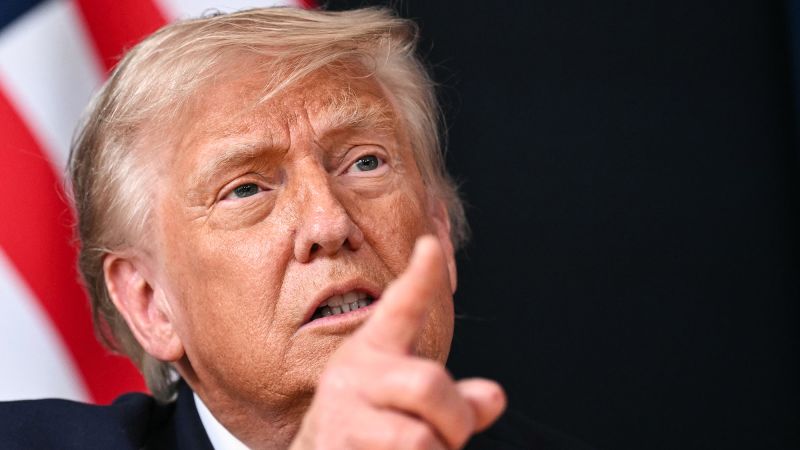
- In 2015, Donald Trump criticized President Barack Obama’s Iran nuclear negotiations, warning that appearing desperate to make a deal was the worst negotiating mistake.
- Now Trump’s own administration is openly acknowledging its eagerness to exit the Iran conflict, with officials stating they want to get this thing over with.
- The president declared at the G7 summit that the alternative to his Iran agreement would be a worldwide depression.
Toward the end of the Obama administration’s negotiations over its Iran nuclear deal in 2015, then-presidential candidate Donald Trump chimed in with some advice from his book, “The Art of the Deal.”
Read more How to read the US-Iran draft agreement: Big commitments from Washington, not from Tehran
“Message to Obama re: Iran: ‘The worst thing you can possibly do in a deal is seem desperate to make it,’” he posted on Twitter.
Trump and his administration are now committing this cardinal sin in their efforts to obtain their own nuclear deal with Iran.
In fact, it looks a lot like they’re giving up on even claiming their memorandum of understanding (MOU) with Iran is a favorable document to the US. The Trump administration is making it abundantly clear they just want out of this war.
Trump’s overriding desire to extract himself has been clear for a long time; he has repeatedly pulled back on his threats, downplayed Iranian provocations and resisted a return to large-scale hostilities.
But over the last 24 hours, this attitude has moved from the subtext to the text.
The administration has repeatedly suggested that its handling of the MOU is about catering to Iran.
Perhaps most striking were comments the administration made without attribution.
“The consensus of the team was we want to get this thing over with, and the deal is the way to do it in a way that maximizes our upside and minimizes our downside,” an administration official directly involved in the talks told CNN’s Alayna Treene.
Wanting to “get this thing over with” sounds a lot like what Trump warned against in 2015.
And in case that quote didn’t raise your eyebrows, witness the US official who urged people not to “read too much into the language of the MOU,” which they called a “political document.”
“What’s more important than the actual document is the understandings we have with each other,” the official added.
The official added that Trump’s negotiating team “came up with language that allows (Iran) to say what they need to say for their domestic politics.”
Read more Trump invokes law to increase weapons production after Iran war depleted US stocks
Trump echoed that on Wednesday at a press conference at the G7 summit in France.
“Some things aren’t even mentioned in the agreement,” Trump said, adding, “But we have an understanding of certain things without writing it. And if they don’t honor that, we’ll probably go back to bombing them until they honor it.”
That’s an astounding level of spin. Suddenly, the administration’s negotiations shouldn’t be judged on what they’ve actually produced, but instead … the vibes between the two sides?
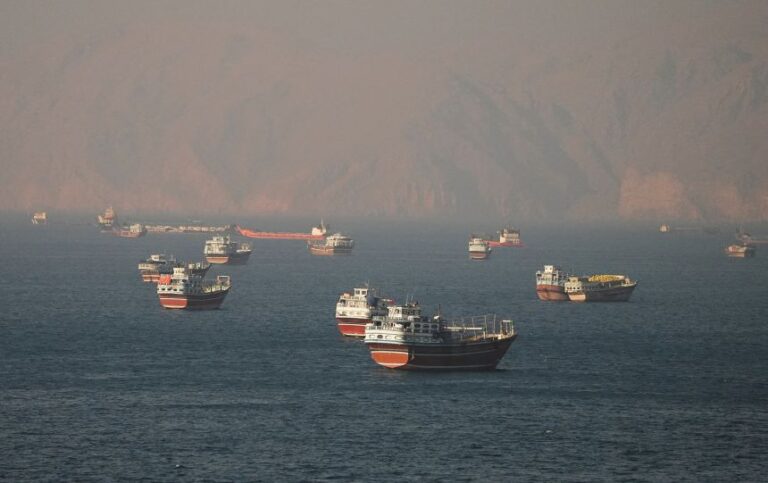
Of course, it’s now easy to see why they’re going with this line. The agreement released by the US Wednesday includes numerous US concessions to Iran — including immediate ones that would enrich Tehran. Iran’s concessions, meanwhile, are mainly just a return to its pre-war footing by opening the Strait of Hormuz and (again) committing to not obtaining a nuclear weapon.
And the suggestion that this is about catering to the political needs of the Iranians certainly doesn’t sound like the US is negotiating from a position of strength and imposing its will.
Then there was Trump on Wednesday at the G7, where he said, remarkably, that the agreement he made was necessary to avert a “worldwide depression.”
“The alternative would be a worldwide depression,” he said. “You know, the stupid people want to have a worldwide depression. And they’re stupid people.”
Trump added: “You can only go so far. You drive somebody into the ground, a lot of bad things happen. Number one, the strait would never open, because they don’t like floating billion-dollar ships up and down the strait when there are rockets flying over them and mines all over the place. The strait … wouldn’t be open for a long time.”
That’s about as blunt as the president can get in acknowledging that Iran’s leverage just proved too much and that he needed to cut bait and get what he could.
There is still much to negotiate. This is really the beginning of the process, with the much-more-difficult negotiations set for the next 60 days after the agreement is formally signed on Friday.
But for the author of the “Art of the Deal” and his administration to rhetorically concede so much leverage up front is shocking.
Read more In private speech, Blanche tried to mend fences with critical conservative activist