 By admin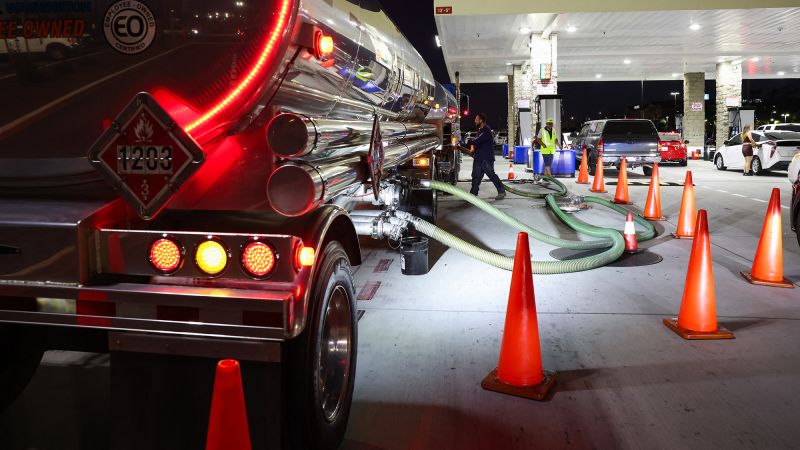
A version of this story appeared in CNN’s What Matters newsletter. To get it in your inbox, sign up for free here.
Read more Trump’s reflecting pool debacle takes a predictably scandalous turn
Back in June, President Donald Trump justified the signing of a memorandum of understanding with Iran by making some alarming predictions.
“We run out of reserves at about four weeks,” Trump said during a press conference in France at the Group of Seven summit.
Running out of oil reserves would cause “bedlam,” he predicted, saying he feared being compared to Herbert Hoover, the Republican president who presided over a market crash that led to the Great Depression.
Trump does not want to be compared to Herbert Hoover.
But he also abandoned the memorandum of understanding and is again attacking Iran. The Strait of Hormuz is again closed. So how far off is the “bedlam” Trump predicted in June?
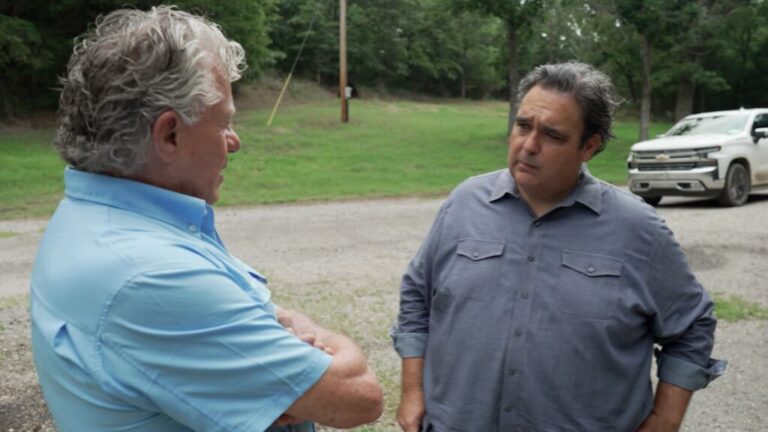
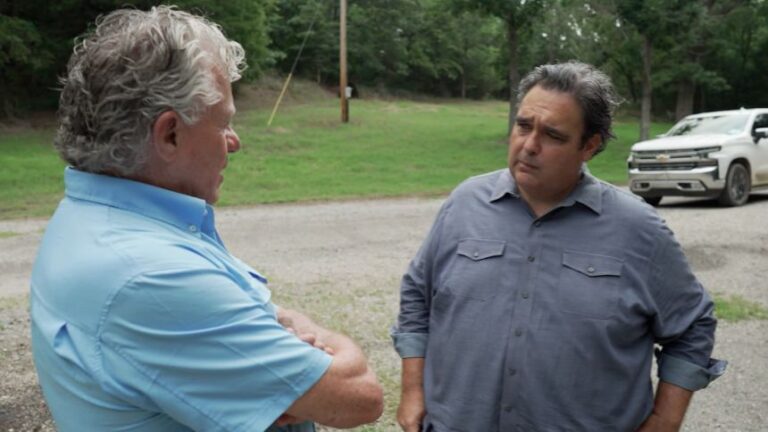
I spoke with David Goldman, a senior reporter for CNN Business who has focused on oil and oil markets during the war with Iran.
He told me the strategic reserve of oil maintained by the US in case of emergencies is dwindling. So are commercial reserves kept in a small town in Oklahoma. But markets are not freaking out because the answer, which Trump won’t like, may be staring him in the face.
Our conversation, edited for length, is below.
Does Trump’s prediction still hold?
WOLF: The MOU is off. The ceasefire is off. Is bedlam coming?
GOLDMAN: The question is when. There are two things that are happening that have staved off the bedlam.
The first is that we had a three-week reopening of the Strait of Hormuz, and just about all the oil that had been locked in the Strait of Hormuz, to the tune of over 200 million barrels, got out. Do the math and you’re at around 17 weeks of supply. That bought Trump some time.
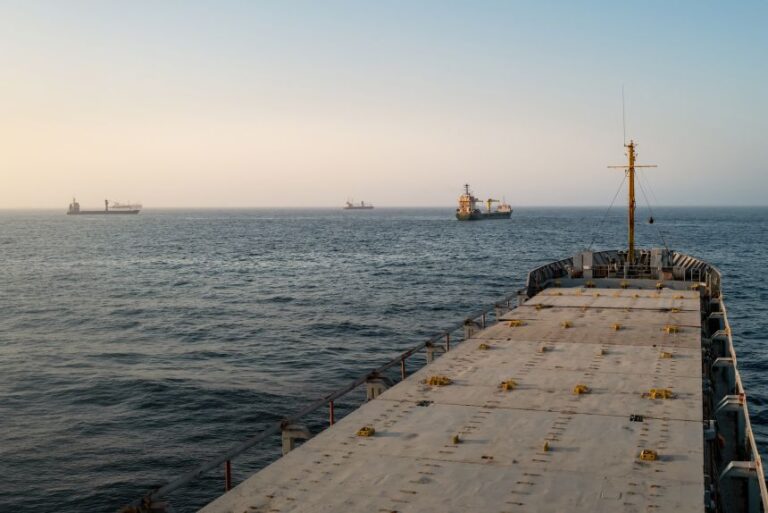
The other thing that has staved off economic catastrophe, I think, and Trump also said, was China.
China has surprised everyone by how much oil it had in reserve before the war. Whether it was prescient or good luck, China had more than a billion barrels of oil sitting in stockpiles, and it’s been drawing down those stockpiles to fuel its oil needs more than you would think.
How much longer can China hold out? The best estimates are like three to four months, but we don’t really have a clear insight.
WOLF: How much longer can the United States hold out?
GOLDMAN: The US is the largest oil producer in the world by far.
In a vacuum, the United States can support its own oil needs. It is producing something like 21 or 22 million barrels of oil a day, and we consume somewhere around 13 or 14 million barrels a day in this country. We have millions of barrels a day more that we produce than we consume, and so the United States has become an exporter of oil. The problem is that there are two kinds of oil, broadly speaking.
We produce what is called light sweet crude oil, and that’s really good for making gasoline and not much else. So if you want to make other stuff — asphalt, or even to an extent, diesel and jet fuel — we need to bring in oil from the Middle East.
The other place to get heavy sour crude, which is the second kind of oil, is from Venezuela. You know what’s going on there. And then the third is Russia. You know what’s going on there.
The next thing that we need to understand is that because the Middle East isn’t producing all this oil, the biggest customers of the Middle East, namely Asia and Europe and Australia, are demanding oil from the United States. A lot of our diesel is going to Asia. A lot of our jet fuel is going to Europe, and that has reduced the amount of fuel and oil that we are able to provide our own country.
Things have changed since the ceasefire
WOLF: The Strait of Hormuz is closed again. Is the oil backing up in such a way that another ceasefire can buy more time?
GOLDMAN: One thing is that there’s less oil inside the Strait of Hormuz right now than there was before. We don’t have hundreds of millions of barrels right now; we have tens of millions of barrels that are stuck inside. So there’s not a massive amount of oil that’s ready to come out of the Persian Gulf this time around.
The second thing is that there is now also a blockade happening in the Red Sea. Saudi Arabia was really effective in piping oil that normally would have gone out through the Persian Gulf westward through its pipelines to the Red Sea, and then exiting the Red Sea for its customers in India and Asia via the Bab-el Mandeb Strait. The Houthis (Iran-backed rebels in Yemen) have now blockaded that Strait as well.
It’s a fuel problem more than an oil problem
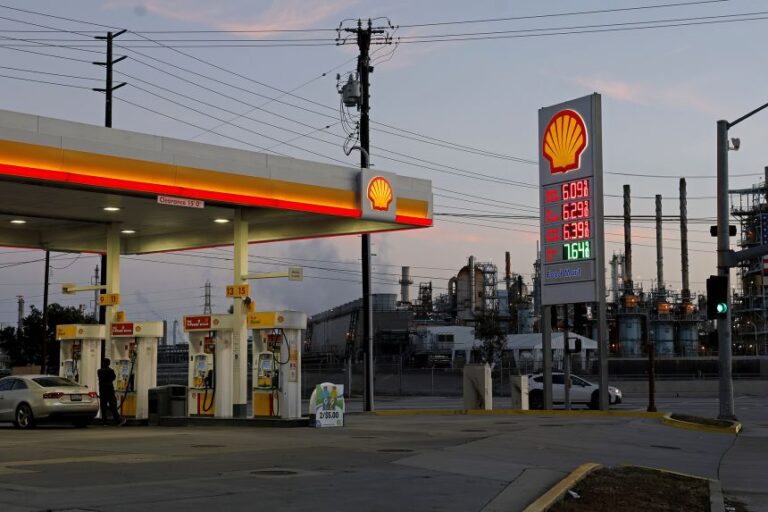
GOLDMAN: The other thing is that we’re in a refining crisis now that hadn’t really existed before. Part of the reason is that Iran has either decimated or significantly impaired 30 refineries around the Middle East during the course of the war. It will either take years or weeks or months, depending on the destruction, to get those back online.
Russia has also been bombarded with drone strikes from Ukraine, and so Russia, which was exporting 12% of the world’s diesel, is now exporting no diesel because they don’t have the refining capacity to do it.
China has placed restrictions on its refineries, in part because of demand, but in part because it’s trying to increase electrification efforts of its vehicles.
The United States is going all out to refine as much as it possibly can because there’s so much demand for US fuel. Well, we’ve been in a heat wave off and on in the United States, and that’s really bad for refining because you need to cool the fuel through the distillation process.
The Strategic Oil Reserve is old, rickety, and very, very low
WOLF: We’re supposed to be prepared for shocks like this through the Strategic Petroleum Reserve. What should people know about that?
GOLDMAN: In the 1970s, there was an oil crisis in this country — a true oil crisis, where people were lined up at gas stations for hours. The country had to restrict the speed limit to 55 to reduce the amount of oil that we were using. You couldn’t get gas if your license plate ended in an even or an odd number, depending on what day of the week it was. It was really serious.
Read more I’m learning to play padel. Here’s the best gear for beginners, according to coaches
One of the solutions was to build a Strategic Petroleum Reserve along the Gulf Coast, so that if we ever had a similar situation, we could draw from that and not rely as much on Iran or the Middle East.
It exists in in caverns. There are underground reserves or tanks. Some of them are in Louisiana, some in Texas. And they are massive, twice as tall (underground) as the Empire State Building. But the problem is that they were built in the ‘70s and ‘80s, and although Congress has, over the course of time, ordered a renovation of the facilities, it’s pretty old. It’s not totally clear that all the oil that we put in it remains in it. There may be some leaks. One of the concerns is that as you drain it, physics might not allow you to pump out all the oil that’s sitting in there because the sediment at the bottom is like gunk at the bottom of the tank. So when you say you have 300 million barrels, you may only have 100 million usable barrels.
WOLF: What is the conventional wisdom about when worldwide reserves really start to fail?
GOLDMAN: The way the SPR works is that the Trump administration basically has a contract where it says we will sell this oil and we will buy back this amount of oil at a later date. So we will get to a level where it’s going to be around 275 million barrels, and then the drain will stop, and then we’ll start to replenish it. And so we’re not really going to approach 175 unless there’s another action that we take.
There’s a few problems with that.
One, we’re buying back at pretty high prices.
The other thing is that if there’s a hurricane or some emergency where we need to use it, even refilling it a little bit isn’t going to get us to where we need to be.
The third problem is that there’s a potential for this war to go on indefinitely, and the Strait of Hormuz is closed indefinitely, and the drawdown in the SPR has been disguising the seriousness of the war and its effect on fuel prices by continuing to kind of flood the market with oil.
WOLF: Why are commercial stockpiles the bigger issue?
GOLDMAN: America’s pipeline network comes to a hub Cushing, Oklahoma. That’s where all Texas oil, Gulf Coast oil gets piped into. The price is set there, and then it’s piped out to the country’s refineries. The stockpiles in Cushing are the measure that the oil industry looks to to understand the health of America’s oil supply. The operational stress level where physics starts to take over and you need to do extra work to get the oil out the pipes is 20 million barrels. Cushing is currently at 18.6 million barrels. Experts who understand this stuff way better than I do believe that somewhere between 14 and 15 million barrels is where you literally cannot get any oil out of the Cushing reserves.
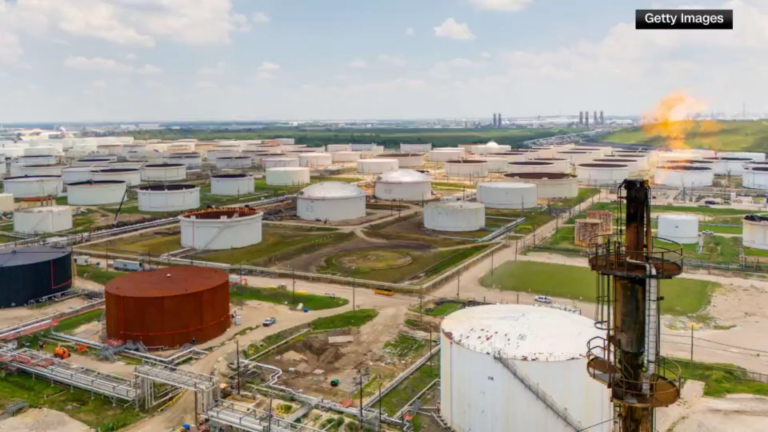
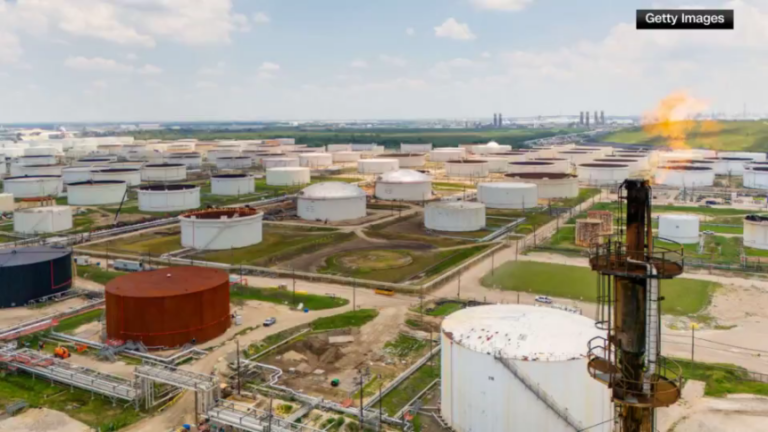
Think of it like a hotel or restaurant coffee urn. You hit the spigot, which is close to the bottom, and the coffee stops dripping out. What do you do? You tip it toward you, and it starts coming out a little bit. At some point, just like with that coffee urn, gravity is no longer able to push the oil out, and there’s gunk like sludge sitting at the bottom of the tank. Can’t use that. The spigot level is not at the very bottom of the tank. You can use pumps to force some of it out, but a lot of that is unusable. We’re pretty close to the unusable.
Demand for oil has fallen dramatically during the war
WOLF: Oil was less than $70 a barrel before the war on February 27. It’s about $84 today. What do we expect from the market?
GOLDMAN: If you’re a fan of roller coasters, this has been the most wild ride that you could possibly take. Oil went from $70 before the war — and I’m talking Brent crude numbers here — to above 113. We went all the way back down below the level at which we started in June when the Strait of Hormuz opened, and then we went all the way back up to $100, and now we’re in the $80 range again.
Why can’t the market figure this out? First of all, demand for oil has plunged during the course of this war. We’ve basically figured out a way to live without 13 million barrels of oil a day. And when that oil started to come back into the market in June, during the memorandum of understanding, the market didn’t really know what to do with it. It didn’t necessarily even want that oil. China is not buying. A lot of Asian countries have figured out other ways to get oil or to get around it. What was astonishing is we went from the world’s largest oil supply crisis to an oil glut very quickly.
The market understands that and has what I would call a peace bias, where it believes because Trump has said that the Strait of Hormuz needs to open up, said we will get it open come hell or high water, and said we could have another deal fairly soon, it doesn’t want to be caught holding the bag. Oil, astonishingly, never approached the high that it hit in in 2022, and that’s astonishing because Brent (in 2022) hit over $120 a barrel because Russia had taken 3 million barrels off the market when it attacked Ukraine.
We had multiple times that amount in this crisis, and we never even approached that price. It also never approached the high that we hit in 2008 of close to $150 a barrel, when we had about 10 million barrels of oil that that we had lost. So this is a huge statement from the oil market that they believe Trump, and they think that there’s enough oil on the market to satisfy demand once the strait opens.
Markets seem to think this will get solved somehow
WOLF: That’s pretty incredible that he commands that faith in the market. Is that because his they trust him or because his back is against the wall?
GOLDMAN: One way to look at it is that no one should believe anything Trump says because you know how many times he says we’re close to the deal and we didn’t have a deal. But then, there was that one time he said we were close to the deal and we really did have a deal, or an agreement, that opened up the Strait of Hormuz for a few weeks. So all he needed to do was be right once, and then if you had thought oil should be at $90, and then all of a sudden oil’s trading at $70, you’re in a real bind.

That’s part of the reason why, despite his very poor track record of making accurate statements about the war and the negotiations with Iran, the market is inclined to believe.
The second thing is that Trump has every incentive to end this. He has a political incentive. He has an economic incentive. He has a financial incentive. Markets, for as long as this war has lasted, have believed that that Trump is more inclined to get out of this than to stay in it.
Iran is obviously the X factor. Iran might not want the Strait to stay open, and has every incentive to keep this going, and that is the trick here. It’s less about does the market believe Trump than does the market believe Iran.
There could be a long-term benefit in the pain right now
WOLF: What are the ways out?
GOLDMAN: The question is what is the acceptable solution. What this is all about right now is Iran charging tolls. This is basically a war over a tollbooth because the MOU’s fifth clause said that Iran would allow for the safe passage of ships through the Strait of Hormuz for 60 days toll-free. Iran interpreted that as “all ships need to register with the regime for the purpose of eventually charging tolls,” and the Trump administration has said, “That’s unacceptable. This is international water, and you can’t do that.” And so Iran started attacking ships that were using this other way out of the strait, around the coast of Oman.
The solution that few people are talking about is, well, why don’t we just let Iran charge tolls? I’m not suggesting that that’s a great idea, but it is a path. It does give both sides what they want, where Iran gets to charge the tolls and gets control of the Strait of Hormuz, and the Trump administration gets the oil to go in and out of the strait. Yeah, it might add a buck or two to the price of oil, but in the grand scheme of things, if the world believes that we’re in an oil glut, it might not even notice that. Currently, Saudi Arabia has found a way around the situation, and others may build pipelines too. We’re talking about Chevron building a pipeline directly from Iraq to the Mediterranean Sea. Down the road we may benefit from this war because it will reduce the importance of the Strait of Hormuz to the global oil market.
The solution may be staring Trump in the face
WOLF: That long-term benefit idea seems very optimistic, since in the near term it will be a huge own goal for the US that enriches Iran at a time when the US was supposed to be making it less powerful.
GOLDMAN: That’s certainly one view. Another way to look at it is that we’re in this situation now, regardless of if Trump believes that he can get a deal that was better than the Obama deal, he’s mistaken.
The way out of this may be staring him in the face, and his resistance may be overly stubborn. His analysis of the economic situation in June that led him to the belief that he needed to sign that memorandum of understanding to avoid an economic catastrophe on the scale of the Great Depression may be extreme, but not so far off that the tipping point won’t happen again. To stave that off, giving in a little to Iran to get the Strait of Hormuz open again to have a long term good of de-emphasizing the Strait of Hormuz maybe the win that he’s looking for. It will just take some time.
Read more The stars, a family hug and the difficult road back from Russian detention