 By admin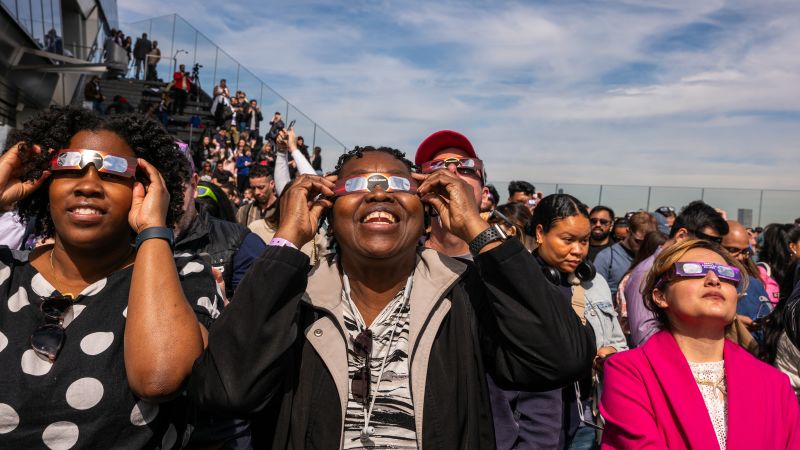
The scintillating cosmic phenomenon of a total solar eclipse will be visible to millions of people across parts of Greenland, Iceland, northern Russia, Spain and Portugal on August 12.
It’s the first of three eclipses anticipated over Spain in the next two years. The best way to prepare for safe viewing of the stellar lineup is to locate a pair of eclipse glasses. Sunglasses won’t be enough to protect your eyes for direct viewing of the spectacle.
A total solar eclipse occurs when the moon passes between Earth and the sun, completely blocking the sun’s face. Since the total solar eclipse will occur over Spain in the evening, sky-gazers are in for a rare treat: a sunset eclipse in which they will see a crescent sun setting after the total solar eclipse.
Those in the path of totality, or locations where the moon’s shadow will completely cover the sun, will see a total solar eclipse. People outside the path of totality will be able to see a partial solar eclipse, where the moon only blocks part of the sun’s face. A partial eclipse will pass across the northern United States, Canada, much of Europe and northwestern Africa. Check Time and Date to see when it will occur in your area.
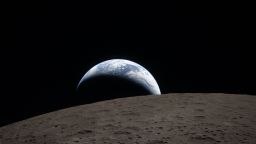
NASA releases new ‘Earthset’ and eclipse images taken during historic flyby of the moon
If your location only affords a view of the partial solar eclipse, some of the sun’s powerful light will be visible throughout the event. And any glimpse of the sun’s brightness with the naked eye is not only uncomfortable but also dangerous.
Why you shouldn’t look directly at the eclipse
The only time it’s safe to view the sun without eye protection is during the totality of a total solar eclipse, or the brief moments when the moon completely blocks the light of the sun, according to NASA. Any hint that light is reappearing means it’s time for eye safety measures.
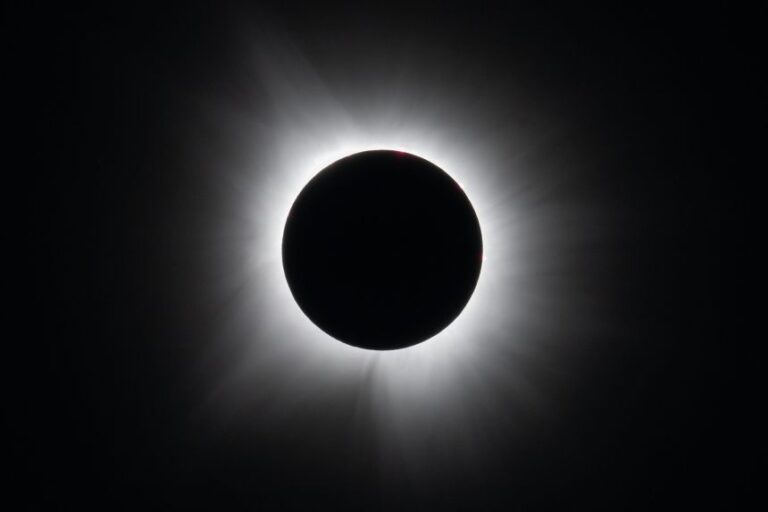
“Even the 1% of the Sun’s surface that remains visible emits enough radiation to permanently damage the eye’s light-sensitive cells,” according to the Institute of Astrophysics of the Canary Islands, which is located along the 2026 eclipse path.
Directly staring at the sun can result in blindness or disrupted vision. During the 2017 total solar eclipse, a young woman was diagnosed with solar retinopathy, retinal damage from exposure to solar radiation, in both eyes after viewing the eclipse with what doctors believe were eclipse glasses not held to proper safety standards.
There is no treatment for solar retinopathy. It can improve or worsen, but it is a permanent condition.
Using eclipse glasses and solar viewers
To view the eclipse, wear certified ISO 12312-2 compliant eclipse glasses or use a handheld solar viewer. Separately, you can observe the sun with a telescope, binoculars or camera that has a special solar filter on the front, which acts the same way eclipse glasses would.
Sunglasses won’t work in place of eclipse glasses or solar viewers, which are 100,000 times darker and held to an international safety standard. While sunglasses can protect our eyes from harmful UV rays during everyday activities, they are not intended for use when looking directly at the sun.
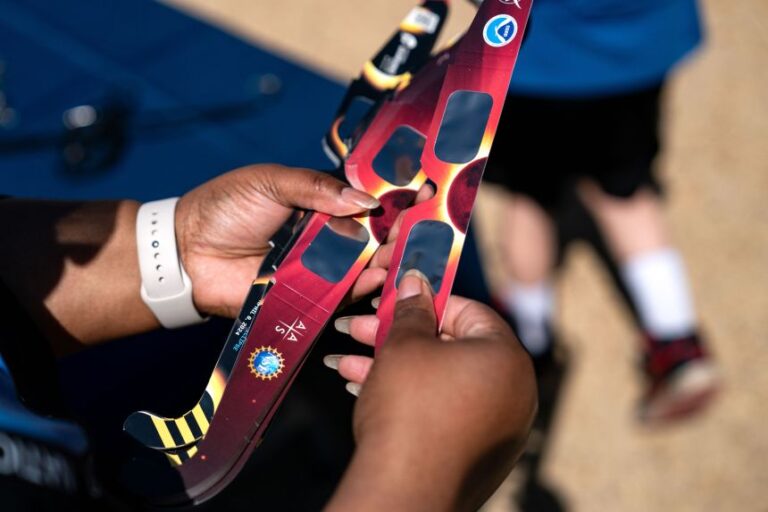
The lenses of solar eclipse glasses are made of black polymer, or resin infused with carbon particles, that blocks nearly all visible, infrared and ultraviolet light, according to The Planetary Society. Sunglasses don’t block infrared radiation.
To find safe manufacturers and resellers of eclipse glasses and filters for optical devices, including cameras and smartphones, check out the list curated by the American Astronomical Society.
Put on your eclipse glasses before looking up and remember to turn away from the sun before you remove them again. Always keep an eye on any children wearing eclipse glasses to make sure they don’t remove them while looking at the sun.
If you normally wear eyeglasses, keep them on and put eclipse glasses over them or hold a handheld viewer in front of them, the American Astronomical Society advises.
Don’t look at the sun through any unfiltered optical device — camera lens, telescope, binoculars — while wearing eclipse glasses or using a handheld solar viewer, according to NASA. Solar rays can burn through the filter on the glasses or viewer and can cause severe eye damage, given how concentrated the rays can be through an optical device.
‘The greatest cosmic movie ever made’: Historic telescope kicks off an unprecedented survey
It’s also possible to use welding filters to view the eclipse safely because the international safety standard was partially derived from using such filters to view the sun.
Welding filters made of tempered glass or metal-coated polycarbonate and with a shade number of 12 or higher allow for safe viewing, but many find shade 13 or 14 to be the best and similar to wearing eclipse glasses, according to the American Astronomical Society. Just know that the sun will appear green instead yellowish-orange or white. These filters aren’t usually on the shelf at supply stores, but they might be available online.
Auto-darkening or adjustable welding helmets aren’t recommended for eclipse viewing because they may not darken quickly enough to protect your eyes.
Keep your glasses
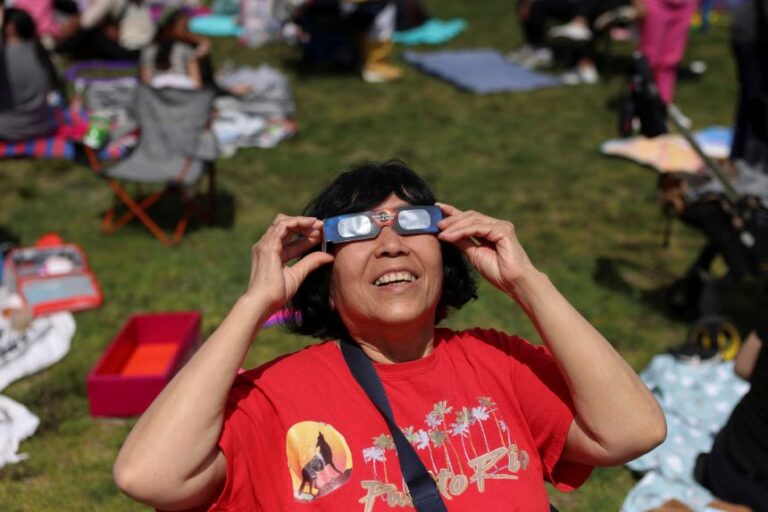
As long as the eclipse glasses or solar viewers you’re using comply with the ISO 12312-2 safety standard and aren’t torn, scratched or damaged in any way, they don’t expire and can be used indefinitely. There is also no limit on how long you can view the sun while wearing them.
Some glasses and viewers carry outdated warnings about using the glasses for more than three minutes at a time or recommend throwing them away after more than three years, but these guidelines do not apply to ISO 12312-2-certified viewers, according to the American Astronomical Society.
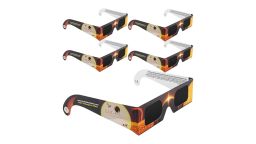
The phenomenon of a solar eclipse is a sight to see. Watch it safely with these glasses (Courtesy CNN Underscored)
Save your eclipse glasses and viewers for future eclipses by storing them at room temperature in an envelope or their original packaging to avoid scratches.
Never use water, glass cleaner, baby wipes or other wet wipes to clean eclipse glasses, as the moisture could cause the cardboard frames to detach from the lenses. Instead, carefully wipe the lenses clean with a tissue or cloth.
Indirect viewing of the eclipse
If you don’t have certified glasses on hand, eclipses can also be viewed indirectly using a pinhole projector, such as a hole punched through an index card. These work when you stand with your back to the sun and hold up the card. The pinhole projects an image of the crescent or ring-shaped sun on the ground or other surfaces.
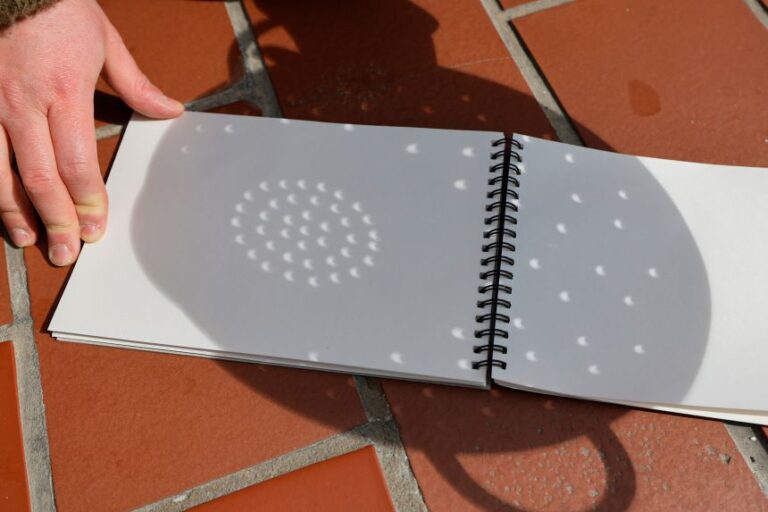
But never face the sun and look directly at it through the pinhole.
Other pinhole projectors you may already have on hand include colanders, straw hats or other objects with small holes in them. Or you can simply hold up your hands, space out your fingers and cross them over each other to create a waffle pattern. The small space between will reveal the sun’s crescent during a partial eclipse.
Standing by a leafy tree? The small spaces between leaves will dapple patterns of the eclipse phase on the ground.
Sign up for our Countdown newsletter to get updates from CNN Science on the upcoming total solar eclipse and whenever there’s a must-see, out-of-this-world expedition. Plus, take deep dives into the future of space exploration.
Read more Justice Dept. admits Reflecting Pool renovation was flawed, drops case against former Olympian