 By admin
Subtraction, not addition, is emerging as the central threat to Republicans in the 2026 election.
Read more He profits off raw milk that’s making people sick. The government isn’t stopping him.
The subtractionrisk for Republicans is the prospect that President Donald Trump’s slipping approval rating among his 2024 voters will cause meaningful components of the coalition that elected him to sit out November’s midterms.
Polls suggest that’s a greater danger for the GOP than the possibility that Democrats will add a big cache of new votes — either by turning out many people who did not participate in 2024, or by convincing a significant share of 2024 Trump supporters to vote blue.
In that way, the emerging 2026 landscape looks very different from the “blue wave” election of 2018 — when Democrats were boosted by a historic outpouring of new voters opposed to Trump and substantial defections from his 2016 voters. At a moment when Americans are so negative on the country’s direction, and the image of both parties is so tarnished, few strategists on either side are expecting nearly as many new voters in November — nor do many expect overall turnout to approach its 50% level from 2018, the highest for a midterm election since 1912.
“When both parties are viewed negatively, you are probably going not to see a lot of new voters,” said Texas-based GOP strategist Matt Mackowiak, with a view widely shared on both sides.
Instead, this year’s result could turn on which side suffers greater falloff among the voters who backed it in 2024. And all signs so far indicate that Republicans now face the greater risk from that sort of subtraction.
For the GOP, this year’s biggest challenge will be would-be voters who say, “I’m frustrated, I’m disappointed, I’m pissed off and I’m not going to bother,” said Democratic pollster Paul Maslin. “And the I’m-not-going- to-bother voters will be disproportionately (Trump’s) voters, and not ours.”
The major shifts are in turnout — not in party loyalty
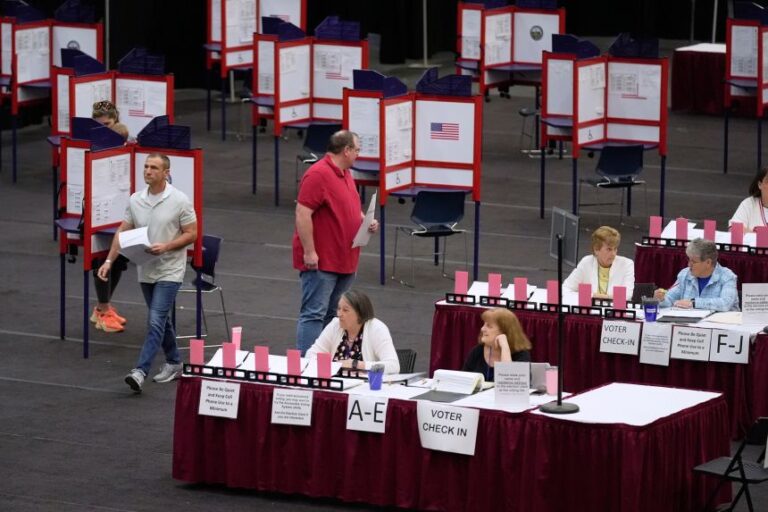
In today’s highly polarized political era, relatively few voters switch their preferences from one party to the other. The Pew Research Center, for instance, that among voters who turned out in both 2020 and 2022, only 6% voted for a presidential candidate from one party in the former election and a House candidate from the other in the latter.
In modern politics, as I’ve written, the bigger impact on election outcomes usually comes from voters who cycle in and out of the electorate. Recent midterm elections have demonstrated how both the addition and subtraction elements of turnout can shape the results.
The midterms under President Barack Obama in 2010 and 2014 were defined mostly by subtraction. Catalist, a Democratic voter data and targeting firm whose work is respected in both parties, calculated from its analysis of individual voter records that about two-fifths of voters who turned out during Obama’s presidential victories in 2008 and 2012 did not return to vote in each of the subsequent midterms. Each time, a preponderant majority of those staying home were Obama voters — people the former president mobilized in big numbers for his own campaigns, but Democrats could not reactivate when he was not on the ballot.
The GOP compounded its advantage in those two elections with a small edge among new voters who turned out for the midterm after not voting in the previous presidential race. But those new voters constituted a relatively small share of the electorate (9%) each time.
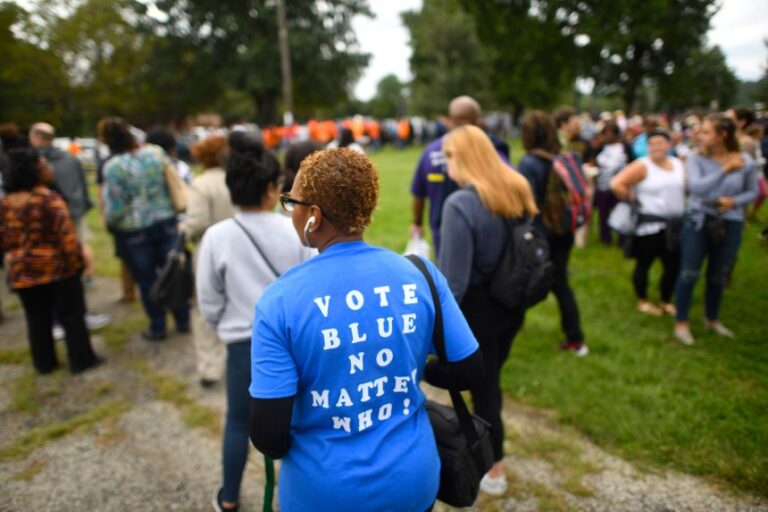
The Democratic “blue wave” election of 2018, during Trump’s first presidency, when the party won over 40 House seats and recaptured the chamber, offered the clearest recent example of the addition model. Catalist calculated that only 27% of 2016 voters stayed home in 2018 — a far smaller decline from the presidential turnout under Obama — and that the drop-off was more closely balanced between the parties as well. But the most distinctive characteristic of 2018 was an unusually large surge of new voters motivated by opposition to Trump: Catalist calculated that 13% of ballots in 2018 were cast by new voters, and that they preferred Democratic House candidates by a crushing 21-point margin. Returning voters also added to the Democratic column: Catalist estimated that people who voted in both 2016 and 2018 shifted toward them by nearly 5 points.
Lifted by the unusual surge of new participants, 2018’s voter turnout hit 50% — way beyond the roughly 40% turnout for the two midterms of Obama’s presidency, according to a University of Florida Election Lab Analysis. Relative to 2014, turnout in 2018 increased for all age groups, but especially among young people — ages 18-29 — whose 2018 turnout fully doubled from four years earlier..
The 2022 election under President Joe Biden presented something of a middle path between the subtraction and addition models. Overall turnout slipped back to around 46%, with fewer new voters apparently entering the electorate and . The muddled turnout story contributed to the election’s overall mixed result, with the two parties basically fighting to a draw.
What can past elections tell us about 2026?
The dynamics threatening Republicans in 2026 look more like the patterns under the Obama midterms than those from 2018.
Democrats are highly unlikely to match the massive gains Republicans made in the Obama midterm elections — largely because the GOP is defending far fewer inherently vulnerable House or Senate seats now than Democrats were then. But as in the Obama era, Republicans this year likely have more to fear from subtraction than addition.
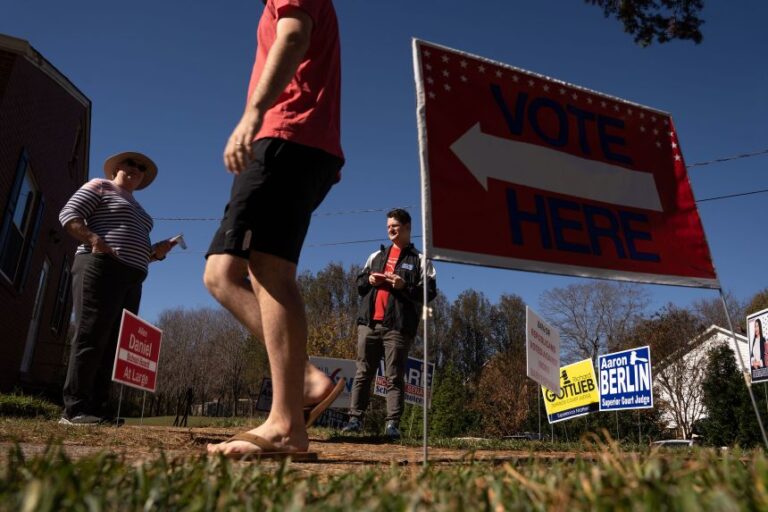
In 2024, the entry of new voters — the addition side of the ledger — clearly benefited Trump. Catalist’s analysis found that Trump ran best among irregular voters who had voted least often over the previous four elections.
Now, though, polls consistently show that amid pervasive economic discontent, Trump’s standing has cratered among potential 2026 voters who did not vote in 2024 — either because they stayed home then or only turned 18 since. The most recent New York Times/Siena College national survey of registered voters, for instance, showed that just 21% of 2024 nonvoters approved of Trump’s performance as president, with 71% disapproving. His ratings among them for handling the economy, inflation and the Iran war were even worse. Less than 20% of Hispanic and Black adults who did not vote in 2024 now approve of Trump, with the share falling to less than 40% even among working-class Whites, Pew found in a poll this spring, according to results provided to CNN. In each case that was well below Trump’s approval with those groups of non-voters when his second term began, Pew found.
Read more On the brink: Black lawmakers could lose decades of gains in one year
With attitudes toward Trump curdling among the 2024 nonvoters, the NYT/Siena survey not surprisingly found them preferring Democrats by a resounding 31-point margin in the House elections. But even as they favored Democrats on that measure, nearly three-fifths of the 2024 nonvoters also expressed negative views about the party . And only about one-fifth of those 2024 nonvoters described themselves as almost certain to vote this year.
To many strategists and observers alike, these attitudes point toward two conclusions: Most new voters in 2026 will probably back Democrats, and there likely will be far fewer of those new voters than in 2018. John Della Volpe, director of polling at the Harvard Kennedy School’s Institute of Politics, said most evidence suggests that young first-time voters are especially unlikely to match their 2018 surge.
“I’m always hopeful for young people to turn out,” said Della Volpe, who supervises the IOP’s poll of young Americans, “but the signals are mixed and muddied.” In particular, he notes, very few young people express confidence that their vote can improve conditions. “Clearly there is an antipathy toward most of the policies and actions around Trump… (but) the couple years before that weren’t much rosier and haven’t left younger people with a lot of confidence in the opposing party,” says Della Volpe, who also advises Democrats on young voters.
Adam Bonica, a Stanford University political scientist who studies voter participation, also says the signs do not foreshadow a big addition of new voters this year. “If you compare what we just saw in Hungary — this massive anti-corruption, anti-system surge, where youth turnout nearly doubled — I don’t see that environment sharping up in the US right now,” Bonica said. “If Democrats had played their cards differently that would have been an option, but I have seen plenty of evidence to the contrary that they are not activating that type of surge.”
Democrats might also see some benefit from the other potential way to add new voters —Trump 2024 supporters who switch to vote for them. But in this highly polarized era, not many may cross that divide: In the New York Times/Siena poll, just 4% of Trump voters said they were satisfied with the Democratic Party. Many Democrats expect most disappointed Trump voters to express their discontent not by crossing the aisle, but by staying home — just as most disappointed Biden voters did in 2024. “We have to get some (switching), but of the two dynamics, I think that turnout falloff (among Republicans) will be a more powerful factor than vote conversion,” said Maslin, the Democratic pollster.
‘The most important question’ for the midterms
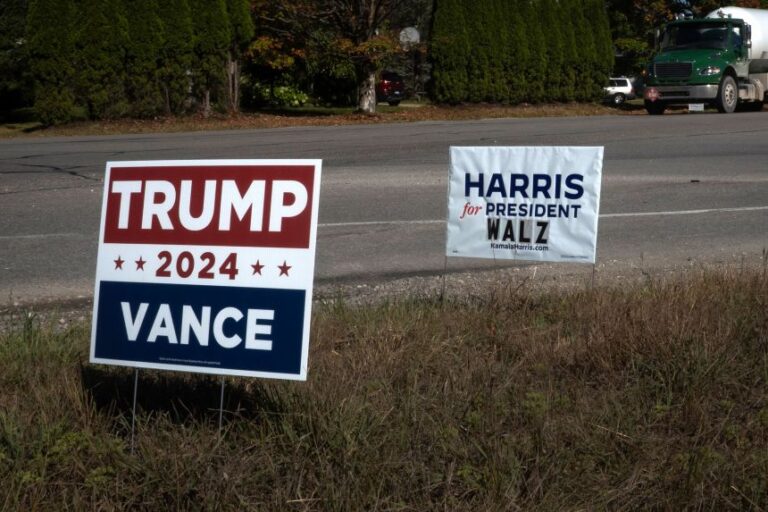
As Maslin suggested, the most important turnout question for 2026 may be which side better limits the subtraction of voters from its 2024 coalition. And on that front, most evidence signals that Republicans face more worries than Democrats. “We haven’t done a full analysis, but you see it everywhere you look at it: Democratic turnout seems to be higher,” said Yair Ghitza, the chief scientist for Catalist. “It’s all pointing in the same direction.”
One of those directional measures is the consistent improvement in the Democratic vote share in special elections since Trump returned to office.
Participation in primaries is another indicator: In competitive statewide primaries this year in Texas, Georgia and North Carolina, significantly more people voted in the Democratic than Republican primaries, a reversal of the pattern in 2022 and 2018.
Polling offers a third yardstick. On the most direct question, some surveys have found a notably higher share of Harris than Trump supporters from 2024 saying they are certain to vote in 2026. The gap could be especially pronounced among young people: This spring’s IOP survey found that only half of Trump’s young 2024 supporters said they definitely intend to vote in 2026, compared with 70% of former Vice President Kamala Harris’ backers. “I think there is going to be a clear drop-off in turnout of younger Republicans relative to Democrats,” Della Volpe said.
These direct measures of voter intention usually overstate how many people actually vote. More telling may be the turnout signals in attitudes about the president. Another warning light for Republicans is that the share of voters who “strongly” disapprove of Trump’s performance is now often double the share of those who “strongly” approve. Those intense feelings are frequently a good turnout predictor.
The fissures in Trump’s support among his 2024 voters are another augur. Throughout Trump’s second term, Pew has measured views of Trump’s performance from people included in its respected Validated Voters study of the 2024 result.
Last February, in its first Trump second-term poll, Pew found that well over 90% of his 2024 voters in all major demographic groups approved of his performance as president, according to figures provided to CNN. But this April, Pew found that Trump’s approval rating among all his 2024 voters had fallen below 80%, while tumbling to 66% among Hispanics who backed him then. By contrast, Harris voters were unified in opposition, with 98% of them disapproving of Trump’s performance.
Melissa Morales, founder and president of Somos Votantes and Somos PAC, groups that mobilize Latino voters, said disappointment in Trump’s economic record and agenda creates “a massive risk” for Republicans that “these Latinos who voted for Trump for the first time” in 2024 will “not show up at all.” She’s also more optimistic than many other strategists that if Democrats can sharpen their economic messaging, they can motivate previously non-voting Latino young people “who are trying to figure out how to make ends meet” and “are looking for solutions.”
Considering all these factors, Mackowiak, the GOP strategist, said “in some ways the most important question facing the midterms” is whether Republicans can blunt the emerging Democratic turnout advantage. “If their base is enthusiastic and ours is not, it has a chance to be a real blowout,” he said.
Mackowiak sees several ways Republicans might mitigate the developing Democratic edge. A Supreme Court vacancy this fall, he said, could energize Republicans — as the bitter nomination fight over Justice Brett Kavanaugh did just before the 2018 election. And he noted that since 2024, Democrats “have really done almost nothing to correct their party image problem.” That could both limit their inroads with independent voters and help Republicans motivate their base voters by portraying Democrats as extreme, he said.
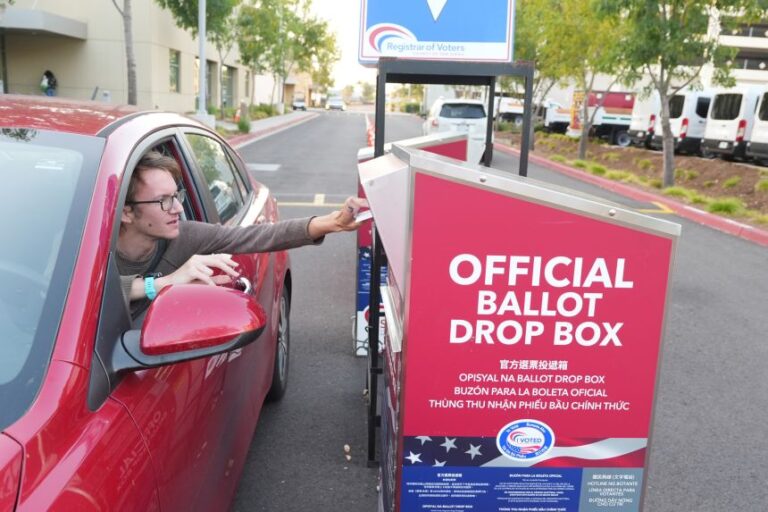
Critics point to another factor that could disrupt the potential Democratic turnout edge: moves by the Trump administration to suppress the vote, such as trying to limit mail voting in blue states or dispatching immigration agents to inner-city polling places. “You can see the countervailing strategy that’s developing” from Trump and his GOP allies of “basically dismantling institutions that support free and fair elections,” Bonica said.If courts don’t block such possibilities, that could significantly scramble the turnout equation.
But if the election unfolds mostly under traditional rules, the biggest turnout threat to Republicans will be the contrast between a Democratic base unified in passionate opposition to Trump — and the clear cracks opening in his 2024 coalition.
Read more Trump’s UFC 80th birthday bash looks to rescue his tarnished macho image