 By admin
Jessica Ochoa and her husband had hoped to have another child. But with Ochoa’s monthly student loan payment expected to balloon to $1,500 in the fall, they are reconsidering when — or whether — they can afford to grow their family.
Read more Trump wants a new Red Scare. Here’s what democratic socialists want
“We couldn’t have a mortgage, daycare and student loans,” said Ochoa, a 32-year-old speech-language pathologist in Southern California. “I don’t know how people do that.”
Ochoa enrolled in the Saving on a Valuable Education (SAVE) repayment plan in 2023 after borrowing about $152,000 to earn her master’s degree. She made several monthly payments of $567 until she went on maternity leave the following April. The Department of Education under the Biden administration paused SAVE borrowers’ payments a few months later after a federal appeals court temporarily halted the plan.
Like other SAVE borrowers, Ochoa must now contend with the Trump administration’s elimination of the plan after years of legal challenges. Earlier this month, she received a notice from her loan servicer giving her 90 days to choose a new repayment plan, which would nearly triple the tab she thought she would have.

More than 7.5 million people were enrolled in SAVE, which was the most generous income-driven repayment plan. It slashed monthly payments – as low as $0 for many borrowers – and provided loan forgiveness in as little as 10 years, depending on loan balances.
More than 2 million borrowers have been notified since July 1 that they must choose another repayment option, Under Secretary of Education Nicholas Kent told CNN. The rest will receive their letters in coming weeks.
The end of SAVE stems from a settlement reached in December between the Department of Education and Missouri, which led a coalition of Republican states that argued in court that the Biden administration did not have the authority to create the debt relief program without congressional approval.
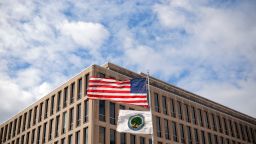
Trump administration announces deal to end Biden-era student debt repayment plan
The Trump administration resumed applying interest to borrowers’ balances last summer.
Picking new repayment plans
Some people aren’t waiting to move into new plans, even though most will face higher monthly payments.
About 25% of SAVE borrowers, Kent said, have opted for the Repayment Assistance Plan (RAP), which was created last year by President Donald Trump’s One Big Beautiful Bill Act. Borrowers’ monthly payments will be between 1% and 10% of their income, depending on their earnings — though they must pay at least $10 a month. Their remaining balances will be canceled after 30 years of payments, and the plan contains several other incentives.
Another 50% are shifting to the Income-Based Repayment Plan (IBR), one of several legacy plans. This option limits monthly payments to 10% or 15% of discretionary income and forgives remaining balances after 20 or 25 years of payments. (IBR plans are not available to borrowers who take out new loans after July 1.)
And the remaining 25% of borrowers chose the Income-Contingent Repayment Plan (ICR) or the Pay As You Earn Repayment Plan (PAYE), though they will have to switch again by July 2028 when these plans will be eliminated.
Those who don’t pick a new plan by the deadline will be enrolled in the tiered standard repayment plan, which was also created by the One Big Beautiful Bill Act. Those borrowers will have between 10 and 25 years to repay their loans, depending on the amount borrowed.
Ochoa is considering the RAP and IBR plans, but her estimated monthly payment would be between $1,500 and $1,600, according to the federal student aid calculator she checked.
Even though she’s hoping to be free of her loan after 10 years of payments through the Public Service Loan Forgiveness program, that increase the couple is facing now is forcing them to consider an array of life changes — including pulling their 2-year-old daughter out of dance classes and stopping the $100 monthly contribution to her 529 college savings account, along with potentially having only one child.
“That would definitely mean pausing any plans to grow our family,” Ochoa said of the larger monthly payment. “The biological clock is ticking … Will we regret not giving her a sibling?”

As student loan interest restarts for SAVE plan borrowers, some are feeling ‘crushed’
After receiving their notices, borrowers should log into their studentaid.gov accounts to look at their different options, said Abby Shafroth, director of the student loan borrower assistance project at the National Consumer Law Center. In addition to the monthly payment amount, they may want to consider how many years it will take them to pay back their loans and what the total repayment amount will be.
Read more Does Trump even care if Russia helps Iran target US troops?
Borrowers may also want to ask their loan servicers for forbearance while they figure out how to handle the larger monthly tab, she said.
Borrowers also don’t have to rush into making a decision immediately, said Aissa Canchola Bañez, policy director at Protect Borrowers, an advocacy group. They should take time to do their homework on the different plans — though ultimately, they’ll likely have to pay more.
“There are no good options for most of these SAVE borrowers,” she said, noting that the smaller share of SAVE borrowers shifting to RAP plans shows that option is not as affordable. “The options that they have at their disposal are all very much more expensive.”
Kent, the current under secretary of education, pushed back, saying there are affordable choices. The SAVE plan was unlawful and overly generous, he argued, so it can’t be compared to the other income-driven repayment options.
The two plans created by the One Big Beautiful Bill Act address the needs of low-income borrowers with sizable balances, he said.
Plus, Americans do not support broad student loan forgiveness, Kent said. An April 2024 ABC News/Ipsos poll found that 42% of Americans thought then-President Joe Biden was doing too much to cancel student loan debt, with 34% saying the right amount and 22% saying too little.
“People generally believe that if you take out a loan, you are responsible for repaying it,” Kent said. “We’re going to give you the tools necessary to be able to do that in a meaningful way.”
‘Sick to my stomach’
One South Carolina resident in her early 30s is staring down a new monthly student loan tab of about $499 in an IBR plan, up from $10 under SAVE. She has about $48,000 in federal student loan debt from bachelor’s and master’s degrees.
“It made me honestly sick to my stomach to think about having to take out an extra $500,” said the borrower, who asked not to be identified to protect her job. “For a week, my anxiety was through the roof.”
The higher payment comes as she and her husband are raising two young children after recently buying a home. The family is already discussing ways to cut expenses, including no longer paying someone to mow their lawn and possibly reducing retirement contributions.
“We need to cut that out or try and think of other things, bill-wise, to cut out,” she said.
She has also considered taking on more work through her side business but worries that earning more income could increase her student loan payments because they are based on income.
“I was like, ‘Oh, I need to make more money.’ But then my payment would probably go up even more because it’s all based on income,” she said.
Others are not ready to look at what they’ll have to pay going forward.
Madison Tracy, 28, a freelance social media manager who lives outside Columbus, Ohio, plans to wait until the fall before weighing her choices. Years of court rulings and policy changes have taught her that the rules can shift quickly, she said.

Tracy, who recently moved back in with her parents as living costs climbed, said she received a notice in mid-July from her loan servicer, Aidvantage, giving her until October 13 to choose a new repayment plan. A 2021 Ohio State University graduate, she has about $30,000 in federal student loan debt, as well as private student loans.
“There’s certain things that are more worth my energy right now than focusing my energy on something that could potentially change again before October,” said Tracy, who has never made a federal student loan payment. “It’s not ignorance at all on me. It’s more of protecting my well-being and also protecting my sanity.”
Read more Jay Clayton confirmed as director of national intelligence