 By admin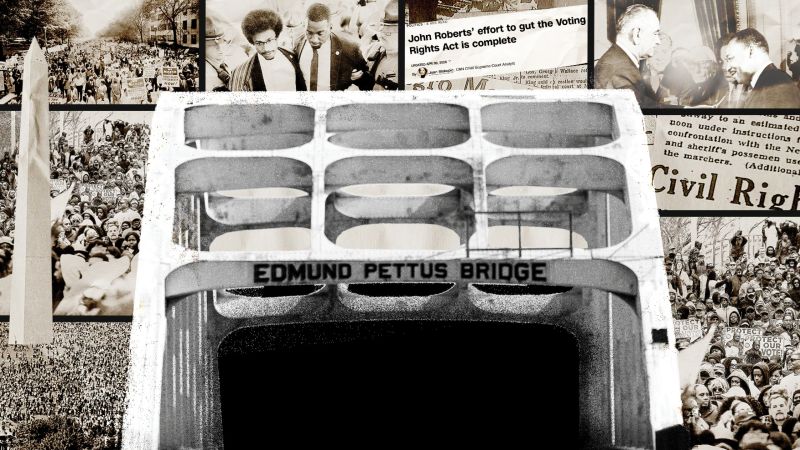
- Black representation in Congress faces what could be its steepest decline since the Voting Rights Act passed 61 years ago.
- Following a Supreme Court ruling in April, redistricting has intensified across multiple Southern states.
- Six Black Democratic House members could lose their seats after this fall’s midterms due to the new maps.
The US is on the brink of the largest reduction in Black representation in Congress since the enactment of the Voting Rights Act almost 61 years ago.
Read more Trump’s UFC 80th birthday bash looks to rescue his tarnished macho image
House Democrats could lose six Black members after this year’s midterms due to a redistricting campaign that intensified after the Supreme Court gutted the power to bring claims of racial discrimination under the voting law. Two of the incumbents in redrawn districts will not return to office next year and the remaining four are underdogs to keep their seats.
A seventh Black lawmaker, Republican Rep. Burgess Owens of Utah, is leaving the House after a judge struck down a map that had favored the GOP.
Winning this fall’s midterm elections, not maintaining racial representation, was the stated target of Republicans who launched an unprecedented mid-decade sweep of redrawing US House maps across the country and Democrats who responded with their own push. But the results of that campaign – and the US Supreme Court’s ruling – could lead to a historic erosion of Black political power, particularly in the South, where most Black people live.
“What the Supreme Court has done is sanction discrimination against African Americans in the political process,” Derrick Johnson, the president of the NAACP, told CNN. “The only time in history that we’ve seen this is after Reconstruction.”
Rapid unraveling of historic gains
Black Americans spent the first century after the country’s founding without the right to vote and much of the next century fighting to make it a reality.
A number of Black lawmakers were elected to Congress after the Civil War, when former Confederate states began allowing Black Americans to vote as a condition of rejoining the Union. Federal troops stationed in the South helped ensure Black access to the ballot.
But official suppression of the Black vote began almost immediately as troops were withdrawn, sometimes through state-sanctioned violence and murder. By 1877, the Reconstruction era was over, and the end of Black representation in Congress followed.
In all, 20 Black representatives and two Black senators served in Congress between 1870 and 1901.
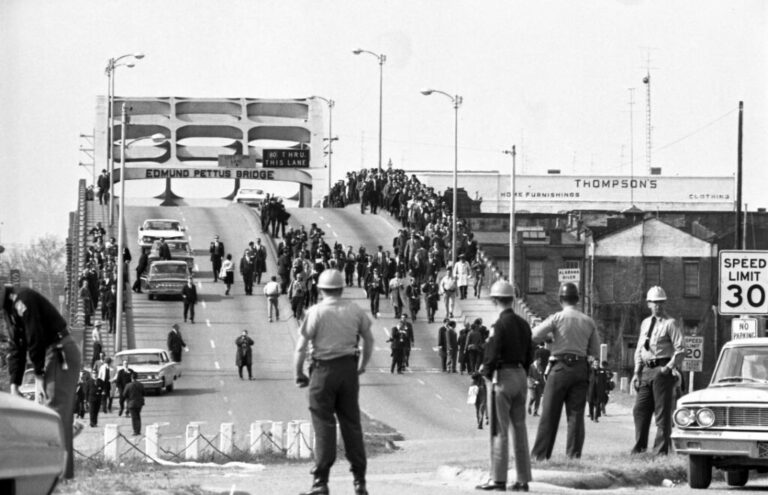
The 1965 Voting Rights Act was enacted the same year that baton-wielding Alabama state troopers bloodied peaceful voting rights protesters, including John Lewis, on Selma’s Edmund Pettus Bridge.
Five months after that “Bloody Sunday” in Selma jolted the nation, President Lyndon Johnson signed the voting law. In the years since, it has helped swell the ranks of minorities in Congress and elevated new Black political leaders.
‘A living legend’
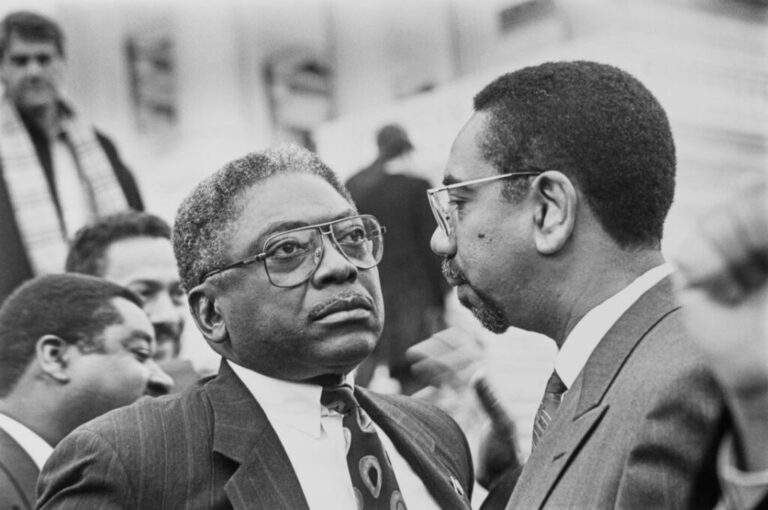
Jim Clyburn was first elected to Congress in 1992. He became just the ninth Black congressman to represent South Carolina – and the first in nearly a century, since the end of Reconstruction. (He chronicled that history in a recent book, “The First Eight.”)
Over 17 terms, Clyburn amassed the kind of political power that eluded African Americans during his childhood in the Jim Crow South. He served as the No. 3 Democrat in the US House, becoming the highest-ranking African American in Congress at the time. He was a critical validator for then-Sen. Barack Obama in South Carolina’s 2008 Democratic primary when Obama was vying to prove to many people – including Black voters – that he had a credible chance of becoming the first African American president.
Twelve years later, Clyburn’s endorsement of Joe Biden famously revived the former vice president’s flagging presidential campaign. He pushed Biden to promise to nominate a Black woman as a Supreme Court justice, which Biden did when he picked Ketanji Brown Jackson for the court.
Tracking states’ unprecedented redistricting efforts
A redistricting plan targeting Clyburn died in the state Senate at the last minute after several Republican lawmakers balked at disrupting the primary election already underway. Some Republicans in the state, however, have vowed to try again to change his district ahead of the 2028 election cycle.
That state lawmakers would even consider targeting Clyburn shocked some South Carolinians. Claire Wofford, a political scientist at the College of Charleston, said Clyburn has brought prominence and federal money to the Palmetto State – for everything from infrastructure projects to historically Black colleges and universities. “I mean, the guy’s like a living legend,” she said.
But Clyburn, 85, said he wasn’t surprised because he knows that history can repeat itself, and he fears it is happening again.
“This Supreme Court is resegregating this country,” he said.
A shift in the courts
For decades, the Voting Rights Act helped expand minority representation. Congress reauthorized the federal law five times since its initial passage. And the Supreme Court in 1986 established a framework for testing whether state redistricting plans had the effect of diluting minority voting power.
But a series of rulings from the high court starting in 2013 have undercut the law’s protections, culminating in April’s decision in Louisiana v. Callais, setting a standard that critics say is all-but-impossible to meet: Challengers must show there’s a “strong inference” of intentional discrimination in the map drawing.
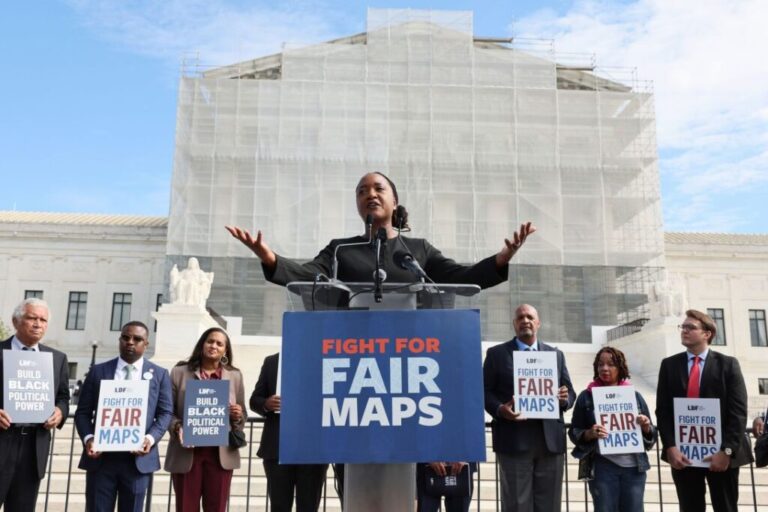
Writing for the court’s conservative supermajority, Justice Samuel Alito indicated that the guardrails first erected by the 1965 law were no longer needed today. “Vast social change has occurred throughout the country and particularly in the South, which have made great strides in ending entrenched racial discrimination,” he .
Critics say the court’s new standard allows lawmakers to use the cover of partisanship when drawing maps that dilute minority voting power.
“At the end of the day, the Supreme Court basically said, ‘We don’t care how racially gerrymandered the districts are as long as you tell us that you did it to get rid of Democrats,’” said Alabama Rep. Shomari Figures. The first-term lawmaker is among the Black Democratic incumbents at risk of losing reelection under a Republican-friendly map.
Within days of the court’s decision, Tennessee, Louisiana and Alabama began moving to put in place maps for partisan advantage. And within a month, three congressional districts with sizable Black populations were reconfigured across those states to help boost Republicans’ chances of holding the US House after November’s midterms.
Read more Nara Organics recalls baby formula sold at Target after multistate infant botulism outbreak
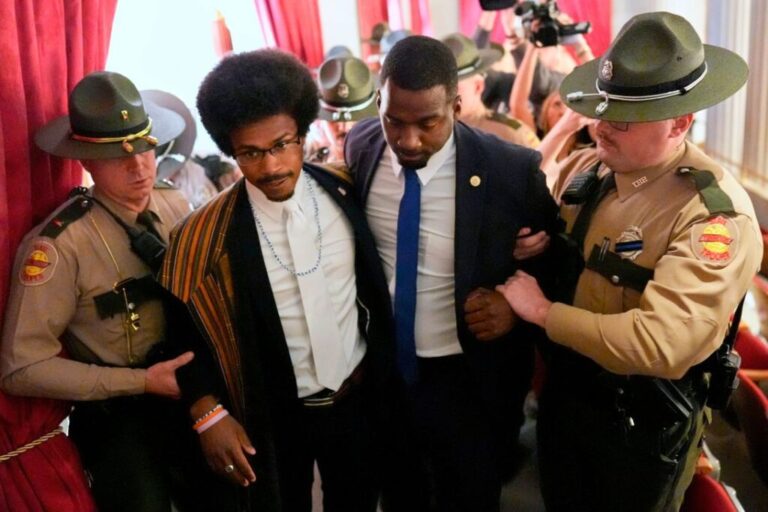
“This is basically denigrating the fight for a real, viable American democracy,” said Carol Anderson, a professor of African American studies at Emory University in Atlanta. “All of the blood, all of the tears, all of the courage, all of the fight, all of the strategizing that it took to get the Voting Rights Act.”
Republican legislators, however, have insisted that politics alone is driving their actions.
“It’s not about race,” Louisiana state Rep. Beau Beaullieu, a Republican who helped lead the redistricting push in his state, said during the recent legislative debate. “We did not take race into account when drawing these maps.”
Some Black Republicans who serve in Congress have hailed the court’s decision, arguing that the Voting Rights Act’s remedies are no longer needed.
“The Black person … who ideologically is aligned with their state or their district can win anywhere,” South Carolina Sen. Tim Scott, the lone Black Republican in the US Senate, said recently.
Maps upend political careers
For Cleo Fields, history is repeating itself in his lifetime.
Like Clyburn, Fields first entered Congress in 1993, part of a then-record group of Black lawmakers swept into power following a congressional update to the voting rights law and a court decision that helped pave the way for more majority-minority districts.
But a court threw out Louisiana’s map, and he was gone from Washington after four years.
Fields, 63, had just returned to Congress last year, after a nearly 30-year absence, only to have the US Supreme Court strike down his current district – Louisiana’s second Black-majority district. It leaves Louisiana with one Black-majority district out of six in total, although Black residents make up a third of the state’s population.
“We’ve been down these roads so many times,” he lamented.
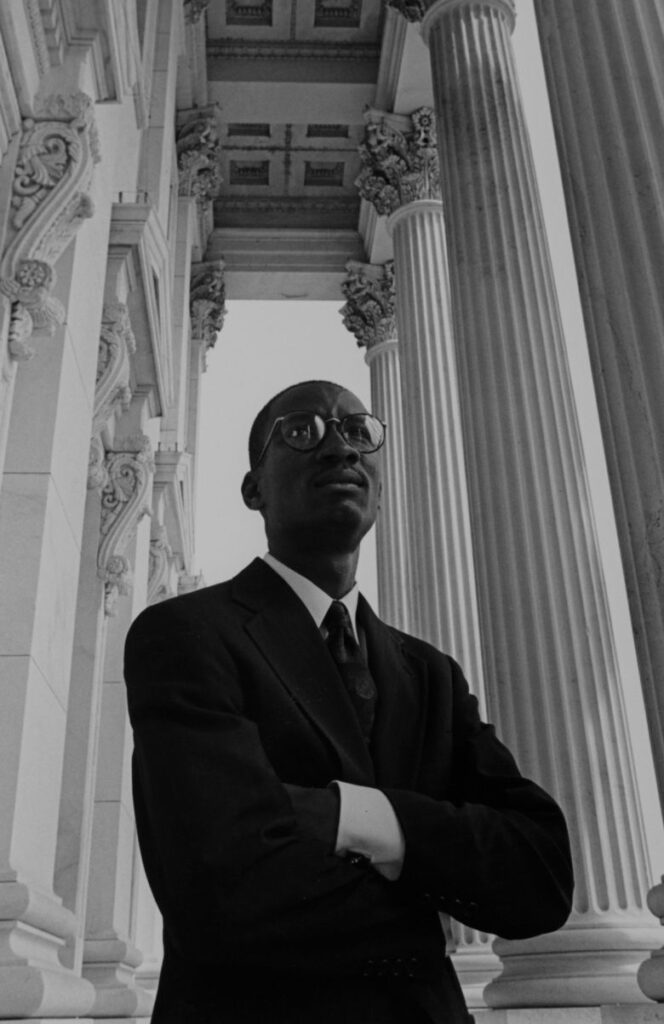
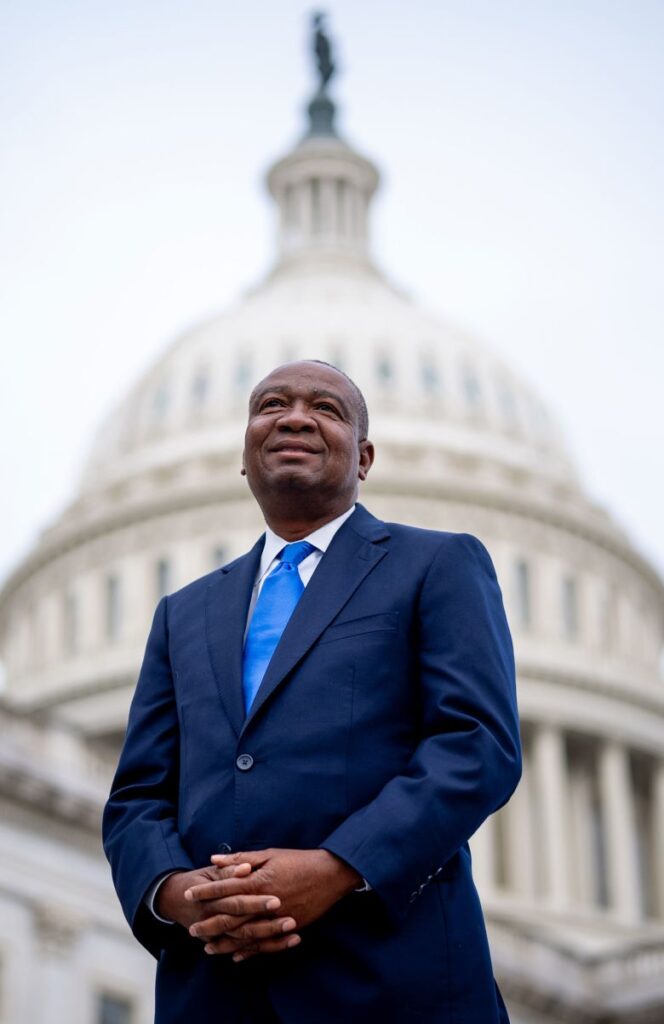
Only the fourth Black congressman from Louisiana since Reconstruction, Fields is now at risk of losing the seat again. He said he has not made a final decision on his political future, but he will not run against his fellow Democrat, Rep. Troy Carter, for a sole remaining Black-majority district.
The new maps already have upended political careers in other states.
Texas Democratic Rep. Marc Veasey, for instance, decided against seeking reelection, following Republican-led redistricting in the state. Another Texas incumbent – longtime Democratic Rep. Al Green – recently lost to Rep. Christian Menefee after the new map left the two Black lawmakers facing off in a primary election.
(Other Black House members are leaving Congress at the end of this term but for reasons other than redistricting, including five who have sought higher office.)
In Florida, meanwhile, Democrat Rep. Debbie Wasserman Schultz, who saw her current district broken apart by the Republicans’ redistricting plan there, has opted to run in a historically Black district – prompting an outcry from some Black Democrats who say the veteran congresswoman’s bid for the seat could shut out an African American contender.
The Republican-controlled legislature in Georgia will soon gather for a special session to consider redistricting for the 2028 cycle in response to the high court’s ruling.
Waking up a ‘sleeping giant’?
Democratic strategists say they are working to spread awareness of redistricting’s stakes in the hopes of increasing Black turnout in the midterms. Some Democrats see encouraging early signs of voter engagement.
The Congressional Black Caucus is asking corporate leaders to condemn what it describes as the effort to dilute Black voting power, while the NAACP has called on Black athletes and fans to shun athletic programs at public universities in southern states pursuing redistricting.
In South Carolina, state party officials seized on the attempt to topple Clyburn to encourage heavy participation on the first day of in-person voting in the state’s primary. In the end, more than 56,000 people cast ballots that day, a single-day record in the state for a primary election, according to the South Carolina Election Commission.
“I think turnout is going to go through the roof in November because I think people, Black Democrats in particular, think this is nuts,” said Jay Parmley, the executive director of the South Carolina Democratic Party.
Activists say voter education and mobilization will be more important than ever, given how much the last-minute redistricting moves have disrupted elections procedures.

Louisiana and Alabama, for instance, rescheduled House primaries after the Supreme Court ruling, and many voters likely will find themselves in new congressional districts and precincts when they head to the polls.
Back in Louisiana, Fields said he was deeply disappointed when lawmakers enacted the new map but was heartened by what he saw during the legislative debate in his state: Residents of all colors showing up to voice their opposition.
“In some respects, they are waking up a sleeping giant,” he said of the redistricting push. Voters, Fields said, “now need to stand up and go the polls and say, ‘You can’t treat us this way.’”
Read more Crowds flock to White House Ellipse for fan event ahead of UFC fight