 By admin
- Last week’s California primaries have sparked a resurgence of election fraud claims reminiscent of 2020.
- But these conspiracy theories don’t withstand scrutiny, nor do they make much political sense.
- And confronted with the lack of evidence, some GOP leaders are now arguing the fraud is real but it’s just not detectable.
The last week has brought the largest resurgence of election denialism since the aftermath of the 2020 election. Many on the right have cried foul over late shifts toward Democrats in results from California’s June 2 primary.
But as was the case six years ago, the vast majority of the theories about why voter fraud is involved don’t withstand scrutiny.
And increasingly, some top Republicans seem to be dealing with the pronounced lack of evidence by arguing that the fraud is just undetectable.
Let’s run through some of the biggest supposed evidence of malfeasance, and why it’s not what it might seem.
Spencer Pratt’s dropoff
The conspiracy theories began bubbling last week as two GOP candidates saw their vote shares drop after primary night.
Gubernatorial candidate Steve Hilton was in first place on election night but appeared at risk of dropping out of the top two as more votes rolled in. And Spencer Pratt, the buzzy Republican candidate for Los Angeles mayor, suddenly saw his significant election-night lead over third-place Nithya Raman, a Democratic Los Angeles City councilwoman, gradually get whittled away.
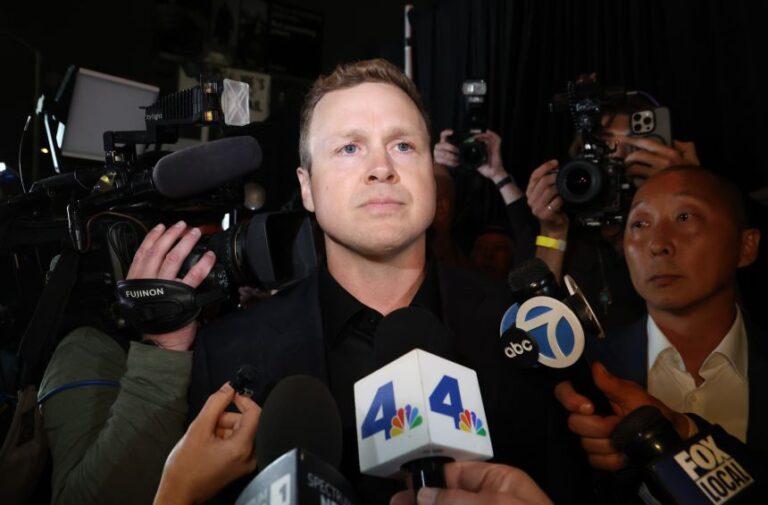
A week later, Raman has beaten Pratt for the second slot against incumbent Mayor Karen Bass in what’s officially a nonpartisan race, even as Hilton continues to hold off Democrat Tom Steyer for second place in the governor’s race.
This is familiar territory.
Perhaps the most oft-cited supposed evidence of voter fraud in the 2020 election was how late-counted ballots tended to go for Democrats, in some cases flipping swing states where Donald Trump was leading on election night.
But there was a very valid explanation for that: An found that Joe Biden counties — often urban ones with lots of votes — tended to count and report more slowly than Trump counties.
And that was exacerbated by the growing partisan gap in mail ballots, which tend to be counted later and which Democrats use much more than Republicans (in large part because Trump has claimed they are prone to fraud).
The combined effect is often called the “red mirage.”
California puts the “red mirage” on steroids, because of its extensive use of mail ballots and how long it takes to count them. Indeed, it was predicted far and wide that Democrats would gain significantly after primary night.
And crucially, the current results look a lot like the polls did.
Bass stands at 34%, Raman at 29% and Pratt at 26%. That three-point Raman lead over Pratt is the same as a late UC Berkeley-Los Angeles Times poll (Raman 25%, Pratt 22%).
What’s more, Pratt’s vote share is similar to the 26.5% that Trump got in the city of Los Angeles in 2024.
Raman’s surge – but Bass’ decline?
Even so, some on the right have wondered what could possibly explain the size of Raman’s surge. The other Democrat, Bass, actually lost ground, percentage-wise, as ballots were counted.
If this was just about late ballots leaning Democratic, why would Raman gain so much and Bass lose ground, as a percentage?
There are a couple of valid explanations.
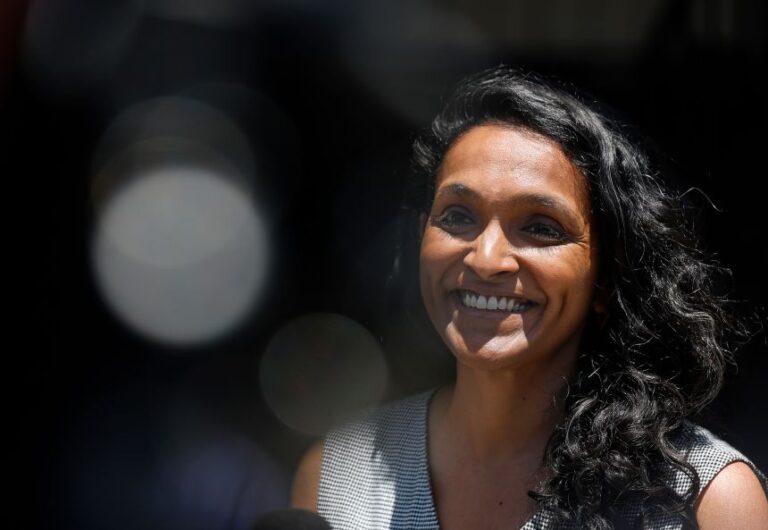
One is that Democratic voters were being strategic about California’s unusual top-two primary system, in which the first- and second-place candidates advance regardless of party. By waiting to cast their mail ballots, the idea goes, they had a better idea of who could win or at least advance to the general election.
The Los Angeles Times even wrote a story about this trend two days before primary day, noting how crowded the governor’s race was. And CNN’s Elex Michaelson spoke to Democrats who said they voted late for Raman in order to make sure Pratt didn’t advance.
But there’s arguably an explanation that makes even more sense, which the Ballot Book’s Mason Herron wrote about on Monday.
It basically boils down to this: Those who cast late mail ballots skewed much younger than those who cast earlier votes, and Raman’s base also skews younger. Given that, it would make sense that the democratic socialist would gain big late, while Bass — with her older base — would lose some ground.
Read more Vance family installs Victorian-style chicken coop at vice presidential residence
And this is familiar territory for Raman. In her 2024 primary for her city council seat, she was in a tight race with her Democratic opponent in the hours after polls closed — so much so that news outlets were writing that the contest (which she led 45%-43% the morning after primary night) was headed for a runoff.
But Raman didn’t need a runoff. She surged over 50%, thanks to late-counted mail ballots. And she won what had looked like a tight race by 12 points.
The basic logic problem
Even if you set all that aside, though, the voter fraud theories in the Los Angeles mayor’s race suffer from a major deficit: basic logic.
As CNN’s Harry Enten noted Monday, Bass would have actually preferred if Pratt had advanced to the general election. That’s because a Republican stands very little chance of winning in deep-blue Los Angeles, and Pratt was about as unpopular as Bass was.
But Raman, a democratic socialist opponent, on the ballot? That’s a major problem for Bass.

Indeed, that late UC Berkeley-LA Times poll showed Bass leading Pratt by 18 points (47%-29%), but trailing Raman by four (28%-32%).
And even if there was “ballot harvesting” by labor unions and the like, those groups tended to support Bass, so the results wouldn’t support that theory.
And then throw in the fact that Hilton still appears likely to make the general election for governor, and the question becomes why Democrats would rig the mayoral race to stop Pratt but not Hilton.
The supposed vote batches with no votes for Pratt
Another conspiracy theory floating on social media is that large numbers of votes were added to the tallies — tens of thousands of them, in fact — with precisely zero for Pratt.
But there’s no truth to that. It appears to be a result of a lag in how the Associated Press updated its vote totals.
And even Trump’s own DOJ has debunked this one.
First Assistant US Attorney Bill Essayli, a Trump appointee who leads the Los Angeles-based US attorney’s office, posted just before midnight on Friday that such claims were wrong.
“We reviewed official county records. The claim is false,” Essayli said. “Each candidate received votes in every update.”
A shift in GOP rhetoric
Some Republicans increasingly acknowledge the lack of evidence of voter fraud, but they argue that doesn’t mean it didn’t happen.
They suggest the fraud is just undetectable.
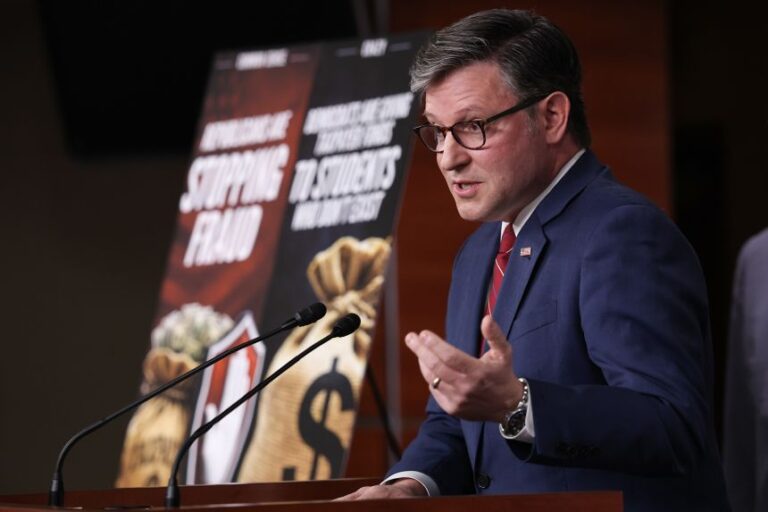
“Some of these efforts are so diabolical and so far upstream it is impossible to prove,” House Speaker Mike Johnson told CNN’s Manu Raju on Monday. “But think everybody knows instinctively something is wrong here.”
(Johnson has previously made similar comments about the prevalence of undocumented immigrants voting, saying in 2024, “We all know intuitively that a lot of illegals are voting in federal elections, but it’s not been something that is easily provable.” There is no evidence of significant undocumented immigrant voting.)
Raju on Tuesday then pressed Johnson’s No. 2, House Majority Leader Steve Scalise, about the lack of evidence.
Scalise responded: “Whether you can prove fraud or not, it does undermine integrity in the vote.”
Read more NASA reveals Artemis III crew that will take the next big step on its journey back to the moon
It’s certainly true that someone is undermining the integrity of the vote.