 By admin
For decades after serving in the US Air Force, Dennis suffered from sporadic back pain, which he believes stemmed from frequently moving heavy equipment during overseas tours.
But when the pain became chronic about two years ago, his mental health also began to suffer – especially as he had to limit his activities, including sports. His anxiety only grew after it took him a few months to schedule an appointment with a psychologist at his local Veterans Affairs facility.
“It was just really tough to get in,” said Dennis, who asked CNN not to use his last name to protect his privacy. “With these wait times, it’s like, ‘Crap.’ Disappointing is the best word to describe it.”
Dennis’ experience appears to be commonplace, according to data the VA publicly posts on its Access to Care website. The site provides extensive wait time information by specialty – including mental health – at VA facilities across the country.
But just how long veterans seeking mental healthcare for the first time actually have to wait to see a provider is anything but clear. The data posted on the Access to Care website paints a very different picture than the one VA Secretary Doug Collins has laid out publicly and for lawmakers on Capitol Hill.
Improving veterans’ access to mental health services has long been a concern for the VA through multiple administrations, especially as many veterans suffer from anxiety, depression and other conditions once they end their military service. In the Trump administration, some veterans have continued to complain to their Congress members and some advocacy groups about long waits to see a mental health provider.
So CNN delved into the data. We crunched the numbers for nearly all of July and found that veterans across the nation frequently have to wait weeks – or even months – for initial mental health appointments at their local medical centers.
Our analysis shows typical wait times at 541 VA facilities, or two-thirds of those that reported data during that period, exceeded the agency’s own target of 20 days to get an initial mental health appointment. CNN tracked the daily average wait times at more than 800 locations across the US.
At a handful of VA facilities, waits stretched nearly five or more months. Another 22 facilities reported wait times of more than three months.
These findings echoed a similar analysis by Common Defense, a progressive veterans’ advocacy group, that also found that a majority of VA facilities missed the agency’s 20-day target in May and June. The group and Vet Voice Foundation, another organization that’s been critical of President Donald Trump’s VA, have fielded complaints about wait times from veterans.
But the VA flat-out denies there’s a problem.
VA Secretary Collins says it only takes 15 days, on average, to see a provider for a first-time mental health appointment.
Asked for more information behind the 15-day figure, the agency told CNN in a statement that it is the wait time for new patients in a “combined” mental health category.
That includes not just individual therapy appointments posted on the VA’s Access to Care site but also dozens of other kinds of appointments such as group sessions and residential treatment. The VA would not provide the underlying data or details about its methodology.
The VA contends that studies analyzing its public data would be incorrect and incomplete for several reasons, including that a few patients with long wait times skew the average and that it doesn’t reflect when appointments are sometimes moved earlier.
The site tells users that wait times can fluctuate greatly – even day by day – and that the best way to know when the next appointment is available is to call their local facility or use the online appointment tool. The agency also noted that new patients make up roughly 10% of total mental health appointments – and that wait times for established patients are generally shorter.
But for many veterans and their advocates, something doesn’t add up. Critics say Collins is cherry-picking data and that the varying figures and methodologies create confusion.
“This creates a significant gap between what the secretary tells Congress and the public and what veterans say they’re actually living through,” a House Democratic staffer who works on veterans’ issues told CNN, on the condition that they remain anonymous.
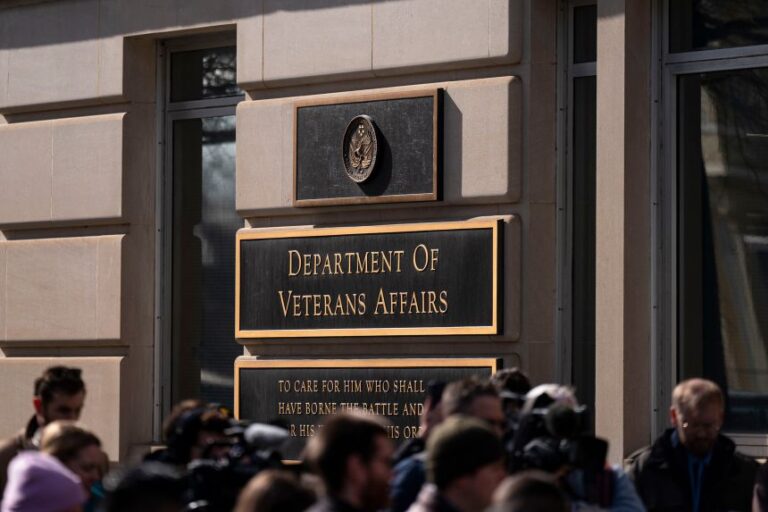
Moreover, critics say it’s hard to square Collins’ rosy picture with what the agency’s watchdog deems is an ongoing “severe” shortage of mental health providers in the VA system – which can make it all the more difficult for veterans in need to get timely care.
For Dennis, trying to get an appointment was frustrating, though he’s happy with his psychologist at the VA.
His initial screening scheduled for earlier this year was canceled by the provider at the last minute as he was on his way to the appointment. Ultimately, he wasn’t screened until several months later. It then took about another month for him to meet with a psychologist for the first time.
“It takes quite a bit of reflection and courage to admit you need help,” Dennis said. “By the appointment being delayed, I couldn’t be helped sooner. My mental state probably declined a little bit more.”
The demand for care is great. Just over 2 million veterans received mental health services – either through individual or group therapy from a professional – within the VA in fiscal year 2024, according to an October report from the agency.
And more than 17 veterans a day died by suicide in 2023, on average.
“These folks go through some of the most dangerous and damaging experiences that anybody can be sent to,” said Alex Rich, data director for Common Defense. “So when they finally come forward and ask for help, to have these kinds of wait times put in front of them is just incredibly depressing and difficult to explain.”
An important caveat is that under the VA’s policy, veterans having emergency mental health crises can be seen the same day at an agency facility, an emergency room or a private provider.
Also, if the wait time for a mental health appointment at a veteran’s local facility is longer than 20 days, he or she is automatically eligible to go to a private provider. But several studies have found that veterans have better experiences at VA facilities, and advocates of the system have raised red flags about privatizing veterans’ medical care.
The longstanding wait debate
Lengthy wait times for appointments are a feature of the US healthcare system that many Americans have experienced, but the issue is a lightning rod for the VA.
The focus on the VA stems in part from the fact that, unlike most private health systems, the agency continuously measures and publishes appointment wait times.
Read more John Roberts is trying to send a message on Trump but is largely in lockstep
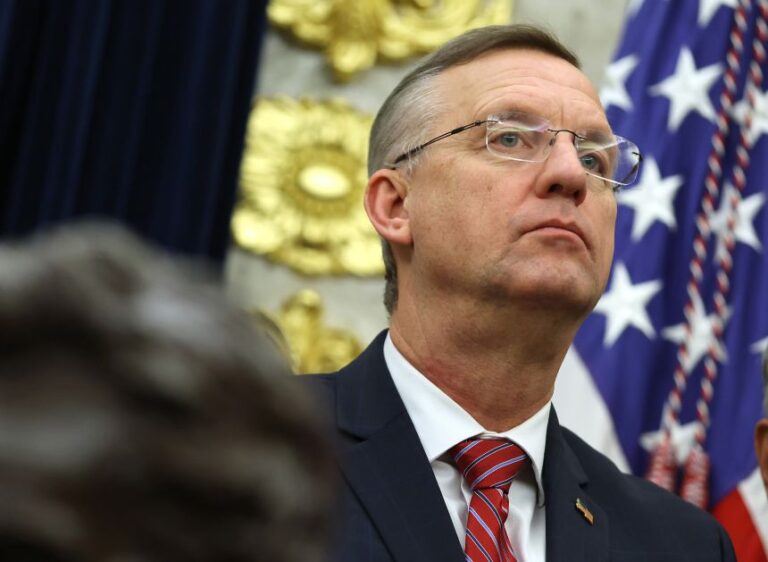
“Nobody else does this,” Collins noted during a Senate hearing in May.
Collins insisted at the hearing that wait times for initial mental health appointments during the second Trump administration have declined.
From January to April, the VA says wait times for new patients seeking the broader array of mental health appointments dropped agencywide by 2.8 days to an average of about 15 days, which is within the agency’s target window.
According to the data on the VA’s Access to Care website, however, the typical wait time for just individual therapy appointments in July was more than 27, according to CNN’s analysis. (Because CNN only had access to VA’s public data, we looked at the median wait time nationwide, which means half of the daily average wait times reported by facilities during the period were longer and half were shorter.)
Democrats say Collins and his aides have not provided the underlying data they used to arrive at their numbers despite repeated requests. They have lambasted the secretary over the issue.
Sen. Patty Murray said during the May hearing that she heard from veterans in her home state that wait times could be up to 90 days for behavioral health care, which includes treatment for mental illness and substance abuse. The Washington state Democrat called that “unacceptable.”
Congressional staffers told CNN that during the Biden administration, lawmakers would often get briefings on VA wait times, which would come in the form of spreadsheets and slide presentations. That changed toward the end of the Biden era, they said.
“We don’t get those anymore,” one staffer said. “We’ve been begging them.”
Mounting frustration and anxiety
Ruth, a Marine veteran who has been treated for PTSD and depression at a VA facility in the eastern US, had been seeing a psychiatrist she liked every two months.
But one day earlier this year – shortly before a scheduled appointment – she was told the doctor had left the VA, and she would have to reschedule. She said she could not get on a new provider’s calendar for another two months, forcing her to go about four months without care and leaving her on edge, worried that no one was monitoring her and that the new doctor might not be a good fit.
“If I’d had a mental health crisis, I’d have been in bad shape,” said Ruth, who asked CNN to use a pseudonym to protect her privacy. “Who is getting these magical 15-day appointments?”
What’s more, her new provider is a man. She would prefer to be seen by a female doctor but was told the facility didn’t know when it could accommodate that request.
Martha Kinney also said her experience was frustrating. A 28-year veteran of the Army and Army Reserve, Kinney said she applied for mental health services at the VA’s Central Western Massachusetts facility in Leeds in late July last year, seeking help to deal with anxiety issues tied to her service. Several months went by with no word from the VA, she said.
Then in late May of this year, Kinney reached out to the VA to follow up. The person who did her initial screening called her to apologize, telling her there was no record of her intake and that the notes from her July 2025 evaluation had not been entered into the system, according to Kinney.
“It really irritates me,” Kinney told CNN. “It angers me that we don’t have a better system.”
She was finally able to set an appointment for mid-June. What bothers her is that there are other veterans “with far greater needs than me,” who could be going through the same frustrations, she said.
“That’s unconscionable,” Kinney said.
Neither VA’s headquarters nor the Massachusetts facility responded to requests for comment on Kinney’s story.
Fewer providers
The VA has been contending with a shortage of mental health professionals for at least the last several years. Psychology was the clinical occupation most frequently reported to be in severe shortage, with 57% of facilities designating it as such in fiscal year 2025, according to the agency’s from August.
Psychiatry was second with severe shortages reported at 55% of facilities. Both have been among the top 5 areas with the highest clinical shortage levels since fiscal year 2018, the report found.
At the same time, demand for care is soaring. The number of veterans who received mental health care directly from the VA jumped 78% between fiscal years 2009 and 2024, according to a separate agency report from October. The VA expects inpatient and outpatient mental health care to grow by another 38% between fiscal years 2023 and 2033.
“The rapid growth over the past decade in the number of Veterans seeking mental health treatment in VHA has posed staffing challenges,” the report said.
Meanwhile, the VA slashed more than 2,300 unfilled mental health-related positions as part of a larger downsizing between November and January. That included the elimination of 425 unfilled psychologist slots, according to VA data shared with the House Veterans Affairs Committee earlier this year.
And tens of thousands of VA staffers resigned, took buyouts or accepted early retirement and other incentives amid the Trump administration’s revamping of the federal government, which includes a hiring freeze that limits the number of replacements who can be brought on.
The VA said in a statement to CNN that VA healthcare facilities have continued to hire for any jobs they need to fill.
“Over decades, the Veterans Health Administration created positions based on their needs at the time. Those needs have changed over the years,” the VA said. “In 2025, we told VHA leaders to keep all of positions they need and eliminate any unfilled positions that they don’t need.”
But Rich, from Common Defense, said he’s baffled that the VA would cut mental health positions at such a time of understaffing and need.
“I can’t, for the life of me, understand why Secretary Collins, or anybody else, would try to nickel and dime those veterans’ care,” he said.
Methodology | CNN retrieved average wait time data reported on the Veterans Affairs’ Access to Care website daily from July 1 through July 26, 2026, by facility. Of 958 VA facilities, 802 reported average wait times for individual mental health appointments for new patients at least once during that period.
Read more ‘He’s irreplaceable’: How Lindsey Graham made an indelible mark on foreign policy and Trump