 By admin
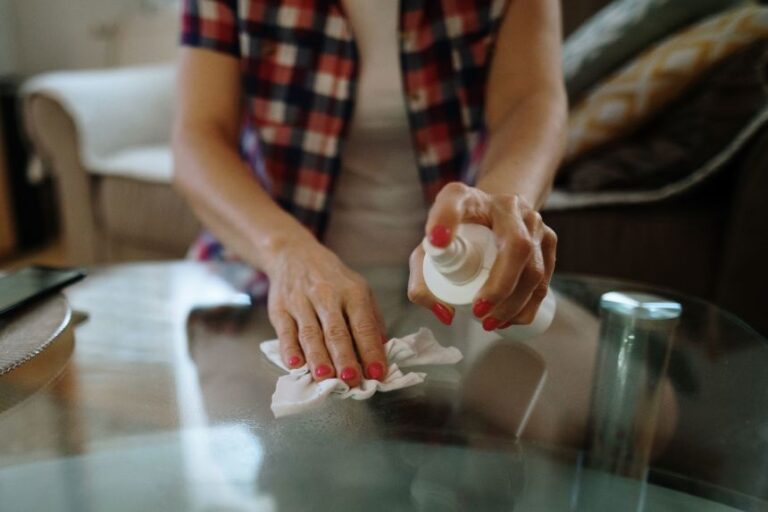
Inside the Trump administration’s Environmental Protection Agency, scientists say they’re under pressure to alter safety reviews of chemicals commonly found in consumer products like household cleaners and cosmetics to make risks to human health and the environment disappear on paper.
Read more Nithya Raman narrowly leads Spencer Pratt in race for second spot in Los Angeles mayoral race
Multiple current and former career employees at the EPA’s Office of Chemical Safety and Pollution Prevention recounted being pushed by supervisors to downplay the potential risk of chemicals that are already used in products on shelves.
With President Donald Trump’s crusade against diversity, equity and inclusion initiatives, scientists are also being told to stop considering the impact a chemical may have on specific racial groups, according to the employees, who spoke on the condition that they remain anonymous for fear of retribution.
While the EPA told CNN it wants testing that reflects real-world exposure, some veteran employees say they have been pressed to make chemicals appear safe by coming up with test parameters that aren’t realistic.
“What we’ve been told is: ‘Let’s look at alternative scenarios,’” one employee said. If putting two hands in a chemical shows risk, this person said a supervisor might ask, “What if you dip one hand? What if you dip one finger?” in search of the smallest amount of contact needed to call it safe.
“We are considering scenarios we don’t have any basis for,” the employee said.
The EPA’s chemical safety office conducts health risk assessments for a slew of chemicals because of concerns over potential impacts on human health, such as cancer, endocrine disruption, birth defects and reproductive harm.
The concerns from scientists about their chemical review process come as Trump’s EPA has rolled back environmental and climate regulations and his administration has installed former chemical industry insiders and lobbyists to lead key agency offices overseeing chemical regulation.
The current and former employees who spoke to CNN said finding risks during chemical safety reviews can lead to regulation. Conversely, when risk disappears, so does the need to regulate, they say.
“Every decision is going to the political level, down to the smallest detail. That is abnormal,” a scientist who recently left the agency’s chemical division told CNN.
Scientists say they no longer feel safe pushing back, pointing to termination of federal union contracts and the suspension of employees who signed dissent letters.
“You have to follow instructions,” one career employee said. “Otherwise, that’s insubordination.”
In a statement to CNN, the EPA defended its science.
“EPA is implementing the President’s Executive Order on Restoring Gold Standard Science across its risk evaluations,” the statement said.
“In practice, that means using realistic exposure scenarios rather than defaulting to compounded worst-case assumptions, being transparent about the assumptions and uncertainties in every analysis, and ensuring conclusions are testable and reproducible,” the agency said in an email to CNN.
The agency also added that its “top priority is protecting the health of all Americans, and every chemical safety decision the agency makes is grounded in gold-standard science: peer-reviewed literature, validated test methods, real-world monitoring data, and fit-for-purpose exposure and fate modeling.”
But career employees described a growing gap between career staff and the Trump administration’s political appointees over how health dangers should be defined. The appointees, they say, want to narrow what counts as risk.
Some senior scientists have been reassigned to administrative roles where they no longer oversee important health risk assessments, several sources said. Less experienced, newer staff who lack institutional knowledge are being put into those roles instead, and scientists are feeling forced to defend the science they’re using to superiors, they added.
In previous administrations, “there was a level of respect and trust that the scientists were relying on the best science,” the scientist who recently left the agency said.
But now, “subject-matter experts having to explain to political appointees why they chose a particular science approach, being scrutinized for what they did, and if asked to think about it differently there’s little you can do to push back if you’re meeting with the top person.”
Changing risk assessments
Thousands of chemicals in everyday products currently on the market have never been fully assessed for their impact on human health or the environment.
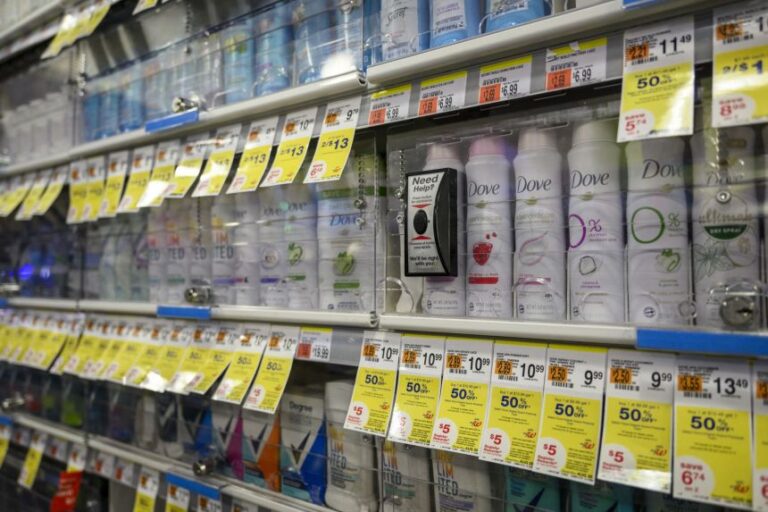
For example, one chemical being reviewed, a silicon compound known as D4, is used in products including deodorant, hair spray and cosmetics. pounds of the solvent is produced in the US every year, but it has been banned by the European Union because it has been shown to be toxic and linked to infertility.
When the nation’sfirstchemical safety law, the Toxic Substances Control Act, was adopted in 1976, some 62,000 chemicals were already in production or on the market and were grandfathered in with no requirement for EPA to conduct a health risk review.
Many remain in consumer products today.
Environmental advocates say that’s because the original law lacked teeth; it was nearly impossible for the EPA to effectively review already existing chemicals.
In 2016, the law was updated, requiring the EPA to review existing chemicals on the market to assess the potential human health risks.
Since early this year, the EPA has been under court-ordered deadlines to complete risk assessments for certain high-priority chemicals after environmental groups and the chemical industry sued the agency, prompting efforts to speed up the process.
The EPA’s Office of Chemical Safety and Pollution Prevention is tasked, among other things, with assessing and regulating these chemicals.
The agency proposed a new rule last year with respect to the Toxic Substances Control Act that streamlines the review process, which advocates said would weaken oversight, shorten reviews and discount real-world exposures that threaten communities across the country.
Now, pressure is being applied at multiple points in the assessment process, three of the sources said. They describe a pattern of internal meetings rapidly convened by superiors at the first sign of potential health risks for a chemical in the early stages of scientists’ review process, where scientists feel forced to defend preliminary findings before the analysis is complete. Some of these meetings are attended by political appointees the administration has placed in leadership roles in the chemical assessment office.
“They don’t even let you finish” the risk analysis, one EPA staffer said. “It’s like you’ve got to brief immediately on the risk that you found.”
“It’s more like, ‘How can we fix this? What can we do to make this risk go away?’” the staffer said.
A second career employee echoed that experience: “Basically, the moment you calculate risk, there’s some sort of meeting and they push you to figure out how we can make the risk disappear .”
EPA employees alsotold CNN that agency leadership is effectively ignoring how certain racial groups could be more susceptible to harm from a particular chemical because of higher rates of underlying health conditions or physiological or genetic factors.
They said that type of analysis was deemed “DEI” and removed from assessments, a characterization scientists dispute, saying it reflects longstanding scientific methods for evaluating risk across populations.
“You can’t put any kind of racial comments in there,” one of the career EPA employees said. “Which is ridiculous because we know certain races have predispositions to certain diseases.” That predisposition may make them more sensitive to certain chemicals.
Read more Platner holds town hall in Portland as he looks to steady Senate campaign
Michal Freedhoff, who was assistant administrator for the EPA’s chemical safety office under then-President Joe Biden and helped lead negotiations to revise the chemical safety law in 2016, told CNN: “The law explicitly requires an assessment of risk to potentially exposed or susceptible subpopulations – if there was direction to categorically ignore that part of the law for some or all subpopulations, that could leave people less safe and create legal vulnerabilities for the agency. ”
The EPA did not comment when asked about allegations of ignoring racial considerations.
A culture change
Among the top officials fueling these changes, sources said, are several former chemical industry lobbyists who run the offices that regulate and conduct safety reviews of existing chemicals and new ones coming on the market.
One EPA employee described the political appointees as “putting their thumbs on the scales” for the reviews in an industry friendly direction.
For example, Nancy Beck, now the principal deputy assistant administrator, previously held senior positions at the American Chemistry Council, a lobbying group.
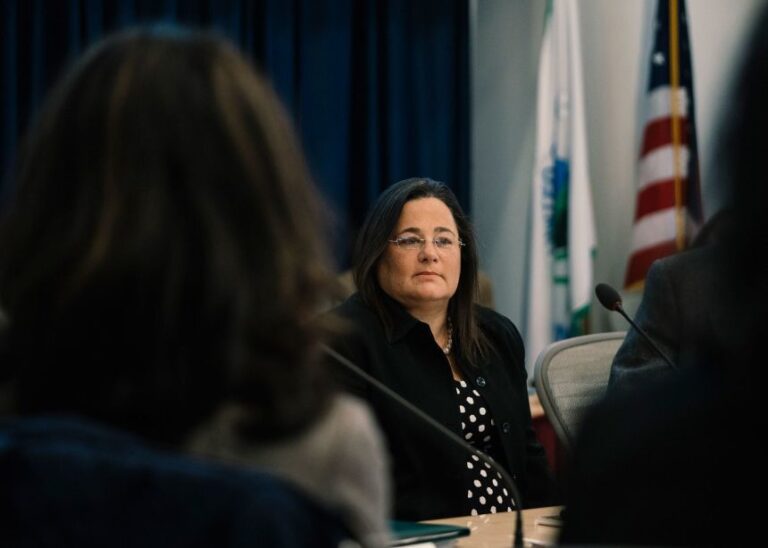
According to the source, Beck was the driving force behind revising a risk assessment of formaldehyde, a known carcinogen.
EPA’s human health risk assessment of the chemical “was finalized in December 2024 before she came, and she specifically reopened it,” the source said.
Once the assessment was reopened, the Trump EPA proposed late last year nearly doubling what’s considered safe exposure levels of formaldehyde – a big win for the chemical industry. Beck’s name appears in the EPA’s notice seeking public input.
The agency has yet to issue final regulations.
Beck did not respond to CNN’s email asking her directly about the formaldehyde issue.
“Nancy Beck is in the weeds. She reads every word. Looks at every science research. And so there is absolutely political pressure, because she’s in there looking at everything,” the employee who recently left the agency’s chemical division added.
“The level of scrutiny of scientists’ work and the granular details is unprecedented,” the person said.
The EPA did not comment when asked about allegations of political interference.
Several employees pointed to a February training session as evidence of changes to the risk assessment process. A video of that session was obtained by Public Employees for Environmental Responsibility and shared with CNN. PEER is a nonprofit organization that advocates for the rights of public employees and whistleblowers on environmental issues.
The training was intended to be a reset for how the chemical safety division does its work, and a primer for newly reassigned EPA scientists following the Trump administration’s reorganization.
A human health risk assessment for a chemical is supposed to ask how much harm a chemical could cause, under what circumstances, and what risk management should be done.
In the training, staff were told: “Risk is not a number; risk assessment is a process. It’s a narrative,” which those who spoke to CNN believed was another attempt to find “more wiggle room,” and to “explain away any risk.”
One career employee told CNN they felt some remarks amounted “explicit instruction to make your chemical pass.”
“I’ve never seen us try to work backward to a preordained outcome,” the person said. “If anything, that’s what they’re doing now. They want the outcome to be that the chemical is safe.”
In a statement, the EPA pushed back on the staffers’ interpretation of what was saidin the training, saying they lacked “technical context.”
“Any suggestion that EPA is engineering assessments toward predetermined outcomes is false,” the EPA said. Thestatements about “refining” risk assumptions and portraying risk as “a narrative” are “standard risk-assessment practice, not a departure from it,” the EPA said.
Even Freedhoff, the Biden EPA official who criticized some risk assessment changes, viewed the video and said she did not think the session on its face instructs scientists to alter their conclusions.
But EPA staff who spoke to CNN say the shift in the agency’s culture goes beyond the video. Kyla Bennett of PEER said she worries the changes are significant and could extend beyond the Trump administration.
“The culture within these agencies outlives the people,” she said. “That culture will far outlast this administration.”
Further move from independence
In a memo last month, the EPA also said it would move away from relying on a standalone scientific program within the agency, Integrated Risk Information System, or IRIS, that has traditionally been used to evaluate whether a chemical is a toxin.
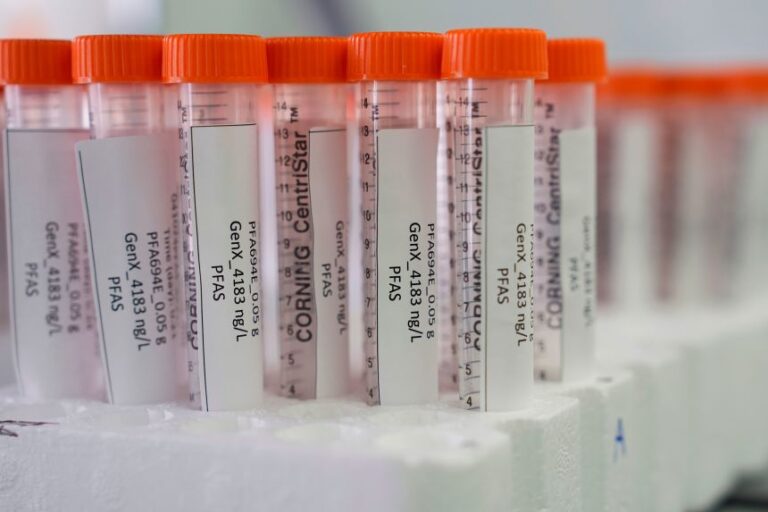
The evaluations done by scientists within IRIS have, for decades, been used to underpin chemical risk assessments.
In its memo, the EPA says it will instead allow individual program offices, which are run by political appointees, to make scientific determinations about chemical hazard.
The memo, seen by CNN, also raises questions about past assessments completed under the old system, saying EPA departments that used IRIS as part of regulatory decision making “should review how that information was employed” and “determine if any updates or changes are warranted.”
Replacing IRIS’s scientific hazard assessments with analyses that weigh economic and other factors could make the science more vulnerable to political influence, one EPA staffer told CNN.
Since Trump took office, the EPA has made a slew of moves seen as industry friendly.
The agency recently announced it would “rescind and restart” regulations on four PFAS – chemicals found in drinking water and in common nonstick, stain-resistant and water-repellent products.
These chemicals have been linked, to varying degrees, to cancer, obesity, thyroid disease, high cholesterol, decreased fertility, liver damage, hormone disruption, and damage to the immune system.
There are nearly a dozen more chemicals to be evaluated by February 2027, and thousands more in the future.
With changes in how the EPA is carrying out assessments, one scientist warned there could be an “explosion of bad health impacts” years from now.
Read more The ultimate hostage negotiation: Why Iran talks are deadlocked
CNN’s Sandee LaMotte contributed to this story.