 By admin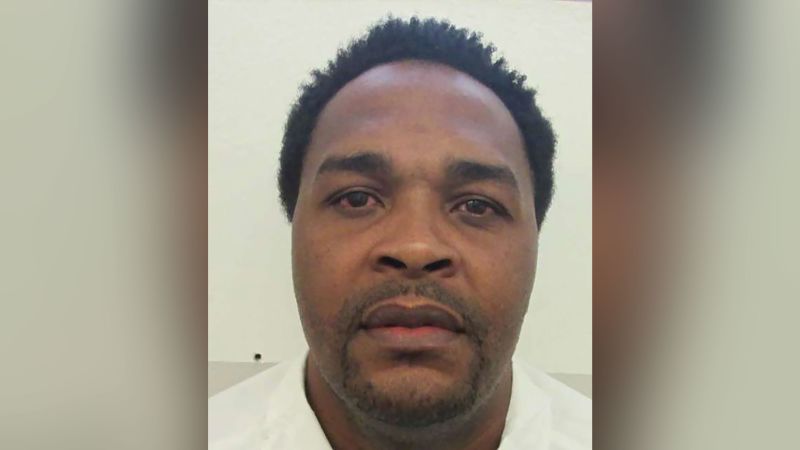
- The Supreme Court blocked Alabama from executing Jeffery Lee using nitrogen hypoxia after a lower court ruled the method cruel and unusual.
- Three conservative justices dissented, and Alabama’s governor said she remains committed to ensuring justice is served for Lee’s victims.
- Nitrogen hypoxia has been used to execute seven people in Alabama despite expert criticism that it causes suffocating sensations.
The Supreme Court on Thursday blocked Alabama from executing a man using nitrogen hypoxia, a relatively new method of carrying out the death penalty that experts say causes “air hunger” and that a federal court ruled violates the Eighth Amendment’s ban on cruel and unusual punishment.
As is often the case in emergency death penalty appeals, the majority did not explain its reasoning. Three conservative justices – Clarence Thomas, Samuel Alito and Neil Gorsuch – said they would have granted Alabama’s request and allowed the execution to take place. They also did not explain their reasoning.
Jeffery Lee was convicted of capital murder for killing two people, Jimmy Ellis and Elaine Thompson, while robbing a pawnshop in 1998 in Orrville, Alabama. A jury recommended life imprisonment, but the trial court overruled that decision and sentenced Lee to death.
The question for the Supreme Court was whether to throw out a decision from a federal district court this week that barred the state from executing Lee with nitrogen gas. That relatively new method is partly a response to pharmaceutical companies declining to allow their drugs to be used in lethal injections. Alabama has executed seven people using nitrogen-hypoxia.
But the method has drawn sharp criticism, and a federal appeals court in Atlanta concluded that the protocol presented “a substantial risk of serious harm — severe pain over and above death itself.” After that, a lower federal court concluded that the state could feasibly execute Lee with a firing squad, instead, and that method would significantly reduce the risk of harm.
The court’s ruling does not foreclose the possibility that Alabama could later attempt to execute Lee by firing squad, a method he had requested.
Alabama Republican Gov. Kay Ivey said in a statement following the ruling that while she was disappointed with the decision, “I remain committed to ensuring that justice is ultimately served for his victims.”
The Supreme Court has previously considered emergency appeals involving nitrogen hypoxia and allowed those executions to go forward. In October, the court denied a request from Anthony Boyd to halt his execution in Alabama without explanation. The court’s three liberals issued a striking dissent.
Read more Kennedy Center board plans to appeal judge’s ruling over removing Trump’s name
Justice Sonia Sotomayor encouraged Americans to start a stopwatch and reflect as the seconds turn into minutes.
“Now imagine for that entire time, you are suffocating,” Sotomayor , which was joined by Justices Elena Kagan and Ketanji Brown Jackson. “You want to breathe; you have to breathe. But you are strapped to a gurney with a mask on your face pumping your lungs with nitrogen gas.”
“Your mind knows that the gas will kill you,” she continued. “But your body keeps telling you to breathe.”
The Supreme Court often sides with the state in last-minute death penalty cases on the emergency docket. But the legal posture of Lee’s case was different because, unlike in most emergency matters, a federal district court had entered a ruling on the merits. Steve Vladeck, a professor at Georgetown University Law Center and a CNN Supreme Court analyst, said the court’s decision would have amounted to an expansion of its emergency docket.
Alabama’s appeal, Vladeck wrote in a brief to the Supreme Court, should have been dealt with on its regular, merits docket on which the justices receive more extensive briefing and hear oral argument if the case is granted.
“This court has numerous options at its disposal if it wishes to take up Alabama’s appeal on the merits,” Vladeck wrote. But dealing with the case on the emergency docket after a federal court ruled on the merits “isn’t — and shouldn’t be — one of them.”
The judge in Lee’s case sentenced him to death despite a jury’s recommendation of a life sentence. That judicial override procedure was repealed by Alabama in 2017, but the change in policy did not apply retroactively.
Read more Group of Epstein survivors announce opposition to Todd Blanche’s attorney general nomination
This story has been updated with additional details.