 By admin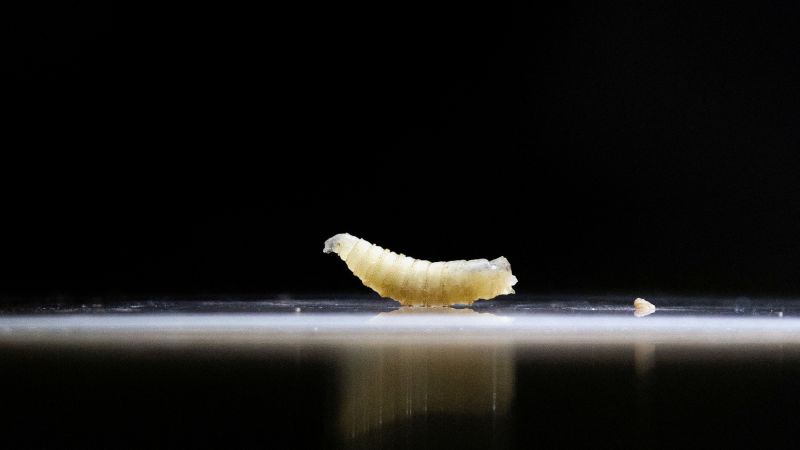
- A flesh-eating parasitic fly has been detected in a calf in South Texas, the USDA said Wednesday.
- The New World screwworm could cost the economy billions and threaten livestock across the Southwest.
- The US eradicated the parasite decades ago using sterile fly releases, but cases have been spreading in Central and South America.
A case of flesh-eating New World screwworm has been detected in South Texas, the US Department of Agriculture said Wednesday. It is the first time this parasitic fly – whose larvae feed exclusively on the tissue of warm-blooded animals – has been detected in US livestock in decades.
Read more Iran war powers rebuke shows how Trump is increasingly boxed in
Although it is not a food safety issue, an infestation can be a food production issue. It could cost the economy billions and raise the price of beef a time when Americans are already paying record high prices.
The USDA says its National Veterinary Services Laboratories in Ames, Iowa, tested a sample from the case in a 3-week-old calf in La Pryor, Texas, and confirmed Wednesday that it was New World screwworm. The agency has activated personnel on the ground in Texas to contain and eradicate the parasite, including a 20-kilometer infested zone and implementation of quarantines, movement controls and surveillance in the area. It’s also expediting targeted release of sterile flies, which are used to overwhelm fertile flies in the area to limit spread.
“If we all work together and follow the animal treatment protocols and movement restriction guidance, there is no reason to believe that this incursion will result in an establishment of the pest in our country,” USDA Secretary Brooke Rollins said during a briefing Wednesday night.
The New World screwworm had been declared eradicated in the US decades ago, thanks to efforts such as the breeding of sterile flies, awareness campaigns and efforts to control the pest in foreign countries.But there have been a surge of cases in South America that public health experts and the USDA have been watching closely.
The US has a plan to breed millions of flies and drop them from planes. Here’s why
Screwworm is not a contagious disease that spreads from animal to animal. Rather, female adult flies lay eggs in fresh wounds of warm-blooded animals. The larvae feed on the host and can damage vital organs or cause serious bacterial infections. Cases can be severe and can even cause the host animal to die.
The parasite is also a threat to wildlife and pets. Vets in Texas, Arizona and New Mexico have been told to be on the lookout for new infections. On Wednesday, Rollins urged pet owners to keep a close watch for signs of discomfort, open wounds or larvae or eggs near body openings.
Human cases are rare but can be fatal. The last person in the US to get sick with a screwworm infection was a travel-related case in Maryland in August. They made a full recovery.
Rollins said Tuesday that the current threat to human health in the US is extremely low, and the screwworm does not pose a food safety risk, but there is “no doubt that this is a very, very serious threat to our livestock.”
People who are at higher risk for catching screwworm are those who work with livestock or other warm-blooded animals in areas where the flies are present and those who spend a lot of time outdoors, especially if they sleep outside. People who have medical conditions that cause bleeding or open sores can also be vulnerable to infection. Any open wound, even a small break in the skin like a scratch or an insect bite, can attract these flies, according to the US Centers for Disease Control and Prevention.
In August, the US Department of Health and Human Services began to allow emergency use of drugs to treat or prevent infestations in animals. A shipment of that treatment is on its way to South Texas, Rollins said Wednesday.
Read more Foodborne illnesses kill millions. Make these changes to reduce your risk
The USDA says it has created new monitoring, testing and quarantine protocolsin response to the outbreakspreading in Central and South America. In May 2025, the agency suspended the import of live animals through US ports of entry along the southern border, Rollins said.
The USDA posted dogs at the US-Mexico border that can sniff out New World screwworm, and it has sent teams to Mexico and Panama to help boost the production of sterile flies.
The US has also set aside $750 million to build a facility in Texas that will produce hundreds of millions of sterile flies each week. That facility is set to open next year.
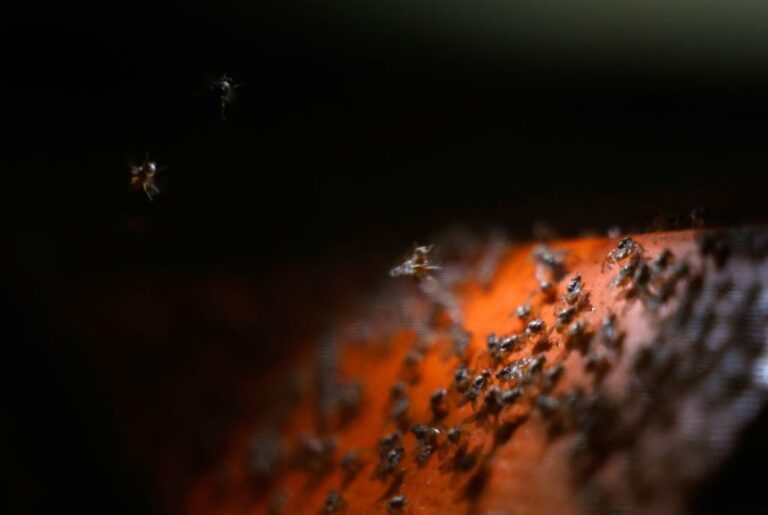
A screwworm infestation in the US could be financially devastating, experts say. The country’s worst outbreak happened in 1972, when the USDA estimated that there were 90,000 cases, and another outbreak of that magnitude could cost the Southwest alone more than $3 billion, according to the Federal Reserve Bank of Dallas.
Max Scott, an entomology and plant pathologist who has genetically modified screwworm so the flies don’t reproduce, said outbreaks are typically controlled by rearing flies in a factory and sterilizing the bugs by exposing them to gamma rays when they are at the pupal stage. Scientists then release enough sterile flies to overwhelm the local fertile fly population. When the fertile female mates with a sterile male, they don’t produce offspring.
“The USDA, over a 50-year period, succeeded in eradicating this fly all the way down to the Panama-Colombia border,” said Scott, who is a professor at North Carolina State University. “It was a lot of effort by a lot of people, but it’s largely unknown, unfortunately, because it was a big success story. They kept it there and away from here for 20 years, but the barrier failed a few years ago, and flies rapidly moved through Central America until where we are today.”
Scott said it was probably a “combination of factors” that caused the barrier to fail and the flies to spread.
In hindsight, he said, the strain of infertile males used recently was “probably not as good,” so the female flies were no longer choosing to mate with the less-fit sterile males.
A recent surge of migrants across the Panama-Colombia border also included animals that may have been infected, he said. The fly doesn’t travel big distances and moves more frequently on infested livestock.
Rollins has called the New World screwworm response an “all of Trump administration effort.”
There’s nothing to celebrate in Wednesday’s announcement, she said, but she commended teams who had kept the fly “out of Texas a year longer, almost, than what was thought, which has allowed us to prepare for today.”
Read more Is Bill Pulte Trump’s least-experienced Cabinet pick? He’s got lots of competition