 By admin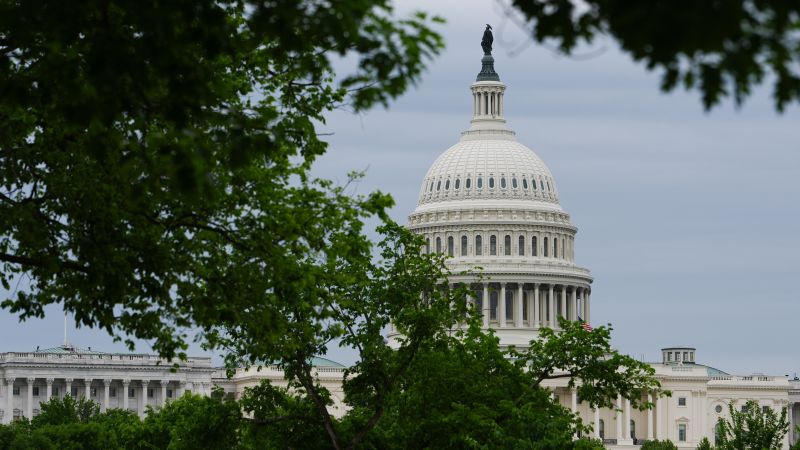
After the White House Correspondents’ Dinner several years ago, a congressman asked a young female staffer from another office to have a threesome. A few months later, he pulled the staffer onto his lap and tried to kiss her.
Read more Restrictions on prediction market bets by US troops part of draft defense bill
In 2023, a male chief of staff messaged a former congressional intern looking for a job and propositioned her sexually, writing that he would “own” her and offering to Venmo her money if she complied.
A member of Congress texted a senior leadership staffer in 2017 asking the color of her underwear while she was in his sight line.
The three women who shared these experiences of sexual harassment with CNN chose not to come forward to the House Ethics Committee or the myriad other offices that handle misconduct on Capitol Hill, concerned that they would not be believed and their careers could be damaged.
CNN spoke with more than a dozen current and former female staffers who say they’ve faced harassment from House members or senior congressional staff, nearly all of whom chose not to report the incidents and still fear publicly naming their harassers. Their stories — told under the condition of anonymity over concerns of retribution and corroborated by CNN to the extent possible through interviews, text messages, photo evidence and settlement documents — reveal how women working on Capitol Hill often face structural and cultural shortcomings in Congress that disincentivize staffers from reporting misconduct.
The female staffers told CNN they often felt discouraged about making a complaint, fearful they would get blacklisted from future jobs in Congress and that their anonymity could not be protected. Those who do come forward to report harassment have to navigate a convoluted labyrinth of offices that help with workplace complaints — even though the most serious accountability for members lies with the Ethics Committee, a lengthy and ill-defined process the staffers said often leads to dead ends.
“We’re not silent because the harm wasn’t serious enough — we’re silent because we know we work in an environment where silence feels safer than speaking,” said one female staffer who faced harassment from a supervisor.
“The risk of professional exile – be it from being labeled a ‘problem staffer’ or cast as the center of drama — has always felt more immediate and certain than the possibility of accountability,” she said.
‘Way short of accountability’
Nearly a decade ago, Congress passed reforms intended to help victims of abuse and hold harassers accountable amid the #MeToo movement. But the recent resignations of Reps. Eric Swalwell and Tony Gonzales amid allegations of sexual misconduct with staffers offered a stark reality check on what remains a pervasive problem in Washington.
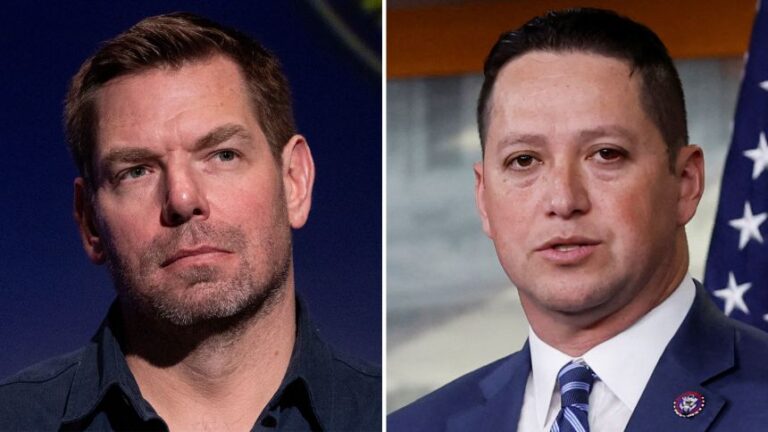
The House Ethics Committee, which is made up of 10 sitting members, is just one path a victim can choose, though staffers say the process can drag on for months or even years.
Defenders of the Ethics Committee process, however, say sufficient time and discretion are necessary to provide members with due process in addressing serious allegations.
Staffers can also go to the Office of Congressional Workplace Rights, the Office of Congressional Conduct, the Office of Employee Advocacy and the Office of Employee Assistance, which offer resources including counseling, potential legal representation or investigations into allegations.
But even those offices, which were revamped as part of the 2018 overhaul, present their own shortcomings: a lengthy list of deadlines, dates and hearings that can end at times with victims signing nondisclosure agreements about their allegations. The alphabet soup of options is often a barrier to coming forward, the women who spoke to CNN said.
“If something, God forbid, were to happen, they have a litany of doors to knock on — but that is not OK. You want to have a one-stop shop,” said Florida Republican Rep. Kat Cammack, who is co-leading a new, bipartisan task force to address sexual harassment reporting in Congress.
One former congressional staffer told CNN that she sought therapy available on Capitol Hill after she was harassed by her chief of staff. She was told to document any instances of harassment if she wanted to later report the case, but the counselor was clear about the hurdles, implying that the system, as structured, was rarely successful in providing accountability and came at a great personal and professional cost.
Ultimately, she decided it was not worth it to pursue further action, eventually leaving Capitol Hill. “It helped me process everything, but it stopped way short of accountability,” she said.
Another young female staffer who considered reporting mistreatment against a former manager said she sought legal advice to learn about her rights, but she ultimately did not lodge a complaint because she didn’t feel like her anonymity would be protected. When she called the House Ethics Committee, they asked for her name and the office she worked for, which made her feel uncomfortable and contributed to her decision to ultimately not move forward with the claim.
‘Not worth the trouble’
Many of the women who chose not to report their harassment said they feared being ostracized across the often-interconnected network of Capitol Hill offices.
“The Hill is a very small place, and if you do move forward with a claim, it is incredibly easy to figure out who made that allegation,” said the senior leadership staffer, who detailed to CNN the uncomfortable text messages she received about her underwear from a sitting lawmaker. “If I come forward, do I want that to be my reputation? What are the real consequences aside from a slap on the wrist?”
It was simply “not worth the trouble,” the staffer said.
Instead of going through the official channels available to them, women told CNN they instead often removed themselves from situations that could lead to bad outcomes and relied on an informal whisper network of trusted women to gut check certain members or staffers.
“It’s hard to want to come forward when your chief or your executive director or anybody else who is a senior staff member — they also have the same mindset to protect all the members,” the former staffer who said that a congressman asked her to have a threesome told CNN.
That former staffer recounted the same lawmaker a few months later pulling her onto his lap and trying to kiss her in his private office after he asked for a ride back to the Capitol for late-night votes following a networking meeting over drinks.
Going to the Ethics Committee didn’t even cross her mind, she said, given the lengthy process and that it would become known in her office if she reported the lawmaker.
“Even then, once an investigation is officially opened, it’s just no man’s land,” the former staffer said.
‘The member protection service’
The House Ethics Committee, which can independently launch investigations or receive referrals, recommends sanctions, censures, reprimands or expulsions of members. The committee has regularly investigated allegations of sexual misconduct and issues reports on its findings. But its critics say the panel too often shields fellow members from accountability.
“The Ethics Committee’s historical nickname is the member protection service,” a source with knowledge of the congressional ethics process said. “They’re there to protect the political prerogatives of leadership, and that means vote counts.”
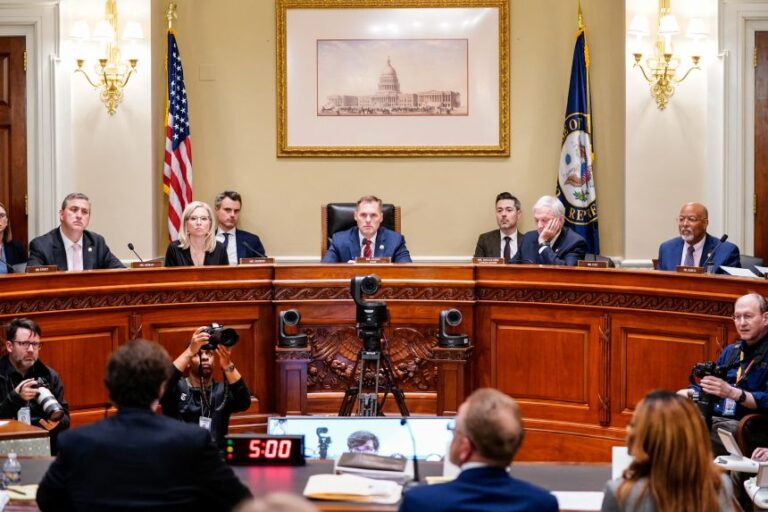
The House Ethics Committee declined to comment. In a statement last month after the Swalwell and Gonzales resignations, the panel said that it has “a long history of investigating allegations of sexual misconduct by Members of the House, ranging from criminal sexual activity to behavior implicating civil employment discrimination laws and more general standards of conduct” and vowed to “prioritize witness confidentiality and safety.”
If staffers don’t want to go to the Ethics Committee, they can instead turn to the Office of Congressional Workplace Rights, formerly the Office of Compliance, which handles employee complaints from discrimination to sexual harassment. That, too, comes with a complicated process and deadline structure, and the office essentially functions as its own court.
In that office, a staffer has to file a complaint within 180 days of alleged misconduct. Once that clock starts, it moves through a process that can include a preliminary review, an administrative hearing, and mediation if any party requests it. There are multiple possible outcomes, including civil litigation, back pay or confidential settlements.
“Through OCWR, a staffer can consult with a Confidential Advisor who can, in a confidential and privileged setting, explain the employee’s rights and protections under the law, the process by which their case would be adjudicated using OCWR’s complaints process, and even discuss the general merits of the employee’s case,” said Nancy Baldino, a spokeswoman for the office.
Congressional staffers can also access lawyers through the Office of Employee Advocacy, an office that was created by the reforms passed in 2018.
Les Alderman, a lawyer who has worked on several cases that have gone through the process, told CNN it requires extensive knowledge, organization and clarity that would be nearly impossible for a staffer to navigate on their own.
Read more Rapid changes in power have become the new normal in American politics. Here’s why
Winsome Packer, who is believed to have received the largest publicly known congressional sexual harassment settlement to date, initially brought her allegations in 2010 through the Office of Compliance, which is now the Office of Congressional Workplace Rights.
After fighting for four years, Packer settled her allegations of multiple instances of sexual harassment against former Democratic Rep. Alcee Hastings for $220,000. As part of that settlement, she agreed to leave her job, according to a CNN review of the documents, and she said she has since been unable to find work in the field.
“I refuse to say that my life is ruined. But basically, I’ve lost my home, I’ve lost the security that I had, I lost my country,” said Packer, who told CNN she no longer lives in the US. “I’ve lost so much. I’ve lost a great deal on my health. And I’m sure if you look into it, many other women have suffered as a consequence of coming forward.”
Hastings denied wrongdoing at the time and died in 2021.
Another woman whose eventual settlement became public, Lauren Greene, initially contacted the Ethics Committee with allegations against former GOP Rep. Blake Farenthold but was referred to the Office of Compliance, where she ultimately reached an $84,000 settlement.
She only took the step of reporting the harassment after being fired from her congressional job, she said — in hindsight, a possible factor in her decision to pursue relief. “I don’t know if I would have gone to that. That’s so intimidating, as a current employee. So, I went as a terminated (employee),” she said.
Farenthold, who died last year, denied some of the allegations against him and resigned from Congress in 2018 while facing an ethics probe.
A ‘dead end’
Women can also take their complaints to the Office of Congressional Conduct, which independently investigates allegations of misconduct and makes referrals to the Ethics Committee.
With no statute of limitations, individuals can bring forward claims to the office at any time. Once moving forward on an allegation, the Office of Congressional Conduct has 89 days to complete an investigation. The office’s board meets monthly to authorize investigations and, when there is evidence of lawmaker wrongdoing, votes on final reports that are eventually publicized.
But the office has several limitations: It also does not have subpoena power or any legal remedies available beyond referrals to the Ethics panel, and cases referred to the committee are often first reviewed by the chairman and ranking member, with most never reaching a full panel investigation.
A spokesperson for the Office of Congressional Conduct declined to comment for this story.
According to a CNN analysis of the office’s publicly available reports since 2009, the Ethics Committee establishes investigative subcommittees to further look into allegations only 13% of the time after it initially receives referrals from the office. More than half of the referred cases end up under the opaque process, known as 18(a), with no timeline where the committee’s chairman and ranking member review them independently.
In the Ethics Committee’s report summarizing its actions in the last Congress, the panel argued that the two paths “differ only in process, not substance,” and said that “Members of the Committee can, and do, attend and participate in voluntary interviews with witnesses in both 18(a) and [investigative subcommittee] investigations.”
One former staffer who filed a harassment complaint against a lawmaker in 2023 recalled to CNN that every step felt like a “dead end.”
She alleged that three years prior in February 2020, as a 22-year-old intern new to Capitol Hill, California Democratic Rep. Jim Costa approached her at a California State Society party and asked her to dance and “shimmy” with him. The next day in the House’s office buildings, the congressman asked whether she had a boyfriend and winked as he said he was single, too, according to a transcript reviewed by CNN of her 2023 interview with investigators in the Office of Congressional Ethics, which is now the Office of Congressional Conduct.
The woman initially filed her complaint under a pseudonym, reporting it several years later when she was a full-time staffer. But after being interviewed in June 2023 by congressional investigators, she did not hear anything further about the probe until the Ethics Committee notified her that the complaint was being dismissed because there was “not enough evidence” against Costa.
The ethics investigation into Costa, first reported by NOTUS, was not previously made public because the Office of Congressional Conduct and the Ethics Committee did not find evidence to substantiate the allegations.
In a statement, to CNN, Costa spokeswoman Lisa Ortiz said the actions of the Ethics Committee and the Office of Congressional Conduct “speak for themselves.”
“Rep. Costa fully cooperated with a review conducted by the Office of Congressional Compliance and the House Committee on Ethics several years ago. The OCC recommended dismissal, and the Ethics Committee unanimously voted to dismiss the matter,” Ortiz said.
The ethics process, the staffer said, was daunting, and she was interviewed without a lawyer or other support.
After her initial interview, the staffer was alarmed when she learned that investigators planned to reach out to others tied to her case to follow-up. She asked the investigators whether she could drop the matter instead.
“I think we need to end this, it’s too many people; I don’t want to continue. I’m really sorry,” the staffer wrote to investigators, who responded that they understood her concerns but also had to complete the investigation, according to emails reviewed by CNN.
‘Just suck it up, bear it’
In 2018, Congress passed reforms that removed the mandatory “cooling-off period,” counseling and mediation requirements under the Congressional Accountability Act before complaints could be filed. It also ended taxpayer-funded settlements.
Those reforms were “a long time coming,” said Greene, the former Farenthold staffer. “But I also think that there’s a long way to go.”
Now, in the wake of high-profile scandals that roiled Capitol Hill, a bipartisan group of female lawmakers blessed by leadership is looking to take a scalpel to the entire process.
In the early stages of their negotiations, leaders in the Democratic and Republican Women’s caucuses are considering everything from streamlining the reporting process to looking at whether an independent entity outside of Congress may be best equipped to take in the complaints.
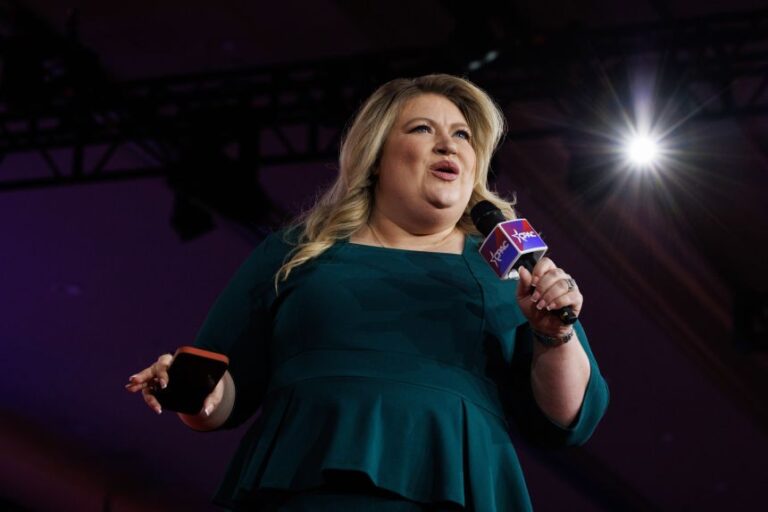
“Members have often an inflated sense of self, and their teams never want to say ‘no’ and they always want to get to ‘yes’ — and sometimes that leads to situations where staff will put themselves at risk,” said Cammack, the Florida Republican co-leading the task force.
The task force is also discussing how to reform the Ethics Committee process specifically. Ethics Chairman Michael Guest, a Mississippi Republican, recently told CNN he is pushing for more money, more staff and to even absorb the Office of Congressional Conduct under his committee.
But there is a balance, a former member of House Ethics told CNN, given the severity of allegations against members that make it through the ethics process. While exceedingly rare, the Ethics Committee’s reports and investigations can be grounds for an expulsion vote.
“These people do have due process rights. I really wish people were a little more understanding that it is not just that Ethics is sitting around doing nothing but they are trying to do the right thing,” the member said, noting that the panel is “trying to balance the need for being fair to everyone with the need for things to be expedited.”
While the resignations of Swalwell and Gonzales allowed both parties to point to a moment of accountability, one former Hill staffer who spoke to CNN about her harassment said she was left feeling concerned about how leadership in both parties has handled the fallout.
“It doesn’t really seem like the system is set up to benefit the victims,” the former staffer said. “The best word I can use is it feels very gross a lot of the time. For women, a lot of it is just suck it up, bear it, get through it, stay until you can’t anymore. It’s been a massive wake-up call.”
Read more Why Lebanon’s unhealed wounds pose a mortal threat to Trump’s Iran dealmaking
CNN’s Pamela Brown and Emily Condon contributed to this report.