 By admin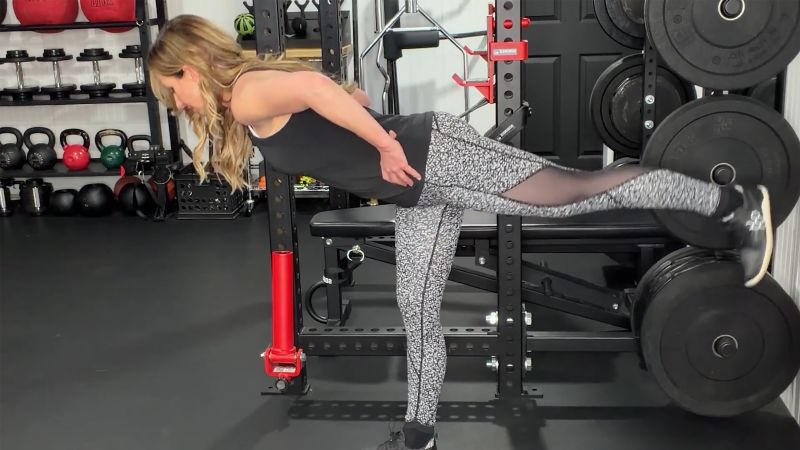
Whether you’re heading into a pickleball match, a strength-training session or out to do yard work, it’s easy to treat warming up as an optional few minutes of stretching before the “real” activity begins.
But a warm-up isn’t about simply making you feel looser. Consider it a part of the activity — a crucial first step to prepare your muscles, joints, nervous system and breathing for the movements, ranges and intensity you’re about to ask of your body.
The right kind of warm-up not only prepares you to take on tasks but can also enhance how well you perform them and help prevent injury.
Important dos and don’ts of a proper warm-up
Too often, people gravitate toward long-held static stretches to prepare the body for movement. Although these movements have a role in recovery and corrective exercise, they don’t belong in warm-ups.
Research has repeatedly shown that static stretching isn’t advantageous for preparing your body for dynamic activity and can even hamper performance. A 2024 systematic review and meta-analysis found the clearest strength deficits after static stretches lasting 60 seconds or longer. That’s why it’s important to avoid long-held stretches as prep work.
As a mobility coach in professional sports, I never use stretches held for greater than 30 seconds in my athletes’ warm-up programs. Dynamic stretching and mobility work are more productive as a means of preparation. These movements take joints through active ranges of motion, lengthening and engaging muscles to support and control movement.
Another common misconception is thinking length equates to quality. A strategically efficient few minutes can be more effective than 30 minutes of unnecessary exercises. Your warm-up should take anywhere from about six to 16 minutes. I’ve provided time-frame estimates below; your exact range will depend on what you’re preparing to do and how you feel that day.
You don’t need a long routine or a complicated list of exercises. Use the following four-part framework to customize your warm-ups to best meet your needs. Work within the context of your activity’s demands without overdoing it. The goal is to feel warmer, more coordinated and better prepared, not fatigued.
The 4-step formula
Note: Before starting this or any new exercise program, consult your doctor or physical therapist.
1. Breathe and roll (2 to 3 minutes)
Breathing is your most fundamental movement pattern, so it’s the logical starting point for any warm-up. The diaphragm does more than drive respiration — it’s also a stabilizing core muscle that plays a role in postural control. How you breathe influences the position of your rib cage over your pelvis, in turn impacting how your shoulders, spine and hips function.
Take a few long, deep breaths focused on establishing proper breathing mechanics and rib movement to support diaphragm function and postural alignment. Your lower ribs should expand out with inhales and move in, back and down as you exhale.
Pair your controlled breathing with strategic soft-tissue preparation, using a foam roller. Target any areas that feel particularly restricted. Common lower-body tension points to address include calves, quadriceps, hamstrings and glutes.
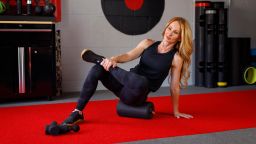
A foam roller can relieve soreness and increase range of motion at the same time
A 2020 systematic review of 49 studies found foam rolling can reduce muscle stiffness and increase range of motion without negatively affecting performance and recommended combining it with dynamic stretching and active warm-up exercises, like the ones that follow.
2. Raise your temperature (1 to 3 minutes)
Next, spend a couple minutes on easy, rhythmic movement that elevates your heart rate and warms your muscles. Walk briskly, march in place, pedal a stationary bike or perform low-impact jumping jacks.
The point is not to tire yourself out, just to feel your body getting warm. A 2025 systematic review and meta-analysis found that increasing muscle temperature improves fast force production and muscle power. Think of this stage like preheating the oven before use.
3. Mobilize and activate (2 to 6 minutes)
Now move dynamically, doing exercises that cover the six fundamental movement patterns: squat, hinge, push, pull, rotate and stabilize. I also like to incorporate single-leg balance into these patterns combined with hinging or stabilizing movements. At the same time, you’ll be moving through the three planes of motion your body uses in everyday life: sagittal (forward and backward), frontal (side to side) and transverse (rotational).
That may sound like a lot, but it doesn’t require nine separate exercises. Compound movements can check several boxes at once.
For instance, a forward or reverse lunge with an overhead reach combines a squat and push movement in the forward-and-backward plane of motion.
Add rotation to an airplane or Romanian deadlift (RDL)exercise — a lower-body strength exercise targeting hamstrings, glutes and lower back — and you combine hinge, rotation and balance patterns in the forward-and-backward and rotational planes of motion.
Add a row or reach-and-pull pattern to a lateral lunge and you are combining lower-body activation, stabilization and a pull pattern in the side-to-side plane.
Modify as necessary and only move through ranges you can control. A warm-up is not the time to push your limits. Gradually increase your comfortable, pain-free range as your body warms. Keep the effort easy enough that your movement quality improves rather than deteriorates.
4. Rehearse what comes next (1 to 5 minutes)
This is where your warm-up becomes most specific to your needs, and where generic stretching and movement most often fall short. Your final few minutes should increasingly resemble the activity you’re about to do.
If you’re about to go for a run, start with jogging in place or for a short distance. Before strength training, perform lighter versions of your first exercises, gradually adding load. For pickleball or tennis, add lateral shuffles, split steps and controlled rotational swings. If you’re hiking a steep ascent and descent, practice progressively higher step-ups and controlled deceleration with slow step-downs.
The closer your warm-up brings you to the actual speed, direction and movement demands of your activity, the less abrupt the transition from preparation to performance.
Personalize your warm-up to be efficient and effective
Not every warm-up needs equal time in every phase. An activity like heavy strength training requires more time in the rehearsal phase to focus on progressive loading. A lighter, functional training workout needs much less rehearsal after the mobilization and activation.

9 best shoes for ankle support, according to experts (Courtesy CNN Underscored)
As you get more familiar with the formula, you can make your warm-ups more efficient and effective by integrating the bulk of step four’s rehearsal movements into steps two and three. Going back to the hiking example, when warming your body, you could do high-knee marching. Then activate and mobilize with movements such as walking lunges with reaching and rotating, lateral lunges, step-ups and step-downs.
No matter the activity, the formula stays the same — only the emphasis changes. You’re still preparing the body in the same four ways, but efficient warm-ups combine those demands whenever possible to address what you specifically need that day.
Dana Santas, known as the “Mobility Maker,” is a certified strength and conditioning specialist and mind-body coach in professional sports, and is the author of the book “Practical Solutions for Back Pain Relief.”
Get inspired by a weekly roundup on living well, made simple. Sign up for CNN’s Life, But Better newsletter for information and tools designed to improve your well-being.
Read more ‘The first prediction-market election’: How Kalshi and Polymarket scrambled the midterms