 By admin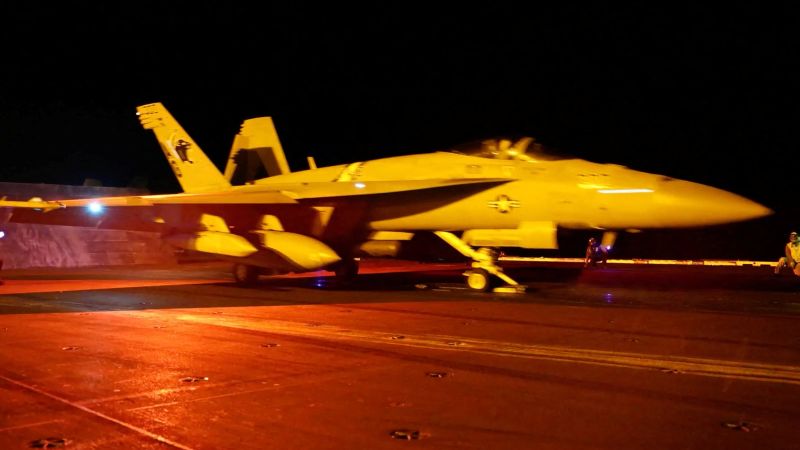
The US military escorted 40 commercial vessels carrying 18 million barrels of oil through the Strait of Hormuz, marking a wartime high as Iran and the US exchanged a new round strikes on Tuesday, two US officials familiar with the operations told CNN.
Read more Federal judge blocks Trump’s newest attempt to crack down on birthright citizenship
Prior to the launch of the war just over six months ago, roughly 20 million barrels a day were passing through the strait.
The US used a range of air, sea and space assets to not only continue hitting Iran’s capability to attack commercial vessels in the strait but simultaneously fended off waves of drone attacks as it conducted the risky escort operations for the ships carrying millions of barrels of oil, the officials said.
US forces also neutralized anti-ship cruise missiles during the escort operation, the first official added.
It comes as the US has focused its strategy in the war to prioritize striking targets around the strait, conducting escort operations for commercial vessels through the key waterway and maintaining its naval blockade on Iranian ports as part of a “full court press” by the Trump administration to ramp up economic pressure on the regime’s leadership, according to the officials.
Even though Tuesday’s operation was a success, officials are under no illusion that a swift solution to the conflict is close, and energy companies are still wary about the huge risks involved in sending their ships through the strait, even with military escorts. And energy prices remain high, causing turbulence in the global bond market.
President Donald Trump’s other stated priorities, including operations focused on eliminating elements of Iran’s nuclear program, have been effectively “backburnered,” for the time being, according to the first official, who reiterated that US Central Command has been directed to focus all of its efforts toward the strait and preventing oil exports from leaving or entering Iranian ports.
Trump himself has recently suggested he is content to leave Iran’s stockpile of highly enriched uranium, which was not completely destroyed in last year’s US strikes on three key nuclear facilities, buried and to monitor it from satellite imagery — despite previously insisting that securing the material was a top priority in the current conflict.
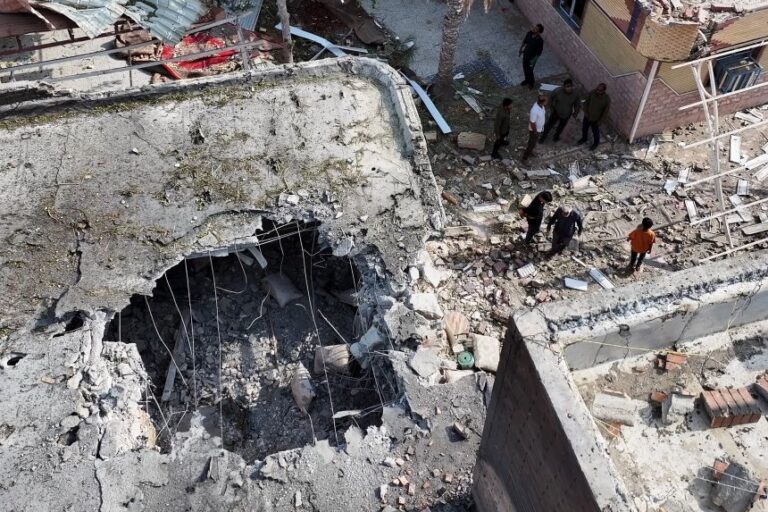
On Tuesday, the US conducted the multi-faceted operation in line with the current strategy, hitting nearly 60 military targets around the strait — including air defense sites, radar systems, maritime assets, mine-laying capabilities, and communications sites — while simultaneously escorting the ships, both officials told CNN.
The US military expects to continue conducting offensive strikes near the strait, in part, because Iran has demonstrated it has the capacity to reconstitute its capabilities in a way that requires persistent maintenance, the second official said. Conducting those strikes amounts to “mowing the grass” or a game of “whack-a-mole,” in service of degrading Iran’s ability to threaten commercial ships.
Chipping away at Iran’s leverage
But they are also a critical part of the broader military strategy for systematically chipping away at Iran’s ability to leverage the strait.
The US blockade, meanwhile, has prevented Iran from exporting any oil since July, the secondUS official said.
Trump said Wednesday that the most recent round of US strikes went beyond targeting Iran’s radar systems, in an effort to eliminate the nation’s ability to track ships through the Strait of Hormuz.
“They were trying to see the ships,” he said from the Oval Office. “They can’t see it because they have no radar, because we blew it up, and we blew up much more than their radar last night.”
Trump did not specify what else was targeted in its attack. But he insisted again that the US maintains control over the strait and has demonstrated that it can both strike Iranian assets along the shoreline while defending ships against any incoming attacks.
Still, it remains to be seen whether the multi-pronged military operations will ultimately force Iran to capitulate — and even if it does — how long it might take for that to happen.
Treasury Secretary Scott Bessent alluded to an uptick in oil flowing through the strait earlier this week, amid a recent flare-up of tensions between the US and Iran, telling CNBC that those exports hit a wartime record on Monday of more than 17 million barrels per day. “That is not Iranian control of the strait,” Bessent said.
US officials have told CNN they believe the strait is a depreciating asset for Iran, pointing to the recent progress as evidence of that assessment. But Iran, meanwhile, still likely sees its ability to negatively influence the flow of traffic through credible threats to commercial shipping as a leverage point, and shippers broadly remain skeptical that the US can implement a sustainable system.
Trump officials have repeatedly insisted that more oil is transiting the strait than is publicly known due to ships’ increasingly routine practice of turning off their transponders to remain undetected as they move through the waterway. Most if not all of the 40 commercial vessels that moved through the Strait of Hormuz on Tuesday turned off their transponders in an effort to avoid detection, according to the first official familiar with the operation.
In August, Energy Secretary Chris Wright claimed that oil exports from the Middle East had risen to pre-war levels for a period.
Skepticism of ‘total control’ claims
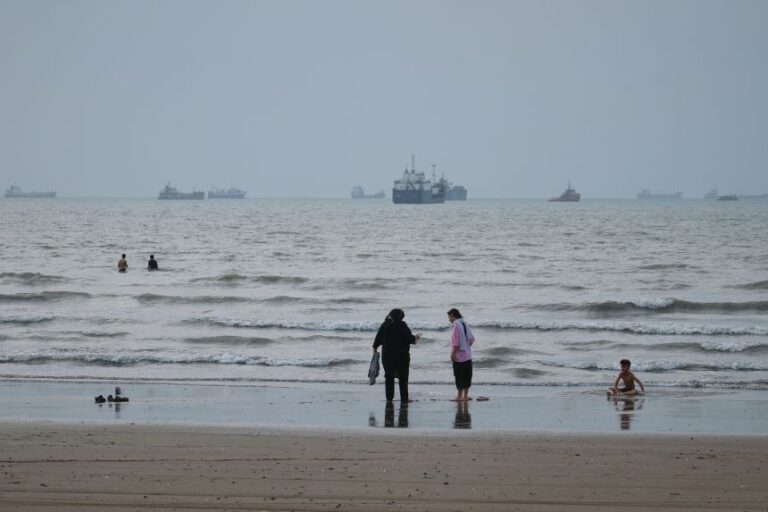
Yet despite weeks of concerted efforts to take over the strait, the administration continues to face heavy skepticism from industry officials and analysts who say the US hasn’t yet demonstrated it can reliably back up its claims of “total control” of the shipping route.
“Safe to say the administration has not covered itself with credibility,” said one person familiar with the industry dynamics, adding that even if the daily spikes in shipping volume are legitimate, “I don’t know anyone who thinks the average is that much.”
In the meantime, commercial shippers that do opt to transit the strait are largely making those decisions on a case-by-case basis, two people familiar with the dynamics said. The price of chartering an oil tanker through the strait has also skyrocketed, with some estimates putting the cost at more than $500,000 per day, offering an added financial incentive for charter companies willing to risk the voyage.
But the industry writ large is still looking for more reassurance. The cost of insuring ships, which soared at the beginning of the war, is still high, adding to the difficult calculations being made by maritime companies. And even if not successful, the continued reports of Iranian attacks on ships going through the strait remains a deterrent.
Oil also represents just one form of energy-related cargo that moves through the waterway. Tankers carrying other energy sources, namely liquefied natural gas, appear to be demonstrating even more caution due to the potentially catastrophic consequences should vessels carrying that type of cargo be hit by an Iranian drone, mine or missile, according to the first official familiar with ongoing US military operations around Iran.
Some US officials acknowledge that it will likely take time and persistence for the US military to not only continue working through its unfinished target list of Iranian military assets near the strait — capabilities that have been at least partially reconstituted during the recent pause in fighting — but also to convince the shipping industry that it is safe to travel.
The latter involves conducting consistent escort operations like what took place on Tuesday where US forces shepherd commercial vessels through a passage that has been cleared of mines. By next month, the US military hopes to widen that lane through the strait to allow vessels to maneuver more freely — with the goal of steadily increasing the amount of oil flowing through the waterway.
CNN has identified the specific inbound and outbound commercial vessels that made the trip through the strait on Tuesday — ships flagged from various foreign countries ranging from Saudi Arabia to France.
Earlier during the conflict, the US military attempted to launch a similar escort operation — dubbed Project Freedom — which was quickly shut down after the announcement caught key Gulf allies, namely Saudi Arabia, off-guard, prompting threats to block American access to basing and overflight for operations against Iran.
Months later, the war has appeared to enter a new phase, and with the Houthi rebels now launching attacks against Saudi Arabia, there is more support from regional partners for escort operations through the strait, the first official familiar with the operation said.
Read more The 23 best arch-support shoes, according to podiatrists and editors