 By admin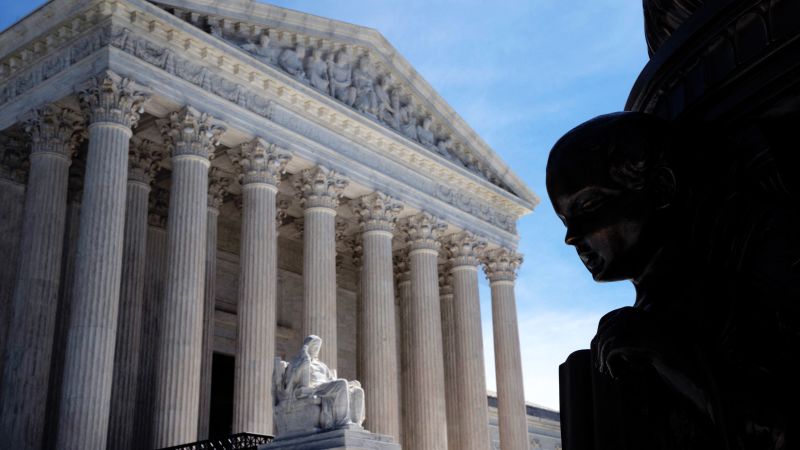
A version of this story appeared in CNN’s What Matters newsletter. To get it in your inbox, sign up for free here.
Read more Pentagon data breach of military personnel raises national security concerns
Election Day is fast approaching, but the Supreme Court is still weighing in on the rules — most recently on Friday when it allowed states to use a Trump administration–backedtool to ferret out noncitizen voting there’s little evidence occurs in a widespread way.
Nobody wants noncitizens voting illegally, but the move by justices less than two months from Election Day raises the real concern that legal citizen voters could find themselves unable to cast ballots.
Supreme Court justices have already been faced with multiple questions about the coming election.
They gutted the Voting Rights Act, supercharging a race to redraw congressional maps this year and into the future.
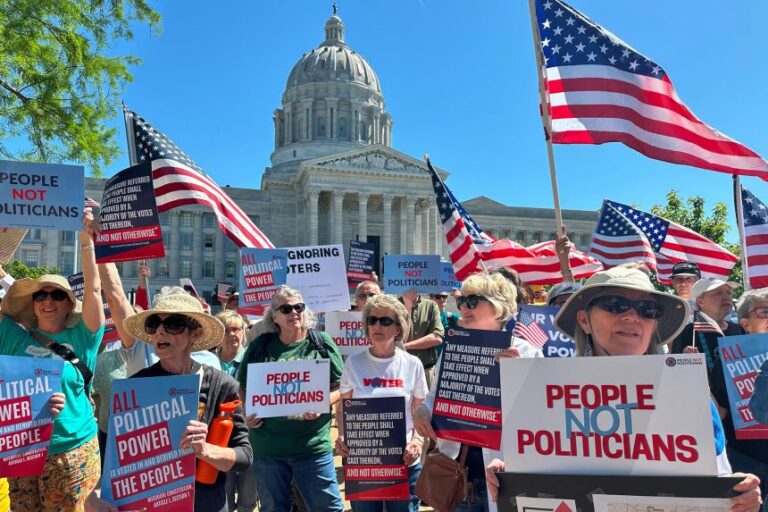
One state, Missouri, was still wondering Friday which congressional districts its voters would cast ballots in come November because lower courts weighed in after the high court. Never mind that ballots had already been printed and mailed.
An unsigned Friday evening decision from the Supreme Court — which sided with opponents of the proposed districts for the third time in as many weeks — seemed likely to put to rest a whirlwind legal saga that bounced through state and federal courts for much of September. Republican Gov. Mike Kehoe said Friday that Missouri would follow the court’s order.
While the justices in other cases blessed the redrawing of maps for partisan gain, they hit pause, at least for now, on the Trump administration’s plan to upend mail-in voting writ large, tabling that issue for the next election.
Noncitizen voting has been a bugbear for Trump for years. He has alleged there is widespread fraud even in elections he won, although neither of his administrations has been able to find much evidence.
I asked CNN’s Fredreka Schouten, a national political writer, about the database this decision unleashes and what it could mean for people trying to cast ballots.
What is the SAVE system?
SCHOUTEN: It’s a federal tool known as the Systematic Alien Verification for Entitlements. It’s been around for decades and has long been used to verify the citizenship and immigration status of people seeking government benefits. And some election officials have had agreements in the past to use the tool, for a fee, to check the citizenship status of voters.
But the Trump administration dramatically revamped it, starting last year. It’s now linked to lots of government data as part of the administration’s push to hunt for potential noncitizens on the voting rolls.
Does it have anything to do with the SAVE America Act that Trump tried, unsuccessfully, to pass?
SCHOUTEN: The SAVE America Act is different but sort of related in that they are both focused on the question of whether only US citizens are casting ballots.
The SAVE America Act would have dramatically revamped voting rules across the country, requiring voter ID to cast a ballot and mandating that people provide documents, such as a birth certificate of US passport, proving their citizenship when they register to vote. It would also put pressure on states to use the SAVE data system and other data tools like it for purging rolls.
Critics say many legitimate voters don’t have easy access to those documents and argue the proposal would have disenfranchised many Americans.
I should say here that experts note that voting by noncitizens in federal elections, which is already illegal, is exceedingly rare. But this has become an animating issue for the president.
Read more Supreme Court rejects GOP’s third effort to capture Democratic House seat in Missouri
How was it assembled?
SCHOUTEN: The Trump administration linked the information already in SAVE to other federal data, most notably Social Security Administration records, which cover most Americans.
The administration then encouraged election officials to carry out bulk uploads of their states’ registration rolls and waived any fee to do so. Tens of millions of records were run through the system before a federal judge blocked its use earlier this year.
With Friday’s ruling, the US Supreme Court has allowed SAVE to be used again for reviewing voter rolls.
What does this mean for the midterms, now just weeks away?
SCHOUTEN: That’s not entirely clear.
The high court’s opinion emphasized that SAVE can be used for “individualized” checks of a voter’s citizenship in the upcoming election but also noted that federal law prohibits mass purges close to Election Day.
But the administration has argued that the federal ban on mass removals within 90 days of an election doesn’t apply to purges involving noncitizens who were improperly registered in the first place. The Supreme Court will decide that question in a case this coming term — but not before the midterms.
States — including red states — have refused to give the federal government their voter rolls. How did the administration get around that?
SCHOUTEN: Let’s back up a bit.
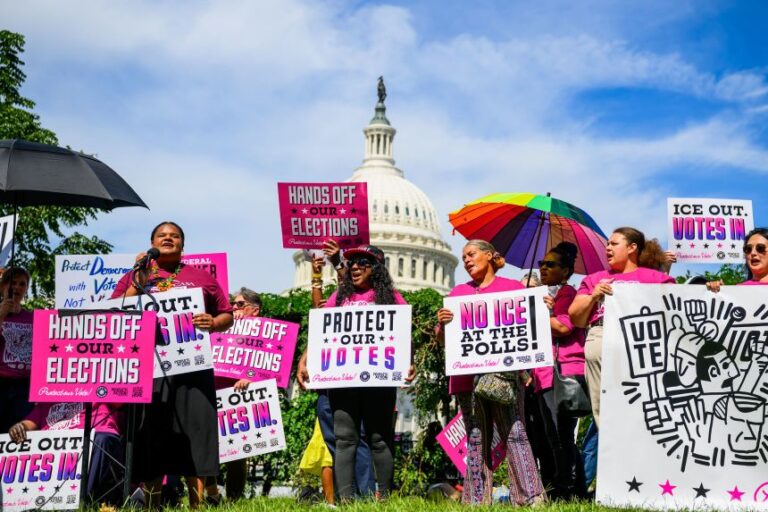
In addition to encouraging states to use SAVE to conduct their own reviews of their voting rolls, the Justice Department has been on a campaign to obtain each state’s full, unredacted lists of voters, including personal information about voters, such as full dates or birth and partial Social Security numbers, to do its own check on whether states are complying with federal law.
When those states refused, the DOJ sued. So far, the agency has lost all 25 cases in which a judge has ruled.
But federal agencies have moved forward with efforts to try to find potential noncitizens on voting rolls — including using publicly available voter lists. A recent whistleblower complaint released by several Democrats on Capitol Hill alleged that agents in the Department of Homeland Security, who were tasked with rooting out voter fraud, are being kept in the dark about the sources of some of the data being used in their reviews.
And the dispute the Supreme Court was ruling on Friday was the administration’s ability to offer the SAVE systems to states that want to voluntarily want to use it for their own voter list maintenance.
What are the concerns about using SAVE?
SCHOUTEN: One overarching worry from critics of the SAVE tool is that it’s not reliable.
Take Texas, for example. State officials there ran all 18 million names of its voters through the SAVE tool last year and announced that their audit had found 2,724 potential noncitizens and directed counties to give voters 30 days to verify their citizenship or be removed from the rolls.
Those numbers began dropping once local election officials began digging — in part, because the system doesn’t appear to properly track naturalized citizens.
Earlier this year, I interviewed a Texas resident who became ensnared by the audit. She was born in Argentina and was a naturalized US citizen, yet state officials tagged her as a suspected noncitizen. She was able to quickly send in a scan of her US passport and remain a voter.
Earlier this month, Texas officials announced that hundreds of potential noncitizens flagged last year were indeed Americans and eligible to vote and called on local officials to reinstate their registrations if they had been removed.
Say I’m a citizen who loses their registration because of a mistake. How will I know before Election Day? What can I do?
SCHOUTEN: If you are worried about this or any other voting issue, you can always verify your registration status with your local election office. There’s enough time before the general election to fix any problems.
Read more Trump’s disruption to TV coverage during Xi visit frustrates Chinese officials
CNN’s Tierney Sneed contributed to this report.
This story has been updated with additional developments.