 By admin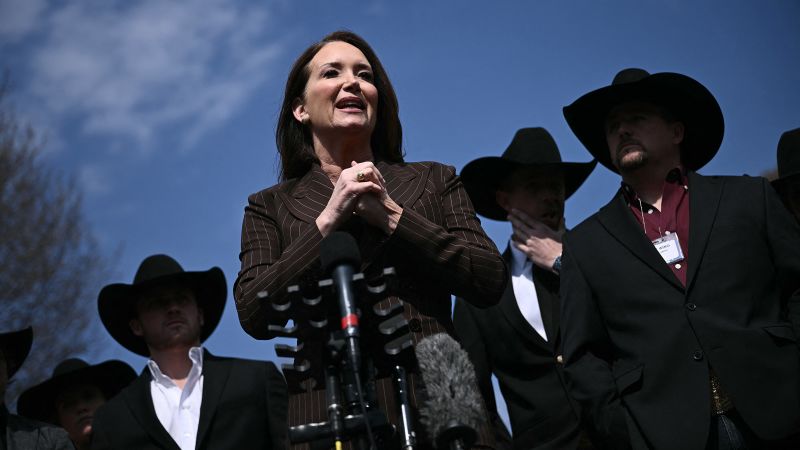
Agriculture Secretary Brooke Rollins, who grew up on a farm and once described winning a hog-catching contest with her sister, should have been in herelement at the Iowa State Fair last week.
Read more Just one drink a day may increase the risk of dying from numerous cancers
But she seemed to have been caught off guard when, just as she was making an appearance at the fair in Des Moines, the White House announced a deal to import 300,000 tons of beef.
It was intended to offset high prices at the grocery stores, but ranchers were not pleased.
She defended the plan – “We’re going to see that cost of ground beef go down,” she told reporters in Iowa – even as days later she said she was “not privy” to talk about the details.
Rollins had initially addressed the media after a meeting with Iowa grain farmers and livestock producers grew testy, according to one participant. The secretary ended up spending more time behind closed doors with officials than in public, touring the fairgrounds.
The consternation over beef policy is the latest headache for a normally low-profile Cabinet post. Rollins’ ability to keep the peace with farmers and the agriculture industry over the next few months could have real impacts on elections this fall, as Republicans work to hold onto rural voters in traditionally red districts across the country.
Interviews with more than a dozen people, including current and former officials, industry figures, state officials and people familiar with the US Department of Agriculture’s response depict Rollins as a capable, savvy political operator who has often moved quickly to contain farmer anger, find money inside a sprawling agency and keep herself in Trump’s good graces.
One of few women remaining in the leadership ranks, insiders say Rollins is a shrewd negotiator who has also managed to make inroads with a constituency known for its animosity to “Big Ag”: Robert F. Kennedy Jr’s MAHA supporters.
“She’s deceptively sweet,” said Chuck DeVore, a former California state assemblyman who worked with Rollins for years at the Texas Public Policy Foundation. “There’s a lot of steel underneath that velvet.”
But sources also describe a department under severe strain from DOGE-driven cuts and criticized for inconsistent communication with stakeholders.
In one key instance, Rollins came under fire over delays to build a facility needed to help combat an epidemic of New World screwworm, a parasitic fly, in cattle. Critics say time was lost while she entertained a proposal from a politically connected construction contractor — time some insiders now say made the outbreak harder to manage.
Rollins, a native Texan and one of Trump’s most politically fluent Cabinet members, has been saddled with shieldingfarmers and ranchers from cascading crises since she took over USDA in February 2025, when the sector was already facing a slew of problems.
Bird flu was ravaging poultry flocks, spreading through dairy herds and driving up egg prices. The flesh-eating screwworm livestock parasite, which had been eradicated from the US decades ago, was creeping north through Mexico. And the agency charged with managing those threats was bracing for budget and staffing upheaval as DOGE cuts began thinning its ranks of tens of thousands of employees.
Since then, things have only gotten worse.
Drought, tariffs, fuel and fertilizer costs pushed up by the war in Iran and the screwworm crisis that hit this June have depleted herds and squeezed farm profits. Today, US farm bankruptcies are at a six-year high, according to data from Epiq AACER, a bankruptcy reporting platform.
In an apparent bid to assuage discontent, on Friday, the administration announced new efforts to streamline beef processing. Rollins followed up with plans Monday to invest in rebuilding American cattle herds.
Yet the National Cattlemen’s Association called the processing maneuvers a “short-term political fix” that doesn’t help farmers where they need it – a criticism USDA contended was “extremely shortsighted.”
Rollins did not speak to CNN for this story, but a USDA spokesperson said: “Secretary Rollins has unequivocally supported the President’s America First trade agenda,” pointing to recent initiatives and accomplishments on school food, fertilizer production and modernization efforts for ranchers.
The administration’s agenda has significantly reduced the agricultural trade deficit, they said.
The screwworm headache
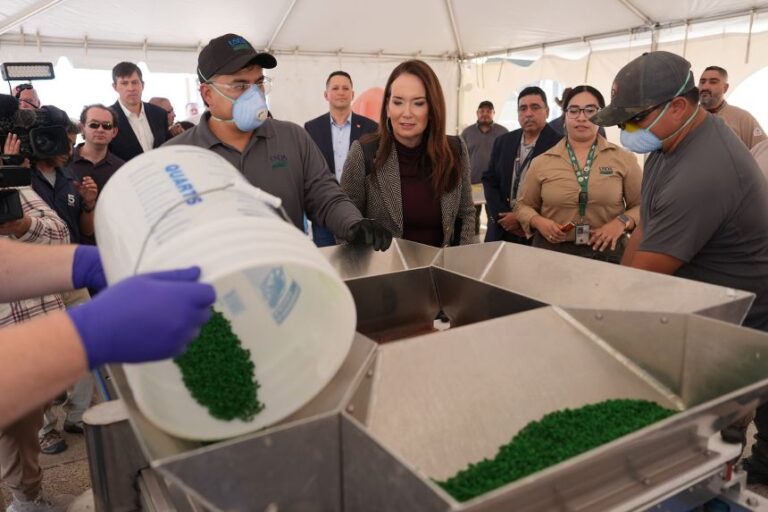
As the threat of parasitic flies crept up from the southern border last year, Rollins weighed tapping a company Trump has favored to helm a multimillion-dollar effort to eradicate them.
Currently one of the most effective methods for dealing with New World screwworm is through breeding and releasing millions of sterile flies who mate without producing viable larvae carrying the parasite, thus eradicating the pests.
Before the first US case popped up in a calf in Texas in June, Trump officials balked at the steep costs of building a US sterile fly facility, which were estimated to be in the hundreds of millions of dollars, according to a former senior official.
“It was extremely difficult to convince [Rollins and USDA leadership] that we had to get going then, in order to be prepared for what was coming at us,” the person said.
But with Rollins’ guidance, discussions eventually began with aconstruction company involved in building “Alligator Alcatraz,” last year, according to the source, who had direct knowledge of the matter.
The immigration detention facility was built rapidly and meant to keep up with the federal immigration crackdown but it quickly became a source of controversy with reports of inhumane conditions. Amid mounting legal challenges, Florida Gov. Ron DeSantis said in June that the facility had been shut down.
The company under consideration, which had previously snagged government contracts under both Trump and former President Joe Biden for border wall construction, made an appealing pitch: a speedy $25 million project.
But about six months later, it said it could not build a massive facility to churn out sterile flies quickly, or as cheaply, as initially proposed, according to the official. Officials were also concernedthat it could not keep to promised costs and that their plans could raise biosecurity containment issues regarding the genetically modified flies, according to the source.
The USDA did not answer specific criticisms over its consideration of the company and the process but said its response to the screwworm problem has been successful.
“When the first case was identified in Texas on June 3, 2026, many ‘experts’ and media outlets projected major infestations, but instead the plan has been working and as of today, there are only 3 active cases of NWS and 48 total in the USA,” the spokesperson said.
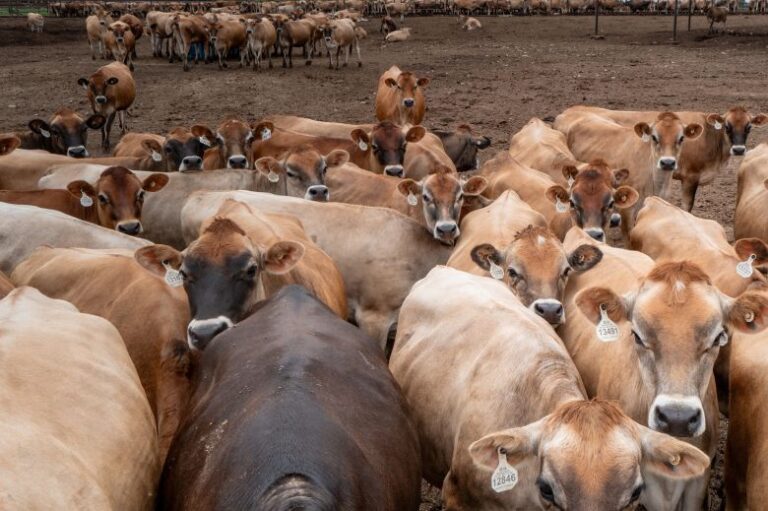
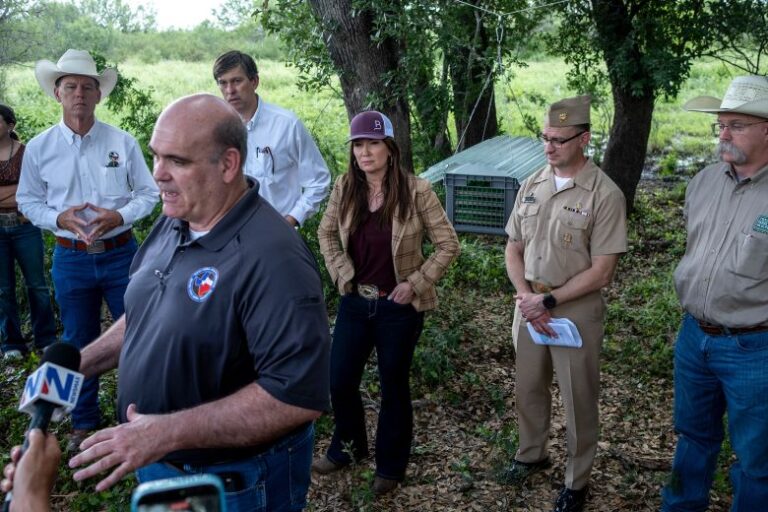
While Rollins announced an intention to build a Texas facility near the Mexican border last June, it was roughly 10 months before there was action. The delay was inscrutable for the agriculture industry and farmers worried about the coming threat, according to two sources familiar with discussions.
“We wasted a lot of time listening to these pitches,” one of them said.
USDA and the Army Corps of Engineers eventually awarded the bulk of the contract to Mortenson Construction in March 2026. Builders broke ground this April. Rollins announced recently that it is seven months ahead of schedule and could open in the spring. It will cost an estimated $750 million.
In Texas, outgoing Agriculture Commissioner Sid Miller — a Republican who lost a reelection bid earlier this year — has repeatedly criticized what he sees as a slow and inadequate response.
“Instead of using every available tool, USDA moved too slowly and relied solely on a partial solution that takes years to fully implement,” he said in a June statement.
Miller also suggested farmers would be unwilling to report screwworm cases, fearing quarantine of their livestock.
Rollins responded to Miller’s criticism that month, calling his charge “a very unserious comment, from perhaps an unserious ag commissioner with just a few months left,” she said. Though he won Trump’s endorsement days before this year’s election, Miller had been hammered by criticism from Texas politicians including Gov. Greg Abbott, a Republican, over a series of alleged corruption scandals.
Read more With diplomacy stalled, Trump returns to floating regime change in Iran
Other Texans who have met with Rollins have had a more tempered view.
Texas Farm Bureau President Russell Boening told CNN that Rollins began discussions on screwworm within weeks of being confirmed. “I mean, she was also dealing with the avian flu at that time, egg prices were through the roof, and so she was dealing with that,” he said.
“Do we wish it would have been done a little faster? Yeah, but it wasn’t,” he added. “So, you know, at this point, let’s don’t do any more blame game. Let’s just, let’s just do our best with what we have.”
The USDA spokesperson said the agency’s approach “has been to turn over every rock to bring additional production online as fast as possible.”
“All efforts have moved at a breakneck speed,” they added.
Since February, it has released a billion sterile flies along the US-Mexico border as of late last month, USDA has said.
From Texas politico to Trump-world operator
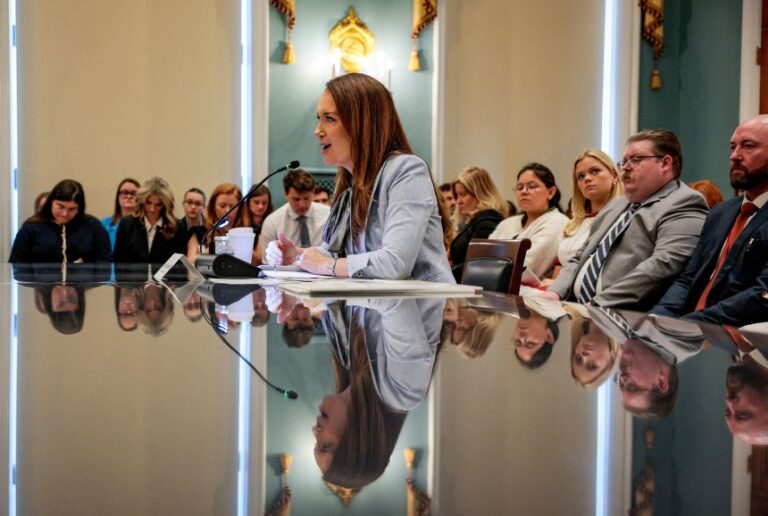
Though Rollins’ critics complain she does not have direct experience with USDA, her farming credentials run deep.
Previously a lawyer, she hails from a farm in a small town outside of Fort Worth, Texas.
In a 2024 podcast interview on the Lou Holtz Show, Rollins — Rollins, then president of the Trump-aligned America First Policy Institute, the think-tank she co-founded with economist Larry Kudlow — recalled winning a hog-catching contest with her sister about a decade ago.
“We had a strategy and a plan, which seems to be a common theme in my life. You always have to have a strategy, and you always have to have a plan,” she told the famed ex-football coach. “We had a plan to wrestle that wild hog — and he was a wild, big hog — and put him into a bag and drag him across the finish line.”
She seems to have taken a similar tack in approaching policy work. Those who have worked with her say she is detail oriented and practical, focused on what building consensus and acting.
Boening, of the Texas Farm Bureau, recalled a meeting Rollins convened last year with 13 Texas state directors.
“She said, ‘I’d like for each of y’all to give me one issue that’s really important to you or to your area,’” he said. “She wrote down every one of those issues, and she went back and addressed them to every person.”
Trump’s team first approached her in 2016 after she had risen to prominence leading the Austin-based Texas Public Policy Foundation, rapidly expanding the tiny conservative think tank into a small government, free-market powerhouse.
She would say that it was not “a think tank, it’s a do tank. So she was always focused on practical implementation of ideas,” Devore, who worked with her at the foundation, said.
Rollins joined Trump’s first presidential campaign as an economic adviser just months before Election Day, but resisted a move to Washington when Trump won.
It was not until 2018 that she joined his administration with a mandate to bring ‘the Texas model’ to federal policy.
By 2018, Rollins had ascended to lead Trump’s Office of American Innovation and later the White House Domestic Policy Council, where her career started to circle back to agricultural policy.
Yet despite her longtime loyalties, there was not an obvious place for Rollins in the second Trump administration, two people familiar with internal transition discussions said. She was the last nominee named to a Cabinet-level position when Trump won his second presidency.
“When I had a chance, I said, ‘What about Department of Agriculture?’ I had no idea that she … went to school on agriculture,” Trump said during a speech to farmers this March. “I would have put her there even if she didn’t.”
Covering the costs of crises
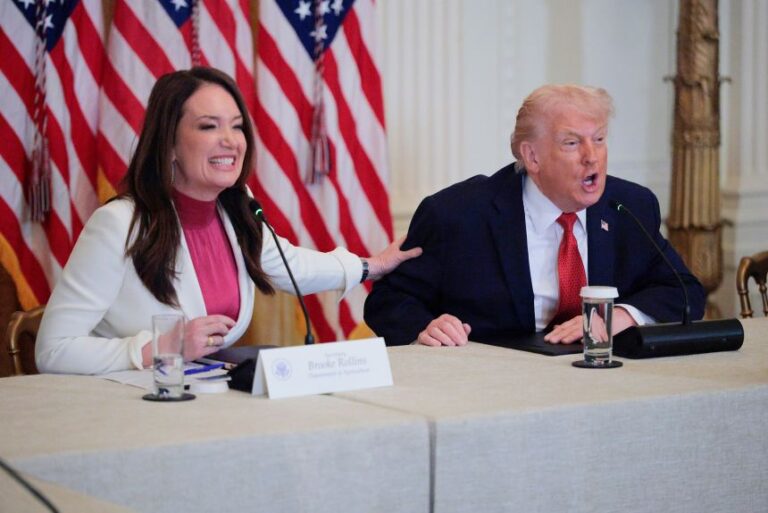
Rollins has claimed she is unsure “that you could ever find someone that is more pro-rancher, pro-farmer, pro-rural America than this president,” and that Trump has been fully bought in to what she has needed since the start of the administration.
“I walked in the Oval Office and I said, ‘Sir, there is a pretty serious threat to our livestock that’s headed our way,’” Rollins told a Senate committee in June. “And he said, ‘Well, what do you need?’”
Trump, in turn, said Rollins is doing “a fantastic job” and has called her a natural leader.
“Brooke, I always said, could run any company in the world. She could run these big companies. She’s a great executive,” he said during the March speech.
But Rollins has had to get creative with the agency’s budget to cover the many woes that have befallen farmers in Trump’s second term.
Sources previously told CNN that, last year, amid tariff pressures on farmers’ profits, she once burst into the Oval Office to declare that she had found a critical $3 billion in emergency relief.
The administration later announced a $12 billion relief fund.
Another prospective emergency fund is on the table now: Last month, the House passed a relief package – also for $12 billion – that will now be considered by the Senate.
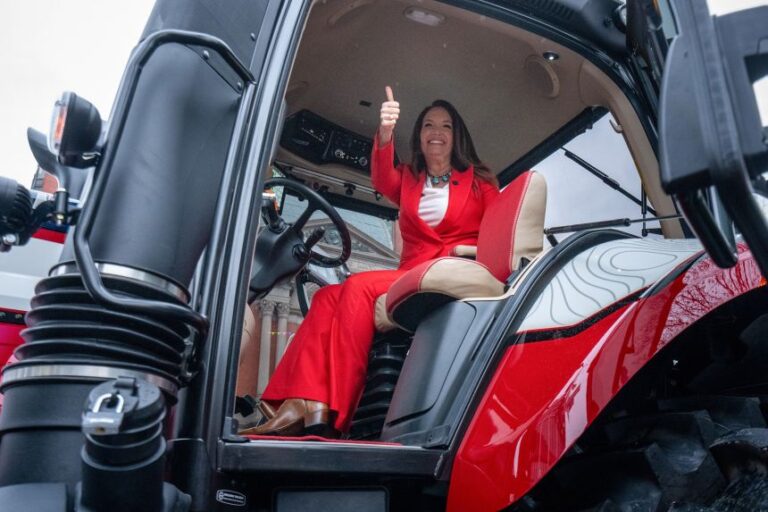
Senate Republicans, led by Sen. John Boozman of Arkansas, appear eager to finalize a bailout as farmers plan for their 2027 planting season. But with a packed September agenda, including the need to pass a broader federal budget or continuing resolution, its fate remains to be seen.
The relief may not come soon enough for farmers planning their next planting season, said Nick Levendofsky, executive director of the Kansas Farmers Union. On top of pressures from the Iran conflict, the US is sparring over trade agreements with Canada, a major supplier of farm equipment.
“These challenges aren’t going to go away anytime soon. It’s going to be well into 2027, maybe even longer before we start to see any kind of relief, and then you throw the tariffs in there,” said Levendofsky. “Farmers are getting squeezed from all sides, just like consumers, everyday people are.”
Trump’s agreement to import beef — amid outstanding questions about where it is coming from — has set off a fresh round of frustration and open GOP concern.
Cattle producers are “increasingly concerned about the unpredictability of the political policy environment,” Glynn Tonsor, an agricultural economist at Kansas State University who studies meat pricing, said. That uncertainty is particularly problematic for an industry where expanding a herd requires a five- to 15-year investment.
“Most people only make multi-year investments if either the economic return looks very lucrative to support the risk or you’re comfortable with a fair amount of limited risk and unpredictability,” he said. Right now, cattle ranchers don’t see either condition being met.
“We’ve got 71 days [until the midterms], and right now we don’t have a positive message to tell farm country,” retiring North Carolina Sen. Thom Tillis told reporters on August 24. “If you think that providing subsidized beef for some period of time is going to make farmers happy and prices go down on a systemic basis, you’re wrong.”
CNN’s Jeff Zeleny, Adam Cancryn, Elisabeth Buchwald and Morgan Rimmer contributed to this report.
Read more The BepiColombo mission begins its arrival at Mercury after nearly 8 years