 By admin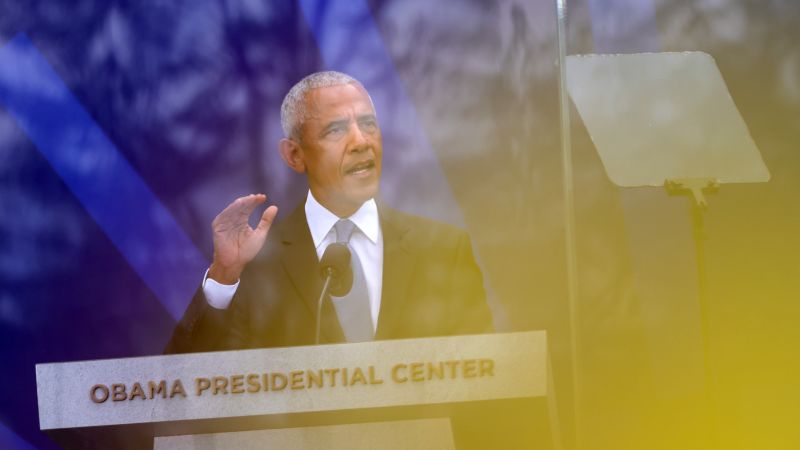
Yes, the likely 2028 Democratic presidential candidates who’ve talked to Barack Obama keep saying when he asks them about AI, they’re paying attention and working up plans.
Read more Trump’s made his big call on AI. Humanity’s fate may ride on him being right
Obama doesn’t think what he’s seen so far is anywhere near enough — for addressing the scale of the issue, and for dealing with the politics. And he tells them that.
The former president isn’t alone: Democratic leaders across the spectrum, from former Federal Trade Commission Chair Lina Khan to former Commerce Secretary Gina Raimondo, are also demanding more from a coalescing field they say so far has generally been more reactive than meeting the moment. But none of them — including Obama — can agree yet quite what the plan should be, and some 2028 hopefuls are worried about getting on the wrong side of the AI industry’s massive campaign spending.
Still his party’s standard-setter 10 years out of the White House, Obama is regularly in touch with the rising generation of Democratic leaders, from when they reach out for advice to when he calls to congratulate them on victories. But on trips to California, in his office in Washington and over the phone, Obama has also been talking with leaders of all the major artificial intelligence companies — including Sam Altman of OpenAI, as well as executives at Google and Anthropic — and a range of outside experts and academics along with informal advisers, including Jason Goldman, the former Twitter executive who ran his Office of Digital Strategy, according to people familiar with the conversations.
He’s deep into the reading, favoring articles by Ezra Klein, Derek Thompson, Charlie Warzel and Casey Newton, and serving as an informal bridge between AI founders updating him and asking advice for how to navigate Washington and the next generation of rising politicians turning to him as they feel through what to do.
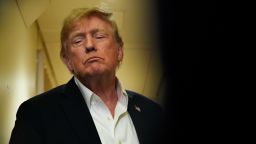
President Donald Trump hosted several AI leaders at the White House on Tuesday, saying they had signed a new commitment aimed at better “self-policing” their companies’ AI models. (Trump also said he would soon sign an executive order renaming “artificial intelligence” as “super intelligence.”) Most Republicans in Washington have taken their cues from him, pushing back against broad federal regulation of AI.
The real reason why Donald Trump is so furiously against AI guardrails
Democrats eyeing 2028, meanwhile, have been releasing speeches and commissions and plans that — multiple party operatives concede — are fledging attempts to show they’re doing something. But they still largely don’t understand where the technology is now or how much it could change in two years.
Advisers to several potential candidates admit privately to CNN they’re so far avoiding doing much of anything they could get tagged with —caught between coming off too captive of the corporations or too combative, insufficiently populist or over-regulatory. They’re also cognizant that speaking out could make the companies’ massively funded super PACs target them in a crowded primary.
Obama doesn’t talk about humanity ending, staying more focused on the fallout in job displacement, national security and the effect especially on children from the mushrooming of disinformation. For months — long before the recent rash of warnings from AI executives — he has been telling every Democrat who comes to see him or who he’s been on the phone with even for congratulatory calls that they need to have a strong sense of what to do, for both policy and political reasons, according to multiple people familiar with the conversations.
“Given the scale of disruption we are likely to face, President Obama believes it’s important to have a grounded and informed conversation about how this technology is developed and introduced,” his senior adviser Eric Schultz told CNN. “Its effects on our economy and our democracy will depend on the choices we make. That means understanding the enormous opportunities AI presents while being clear-eyed about the risks and how best to mitigate them.”
Over 10 years, Obama has gone from joking in an interview about AI — “When you see it about to happen, you gotta yank that electricity out of the wall” — to a grim view of how unprepared the country is for the consequences of what is arriving.
Earlier this month during an appearance at Colgate University, he said, “in terms of how do we cure cancer or get better energy, you can do that without having agentic AI and having it just roaming free in the internet. The reason you are doing that is because you have to market a product that people will pay money for.”
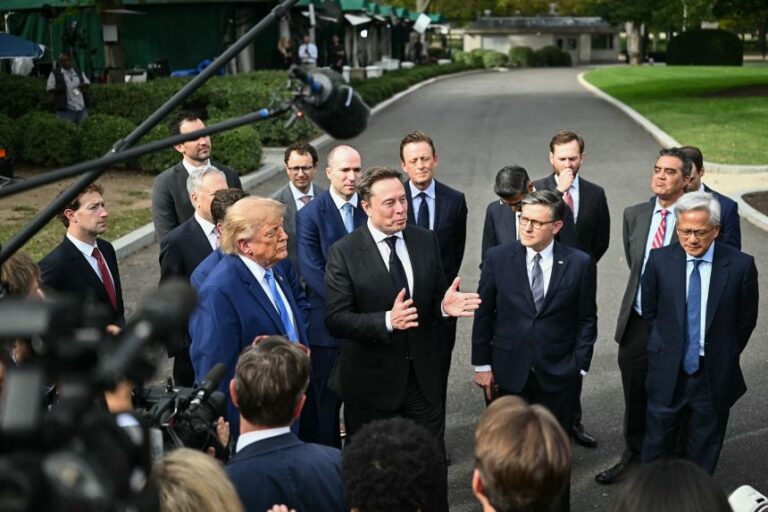
The rise of artificial intelligence and its coming impact would still be really hard, Obama has said in multiple conversations relayed to CNN, even if he felt the country had a competent administration in charge. That he has little confidence in Trump — who last week announced at the United Nations he’d rather call it “super intelligence” and on Tuesday met with several AI founders himself as he keeps to a laissez-faire approach — Obama tends to add, makes it infinitely harder.
Interested in changing technology going back to his White House days and building on the work he did when tapped by President Joe Biden in 2023 to be the informal envoy to the AI world, Obama has said he wants what he calls “a serious regulatory framework” in line with how the federal government sets standards for food or airlines. But Obama doesn’t have a specific plan that he’s pushing the 2028 contenders to sign onto.
Trip wires to avoid
Advisers to several prospective presidential candidates told CNN they see the polls showing the turn against data centers and social media, with some now coming to believe from their own conversations that more has already gone wrong than has been publicly disclosed — such as AI agents surreptitiously implanted across the internet. Yet they also admit they’re worried about being targeted by money if they speak out too much.
Outside groups linked to the AI industry have spent nearly $50 million on warring ads for 2026 races, according to data from AdImpact. And FEC records show leading AI PACs and nonprofits amassing significantly more, with groups linked to Anthropic and OpenAI combining to raise more than $150 million so far this cycle.
Alex Bores, a former Palantir employee who supported several state measures to regulate AI while serving in the New York assembly, was the subject of so many millions spent for and against him by AI-affiliated PACs this spring that the primary for an open congressional seat in Manhattan became one of the most expensive in history.
He said the prospect of campaign spending comes up regularly in meetings he’s already had with the candidates or teams of former Vice President Kamala Harris, former Transportation Secretary Pete Buttigieg, Gov. Josh Shapiro, Gov. JB Pritzker, Sen. Mark Kelly, Sen. Ruben Gallego, Sen. Jon Ossoff, Rep. Alexandria Ocasio-Cortez and Rep. Ro Khanna.
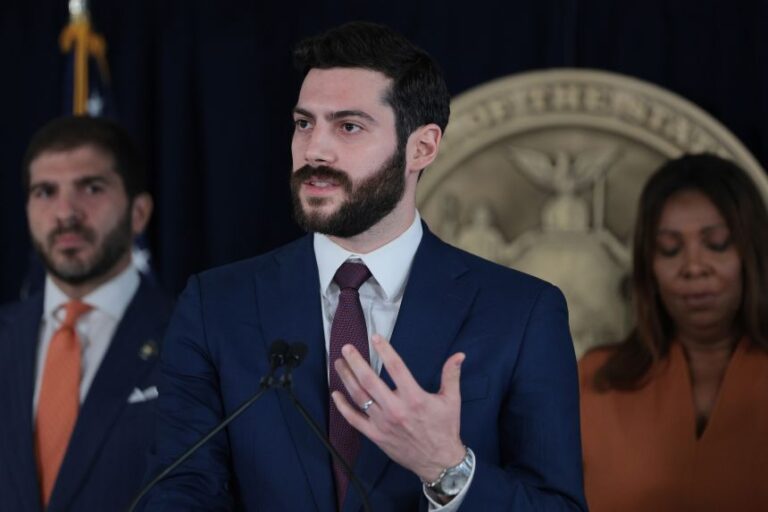
Bores, who started a group meant to push the 2028 candidates to take more definitive regulatory positions, told CNN the politicians and advisers keep bringing up the cash.
“‘What was it like having all that money spent against you?’ ‘How did you know they were going to come after you?’” Bores told CNN of the ways they’re “subtly and not so subtly asking, ‘Are there specific trip wires I can avoid?’ ‘How can I steer through these waters in a way that says the right thing about AI and not bring on the incredible amount of money from the other side?’”
“Some of the candidates who have longer odds are more willing to take risks,” Bores added. “Generally, a lot of people are still trying to find a way to appease everyone.”
But there’s money in both directions. Bores, for example, had $8.5 million spent against him by AI-linked PACs but another $22.5 million spent to boost him. One AI industry source, though, warned of Democrats chasing overly regulatory, doom-minded positions that could prompt a backlash against whomever emerges as the party nominee goes up against a Republican, much like the crypto millions that went for Trump in the 2024 election.
Read more What to know about America.gov, the Trump administration’s new AI-driven services website
Jesse Hunt, a spokesperson for the Leading the Future PAC — largely funded by people with past or current ties to OpenAI and Andreessen Horowitz — said their focus remains innovation.
“We’ll continue to support leaders who want to find consensus on this important topic and reject extremism,” Hunt told CNN.
Warnings from Khan and Raimondo
Also on the call list for many of the potential Democratic contenders trying to stake out AI positions: Khan, who since leaving the Biden administration has become the new nexus for corporate control thinking on the left and even some on the populist right.
Politicians talking about PACs or “p(doom)” — the shorthand for estimating the probability that AI will end humanity — are missing the point, Khan told CNN. Americans are sour on AI because they see their water and electricity rates going up due to the drain of data centers, or just from having a chat bot complicate their customer service experiences, let alone deny their health insurance claims.
In her conversations, Khan said she’s been urging prospective presidential candidates to remember that the AI questions are hitting against a backdrop of Americans feeling more economically precarious than ever while the rich keep getting richer.
“There’s also this basic question of, day after day, these AI executives are explaining how their technologies are hacking into other companies, hacking into other countries’ governments. That would be considered illegal if done by any random person,” she said. “And now that these companies and their very sophisticated technologies are doing it, why isn’t that illegal?”
Even for what little Democrats have put out, “it’s difficult for any of it to seem credible because Congress has been totally gutted of capacity, the executive branch has devolved into total corruption, the courts have become so libertarian,” Khan said. “And so there’s the way in which reckoning with these serious questions around AI and how do we regulate it is going to also require reckoning with the governing crisis.”
The generally more business-minded Raimondo, meanwhile, has through her new group, RAISE US, been pushing a more integrated approach to AI, focused on helping the workforce transition to an artificial intelligence economy.
Raimondo said she’s also been speaking with many of the prospective presidential candidates and has not been overwhelmed with any of what she has heard so far, classifying most as purely reactive to the pushback on data centers or the tweeted warnings of AI executives.
“If you want to be president, you have to step back and say, ‘You know, what’s America going to look like in a few years because of AI? And what is my plan proactively to make sure that we have the innovation and that every American worker has a good job in an AI world and everybody benefits from it?’” Raimondo told CNN. “When people are afraid, the worst thing to do is try to convince him that there’s nothing to worry about — and the best thing to do is to be honest, straight talk, accountable, and reassure them that you got it.”
Asked if she felt confident that the political dynamics will lead to the thoughtfulness and detail she believes AI demands, Raimondo said, “I’m a person of faith,” adding, “presidential candidates right, left, center are going to come to the realization that this could be the biggest issue and it won’t be enough to just be reactive.”
Raimondo had been toying with a presidential run in 2028 herself. She said that’s off the table as she digs in on this.
Caught between a ‘robot apocalypse’ and a ‘money bomb’
Pritzker and California Gov. Gavin Newsom have both spoken with multiple AI industry leaders and, along with Shapiro and Maryland Gov. Wes Moore, issued a new round of state executive orders in September to grapple with the technology.
The prospective presidential candidate who’s engaged the most on AI policy on the federal level, though, is Kelly. He released what he called a a year ago built around a proposed federal fund, paid into by AI companies, to help pay for higher electricity bills, investing in infrastructure and safety protocols.
Walking to the Senate floor last week where he introduced a new bill to mitigate coming workforce disruptions, Kelly told CNN that he had been part of a briefing by an expert who came to see senators in September warning them how exponentially the technology is changing. Every conversation he has as part of the Armed Services and Intelligence committees, Kelly added, is packed with information about not just what’s happening in the US, but trying to keep up with adversaries, “and boy, every few months it’s something new.”
The Midterms’ Unlikely Villain: Data Centers | CNN 5 Things | CNN Audio
“I don’t think we’re approaching some kind of robot apocalypse here, you know, ‘Terminator’ stuff,” Kelly said, “but I think we are smart enough to be able to put the guardrails in place, and guide this in a direction that ultimately benefits humanity — that’s what I’d like to see.”
Kelly said among the people he’s spoken with in thinking through his ideas are Raimondo, former Bureau of Labor Statistics commissioner Erika McEntarfer, former acting Labor Secretary and current New York City Deputy Mayor Julie Su and American Federation of Teachers president Randi Weingarten. Obama’s been in his ear too, though Kelly said, “I don’t actually think we necessarily need that, especially if you pay attention to what’s going on in the world.”
Kelly added that he knows the threat of spending against him looms as he considers a 2028 run, but “we shouldn’t be making decisions based on that we think someone’s going to drop a money bomb on us for an election.”
To other Democratic leaders, there’s a political opportunity from explicitly going against the money.
“We have a decision to make: Do we want to stay quiet on AI and crypto and hope that they won’t spend money against us? Or do we want make their money an issue in the election?” said Connecticut Sen. Chris Murphy, who’s also discussed as a possible presidential candidate. “I think it’d be a huge mistake if we tried to curry favor with two industries that are not politically popular and are trying to get away with murder. So my view is that if we are very loud about the AI industry and the crypto industry’s attempts to try to buy our politics, that’s the safest political play we can make.”
Read more Lone GOP senator blocks bipartisan effort to prevent Trump from demolishing Kennedy Center
CNN’s David Wright contributed to this report.