 By admin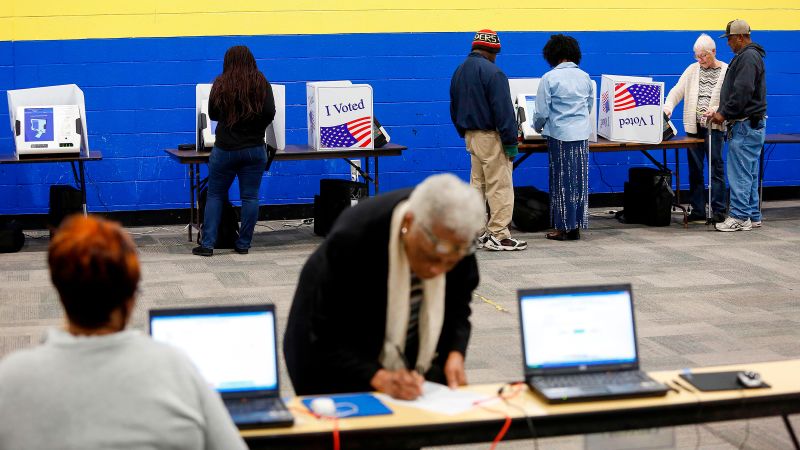
The new calendar for the 2028 primaries that Democrats are poised to approve later this week will dramatically shake up the race for the party’s next presidential nomination.
Read more ‘It’s been chaotic’: Trump’s immigration crackdown prompts worries from industry groups
The Democratic National Committee next Saturday is on track to approve a primary schedule that will replace Iowa and New Hampshire, the small and preponderantly white states that held the first contests for nearly 50 years, with two racially diverse battlegrounds: South Carolina and Nevada.
Under the new calendar, South Carolina, in late January 2028, and Nevada, in early February, will kick off the race for the party’s next presidential nomination. New Hampshire, New Mexico, and then Michigan and Virginia will hold the other early contests through February 2028 before the remaining states start voting in March.
Democrats are adopting this new calendar at a time when their progressive and centrist wings are wrestling for control of the party’s direction this year through the greatest concentration of hard-fought primaries in the party’s modern history. All these battles between left and center offer a clear signal that Democrats will face a monumental internal competition for the biggest prize: the party’s 2028 presidential nod.
The revised calendar adds an unpredictable new dimension to that struggle. Strategists from all factions in the party believe the new schedule provides plausible pathways to the nomination both for progressive and centrist candidates. But, like a brand new golf course or baseball stadium, no one can predict exactly how this map will play until the candidates begin to compete on it in the 2028 race.
“The sequence of primaries and caucuses is one of the most important strategic elements of the nominating process,” says Tad Devine, who has served as a senior strategist for Democratic presidential candidates from Michael Dukakis to Bernie Sanders. “You have to understand the sequence of how these states relate to each other and how you can build momentum by it.”
Why this calendar change is different
Fiddling with the rules for their presidential nominating process is something between a hobby and a compulsion for Democrats. The party substantially rewrote its nomination rules after the primary contests in 1968, 1980, 1984, 2004 and 2016.
But amid all that tinkering with the rules of the primaries, their order remained remarkably stable.
Democrats decisively shifted the power to pick their nominees away from party bosses toward voters through caucuses and primaries in 1972. From then through 2020, the party’s nominating process always began with the Iowa caucuses, followed by the New Hampshire primary, whose state law requires it to hold the first primary. Over that nearly half-century, George McGovern in 1972, Bill Clinton in 1992 and Joe Biden in 2020 were the only nominees who did not win either of them — and Biden was the sole victor who did not finish at least second in one.
After the 2004 election, amid widespread frustration that Iowa and New Hampshire still wielded so much power in a diversifying party, Democrats chose Nevada and South Carolina to also vote before Super Tuesday. That shift somewhat changed the dynamic of the nominating fights. As the final state to vote before Super Tuesday, South Carolina and its large Black population proved especially influential: The winner there won the nominations in 2008 (Barack Obama), 2016 (Hillary Clinton) and 2020 (Joe Biden).
But many Democrats still chafed at the outsized influence of Iowa and New Hampshire in winnowing the field. Not feeling much loyalty to either after his poor showings in 2020 (and Iowa’s botched handling of the vote-counting that year), Biden imposed a calendar for 2024 that created the party’s biggest reshuffle since the primary era began: South Carolina first, followed by Nevada, New Hampshire and Michigan. But the new calendar didn’t get a real test that year as Biden didn’t face a competitive primary.(Democrats were forced to invalidate New Hampshire in 2024 after state officials, following state law, scheduled its primary before South Carolina — a problem that may recur in 2028.)
The calendar approved last month by the DNC’s Rules and Bylaws Committee — which the full DNC is expected to affirm Saturday at its meeting in Austin — generally followed the 2024 blueprint, but inserted New Mexico after New Hampshire and Virginia after Michigan.

At a time when the DNC and its chair, Ken Martin, have been under fire on several fronts, the new calendar has drawn high marks across the party. The calendar blends large and small states; states with a large Black population (South Carolina, Michigan and Virginia); a large Latino cohort (Nevada and New Mexico); and a strong union presence (Nevada and Michigan), and it includes contests in the DNC’s four national regions.
“I’m not here to win a primary election, and neither are our candidates running for president,” Martin said in an interview. “What’s most important is whoever comes out from (the process), from whatever wing of the party they represent, they have to be ready for the general election. And battle-testing them with all parts of our coalition and all parts of the country … prepares whoever comes out to actually win.”
What does this mean for Democrats’ internal battle?
As Democratic strategists game out the implications of the new calendar, one question looms largest: At a time when left and center are dueling in so many fierce primaries, does this calendar provide an inherent advantage to either side? Most strategists believe it does not.
“I think every candidate from the progressive end of the spectrum, to a moderate, to an establishment person can probably chart a path that they feel OK about,” says Dan Kanninen, the battleground state director for both the Biden and Kamala Harris campaigns in 2024.
Jesse Lehrich, a Democratic consultant who publishes an online newsletter and podcast about the 2028 Democratic presidential race, also believes the new schedule offers a pathway for either wing. “I think it’s fair for the left and the center,” he says. “You have more conservative and more progressive states, you have the more diverse and less diverse electorates.”
Likewise, Adam Carlson, a Democratic pollster who often works for the progressive wing, says the calendar “is pretty good” for potential leftist candidates. “Honestly, it could have been a lot worse for the left than it ended up being,” Carlson said.
Read more See who voted ‘yes’ and who voted ‘no’ to confirm Blanche for attorney general
For the relatively centrist White candidates — a group that potentially includes Govs. Josh Shapiro, Gavin Newsom and Andy Beshear, Sens. Mark Kelly and Jon Ossoff, former Transportation Secretary Pete Buttigieg and former Chicago Mayor Rahm Emanuel — South Carolina and Virginia loom as the most important early opportunities.
In the 2020 primaries, according to the exit polls, about half of Democratic voters in both states identified as moderate or conservative, far more than in the other four early contests. Black and college-educated White voters, in particular, were more likely to identify as moderate or conservative in those two states than the other four.
South Carolina’s Black voters in 2020 famously resurrected Biden’s flatlining candidacy after his early stumbles, and according to the exit polls, only about 15% of them in both 2016 and 2020 backed Sen. Bernie Sanders — whose populist campaign will likely provide the prototype for any of the left-wing candidates in 2028. “We’re not going to be … held to a litmus test” of far-left positions, says Bakari Sellers, a South Carolina-based Democratic activist and CNN political commentator.
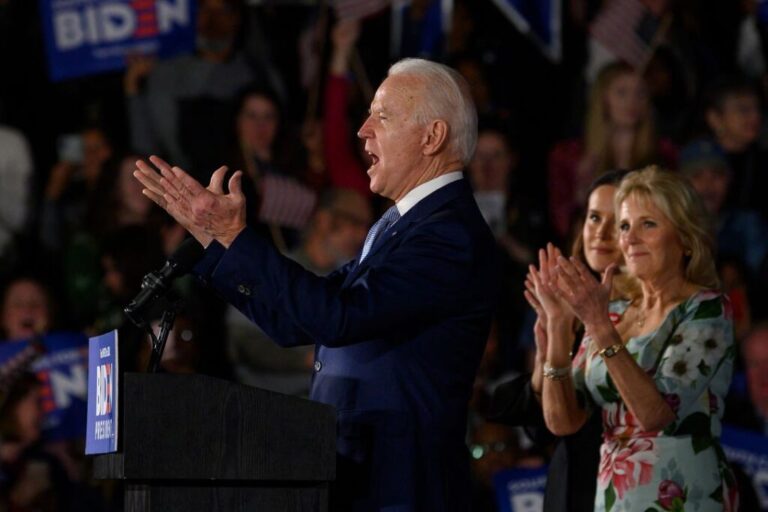
The complication for the White centrists is that South Carolina’s Black voters — who made up about three-fifths of the electorate there in 2020 — may be drawn to a viable Black contender, whether they are identified with the center or not.
Analysts agree that former Vice President Kamala Harris would start with a significant base there, and the state’s movement to the front of the line could encourage her to run. Lehrich reflected many strategists’ war-gaming of the 2028 race when he recently wrote in his newsletter, “The new order is a coup for Harris — the kind that might persuade her to run.” South Carolina’s move to leadoff could also encourage another Black candidate — particularly Maryland Gov. Wes Moore and/or Georgia Sen. Raphael Warnock — to run, especially if Harris does not.
As the final state to vote before Super Tuesday, Virginia is stepping into the role that had elevated South Carolina.

Your midterms questions answered
Virginia Democrats have usually favored moderates, not only in presidential primaries (soundly rejecting Sanders for Clinton and Biden), but also in state elections, with candidates such as Gov. Abigail Spanberger and Sens. Mark Warner and Tim Kaine. “That’s quite a triumvirate,” says Larry Sabato, director of the Center for Politics at the University of Virginia. “They may all work together to try to help Democrats to get a nominee who can win in November.”
Many Democrats believe the states between South Carolina and Virginia will generally favor potential candidates on the left, such as Reps. Alexandria Ocasio-Cortez and Ro Khanna or Sens. Chris Van Hollen and Chris Murphy. Carlson says that with Nevada, New Hampshire and New Mexico lined up in the middle stage of the early window, “It’s pretty easy to imagine” a left candidate “sweeping all three, or two of the three races, after South Carolina.” That, he adds, would allow a left champion to go into Michigan and Virginia “with some real momentum.”
Dave Jacobson, a Democratic consultant who has worked extensively in New Mexico, agrees the state, while not culturally liberal, will likely prove receptive to candidates offering a Sanders-style economic message. “New Mexico is one of the poorest states,” Jacobson says. “Democrats who are campaigning on a progressive economic populist message of affordability, health care, education are resonating with Democratic primary voters.”
But others say it’s premature to assume Nevada and New Hampshire (if it doesn’t invalidate itself by trying to go first) will also bend left. Sanders won Nevada in 2020, and more voters there (31%) identified as “very liberal” than in the other five early states. But that was for a caucus. In 2028, Nevada will hold a primary, and the expectation that larger electorate will favor the far left “is wishful thinking by some folks,” says Ted Pappageorge, the secretary-treasurer of the Culinary Workers Union, the state’s most powerful political force.
For instance, the culinary union, which represents service workers in the casinos, has long opposed the Medicare for All single-payer healthcare proposal that any left-leaning candidate is likely to stress in 2028.
Instead, Pappageorge says, moving Nevada forward to the second contest will pressure candidates to provide practical answers to the daily needs of economically precarious working-class voters who were never as central in Iowa or New Hampshire. “To be No. 2 in the nation,” he says, will allow Nevada to elevate the concerns and experiences of “all workers in this country.”
Sanders did win New Hampshire in 2016 and 2020, but in that latter race the most moderate alternatives (Buttigieg, Biden and Sen. Amy Klobuchar) combined for just over half of the vote. New Hampshire’s large constituency of college-educated White voters could break left (as they have in multiple Democratic primaries this year), but in the past many of them have also flocked to cool, brainy centrists such as Gary Hart, Bill Bradley and Buttigieg.
Of all the states on the early 2028 calendar, Michigan looks most closely balanced between left and center — as it demonstrated again last week in the acrimonious Senate primary won by about 15,000 votes by progressive Abdul El-Sayed over centrist Rep. Haley Stevens. That echoed Sanders’ razor-thin victory there over Clinton in 2016; on the other hand, Biden decisively beat Sanders in Michigan in 2020. With large populations of Black voters and Whites with and without a college education, Michigan could provide the best test among the early states about which contender can build the broadest coalition within the party —and potentially in November.

Kanninen points out that Michigan and Virginia will test the candidates in another new way, because they are much more populous than any of the previous early states. While a candidate can win smaller early states by dominating just one or two voting blocs, he says, these larger and more complex states will demand more. “Once you get to Michigan and Virginia, I think you’ve got to be a five-tool player to be serious,” he said, using a baseball analogy about a player with many skills. Only candidates with “a frame durable enough” to attract “all the disparate parts of the Democratic coalition” are likely to do well in those two states, he says.
If there is a master key to this new calendar, it may be that it will reward a candidate who can appeal to both Black voters (a big presence in half the early states) and college-educated White voters (who are very likely to outnumber blue-collar Whites in all of them except New Mexico and maybe Michigan). Historically it hasn’t been easy for one candidate to marry those two constituencies, since Black voters often gravitate toward grounded bread-and-butter options (like Bill and Hillary Clinton or Biden) while well-educated Whites are often drawn to more ideological or idealistic alternatives (think Sanders or Gary Hart). The one modern candidate who did run well with both groups was Obama in 2008, and the states he relied on to beat Hillary Clinton in their epic primary duel may offer the clearest map to success on this new course.
Then again, as Sabato points out, the rules and calendar changes Democrats have instituted over the years have rarely worked out exactly as planned. “When you try to structure a selection process to produce a certain result, especially in this party,” Sabato says, “in all likelihood, you are going to be disappointed.” Still, however it unfolds in 2028, the new schedule represents the biggest reordering of the Democratic nominating calendar in over half a century — and the beginning of a new era for the party.
Read more An eerie phenomenon occurs around eclipse totality. Scientists are trying to unravel the mystery