 By admin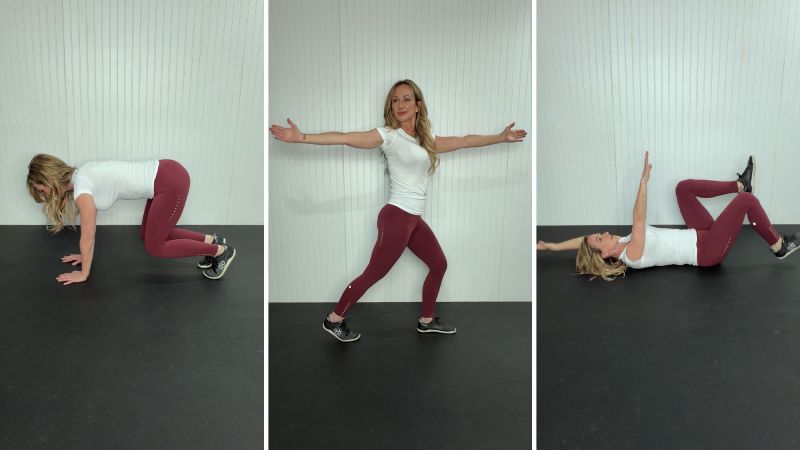
Dana Santas, known as the “Mobility Maker,” is a certified strength and conditioning specialist and mind-body coach in professional sports. She is also the author of “Practical Solutions for Back Pain Relief.”
Read more Trump officials say they’re strengthening Head Start with proposed rule. Critics say they’ll gut it
If you’ve spent any time in a gym, you’ve probably heard the cue: Brace your core.
The intention behind that advice is sound. Your core needs to stabilize your spine during movement and lifting. But when bracing becomes your default — forcefully tightening your abs during every exercise and throughout the day in pursuit of better posture or aesthetics — the strategy can backfire.
Instead of building greater strength or resilience, excessive core tension limits mobility, restricts breathing and triggers your nervous system’s stress response.
After more than two decades of working in professional sports, I can tell you that the strongest, most durable athletes aren’t the ones holding the most tension. They’re the ones with dynamic core stability that adapts to changing demands without restricting breathing or mobility.
Do you want to build a strong, stable core that provides responsive support without creating restrictive stiffness? Below, I explain how to avoid excessive bracing and train functional core strength.
Understanding core stability vs. rigidity
Your core is not just your abs. Think of it as a 360-degree system that includes your abdominal wall, lower and mid-back muscles, diaphragm, and pelvic floor. These muscles work together to provide the foundation for transferring force through your body while also supporting your spine, pelvis and rib cage.
True core stability is dynamic, increasing support as demand rises and easing as demand abates. The muscles of your trunk are designed to work together to adjust tension so that your rib cage can move with your breath while your body bends, extends and rotates as needed.
To be clear, bracing itself is not the problem. It’s useful when a task demands greater spinal stiffness, such as during a heavy lift. Issues arise when maximal core engagement becomes your default.
When you continually over-brace, you replace your core’s responsive control with rigidity. Gripping your abs at maximum effort regardless of the task can make your torso feel like an immobile block. Every step, reach and rotation then must work against a rigid core, which can lead to chronic stiffness and pain, regardless of how much you stretch.
How excessive tension interferes with breathing
Breathing mechanics and core stability are interdependent. In addition to the diaphragm’s role in respiration, it serves as a stabilizing postural muscle that works in concert with the other muscles of the core system. When your diaphragm contracts during breathing, the pelvic floor relaxes and vice versa. Your diaphragm and abdominal wall work together to manage pressure inside your abdomen, contributing to spinal support and force transfer.
Emerging research shows that the diaphragm’s ability to act as a respiratory muscle is inhibited during active bracing for spinal stability. A small 2023 study of 31 healthy adults illustrates that respiratory trade-off: Abdominal bracing during a lifting task reduced lung volume despite increased diaphragm movement. Again, this finding doesn’t mean that you shouldn’t brace when lifting heavy loads. You should. But it’s important to understand that a strategy intended for your heaviest lifts can become detrimentally restrictive when used all the time.
Chronic excessive bracing leads to shallow breathing and breath-holding, which reinforces sympathetic arousal — your fight-or-flight response — and increases muscle tension. That added tension can further restrict breathing, creating a self-perpetuating cycle.
Read more Supersonic flight is making a comeback decades after the Concorde. But one big hurdle remains

This 90-second deep breathing exercise will help relieve stress
Finding stability without stiffness in daily life
Rather than trying to hold in your stomach constantly and squeeze your abs harder, try to match your muscular engagement to the task. For instance, carrying groceries demands strength and stability but less rigid activation than a heavy dead lift would. Mopping the floor, raking leaves and shoveling snow all require dynamic stability that supports rotational movement.
Use these cues to recalibrate your core stability during daily activities:
- Keep breathing. During low-load exercises and most everyday movements, you should be able to breathe deeply and steadily without straining or holding your breath. If you cannot, reduce the effort or range of motion.
- Balance your rib cage over your pelvis. This alignment creates the functional foundation for the muscles of your core to coordinate naturally.
- Use only as much effort as you need. Increase your core effort during the most challenging part of a movement, then let it ease as the demand decreases.
3 exercises to train dynamic core stability
The three exercises below train responsive trunk control through the three planes of motion, progressing from lying down to standing. Integrate them into your existing workouts or perform them as a circuit two to three times per week, moving with control rather than speed.
Note:Before beginning this or any new exercise program, consult your doctor or physical therapist. Stop immediately if you experience pain or difficulty breathing.
Dead bug
Lie on your back with your arms extended toward the ceiling and your hips and knees bent at 90 degrees. Exhale — bringing your lower ribs inward, back and down — to engage your core naturally as you slowly lower your right arm back and your left foot forward toward the floor, keeping your knee bent. Do not let your lower ribs flare or lower back lift away from the floor. Inhale and expand the ribs in your back as you return your limbs to the starting position and repeat on the opposite side.
Perform a total of 12 to 20 alternating repetitions. The dead bug exposes a common stability mistake: holding your breath and gripping your abs instead of coordinating trunk support with movement. If your ribs flare or you catch yourself holding your breath, stop and reestablish breathing in a shorter range of motion.
Sideways bear crawl
Start on your hands and knees with your wrists under your shoulders and your knees under your hips. Lift your knees a few inches off the floor into a bear-crawl position. Keeping your hips level and your spine long, move to the right by moving your right hand and left foot sideways, followed by your left hand and right foot. Depending on space to move, travel two or more “steps” in one direction, then return in the opposite direction. Breathe steadily as you move, resisting the urge to hold your breath or stiffen your torso.
Going at your own pace, complete as many rounds as it takes to do 12 to 20 steps in each direction. Crawling laterally challenges frontal-plane control under load, requiring your core to respond to shifting weight while your limbs move rather than locking down.
Split-stance rotation
Stand in a split stance with your feet about 12 to 18 inches apart: Position your right foot forward with the knee slightly bent and your left leg straight with the heel lifted. Extend your arms in front of you at chest height, hands together. Keep your right arm forward as you inhale and open your left arm out to the side, rotating your torso to the left. Exhale as you return to center and bring your hands together. Complete eight to 10 repetitions, then switch your stance and repeat on the opposite side.

I’ve been testing stability running shoes for years, but these 3 are my absolute favorite pairs (Courtesy CNN Underscored)
Rotation from a split stance trains your core to control twisting forces while maintaining balance and alignment. That integration carries over to more dynamic movements such as walking, throwing and swinging.
Remember, core stability does not mean rigidity. The harder and more often you tense your core in the name of protection or aesthetics, the more you risk interfering with your ability to move and access strength. Train your core to respond rather than grip, and you can move with greater freedom and control, breathe more effectively and use your strength more efficiently.
Get inspired by a weekly roundup on living well, made simple. Sign up for CNN’s Life, But Better newsletter for information and tools designed to improve your well-being.
Read more Congressional probe promised answers on Epstein. A year later, frustrations are mounting