 By admin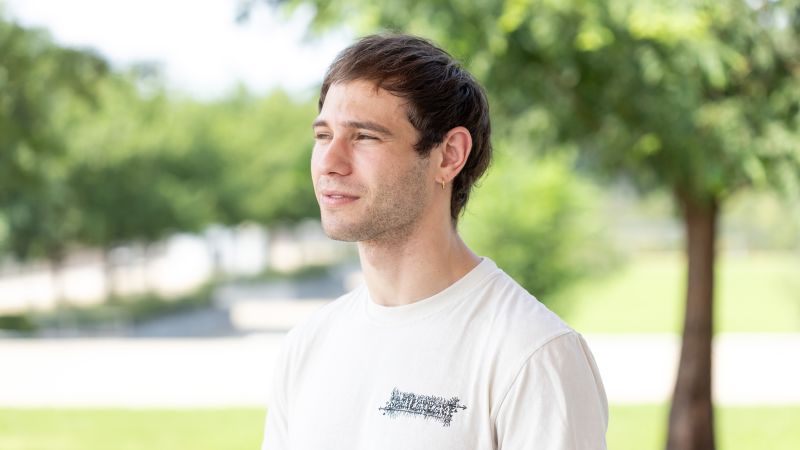
In a small room at the Atlanta International Airport, without a warrant and ignoring his protest and requests for his attorney, a left-wing activist and US citizen says Border Patrol officers started to search his devices, luggage and diary.
Read more I’ve been journaling for more than 20 years. Here are 33 of my favorite journaling supplies
Sam Tunick, involved in the Stop Cop City movement, which opposed an 85-acre law enforcement training center in Georgia that opened in April 2025, was returning from a vacation in the Dominican Republic in January of that year when Border Patrol officers, coordinating with the FBI, pulled him aside, according to his lawyers.
After refusing to answer questions, the officers began searching Tunick and the items eventually asking for access to his phone, Tunick and the prosecutors say. According to prosecutors, Tunick then gave officers a passcode that wiped the contents of the device.
Tunick was charged that November with a single count of destroying property to prevent seizure. He has pleaded not guilty and has not been charged with any additional crimes.
Experts told CNN the case could be a toehold to challenge how Fourth Amendment protections, which generally prohibit search and seizures without probable cause, are weakened at the US border and entry points into the US, including international airports.
“It’s not that the Fourth Amendment doesn’t apply at the border,” white-collar criminal defense attorney Paul Calli told CNN. “It’s that there’s no requirement for reasonable suspicion, like there would be not at the border.”
Warrantless search
Tunick’s lawyers say agents told him that he was suspected of possessing child pornography before they demanded access to his phone. But during a hearing last week on efforts to suppress evidence and testimony gathered during the search, CBP agents admitted there was no reason to suspect Tunick possessed child sex abuse material, according to his attorneys.

Police must obtain a warrant when seeking sweep of cellphone location data, Supreme Court rules
“They were unequivocal that no, we had no reason to think that was applicable to Sam, it was part of our shtick to sort of get him to open up,” Tunick’s attorney Matthew Dodge told CNN.
CBP said agents have authority to search the devices of anyone entering the US “regardless of citizenship.”
Despite Tunick’s protest and refusal to allow such a search, the officers still went through his luggage and personal journal before turning to his phone, according to his attorneys.
Tunick said he also repeatedly directed the officers to his lawyer’s business card, which he was carrying.
“Because you’re refusing to talk, which is your right, we have the authority to go through your phone to see what we’re looking for,” one of the officers said, according footage of the incident provided to Tunick’s attorneys.
CNN has not reviewed the footage.
When he asked for a second time why he was not allowed to contact his lawyer, Tunick was told that “when it comes to immigration and customs, right, it’s a whole different ballgame.”
“We have search authority, we don’t need a warrant,” Tunick was told, according to his lawyer’s March court filings.
Tunick’s attorneys also allege their client was never read his Miranda rights nor given the chance to have a lawyer present.
“Sam’s big interest here was protecting his privacy, not hiding evidence of wrongdoing,” Dodge said.
Read more What a new Justice Department filing says about the ‘botched’ Reflecting Pool renovation
Tunick’s attorneys claimed in a March court filing the search was conducted because of his involvement the group opposing law enforcement training facility.
As it was being constructed, the facility was a hot spot for protests and, at times, violent clashes with police. Authorities charged dozens of activists allegedly associated with the protests. Law enforcement shot a man 57 times in January 2023 after they say he opened fire at officers near the facility.
Border exemptions and questions of obstruction
When asked about the case, CBP told CNN it has the authority to search all electronic devices for people, regardless of citizenship, coming or leaving the US, “to enforce laws addressing terrorism, child exploitation, drug- and human-smuggling, visa fraud, and national security threats.”
The statement continued: “The border search will only include an examination of information that is present on the device at the time it is presented for inspection. In Fiscal Year 2025, less than 0.01% of all arriving international travelers had their electronic devices searched by CBP.”

The limits of that authority, however, could be challenged with cases like Tunick’s.
“We are hopeful that this general rule, that the Fourth Amendment doesn’t apply at the border, (has) just got to be revised and corrected,” Dodge said. “And this is a pretty vivid example of why it that rule is far too broad.”
“It has to be much more tailored rule about the Fourth Amendment at the airports,” Dodge added.
In speaking broadly about warrantless seizure, Nathan Freed Wessler, the American Civil Liberties Union’s deputy director for the foundation’s speech, privacy, and technology project told CNN that several “cases pending in a few courts of appeals now where this question is really live.”
“A couple federal courts of appeals have imposed more stringent limitations than the government was,” Wessler added. “And there are a handful of federal district court judges who have actually gone the whole way and said a warrant is required because this is such a privacy imposition.”
The appeals court that will have jurisdiction over Tunick’s case — the 11th Circuit — however, has previously ruled that phones and electronic devices don’t have greater protections than a suitcase or handbag, despite the vast amount of personal information stored in those devices, Wessler noted.
Questions also remain over whether giving law enforcement a passcode that strips your device of information constitutes obstructing an investigation.
“Obstruction means I’m obstructing some type of investigation, and without any type of warrant or even reasonable suspicion of criminal activity, what investigation am I obstructing?” Mike Fox, a legal fellow at the libertarian Cato Institute, a think-tank focused on issues of civil liberties, told CNN.
Fox noted that it’s unclear what recourse federal agents would have if a person refused to hand over their phone passcode in a similar, warrantless search.
“They’re not going to deny entry because he’s a US citizen,” he said. “But are they going to charge him with some type of obstruction or take his device?”
“This is new, uncharted territory,” Fox added.
According to his attorneys, Tunick was told by officers that if he didn’t comply, they would take his phone and access it by other means.
The judge overseeing the case issued a deadline for final preliminary court filings in late October.
Read more The fight for Michigan: How a marquee Senate primary became the Democrats’ latest proxy war
No trial date has been set.