 By admin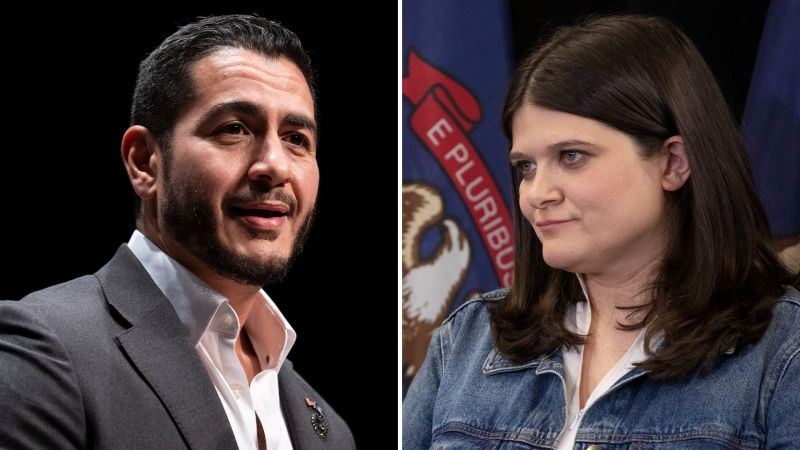
Chuck Schumer isn’t much for subtlety. When the Senate Democratic leader called retiring Sen. Gary Peters into his office in late June, Schumer went right to discussing the primary to succeed Peters in his home state of Michigan.
Read more ‘We are knifing each other’: Trump and Thune showdown splinters GOP unity ahead of midterms
Schumer believed Abdul El-Sayed’s poll numbers had fallen from recent heights, suggesting there was a chance to beat the former Wayne County health director. He didn’t want El-Sayed, who is running hard from the Bernie Sanders and anti-Israel wings of the party, as the Democratic nominee both for ideological reasons and fears he would lose the November election to former Rep. Mike Rogers.
The three-way Democratic race was a mess, Schumer told Peters, and state Sen. Mallory McMorrow was clearly not going to win.
He never said it outright, but Peters walked away thinking his mission was to get McMorrow to drop out and give Rep. Haley Stevens a one-on-one matchup against El-Sayed.
Tuesday’s Michigan Senate primary has become a bitter, microcosmic referendum on many of the fights Democrats are having nationally. With McMorrow now out of the race, Stevens has talked up her experience working for former President Barack Obama and a need to drill down on manufacturing and other Michigan issues, all while being kept afloat by more than $50 million in outside spending. El-Sayed has built his campaign around promoting Medicare for All but also targeting the American Israel Public Affairs Committee and other outside interests that have tried to stop him.
However it ends, the fight in a purple state that is almost always central to which party wins the White House — and which both Republicans and Democrats believe could help decide the Senate majority this year — has become the greatest showcase yet of a party split into bitter factions and an establishment struggling to lead it.
Committed supporters of El-Sayed and Stevens can’t stand each other. Backers of each candidate across the country have treated the race as if it’s an existential crisis.
With just a few dozen hours left until the results come in, no one on either campaign is quite sure where the race stands, other than the very real possibility of Democrats wounding themselves for November no matter who wins.
“There are a lot of very strong, intense feelings right now, and we have to bring people together because we have to remember what the November election is about. It is about winning the House and the Senate, so we cannot lose the Senate seat,” said Rep. Debbie Dingell, one of the few Michigan Democrats who have not taken sides in the Senate primary.
“Nobody can like the kind of brutality, the ugliness that we have seen,” she said. “That makes it harder to come together. But we have no choice.”
A push to get behind Stevens
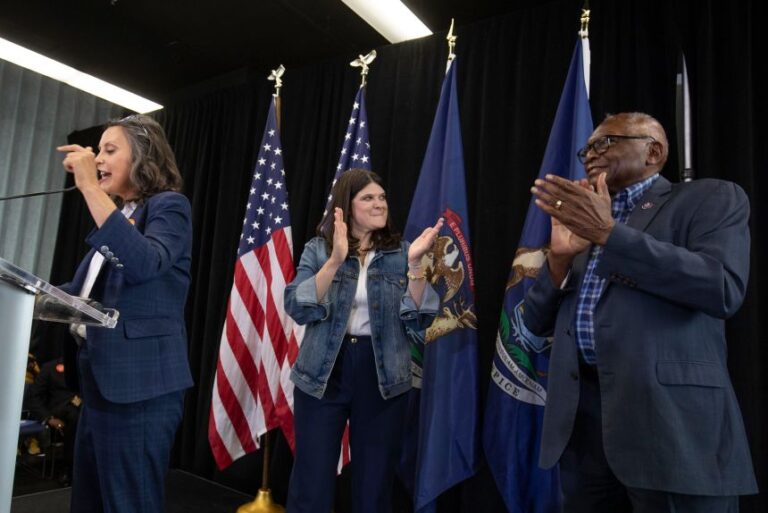
Schumer’s first choice to succeed Peters was term-limited Gov. Gretchen Whitmer — he always prefers candidates who’ve won statewide previously — but she shut him down completely.
For months, Schumer and Democratic Senatorial Campaign Committee Chair Sen. Kirsten Gillibrand of New York had made their unofficial backing of Stevens clear, inviting her to donor events and directing other support her way. Gillibrand even went so far as suggesting to several donors, ominously, that McMorrow had been a member of the Democratic Socialists of America – even though McMorrow isn’t.
“Senator Gillibrand is proud that Democrats are in a strong position to defeat Mike Rogers and continue our 30-year record of holding this seat,” her spokesman, James Singer, told CNN when asked about those moves.
Between managing Senate Democrats in Washington and an array of other complicated races, Schumer’s attention went elsewhere for much of the spring. His concerns never faded, though, and his gut check with Peters left him sure that the National Republican Senatorial Committee, which had been working to boost El-Sayed, was onto something about his weakness.
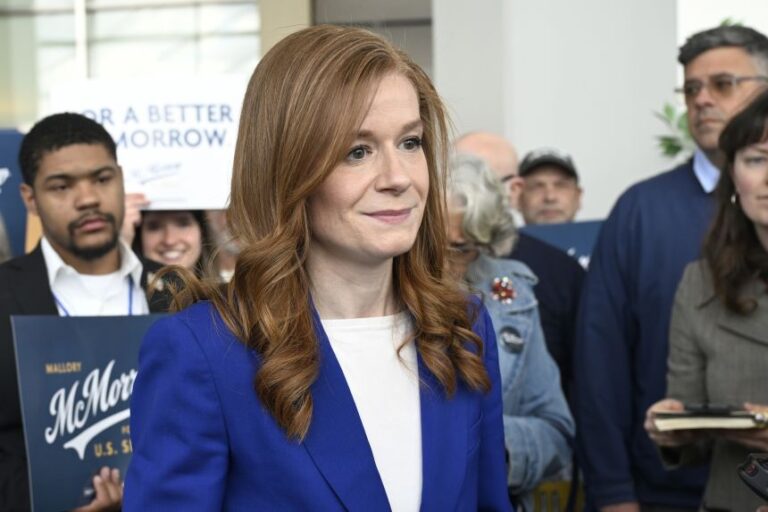
Also urged on by his wife, Peters undertook the mission in his typical soft-sell way. McMorrow called him, enraged, after a Wall Street Journal story published on June 26 included a mention that he thought she needed to consider dropping out. They didn’t speak again before she gave him a heads up on July 5 that she was about to suspend her campaign, according to a person familiar with the matter, deciding with advisers that she didn’t want to be painted as a spoiler if she wanted to run for another office in the future.
Stevens couldn’t believe her luck but couldn’t figure out what to do, according to two people familiar with the matter. Intermediaries kept telling her to give McMorrow space to make her decision, so much so that when McMorrow posted her video, Stevens decided not to call her.
For months, she’d been fixated on McMorrow as blowing the race for her. Only when a Politico reporter reached out to her campaign about what was being made out as a snub did Stevens text her. While El-Sayed in his own call to McMorrow asked for her support, Stevens never did.
Stevens also didn’t ask Peters for his support the first time they spoke after McMorrow’s exit, despite being urged to, according to two people. A second call had to be arranged for that, but even before Peters said yes, he had already stepped up his efforts, talking to donors and other Michigan officials about potentially jumping in for her.
After McMorrow’s exit from the race, Peters chatted with Massachusetts Sen. Elizabeth Warren, who had endorsed McMorrow. The two senators are friendly, and Peters said while he liked El-Sayed, he’d been convinced that Stevens was the one with the better chance of winning in the fall.
According to three people familiar with their conversation, both senators shared their concerns about Stevens’ struggles as a candidate. He asked if she was thinking of endorsing. She asked if he was thinking of endorsing. They both said maybe.
A week later, Peters made his Stevens endorsement official. A week after that, Warren went with El-Sayed, though she had previously declined to after meeting with him in Washington last year.
The Stevens campaign tries to stick it to ‘em

For months, Stevens’ campaign had been counting on their prime voters being the kinds of women and African Americans, especially people without college degrees, who wouldn’t tune into the campaign until closer to the election. Her advisers believed that showcasing her quirkiness, her particular accent and her connections to Obama would be exactly what would appeal to the voters they needed.
Instead, Stevens trudged through months of mostly small crowds and awkward moments clipped and quickly shared online. The staff was demoralized, and the candidate, despite deleting X from her phone, sometimes struggled to keep up her own determination when friends texted her the worst bits.
“Up until that point, the campaign was in a very defensive posture. It was very hard to ‘let Haley be Haley,’ because the internet was going to dunk on her, and there was no one to defend her,” said one person involved with the campaign. “She got all the downside of being the establishment candidate and none of the upside.”
How Stevens’ most famous comment emerged surprised them all. A C-SPAN camera happened to show up at an otherwise unremarkable campaign event – and a Republican-linked account posted 18 seconds of it, in particular her promise that she would campaign with “a little bit of ‘stick it to ‘em,’ because that’s the Michigan way.”
That clip has 3.4 million views on X. It drew a wave of sympathetic attention from fans who saw her delivery as folksy. Her campaign manager rushed an order of “Stick It To ‘Em” yard signs that became hugely popular. A follow-up interview in the halls of the US Capitol with TMZ – in which she keeps talking about the moment even as an aide tries to pull her away – was widely shared.
Those moments of getting better attention online became known internally as “Justice for Poochie,” a reference to a widely mocked 2025 video in which Stevens described a dog she had been scared of as a child.
Meanwhile, Whitmer was going through her own difficult weeks of being blasted by unions and Democrats in the legislature for a series of vetoes. Peters and others were urging her to jump on with Stevens. Even after beating El-Sayed in her own primary in 2018, she felt she barely knew him, though she heard the buzz among some of her staff about him. She knew Stevens.
“If Gretchen Whitmer bowed to pressure, she would be running for Senate herself,” said one person familiar with the governor.
Whitmer wasn’t sure how much of a difference her endorsement would make, despite Peters and others trying to push her along. She sat with polls that suggested she could sway still-undecided voters by attaching to Stevens her same results-minded sensibility.
Surprising even some on her staff, Whitmer jumped in, endorsing Stevens just over a week before the primary.
Elissa Slotkin was also elected as a first-time candidate to the House as part of the same Michigan wave as Stevens in 2018. She narrowly beat Rogers in 2024. She has gotten heavily involved in the primary for her former House seat to the point of paying for polls for her preferred candidate.
For now, Slotkin is on the sidelines in the Senate race. Even as she’s tried to whip up chatter about a potential 2028 presidential run by throwing down on the direction of the Democratic Party, Slotkin has insisted she has to stay neutral via a statement of principle that applies almost exclusively to this year’s race.
The result: Slotkin has become an object of derision and anger herself. Both El-Sayed and Stevens supporters tell CNN they’re not at all convinced Slotkin can be the unifying figure she keeps saying she wants to be once the dust settles. Instead, the exasperation is feeding a variety of conspiracy theories that she also is out to make the Democrats lose.
Through an aide, Slotkin declined to comment.
Bernie Sanders coaches El-Sayed
El-Sayed has made some on his staff uncomfortable at points with both the substance of his attacks on Stevens and the feared political fallout. But emboldened by his belief that victory is at hand, he has kept going, suggesting to supporters that his campaign was walking “the exact same path” as movements like the push for LGBT rights or ending Jim Crow.
As McMorrow and Stevens fought over voters they wanted to be their base, El-Sayed solidified and purposely kept speaking to his.
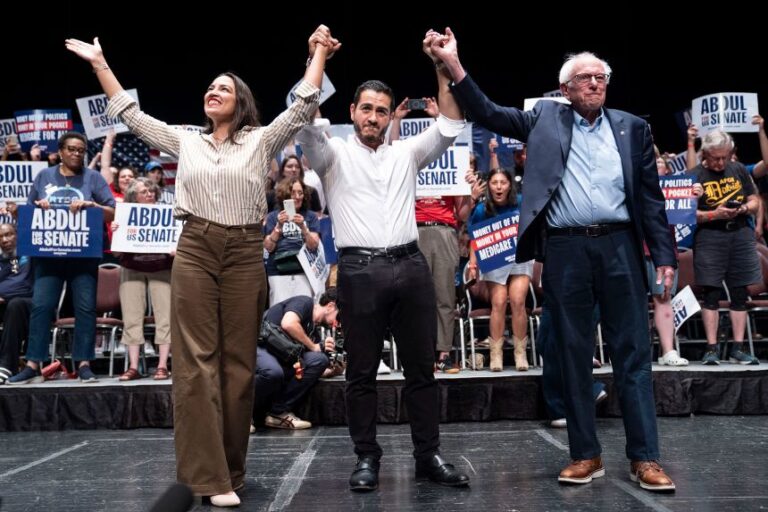
He campaigned with Sanders and Rep. Alexandria Ocasio-Cortez, who is far more sparing than her mentor in whom she endorses.
An admonition from Sanders last year while campaigning in Kalamazoo stuck: “You’ve got to tell them you’re a doctor. Talk about being a doctor,” the senator said, according to two people familiar with his comment. (El-Sayed graduated from medical school but pivoted to a career in public health instead of completing a residency or practicing medicine.)
Sanders meant not just stressing El-Sayed’s own medical experience but showcasing a fuller personality so that he wouldn’t be dismissed as an ultra-leftist or an outsider with his Arab heritage and name.
Even before he was back in Michigan two weeks ago for a series of rallies he successfully urged Ocasio-Cortez to join him for, Sanders was chipping in with more advice, including “Don’t shy away from talking about Gaza,” since AIPAC’s allies would spend millions against him anyway.
The afternoon after McMorrow dropped out, El-Sayed got more bad news when sexual assault allegations were published about Graham Platner, running a parallel insurgent campaign for Senate in Maine with the same consulting firm helping both.
It wasn’t just that Platner’s implosion prompted another round of questions about what wasn’t known about El-Sayed — accentuated by his refusal for weeks to disclose his personal finances — El-Sayed also put out a statement that condemned sexual assault but did not explicitly call for Platner to quit even as other Democrats were.
Others have suggested that El-Sayed was being either too deferential to his consultants or to Sanders, who himself waited on calling for Platner to leave the race. His campaign spokesperson did not respond when asked to explain the timing or content of the statement. But the campaign acknowledged internally it was a mistake, according to a person familiar with the matter.
El-Sayed has otherwise been deliberately unapologetic, standing by positions even when they go beyond where some think the median voter seems to be. He refused to back down on campaigning with streamer Hasan Piker, who has said America deserved September 11, a comment Piker has since said he regrets, and has called Mao Zedong “one of the great leaders of this world, a man who changed the entire universe.”
He took a swipe at Whitmer after her endorsement and repeatedly attacked Stevens even after calling on allies to lower the temperature as they mocked her “stick it to ‘em” moment.
“When AIPAC watches this: Come for me, see what happens,” he said in an interview posted Thursday. “You picked literally the least capable candidate in America, right? And then Chuck Schumer doubles down and then AIPAC doubles down and part of me is like, OK.”
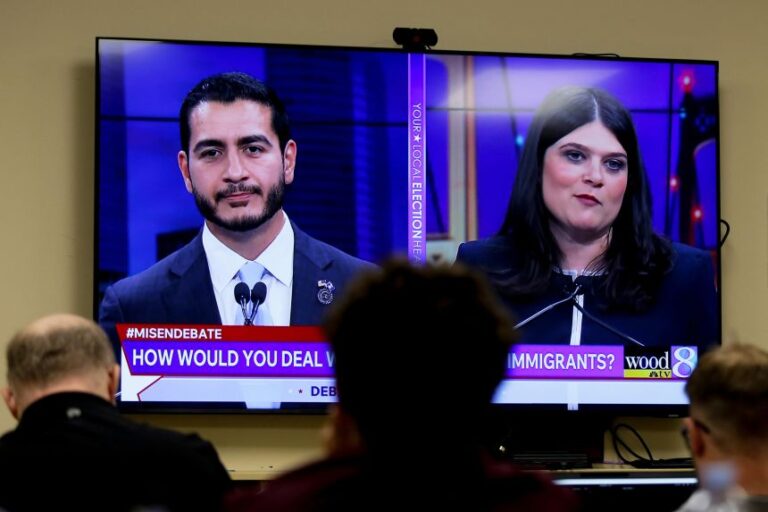
“Everyone in America understands you want to blame all of your problems on Jewish Americans,” Stevens fired back Thursday night on X. “But buddy, let me be very clear, I will lower the costs of groceries, ban stock trading for elected officials, stop Trump’s abuses of power, and protect Michigan manufacturing. And you’ll just be a celebrity whining and writing books to get even richer. You’re part of the complainer class, looking for their next book or podcast deal.”
El-Sayed has kept making the same joke about having a funny name at nearly every campaign stop. His own videos wearing fitted T-shirts and dancing were themselves a deliberate move to make him seem more relatable, less scary. Going viral helped too.
“We all feel a tremendous amount of pressure. But the candidate who has the most fun usually wins,” said Rebecca Katz, one of El-Sayed’s strategists. “The stakes are as high as they can possibly be, but we’re having fun.”
As an array of Democrats are turned off by El-Sayed’s pugilistic approach and positions, particularly on Israel, that’s exactly why he’s generating so much interest from those more aligned with Sanders.
“This is a pivotal race, not just for the Michigan Senate seat, but for the entire map in 2028 — because if a progressive wins not only the primary but the general, the centrists’ whole argument that progressives can’t win a swing state is moot,” a Sanders ally told CNN. “And that sets the stage for a national candidate in 2028.”
Read more Trump predicted an oil catastrophe if the war didn’t end. The clock is ticking