 By admin
After dismantling the federal system designed to protect US elections, the Trump administration now says it has a plan to rebuild it — less than 100 days before Election Day and just weeks before ballots begin going out in the mail.
Read more How to explain the complex emotional backlash that started soccer’s global war
A year after forcing out many of its most experienced election-security specialists, a key federal cyber agency is now reassigning remaining staff into new roles.
The agency says the new liaisons are expected to “build trusted relationships” with state and local elected officials, according to an internal summary of the administration’s plans obtained by CNN.
The memo, which US officials emailed Capitol Hill staff earlier this month, reveals more details than the Trump administration has publicly provided about how it intends to reconstitute its election-security operation amid demands from President Donald Trump and Homeland Security Secretary Markwayne Mullin for a sweeping overhaul.
The DHS agency that oversees this work — the Cybersecurity and Infrastructure Security Agency (CISA) — says it will use a security mechanism it employed during the World Cup to protect the midterm elections. It also promises a public plan in 30 days that will “lay out cyber and physical security resources” for states, according to the July 17 email.
But election officials and non-partisan experts warn it’s too deep into the election cycle for any major changes to their security protocols, and they are skeptical that the agency’s hollowed-out workforce can deliver even the baseline support to states before the midterms.
In a closed-door briefing this month, a CISA official recently assigned to election security told congressional staff that the agency has been so depleted of staff that it wouldn’t be able to provide its normal election-security assistance ahead of the midterms, according to a US official.
Met with months of mostly radio silence from CISA, states have moved on, cobbling together new security measures to fill gaps created when the Trump administration gutted the election-related functions of the agency.
State and local officials have stretched their tight budgets to contract with private cybersecurity vendors or hire additional IT staff to do that work in-house. They’re setting up the sort of table-top exercises that CISA previously hosted to game-out how they would respond to security emergencies. And they’ve had to retool the information-sharing processes among states that served as an early warning system for any attempts to disrupt election systems, with state and local governments paying for a platform that the federal government once offered for free.
“This was all supported by federal agencies,” Vermont Secretary of State Sarah Copeland Hanzas told CNN. “Now we’ve got to figure out how we can share that — with some duct tape and, you know, maybe a bungee cord or two.”
State and local election officials are nonetheless confident they’ve taken the steps needed to plug the holes and secure election infrastructure for the 2026 midterms. But they acknowledge that they haven’t been able to replicate the federal government’s ability to coordinate intelligence gathering and analysis across multiple federal agencies for a nationwide view of emerging threats.
The advantage of that cross-government approach was evident when the first Trump administration identified attempts by Iranian actors to influence the 2020 elections. Working with intelligence agencies, CISA played a critical role in presenting that information to election officials, using language they could act upon, according to various sources in the election community. Information that election officials shared with CISA and its counterparts at the FBI helped the federal government understand what the Iranians were up to.

Secret US cyber operations shielded 2024 election from foreign trolls, but now the Trump admin has gutted protections
CISA’s then-director Chris Krebs stood next to then-director of National Intelligence John Ratfcliffe to announce the influence campaign — an episode Mullin omitted when he and Trump claimed a government cover-up of the Iranian efforts.
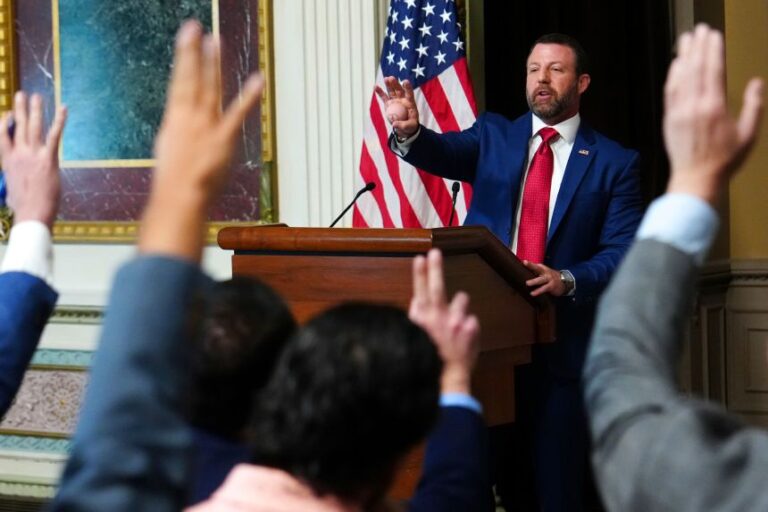
In a statement to CNN, CISA acting Director Nick Andersen said the coming election security plan “will further offer to states the cyber resources they need, including information about available no-cost voluntary services such as the sharing of threat information, technical expertise, vulnerability scanning, and other risk mitigation support.”
Nevada Secretary of State Francisco Aguilar, a Democrat, told CNN it was “too late” in the election-preparation season for such a plan from the federal government — a point echoed by others who work in election security.
“We are well until the election cycle. It is not simply about Election Day. Election Day is not when the Russians started in 2016. It is not when the Iranians started in 2020,” said Geoff Hale, a former election security official at CISA who is now a visiting fellow at the Center for Democracy and Technology. “People should be realizing we have a gap of information of 14 to 18 months.”
Scattershot support
For nearly a decade — after a decision in 2017 by the outgoing Obama administration to designate elections a subsection of the nation’s critical infrastructure — CISA forged relationships with election officials through 10 regional offices, which were eventually staffed with election advisers who could help direct resources to voting officials.
Those resources included table-top exercises, stress-testing election systems’ cyber defenses and intelligence advisories laying out potential threats. Physical security of elections became a focus after the 2020 election made harassment and threats to election officials a more prominent issue. At the request of local offices, CISA officials would conduct assessments of the physical security around polling locations or other election sites.
Read more GOP Senate nominee ends press conference after questions on ties to White nationalist influencer
But CISA’s presence shrunk drastically after Trump returned to the White House — more fixated than ever that a deep state was rigging elections against him — and his administration made dramatic cuts to the agency. Those regional election specialists were forced out, as were other CISA employees who focused on elections, including Hale, and much of the election-related work of the CISA experts who remained was put on hold.
Despite the gutting of personnel and operations, CISA’s services to election officials haven’t ceased entirely, according to people who work with election officials who described the support as scattershot at best. Election officials in a handful of states have been able to secure occasional assistance— sometimes, by not mentioning in their request for a security assessment that it was for an election-specific function. CISA’s larger mission of helping state and local governments with security issues lives on.
Still, in large swaths of the country, election officials have not obtained any election-specific support from CISA this voting cycle.
Instead, election officials have grown to rely on a “ragtag team of advisors and coordinators that we’ve built among those of us who were doing this work previously,” said Arizona Secretary of State Adrian Fontes, a Democrat.
For instance, under prior administrations, the federal government paid for an information-shared portal used by election officials across the country.
The portal, the Elections Infrastructure Information Sharing and Analysis Center, is still operating, but now under a paid subscription model, creating a patchwork of membership across 44 states. In some states, the state elections offices are paying for the local election administrators to have access to the platform, while in other states, local offices are buying their own memberships.
‘Happy it’s now and not a few years ago’
The silver lining for the election community is that they had nearly a decade of experience working with CISA’s security experts before Trump took a wrecking ball to the agency.
“My main take on the CISA pullback is I am happy it’s now and not a few years ago,” said a person who works with election officials and asked for anonymity to not strain their working relationship with the administration.
With that know-how, state officials stressed their ability to adapt to the change in landscape, with some GOP election administrators arguing the federal retreat is not the crisis it is sometimes made out to be.
“We took the resources and the knowledge that was being shared by the various federal partnerships and tried to make sure we were able to reproduce it going down the road,” said Iowa Secretary of State Paul Pate, a Republican. “When CISA was teaching us how to do tabletop exercises, well, we quickly wanted to learn how not only to do them, but how to teach them to others.”

West Virginia Secretary Kris Warner, a Republican told CNN his “ace in the hole” was his office’s hiring of a former CISA official as its chief information officer, while stressing that his state was never reliant on the federal government for election administration, particularly with the partnerships he has built with other states.
“We don’t need the feds to be able to pick up a cell phone and call [Kentucky Secretary of State] Michael Adams or [Missouri Secretary of State] Denny Hoskins or any of the other secretaries of state that we need to stay in contact with,” he said.
Still, even with their success in recreating CISA’s support for themselves, the financial cost of doing so remains an ongoing burden for election officials.
“This is on the back of the Nevada taxpayers, when it’s Nevada taxpayers who are already paying into the federal government to do this job. The federal government should take on this responsibility, and they’re not,” Aguilar said.
The ouster of CISA’s election specialists has created a diaspora of those experts landing in election cybersecurity support roles at large tech companies or smaller non-profits that have popped up — many of them offering their services cost-free to election officials.
But among the two-dozen states that have banned private funding for elections — after controversial donations to elections offices in 2020, pejoratively known as ZuckBucks, from Mark Zuckerberg’s foundation — at least some of those state laws block states from receiving such services gratis from private organizations.
“It’s just gone crazy,” Pate said, of the increase in cybersecurity costs for elections offices. “We’re going have to really get serious about that consistent funding stream — whether that’s going to be the states having to pony it up, or the federal government’s going to stay committed to it.”
Read more Trump says agreement has been reached for ‘complete disarmament’ of Hamas; Hamas has yet to respond