 By admin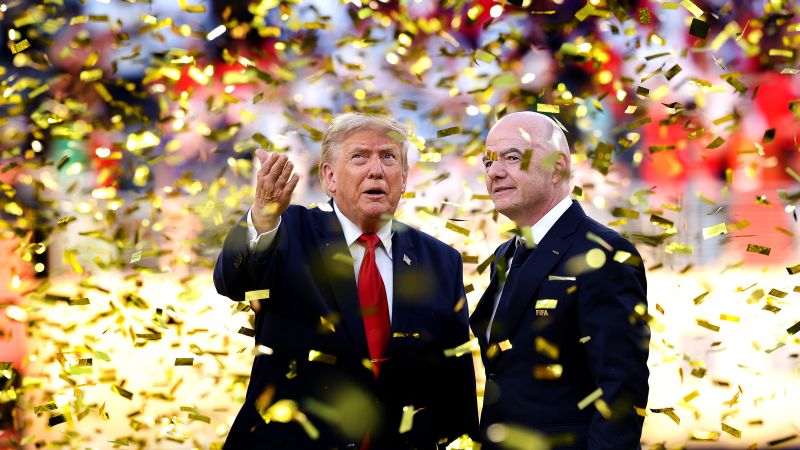
“This is our game, not their game.”
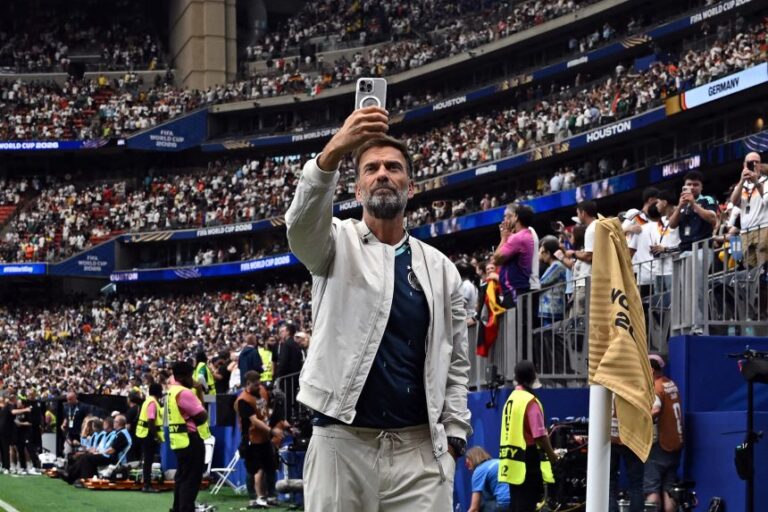
Jürgen Klopp spoke for millions of global fans when condemning President Donald Trump’s apparent string-pulling to overturn US star Folarin Balogun’s suspension for a critical World Cup game.
Read more GOP Senate nominee ends press conference after questions on ties to White nationalist influencer
The new German national soccer coach’s insight into the psyche of football’s devotees is now the best way to understand the game’s new storm — FIFA’s plan to sell shares in future World Cup events.
This would always have been contentious. It’s especially so in the emotionally charged aftermath of spectacular World Cup finals in North America.
But the backlash is being supercharged by one thing: There’s a Trump factor.
The reported involvement of Joshua Kushner, brother of Trump’s son-in-law Jared, turned a sports business story into a reprise of the uproar ignited by the president this summer.
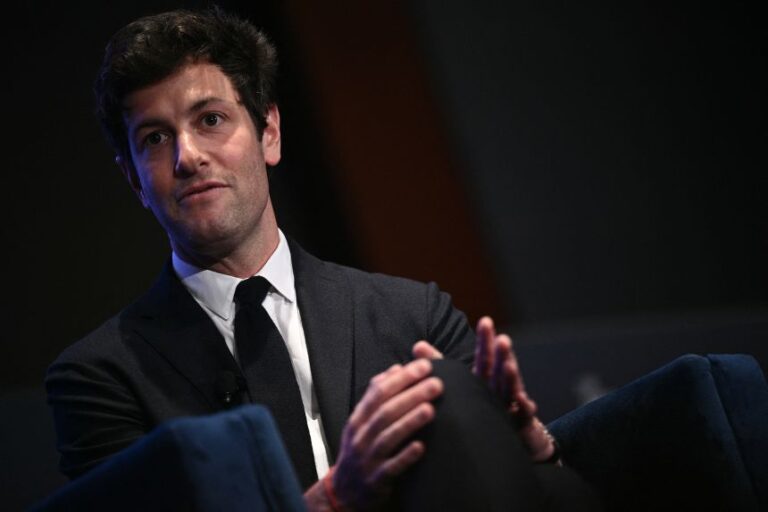
There’s no confirmation that Trump is involved. And there’s nothing illegal about FIFA’s plan — which nevertheless prompted European nations Thursday to threaten a future World Cup boycott. Other global federations, including the one governing the sport in North America, also registered opposition.
But football followers are primed for suspicion because of Trump’s meddling over Balogun; his crashing of world champ Spain’s on-pitch victory party; and his bromance with world soccer supremo Gianni Infantino, which culminated in the extraordinary decision to award the president the inaugural FIFA Peace Prize.
“Where will they stop?” the front page of French sports daily L’Equipe blared this week over a photo composite of Trump, Infantino, the glistening golden World Cup trophy and dollars floating in the air.
FIFA says its scheme will unleash millions in cash, including from US investors, for grassroots football development — especially in poorer nations like Cape Verde, which wove a World Cup fairy tale. It may be more welcomed in emerging soccer hotbeds in Africa and Asia than in Europe.
FIFA plans to set up a separate subsidiary — involving private equity investment — to control the commercial and operational rights of its events. But UEFA, the governing body of European football, says the arrangement is immoral and that FIFA doesn’t have the right to sell off “what they merely hold in trust for the next generation.”
The showdown plunged football into a global civil war. Opponents fear new investors are buying the power to influence the sport; make World Cups — which are special because they happen only every four years — more frequent; and even modify the rules in pursuit of money. The UEFA boycott would affect the next women’s World Cup next year and could deprive the next men’s showcase of titans Spain, Italy, France, Germany and England.
The values that still linger in soccer’s heartlands
It’s not news that Trump is unpopular in Europe. And Infantino is increasingly hubristic; he recently declared the recent World Cup “the greatest human, social and cultural event that mankind has ever witnessed” — never mind the invention of the printing press; the Industrial Revolution; political revolutions and religious awakenings; two world wars; the discovery of penicillin; and the moon landing. But many of the fans who abhor Infantino aren’t exactly consistent. They don’t seem to mind the oligarchs and repressive Middle Eastern nations who own their clubs when they splash out for the best players.
But this backlash goes beyond dislike of Trump and Infantino. It’s rooted more broadly in the psychology and insecurities of supporters of the Beautiful Game itself. It reflects an era of political, sporting and emotional dispossession as runaway financial forces globalize a working-class game that handsomely enriches a select few but leaves the masses behind.
There’s also a perception among some football supporters following the World Cup that FIFA wants to Americanize the game. And these forces reshaping football are not unique. They are the same ones challenging global societies in an age of oligarchs, political strongmen and elites whose decisions shape the lives of millions with far less say in their own fates.
Read more Trump says agreement has been reached for ‘complete disarmament’ of Hamas; Hamas has yet to respond
This is what Klopp seems to be getting at. He proved unusually attuned to football’s emotional lore while manager of Premier League Liverpool — a club steeped in tragedy and sentimentalism. And he’s tapping into a sense among many soccer fans that something that is sacred, that is theirs, is being taken away and will never be the same. It implied what many fans think: Why should the wealthy and the powerful get to trample the rules and traditions of a game so integral to the lives of so many?
This feeling is distilled through football’s deep social and civic heritage. In Rome, Madrid, Buenos Aires, Mexico City, Manchester, Athens, Glasgow, Marseilles, Munich and elsewhere, football clubs are pillars of regional, cultural, social and even religious and national character. They are ways to express class pride and personal identity.
There’s a saying that you don’t choose your team; it chooses you. Fandom is handed down through generations. “Few of us have chosen our clubs, they have simply been presented to us,” wrote Nick Hornby in “Fever Pitch,” his classic 1992 book about the obsession and agony of life as a football supporter. One American equivalent may be the Southern college football teams that come to embody the qualities of their cities and serve as vessels of regional singularity.
This sense of identity is endemic to soccer in its European heartlands. There, many generations-old stadiums loom over rows of working-class housing, epitomizing the game’s widening inequality as soaring player salaries and massive commercialization alienate the game from its traditional audience.
Why some longtime fans felt alienated by the latest World Cup
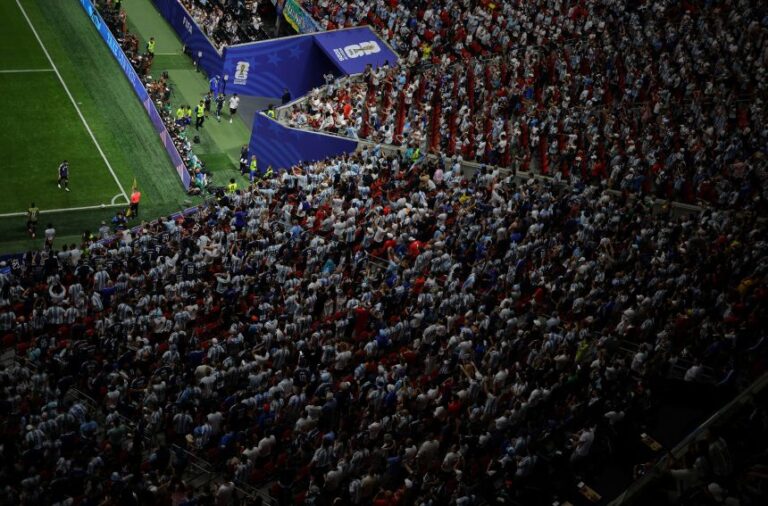
This summer’s World Cup finals were a huge success — financially, and on the field. Many overseas fans experienced a side of America beyond headlines about Trump and mass shootings that dominate their news at home.
But the event also tore at fears of global aficionados that their inheritance was being eroded. These are now being raised again by FIFA’s big financing deal. Take something as seemingly trivial as hydration breaks during games, introduced to cope with high summer temperatures in the Western hemisphere. Many fans see them as an excuse to introduce more commercial breaks, and the intervals jarred with soccer’s conventional continuous flow of play, evoking the stop-start nature of NFL games.
The same complaints greeted an extended break in the middle of the World Cup Final to accommodate a Super Bowl-style halftime show. Americans might consider the spectacle of Madonna, Shakira and Justin Bieber a more alluring prospect than halftime entertainment in Europe, when fans neck beers below the stands, line up for overflowing urinals or, in the UK, buy pies filled with something optimistically described as meat.
Football clings to the quaint notion that it “belongs to the fans.” Variations of this phrase have been on many lips in recent days, including those of new British Prime Minister Andy Burnham, an Everton fan, as he hit out at FIFA’s proposals.
This is true up to a point. Soccer’s appeal may be uniquely enriched by the tribal displays of supporters — as empty, echoing stadiums during the Covid-19 pandemic demonstrated. But it’s controlled by billionaire team owners, multimillionaires on the pitch and TV companies that decide kickoff times.
Still, fans have great power, once roused. This was driven home by the popular revolt that killed another proposal by wealthy tycoons — for a European Super League in 2021.
As Bill Shankly, Klopp’s most famous predecessor at Liverpool, put it: “Some people believe football is a matter of life and death. I am very disappointed with that attitude. I can assure you it is much, much more important than that.”