 By admin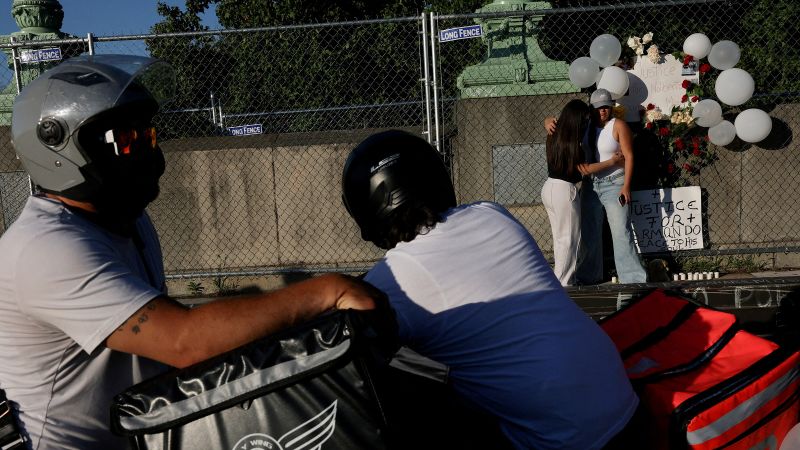
With a US Park Police cruiser in pursuit last month, the driver of a Honda Accord slammed into Nolberto Meza on his moped, in Washington, DC, instantly killing the Venezuelan national and splattering the food he was delivering on the hot pavement, according to the Metropolitan Police Department.
The allegedly stolen Honda then plowed into a vehicle with two Chinese embassy officials, injuring the diplomats before coming to a stop, the police and an eyewitness said.
The “confirmed stolen vehicle” failed to yield during a traffic stop, leading to the chase, Park Police said, and the three young men in the Honda fled on foot after the accident until officers caught up and arrested them.
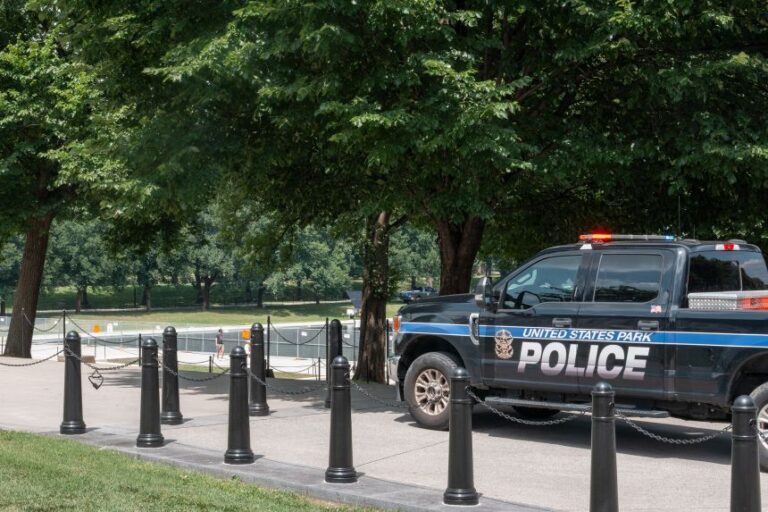
After President Donald Trump declared a crime emergency in the nation’s capital last August, the Park Police adopted a directive lowering the baseline for initiating high-speed pursuits — a shift that some law enforcement experts warn is dangerous. Even after Trump’s emergency order expired last year, the looser pursuit policy remains in effect.
Many police departments nationwide have shifted away from vehicle pursuits in response to high rates of accidents and deaths. But some law enforcement advocates argue that failing to pursue criminals sends the wrong message, and Trump has encouraged agencies like the US Park Police and Immigration and Customs Enforcement to adopt more aggressive police tactics.
In the past year alone, Park Police have initiated more than 400 chases — an eight‑fold surge from 49 chases in the year before the policy changed, according to the agency, a spike that underscores how the department has broadened its pursuit tactics. At least seven pursuits have resulted in crashes since January, two of which involved a fatality, a CNN review of local news reports, social media posts and police press releases found.
When asked to confirm these incidents, the Park Police spokesperson declined to comment on the individual pursuits but said the new policy has led to 290 arrests and acknowledged that two incidents resulted in life-threatening injuries or death.
Park Police did not share data for chases that caused minor injuries.
“We would like that number to be zero,” the spokesperson said about the pursuits that have resulted in life-threatening injuries or deaths.
Meza’s family desperately wishes he was not one of those lives lost in a police chase.
“We wanted him to return to his country safe and sound, not like this, not inside a coffin,” Meza’s niece, Verónica Sanabria, said in an interview conducted in Spanish, her voice breaking with emotion. “No family deserves to go through the pain we have been forced to go through.”
Expanded officer discretion
The US Park Police, created by President George Washington, has jurisdiction in federal parks and officers are located in the nation’s capital as well as New York City and San Francisco.
DC’s Park Police force has doubled since last August, with an additional 300 new officers joining, following Trump’s executive order declaring a crime emergency in the district.
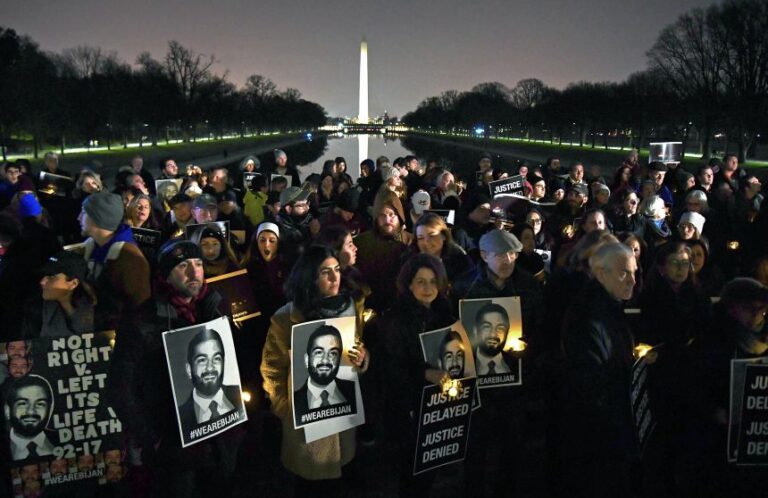
After two officers were indicted over the fatal shooting of 25-year-old unarmed motorist Bijan Ghaisar in Fairfax County, Virginia, following a chase in 2017, Park Police tightened its guidelines for pursuits.
Under that revised policy, the department allowed pursuits only when a suspect was wanted for a violent crime or some other felony offense.
The current gives more authority to the pursuing agent, allowing officers to initiate a chase when a suspect is wanted for a felony or when they broadly perceive a threat to the public – relying on their judgement.
But law enforcement experts who study the effectiveness of police chases said the potential recovery of a stolen vehicle, for instance, shouldn’t necessarily lead to a police pursuit. They argue officers need to balance the potential risks against the benefit of immediately apprehending a suspect.
Dennis Kenney, professor at John Jay College of Criminal Justice, noted the incident that led to Meza’s death took place around rush hour on a main artery.
“It seems like recklessness to me,” he said. “I would say that this had a pretty low need for apprehension and a pretty high level of risk, which should put the pursuit off limits.”
Chuck Wexler, executive director of the Police Executive Research Forum, believes pursuits should only happen for suspects who have committed a violent offense and there’s an imminent threat to the public.
Wexler’s group, which worked with the Justice Department to publish policy for departments nationwide, found that crashes occurred in an average of at least 30 percent of vehicle pursuits from 2015 through 2020, with injuries or fatalities occurring in up to 17 percent of pursuits.
Read more Trump administration demands hospitals share emergency room records
“You can get that car another day, but you can’t get a life back,” Wexler said. “We’re not saying that police should never pursue. We’re simply saying… the threshold should be very high when you do pursue.”
But some law enforcement experts are in favor of giving officers more discretion.
“I think the downside of really restrictive pursuit policies are that you send a message to offenders that all they need to do is start driving erratically high speeds, and that police will stop pursuing. I think there’s a real hazard in that as well,” said Jim Dudley, who served as deputy chief of the Patrol Bureau of the San Francisco Police Department.
Trump’s August 2025 executive order regarding Washington, DC, serves as part of the president’s larger efforts to make the nation’s capital safe and secure in his vision.
Interior Secretary Doug Burgum, whose department oversees Park Police, praised the pursuit policy change at a Cabinet meeting last August and said officers were in favor of it as well.
“The next night they had so much fun. They pulled people over. They started to take off. They chased them, they stopped them,” Burgum said to a smiling Trump sitting beside him.
The Park Police’s union, for its part, offered a threat to would-be criminals, saying: “If you flee from a traffic stop in DC, we will chase you – and we will catch you. Tell your friends.”
Since then, some pursuits have led to serious injuries or worse.
In March, the driver of an allegedly stolen car died after reportedly crashing into a tree while trying to escape the Park Police chasing him for evading a traffic stop, according to FOX5 DC. A Park Police officer was hospitalized after a crash that took place while in pursuit of another suspect in April. And in June, several Park Police vehicles pursued a stolen vehicle in Northwest DC, ending in a crash and the apprehension of four juveniles.
The Metropolitan Police Department assisted Park Police with the investigation into the crash that killed Meza and initially charged the driver of the allegedly stolen car with second degree murder. The DC US attorney’s office later dropped the charge, saying it was “not yet in receipt of all the information needed to make a decision.” The driver was released from custody and the case remains under investigation with the DC US attorney’s office.
The Chinese Embassy did not respond to repeated requests for comment from CNN about its diplomats who were injured in the chase.
A delivery driver’s journey
After devastating earthquakes tore through Venezuela in June, Meza’s family is holding out hope for airports to reopen there so they can bring his body to home to Caracas where his wife, Angélica, awaits him.
Meza left Venezuela in 2023 with his wife, crossing the treacherous jungles of the Darien Gap, then Central America to arrive in Mexico where Meza parted ways with his wife and children, Sanabria, Meza’s niece, told CNN.
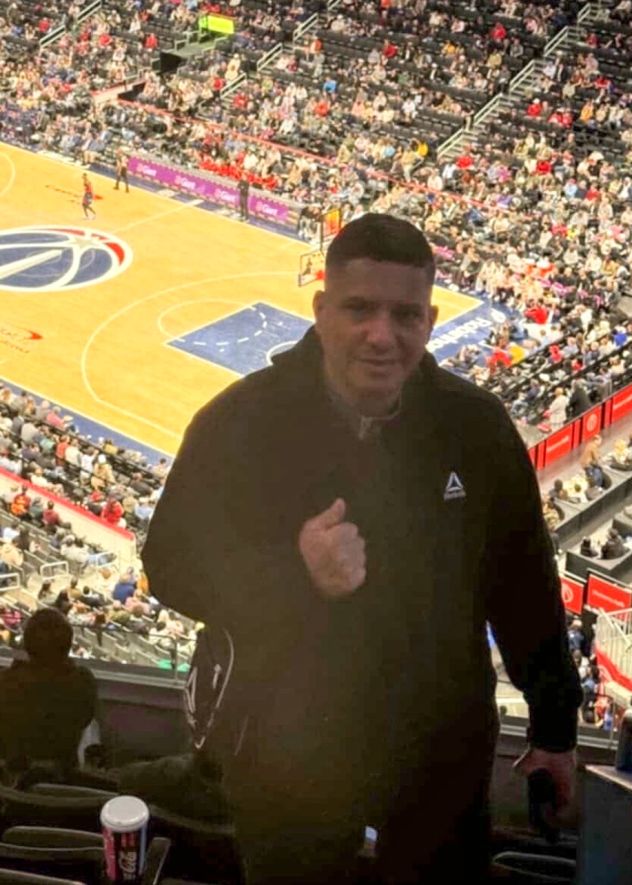
Only able to afford travel expenses for herself and one other family member, Sanabria took her uncle to the US with her so he could make money to support his family.
Before he died, Meza was working his way through the legal process of seeking asylum in the US. He and his niece were set to have their court hearing in January.
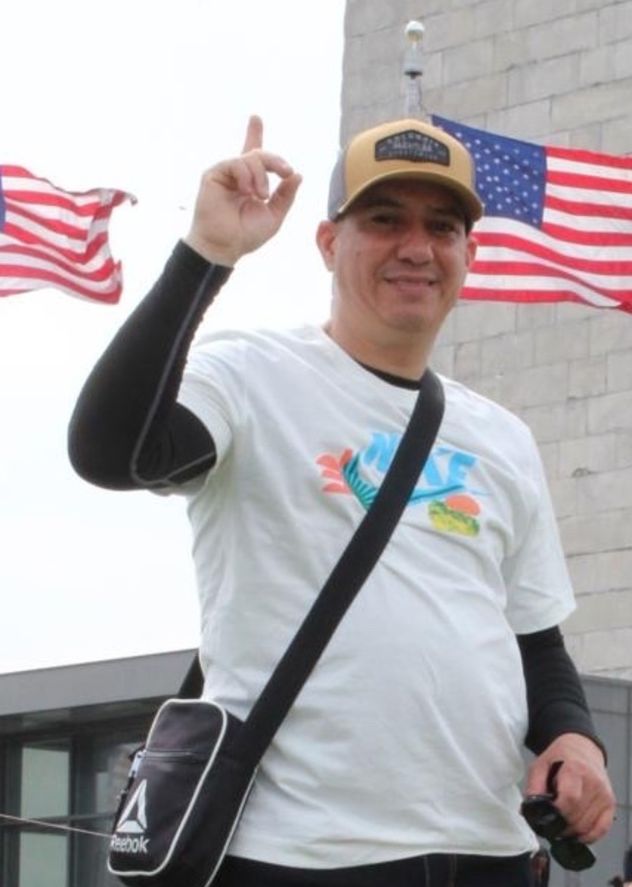
“Here, all he did was work and work. He practically didn’t have any days off,” Sanabria lamented. “The few photos he has are from times when he went to deliver an order, saw a nice spot, and took a picture.”
A lover of Leones del Caracas baseball and Salsa dancing, Meza’s family described him as a man who always put his family first, whose ultimate sacrifice was being away from them. They said he was headed to complete a food order delivery when he was killed.
Meza’s family said they blame the suspects who allegedly stole the car and the officers at the helm of the pursuit.
“I do not condone crime. It is wrong that a car was stolen, but the stolen vehicle was insured — my uncle’s life was not,” Sanabria, Meza’s niece, said. “It was snatched away from him. He deserved to live.”
Read more 6 looming questions about the Iran war
CNN’s Rashell Marthans contributed to this report