 By admin
The Iran war could be reaching another pivot point.
Following the demise of a three-month-long ceasefire, the two sides returned to fighting this month, but with little sign that either is really gaining a strategic advantage.
Read more Inside the fights to maintain TPS status for thousands after the Supreme Court sided with Trump
With the war in a bit of a quagmire, the main movement seemingly happening right now is wavering support among the conflict’s few US supporters. And although US operations are “on a hold,” a Defense Department source told CNN over the weekend, after nearly two consecutive weeks of nightly strikes, the Trump administration has routinely flirted with escalation.
So what happens next? Here are some of the critical questions.
Do Republicans start applying more pressure to end it?
Even those who didn’t initially criticize the war are starting to publicly question how long it can go on.
Fox News host Laura Ingraham said last Monday night that “the clock is ticking for President Trump to get out of this war before voters head to the polls. It’s making a lot of Republicans nervous. … Republicans cannot let this become an endless distraction, especially if they want to win in November.”
House Speaker Mike Johnson on Tuesday espoused the importance of the war before adding: “Now we’ve got to wrap it up.”
Sen. Bill Cassidy of Louisiana, meanwhile, said on CNN’s “State of the Union” on Sunday that “in my mind, the president’s had the opportunity to achieve the initial goals, which I agreed with, to wrap it up. It’s not happened at this point.”
But there doesn’t seem to be a great way for Trump to wrap it up right now. Iran didn’t seem interested in even a pretty favorable peace agreement (the memorandum of understanding) and Trump’s renewed strikes and threats don’t seem to have cowed the country either.
Are those Republicans prepared to push Trump to get out if there’s no nuclear deal? What if Iran continues to control the Strait of Hormuz? The latter, especially, would be a major loss that would be difficult to sell as anything else. So if prominent Republicans suggest it’s time to just get out regardless of a deal, or with the issue of the strait unsettled, it quite simply means they’re terrified of the politics of this.
Trump, for his part, insisted again on Tuesday that the midterms “won’t have any impact on me.”
Do the recent troop deaths further tank public perception?
Trump has made it abundantly clear that he’s worried that the first US troop deaths in the war since March — there have been four since regular strikes resumed — could further damage public support.
For one, he keeps favorably comparing the number of deaths (currently 18 US service members) to past wars with much higher death tolls. And for another, he keeps claiming — without evidence — that the fallen troops and their families supported the war effort. (At least one family member has said something different.)

The evidence suggests there’s good reason for the president’s apparent anxiety.
A back in March showed 42% of Republicans and 53% of independents said US troops being killed or injured in the Middle East would make them more likely to oppose the war.
The Pentagon over the weekend quietly updated its casualty database, recording more than 140 additionally wounded and bringing the total to more than 600.
And even a lower death toll than previous wars could have an outsized impact. That’s because Americans have largely turned against this war even during months in which there were no deaths. After all, the rising gas prices seemed compelling enough.
And given Americans largely don’t seem to see the point of the war or expect it to do any good, seeing service members die as part of it could be even more difficult to countenance.
Does Trump escalate?
Trump has steadfastly resisted escalation so far. But given the growing impasse, it’s possible he and those around him decide it’s the only alternative to a potentially embarrassing retreat.
There are credible reasons for his hesitation, of course.
Trump has repeatedly threatened to strike Iranian infrastructure, for example, including over the past week. But that could constitute war crimes.
Another option is to try to control strategically important territory, like Kharg Island or the area around the Strait of Hormuz — all critical oil hubs that contribute to Iran’s struggling economy. But that would very likely require ground troops, which a CNN poll in March showed Americans opposed 68%-11%, and comes with the risk of a lot more US casualties and a longer war.
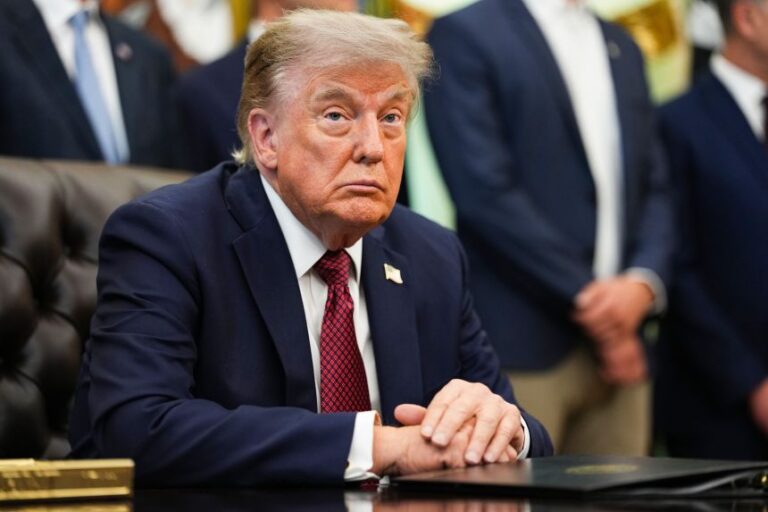
Trump told Axios on Thursday that he is currently “considering a massive attack,” which he called “bigger than ever before.”
But he’s made similar comments many times before, and he has regularly backed off despite not getting what he wanted from Iran.
Read more At every fork in the road on Iran, Trump’s choices get worse
At some point, it seems he and those around him would decide that threats aren’t really working.
Trump paused strikes this weekend, with US Ambassador to the United Nations Michael Waltz saying Trump was “giving the talks some space.”
But CNN and others reported that part of the reason the administration might hold off on going big is that Vice President JD Vance and Joint Chiefs of Staff Chairman Gen. Dan Caine have raised concerns about escalation, and Caine has pointed to concern over the size of the US munitions stockpile.
How high will gas prices go?
One of the most troubling developments last week was that the Houthis, Iran’s proxies in Yemen, announced a blockade of Bab al-Mandeb strait and started targeting Saudi ships in the Red Sea.
That’s acted as a major bypass of the Strait of Hormuz, so hindering passage is bad for an already struggling global oil market.
By Thursday, oil topped $100 a barrel for the first time since May. That’s after gas already went back above an average of $4 per gallon in the United States.
And on some level, Trump’s leverage can be directly traced to the latter number. To the extent gas prices rise significantly beyond $4 per gallon, it’s going to be difficult for him to make a case for the war that’s going to be acceptable to not just the American public, but also his allies.
Does Trump further lower his expectations?
One of Trump’s biggest problems right now is that he promised people the moon. He said he would only accept “UNCONDITIONAL SURRENDER” from Iran and that he aimed to prevent it from building a nuclear weapon in perpetuity. He even talked about the Iranian people rising up to oust their leaders.
He’s already significantly scaled back those goals, judging by the terms of the now shattered memorandum of understanding. Now the question is whether he might settle for even less just to extract himself from the war.
For example, would Trump accept a simple reopening of the Strait of Hormuz without a nuclear deal? He’s previously suggested that Iran is already effectively denuclearized and that it can simply be monitored from space.
(Of course, Trump also said Iran’s nuclear program was “obliterated” a year ago, and he still went to war.)
Trump has also occasionally suggested that the Strait of Hormuz isn’t really the United States’ problem — or at least that it’s a bigger problem for other countries. Might he reason that he can just pull out and force others with more at stake to deal with it?
That would be horrible for US relations with other countries, but making nice with allies doesn’t generally rank high on Trump’s list of concerns.
Will Congress actually do something?
It still seems like the Republican-controlled Congress, which has been more outwardly anxious about the midterms, is a long way from asserting its constitutional authority over the war. But there have been some developments.
One way Congress could do this is by declining or delaying funding for the war. The House passed a bill that included funding last week, but the bill’s fate in the Senate looks murky at best.
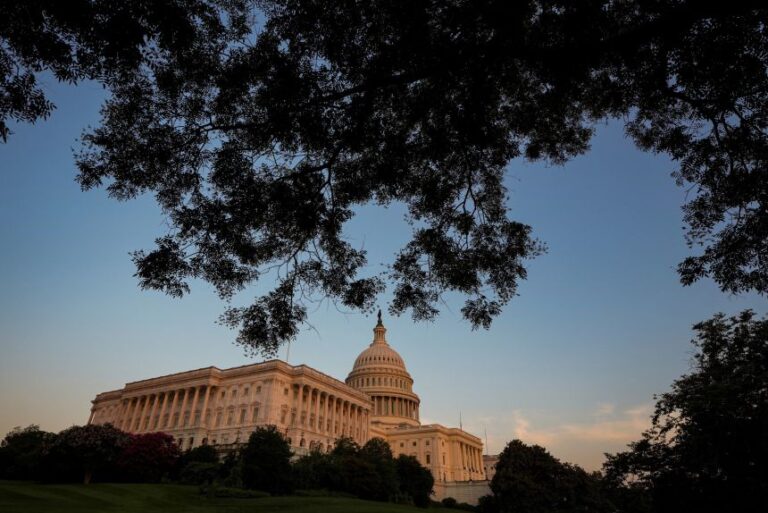
The second path is continuing to hold votes to limit Trump’s authority via war powers resolutions. The House voted to do so for the second time on Thursday, and the GOP-controlled Senate has voted that way once, too.
Republicans in Congress have given Trump a wide berth on the war generally, but the administration is clearly flouting the 60-to-90-day limits of the War Powers Act — engaging in a drawn-out conflict and claiming it has actually been two conflicts because of the ceasefire in between. And some GOP lawmakers are signaling they’re growing tired of the illogical explanations.
“Just because you stop a war and then restart it a few days later doesn’t really mean anything to the Constitution,” Rep. Nancy Mace of South Carolina told CNN’s Manu Raju last week.
Sen. Lisa Murkowski of Alaska made similar comments at a hearing last week.
Cassidy, who recently switched from voting to limit Trump’s war powers to allowing Trump more time, added Sunday that Congress might “soon” need to act.
Read more Iran war casualty count eclipses 600 as Pentagon quietly changes accounting