 By admin
Oona Hanson is a writer, educator and parent coach who specializes in helping families navigate diet culture and eating disorders.
Read more Cyclospora outbreaks start with human contamination. Nobody has ever been able to figure out how
Celebrating losing a few pounds because you got sick? As cyclospora cases spread throughout the United States, more people are making jokes about the “benefits” of the intestinal parasite.
The toilet humor took a disturbing turn when some people on social media suggested they wanted to contract this infection for its potential weight-loss effects.
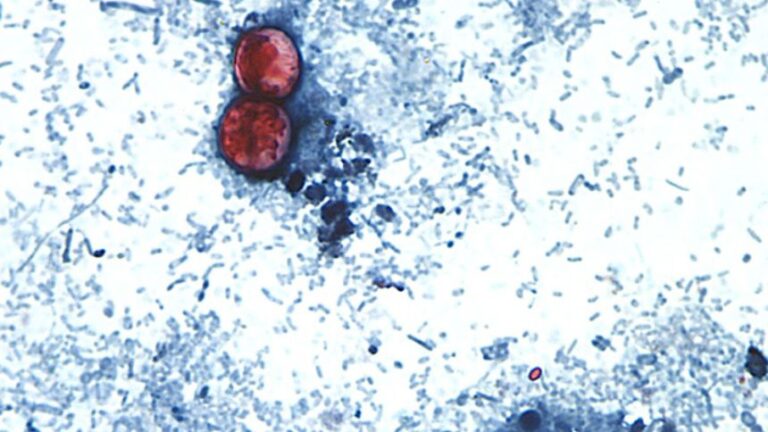
Cyclosporiasis, a parasitic infection that causes nausea, fatigue, cramping and explosive diarrhea, can linger for weeks. The illness lands nearly 10% of patients in the hospital. I spotted online creators jokingly featuring themselves headed to the store for raw produce or eating berries in the hopes of getting sick and losing weight — despite the risk of experiencing discomfort and dehydration.

Many kids don’t eat enough veggies. Amid a parasite outbreak in the US, what’s a parent to do?
“The fact that many people’s first reaction to a disease outbreak is to joke about weight loss speaks to how deeply diet culture has shaped our thinking,” said registered dietitian and psychiatric nurse practitioner Dr. Whitney Trotter, CEO of Project Heal, a nonprofit that aims to remove barriers to eating disorder treatment.
These comments “contribute to a culture that minimizes both eating disorders and the seriousness of infectious diseases,” Trotter added.
Posts about getting thin by “parasite-maxxing” have appeared alongside restrictive diet tips on social media. Although the hashtag #SkinnyTok was banned on TikTok because it encouraged eating disorder behaviors, creators have found workarounds to promote the same extreme weight-loss content on the platform. The newest iteration features people proudly announcing “got back to my pre pregnancy weight” from severe diarrhea and others getting “cyclospora skinny.”
“What worries me is that it’s just so reckless, and it normalizes the lengths people would go to in order to be thinner,” said Zoë Bisbing, a licensed clinical social worker, body image therapist and creator of Body Positive Home.

Trump’s funding cuts created ‘the perfect storm’ that slowed the government’s cyclosporiasis response
Parasite jokes reinforce eating disorders
Using social media is already risky for people vulnerable to eating disorders. The parasite posts — even when created in jest — add to the “normalization and reinforcement of anti-fat bias, fat phobia and the elevation of thinness, which, with these recent extreme thinness trends, it’s just a perfect storm,” Bisbing said.
Trotter agreed. “For individuals living with or recovering from an eating disorder, this type of messaging can be incredibly triggering,” she said. “It normalizes illness-induced weight loss and perpetuates the belief that suffering is an acceptable or even desirable path to changing one’s body.”
The temporary weight loss from parasitic diarrhea also resembles dangerous purging behaviors common to those with bulimia and anorexia nervosa.
“There are important parallels between the medical consequences of severe gastrointestinal illness and eating disorder behaviors such as laxative misuse,” Trotter said.
“Laxatives do not meaningfully prevent calorie absorption or promote healthy weight loss, but they can lead to dehydration, electrolyte abnormalities, kidney injury, gastrointestinal dysfunction, and, in severe cases, life-threatening cardiac arrhythmias,” Trotter added, referring to abnormal or irregular heartbeats.

Why American values are changing when it comes to our health
Even jokes can be harmful
Although creators may label their posts as satire, Trotter noted these jokes still “reinforce the harmful idea that any amount of weight loss is inherently positive, regardless of the physical or psychological cost.”
Read more After being ‘bamboozled by Russian propaganda,’ Laura Loomer says she’s all in for Ukraine
Although humor can be an effective way of responding to stressful news, it’s worth considering how laughing about diarrhea-induced weight loss might be doing more harm than good.
“It’s gross, even as a joke, because there’s always a little kernel of truth in jokes. It’s so worrisome because it normalizes the pursuit of thinness at any cost,” Bisbing said.
The trend of making jokes about rapid weight loss is an example of how many people view their bodies as unworthy and feel compelled to strive for thinness. “I’m totally troubled by the commentary, but I’m not at all surprised,” Bisbing added.
Diet culture doesn’t care about your health

The flippant comments about this parasite belie the dominant belief that weight loss is inherently about pursuing health. Our modern Western culture praises thinness and stigmatizes those in larger bodies.
“Weight stigma research shows fatness seems so abhorrent to most people that they would genuinely give up years of their life to avoid being fat,” Bisbing added.
The pursuit of thinness is often marketed as a key to longevity, but Bisbing warns that “it’s not about health, folks. This is about, how can I get skinny.”
The cyclospora outbreak isn’t the first time an illness has been romanticized as a way to achieve rapid weight loss. Trotter shared that the online chatter about losing weight from the parasite’s effects reminds her of the time when “people would joke about being ‘AIDS skinny’” during the years she was doing HIV/AIDS outreach work.

You can kick diet culture out of your diet, experts say. Here’s where to start
An invitation to consider well-being over weight
Bisbing wonders if there might be an upside to these jokes because they force us to confront the reality behind the constant push for thinness.
“Maybe on some level there is a self-awareness that we say it’s all about health, but come on, let’s be honest. It’s not,” she said. “This is obviously not the pursuit of health.”
Bisbing invites people “to be honest about what they’re after. Is it better labs? Better cardiovascular health? Or, like, just being thinner.” These jokes are really saying, “I am prioritizing weight loss over health, even at the expense of health.”

Orthorexia: An eating disorder that few people understand and many accidentally applaud
Want to actually focus on your health? We know that many other factors, such as physical activity and stress management, are a much better predictor of health than a number on the scale.
Wishing for a debilitating infection to lose a few pounds — for a few days — can be a wake-up call to consider ways you have internalized diet culture’s ideas about body size.
So, if you found yourself half-hoping for contaminated lettuce, consider whether you’re taking steps to truly care for your body or just trying to control, punish and shrink it. As Trotter noted, “I hope this moment encourages us to think more critically about our relationship with weight and health.”
If you or someone you know may be struggling with an eating disorder, the National Alliance for Eating Disorders provides free resources and referrals.
Read more Inside the world of Gen Z political influencers, where the money is messy, but the work keeps coming