 By admin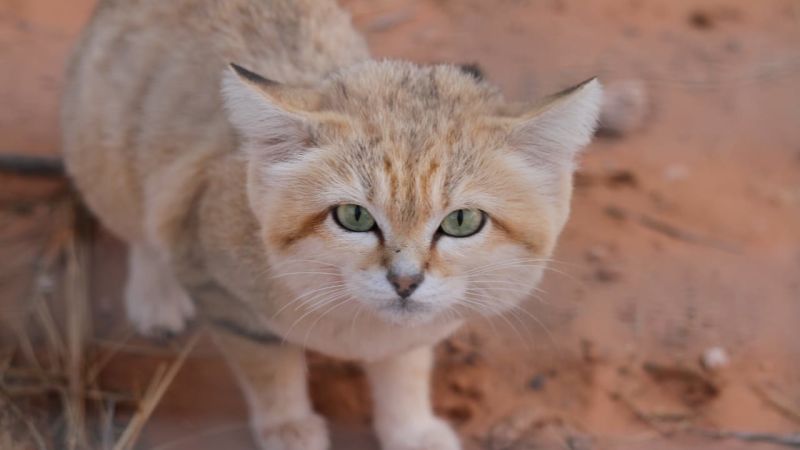
It’s not every day that a YouTube video triggers a major wildlife discovery, yet that’s exactly what Mohammed Almuntasir unknowingly did when he hit upload in 2017.
Clocking in at just 18 seconds, the clip showed a fun-sized feline curling up under the shade of a desert shrub in the photographer’s native Libya. Almost a decade later, it was confirmed as the first documented evidence that the North African country was home to the sand cat, a wild felid that is as elusive as it is adorable.
A longtime field photographer of plants and animals across the North African country, it was not that Almuntasir had not realized what he was looking at. He had seen sand cats in Libya previously, but their nocturnal nature had foiled his attempts to capture footage.
“As soon as I saw the animal, I knew it was a sand cat because I had seen the species before at night,” Almuntasir told CNN via email.
“However, I had never been able to photograph it because I did not have a camera suitable for night photography, or camera traps.”
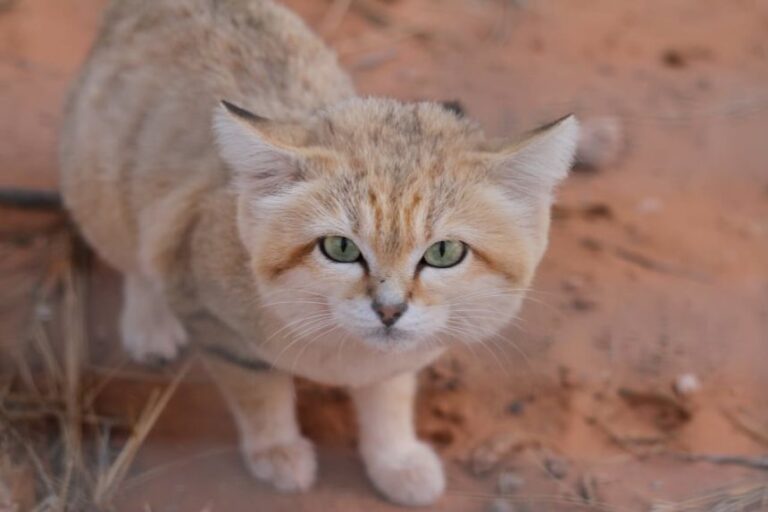
Almuntasir assumed the diminutive desert cats — which typically grow to a maximum of 22.5 inches (57 centimeters) and 7.5 pounds (3.5 kilograms) — had already been documented in his homeland.
Yet despite some scattered reports dating back to the mid-20th century, the sand cat (Felis margarita) had never been officially verified as native to Libya, Firas Hayder, an expert on North African small carnivores, told CNN; instead, it was primarily associated with Sahara regions across other North African countries like Morocco, as well as Southwest and Central Asia.
Hence Hayder’s shock when he contacted Almuntasir a few weeks after the video was posted, and the photographer nonchalantly confirmed that — true to the YouTube video’s title — “sand cat in Libya” had indeed been filmed in the Al-Hamada Al-Hamra region of the Libyan Desert, close to the Tunisian border.
“I told him, ‘No!’” laughed Hayder, a wildlife ecologist and North Africa regional coordinator for the African Small Carnivore Research Initiatives, a nonprofit headquartered at South Africa’s Sol Plaatje University.
“’For you, it is normal, but for us not.’ He was surprised. He told me, ‘Are you sure?’ And I said, ‘Yes, this is the first record.’”
Ghost hunting
From there, the duo joined forces on an eight-year effort to collate documented sightings of sand cats — as well as Saharan striped polecats — in Libya, culminating in “Rediscovering desert ghosts,” a research paper published in the Journal of Arid Environments in February this year.
A collaboration of seven researchers, the study saw Hayder quarterback the operation remotely, teaching Almuntasir how to record GPS coordinates of where the sand cats were sighted. The photographer worked closely with local guides to track and observe the animals.
When the habitat of an endangered bat went up in smoke, this ecologist dedicated herself to ending wildfires
Almuntasir quickly realized it would be an “extremely challenging” undertaking. Hunting mostly at night for rodents and reptiles, sand cats are prolific diggers: they are known to stay in burrows during the hottest daylight hours, as well as burying both feces and remains of kills to eat later. With water at a premium, the cats can survive solely on the moisture received by drinking the blood of their prey.
Read more American scientists see prosecutions as part of federal campaign against them
Known to travel huge distances and with sand quickly sweeping away paw prints, the elusiveness of the naturally camouflaged species is a key contributing factor to their under-researched status — kittens were only photographed in the wild for the first time in 2017.
That trio of juvenile felines were spotted hiding in a Moroccan desert shrub by Dr. Grégory Breton, managing director of the French branch of global wild cat conservation organization Panthera, with images of the tiny cats immediately going viral.
Perseverance paid off, though, as Almuntasir personally accounted for 24 of the study’s 36 sand cat observations. Overall, they were logged at 13 locations across the Libyan Sahara, predominantly in the southwest of the country, suggesting the region is a “potential stronghold” for the species.
Yet “major knowledge gaps” remain, the study stressed, and closingthem could be essential to ensuring that sand cats do not become true ghosts in Libya and beyond.
While the species is currently listed as “least concern” by the International Union for Conservation of Nature (IUCN) — meaning it doesn’t qualify for an at-risk category — researchers have previously pushed for the authority to reconsider the assessment, which was made in 2014.
Sand cats could be more endangered than previously suspected due to “their home range, the limited resources and fragile ecosystem,” Breton, who coauthored a study of Moroccan sand cats published in 2023, told CNN at the time, adding that there had been cases of the species being captured for the illegal pet trade.
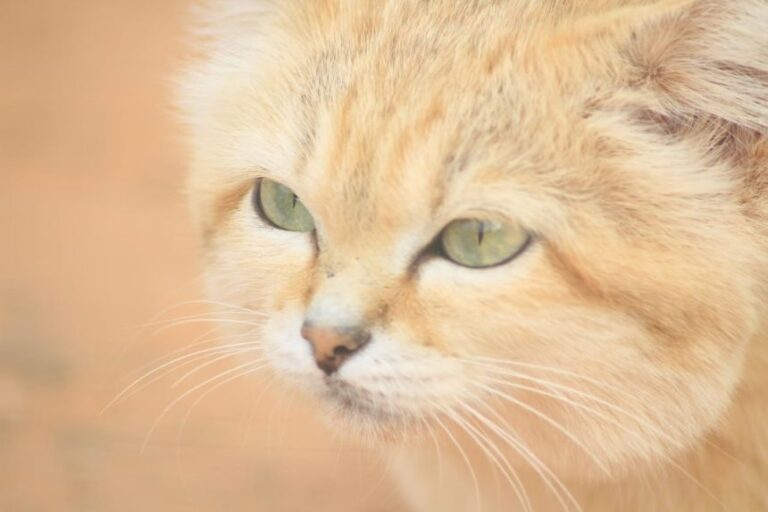
Hayder echoes Breton’s conservation concerns, particularly around environmental factors. Acutely sensitive to increases in temperature, small carnivores like the sand cat can act as a “sentinel” for climate change.
“If you want to check if a habitat is in good (condition), you have to study the small carnivores,” said Hayder, who theorizes that climate change could have already contributed to a drop in sand cat populations.
Observations in Libya supported more of Breton’s fears. During his field work, Almuntasir reported seeing sand cats sold at local markets, often as pets, while Hayder said he had spoken to hunters who killed them for meat.

These ‘invisible buildings’ are hidden in the desert
For Hayder, it is a painfully familiar tale that spurs him to want to increase awareness and understanding of small carnivores — from caracal to fennec foxes — across North Africa.
The ecologist believes a lack of public knowledge around the various species is fueling human-carnivore conflict, an area of research he has previously explored in relation to negative social media perceptions of the Egyptian weasel.
“For me, it is like a challenge,” Hayder said. “I feel that I have to change the mentality.”