 By admin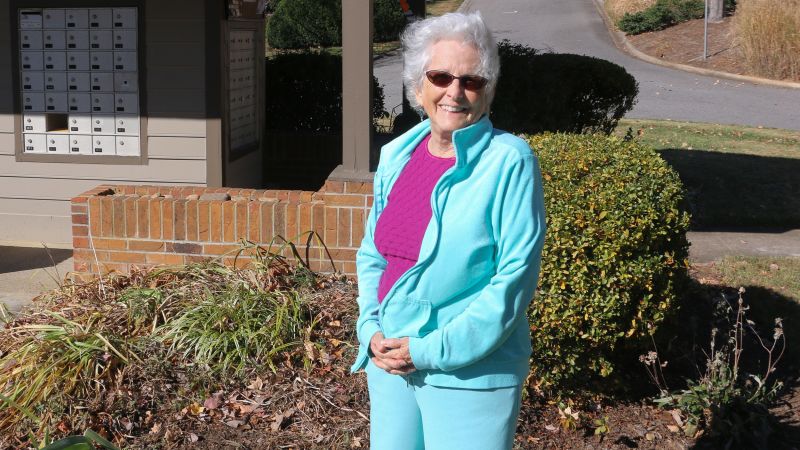
- After Hurricane Helene devastated Asheville in 2024, a small group of neighbors, all over 50, formed a mutual support pod.
- The residents hired a sharegiver and are exploring an intergenerational housing model called Stonewall Bridge.
- The new model would allow seniors to donate their homes in exchange for care and continued tenancy.
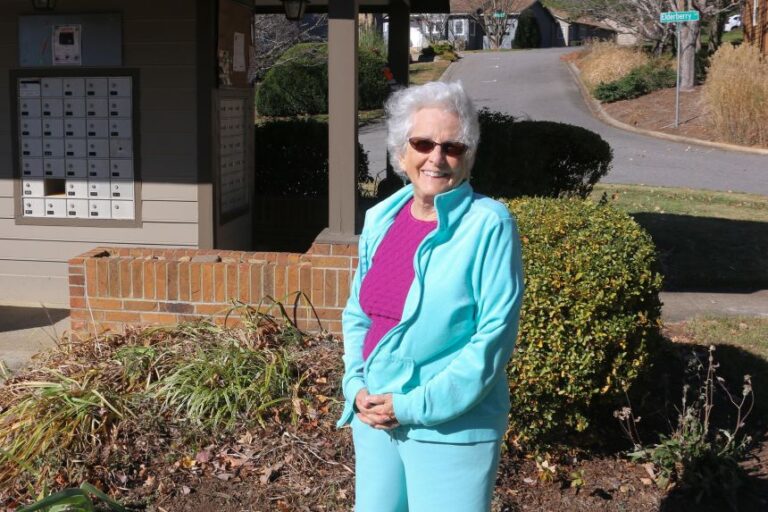
It’s Sunday afternoon and Nancy Miller-Green, 83, is knocking on doors to remind neighbors about the weekly dinner at her house. She’s spent the afternoon preparing a shrimp and corn chowder, which she’ll serve with some red wine. Rapping on Maria Pugliese’s door, she’s surprised when it cracks open.
Read more Federal court blocks Alabama plan for new congressional districts that could help Republicans
“Are you coming tonight, Maria?” Miller-Green asks after pressing inside. “We all want to see you.” Pugliese, 51, says she’ll try her best, and Miller-Green continues her rounds in the cul-de-sac.
The guests arrive as the afternoon light dims on this Asheville, North Carolina, community. Eight neighbors, including Pugliese, sit around the coffee table sipping wine and nibbling on cheese cubes and fish dip, a black cat named Aura circling their ankles. Some are former social workers or therapists who have spent their professional lives caring for other people. All are over 50 years old, and the oldest is in her 90s. Half are lesbians. Most don’t have children.
They tease each other as close friends do about one’s dark sense of humor and another’s taste in wine. But the conversation inevitably veers to the honest realities of aging. Married couple Va Boyle, 91, and Jean Cassidy, 79, say they are missing friends, those who recently have died and those who have moved to retirement communities that offer more care. Aging, Cassidy says, is about “learning to lose.”
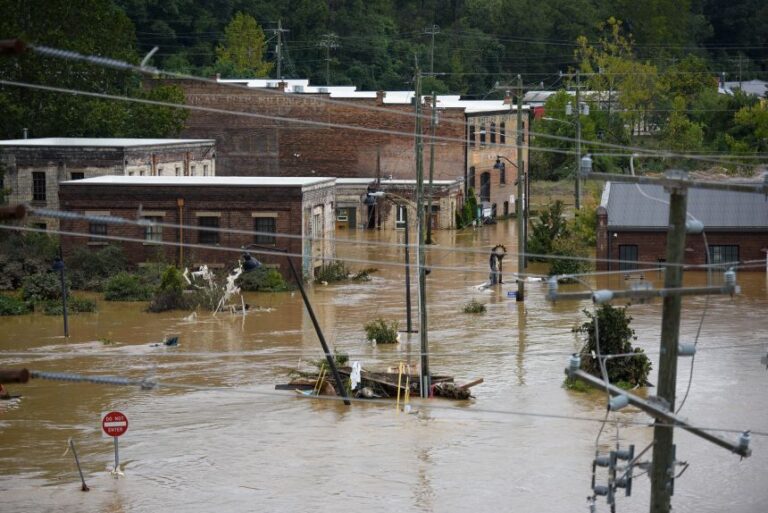
The group — which the neighbors call a pod and numbers about 10 — often discusses their older years at the weekly dinners that started in the wake of Hurricane Helene, which devastated the Asheville area in September 2024.
Even though most members of the pod don’t require a regular caregiver, they’ve hired a “sharegiver” to help out about five hours a week with tasks such as sewing a button, doing yard work and running errands. The hope is that the sharegiver can deliver increasingly more care as they need it.
But Miller-Green is asking them to consider something more imaginative: an intergenerational living model that her brother, David Nimmons, is helping build with the nonprofit housing assistance organization Stonewall Community Development Corp. The model was designed with LGBTQ people in mind but can be applied more generally. It would require housing for a younger sharegiver, someone who could provide care for just one or for a community of older adults such as the pod, with compensation increasing depending on the level of care.
“If we are not talking about our history and our values and what makes us special and our life experiences to the younger generations coming up, that will get lost,” Nimmons said. “The transmission of our culture cannot be left to chance.”
A model for any community
This intergenerational housing program is called the Stonewall Bridge. Ideally, a participating senior would donate their home, making it part of a collection of homes owned and managed by a local nonprofit or charitable foundation. In return, the senior would receive an annual income for care, continued tenancy in the home and the help of a caregiver. Those homes would remain affordable and continue to house seniors and caregivers, even after their original owners had died or left.
The setup is meant to address two concerns for seniors: the ability to age at home and continuity of care. The arrangement also would create a financial opportunity for young people to live affordably and grow their assets while giving more LGBTQ seniors the opportunity to connect with younger LGBTQ generations, creating an important cultural bridge.
“This community has a history of building networks for care,” said Paul Nagle, the corporation’s executive director, referring to queer communities that cared for each other during the AIDS crisis of the 1980s.
In addition to New York and Asheville, both of which have sizable LGBTQ communities, Stonewall CDC hopes to bring the model to South Florida, an area popular among retirees and gay men. Stonewall CDC is partnering there with retirement planning group Treece Financial and the Our Fund Foundation, which helps philanthropists find ways to support the LGBTQ community. The organizations are working on a legal plan for how to make homes fit the Stonewall Bridge model and pass part of the value of these homes to the sharegivers.
“Our job is to create the model, then people can put it wherever they want,” Nimmons said. “So if you have a group of friends that have always wanted to age together, you could build your own properties and put this into it. If you’re aging in place on a block or in an apartment building, you can put it there.”
As of now, the model has yet to be officially implemented.
Angie Perone, who directs the Center for Advanced Study of Aging Services at the University of California, Berkeley, sees possibilities in the model, especially for LGBTQ seniors, who are less likely to have children or traditional family structures.
“It would have to be based on community rapport, community trust,” she said. “And I think if it’s created for and by LGBTQ+ communities, I think it could work really well.”
Read more Teens need to press pause on late-night doomscrolling
While studies show that most people want to age at home, that choice is more imperative for LGBTQ seniors, who often face discrimination, including at long-term care facilities. Perone said living under such conditions has pushed some seniors back into the closet.
The Fair Housing Act forbids exclusionary practices, such as housing designated for a particular group, putting federal funds out of reach for LGBTQ-specific housing. Consequently, only about 21 senior living communities in the country are affirming to LGBTQ identities, according to SAGE, a national advocacy organization for LGBTQ seniors.
Stonewall Bridge’s model would be insulated from the volatility of federal funding because it would involve private homes. But what makes it revolutionary is also a sticking point.
Even Miller-Green, who supports her brother’s endeavor, isn’t ready to go so far as to sign over her home to the nonprofit. Referring to her Asheville community, she said, “A lot of us do have some kind of heirs. I have a daughter and grandchildren, but I also have charities that I will absolutely want to give money to,” she said.
Her neighbors feel similarly.
After the flood
When floods ravaged the Asheville area, the neighborhood went three weeks without electricity and six weeks without running water. The pod formed to help each other get by. They scooped water out of the community swimming pool to flush their toilets and carpooled miles to find cell phone service. And they shared many meals, emptying their refrigerators to cook grilled cheese sandwiches and hamburgers while sharing gas stoves.
When the power came back on, they vowed to take care of each other through the tough times that life might bring as they aged.
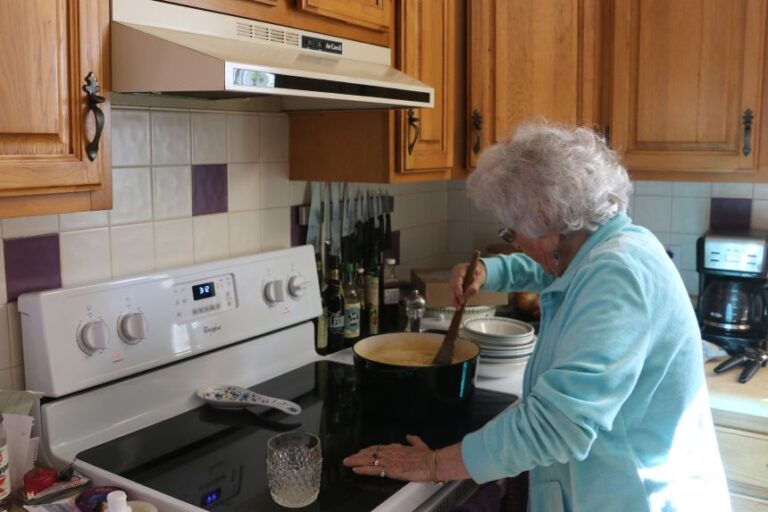
“It’s really lovely as a single person to have that support,” pod member Sandra Taylor, 79, said. “The support we had from each other during a big crisis has welded us together.”
Even though most members of the pod don’t immediately require regular care, they’re preparing for a time when they’ll need more assistance.
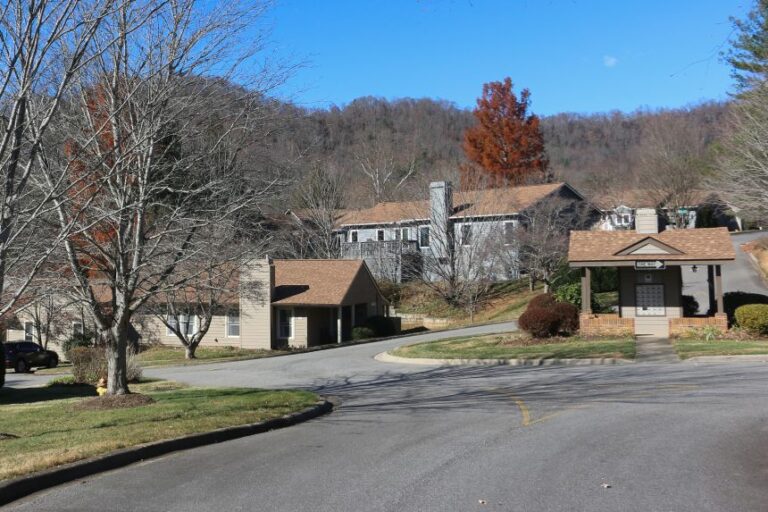
At 91, Boyle is the oldest member of the group and one of the most determined to stay in their neighborhood, called Hawthorne Villages. She has no children and no likely caregiver beyond her spouse. And she doesn’t relish moving into assisted living or another type of senior housing, having seen her friends decline after such moves.
Like many homeowners, Boyle and Cassidy see their house as their most treasured asset. When they moved in at the end of 2019, it was with the expectation that this home would be their last. Boyle shakes her head at the thought of giving up the certainty of owning her home, even if it might mean she could stay for longer.
“We like where we live,” Boyle said. “It feels comfortable and safe.”
One thing working against the Stonewall Bridge model, Miller-Green said, is that people aren’t likely to invest in a caregiving solution before life necessitates it. A key condition in the model is that the seniors and their caregivers are comfortable with each other. No decisions are made until a relationship is established that everyone feels good about.
“I want to make damn sure when the time comes, that the people who are taking care of me are people I feel comfortable with and I want to be with,” Nimmons said. “That’s always my proof that I think this is a good idea, because this is what I would want.”
Jessica Blough is a journalist with the Investigative Reporting Program at the University of California, Berkeley, Graduate School of Journalism. She covered this story through a grant from The SCAN Foundation.
Get inspired by a weekly roundup on living well, made simple. Sign up for CNN’s Life, But Better newsletter for information and tools designed to improve your well-being.
Read more Supreme Court allows Brian Flores to sue NFL for discriminating against Black coaches