 By admin
President Donald Trump ran for office promising to put America First. He has governed with an eye toward getting America paid.
Read more Hegseth announces new policy to test troops for low testosterone
In Trump’s transactional view of the world, the US is more like an interested party in a business deal than a beacon of capitalism and democracy. Efforts to extract tolls, impose tariffs or take ownership of resources in foreign countries, both allies and opponents, have been a notable focus of foreign policy in Trump 2.0. in which the president has also cast his expansionist vision to Greenland, Canada and the Panama Canal.
These things don’t usually work out according to plan, as the world learned during Trump’s first term when Mexico did not pay for a border wall like he repeatedly vowed it would. But the military might and economic heft of the United States are as ever, in Trump’s view, assets to be exploited. In recent months:
► He suggested — and then abandoned — a 20% toll for US protection of cargo passing through the Strait of Hormuz.
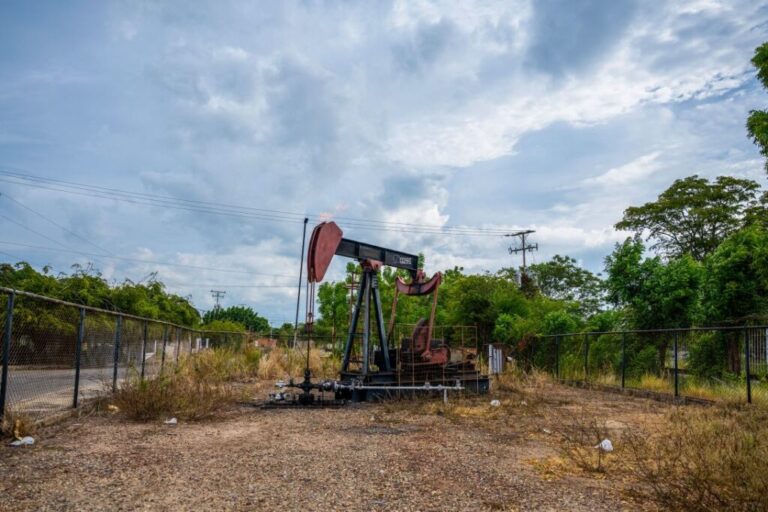
► He took over the sale of Venezuela’s oil by propping up what remains of the antidemocratic regime he decapitated and icing out the democratic opposition.
► He held up opening of a new bridge to Detroit, trying to squeeze something more out of Canada even though Canada paid to build the bridge.
► He’s gotten more friendly toward Ukraine now that he says the US has a “stake” in the country’s rare earths.
A tollbooth on the Strait of Hormuz?
Setting aside the legal issue of putting a toll on what’s supposed to be open water — and the fact that Iran set up a tolling system first — charging for protection sounds either like common sense or like an organized crime tactic, depending on your perspective.
In either case, it was not meant to be. Within a day, Trump had moved on and was instead promising the US would receive another sort of payment — this time from Gulf nations instead of shipping companies.
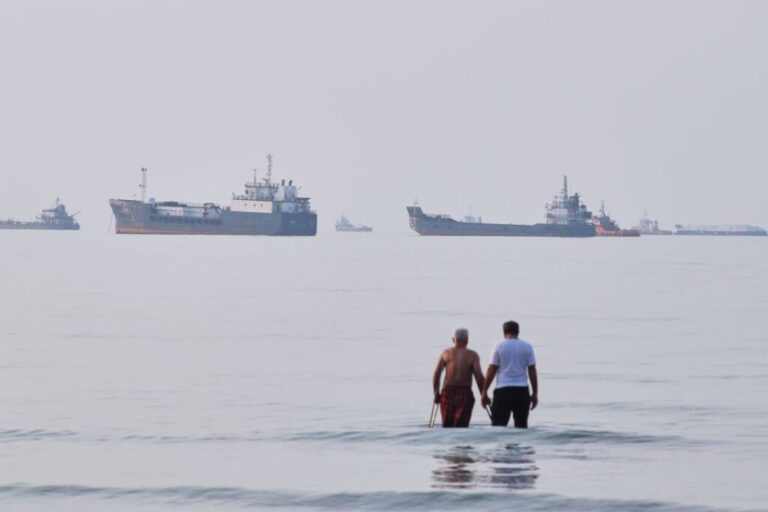
“Based on highly productive conversations with Middle East leadership, I have decided to replace the 20% United States Reimbursement Fee with Trade and Investment Deals that the various Gulf States will be making into the United States,” Trump wrote in a social media post Tuesday, one day after first proposing the toll idea.
The underlying idea Trump may be trying to convey is that the US will be getting something in exchange for this foreign entanglement he started and has so far been unable to end.
The Pentagon has not put a price tag on the war with Iran, but watchdog groups have guessed it will cost more than $40 billion and counting. Everyday Americans have seen the financial toll of the conflict each time they head to the gas station.
A portion of the profits may not be very much
Back in February, Trump piled on to his tense relationship with Canada by demanding the US should split ownership of the Gordie Howe Bridge between Detroit, Michigan, and Windsor, Ontario, even though Canada paid to build the bridge.
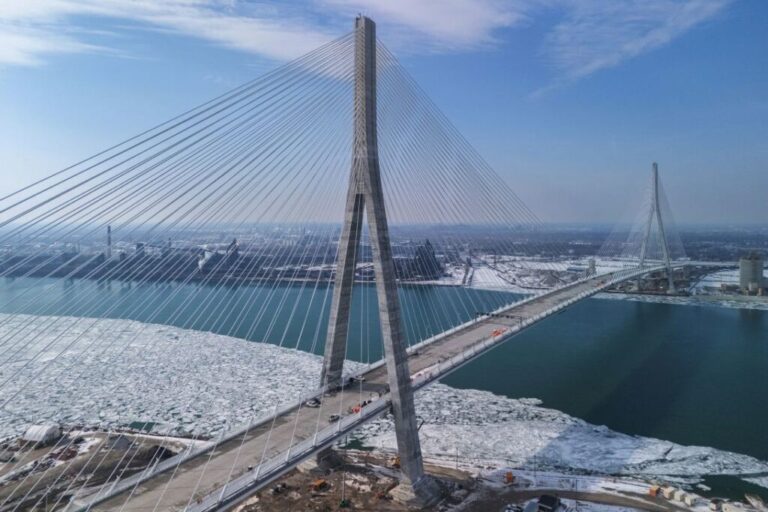
The bridge’s opening was delayed as the countries reworked their agreement. The resolution appears to be that Canada will split net profits from tolls for the next 15 years with an economic development fund, although specifics on how that fund will work are lacking. The bridge will now open on July 27, according to the Canadian government.
Canadian Prime Minister Mark Carney defended the emerging deal in an interview with CTV.
“The word ‘net’ does a lot of work in this. We are sharing after Canada is paid back,” according to Carney.
“There’s not going to be a lot of net to split,” he said.
No sign of trillions of dollars Trump claims will be invested in the US
Trump did not expand on what sort of investment Gulf nations will put into the US now that he has abandoned the toll idea, but he has repeatedly claimed that he has secured funding from foreign countries to be invested in the US. He frequently cites the enormous figure of $19 trillion in foreign investment that he has secured.
CNN’s Daniel Dale has tried and failed to find anything close to that level of foreign investment in the US during Trump’s term. But Trump continues to make the fictitious claim with regularity.
Current problem: How to repay illegal tariffs
The backbone of Trump’s trade and economic policy was to impose tariffs on imports. These are effectively taxes paid on imported goods. While economists generally argue that it is American consumers who ultimately pay for tariffs in the form of higher prices, Trump has argued it is foreign countries that pay them.
In any event, the US government is currently in the process of paying back tariffs the Supreme Court ruled this year it should not have collected. In June, for instance, the US repaid more than $49 billion. Trump has said he will look for new ways to impose taxes on imports. Meanwhile, lawsuits from businesses and individuals to reclaim illegal tariffs are proliferating.
Major questions about US control over Venezuela
While the tariff policy is trackable through government reports, much less is known about US control of Venezuela. The Trump administration authorized the US military to capture former President Nicolás Maduro early this year and bring him to the US for prosecution. But the rest of Maduro’s regime has retained power with oversight from the Trump administration, which has taken control of the sale of Venezuela’s oil resources.
Details on the size and scale of those oil sales have been hard to come by. Even Republican members of Congress have voiced concern about the lack of transparency, particularly after devastating earthquakes rocked the country.
The political opposition, meanwhile, has largely been left out of the process even though opposition leader María Corina Machado gifted Trump her Nobel Peace Prize before the US military acted against Maduro. The New York Times reported that Secretary of State Marco Rubio is exerting a high degree of control over the country from afar, working through the existing regime.
Elliot Abrams, who was special representative for Venezuela during Trump’s first term, wrote for The Free Press that the administration is choosing access to oil over reform.
“The focus has been on seeking investments in Venezuela and above all boosting oil production, with recovery and democracy pushed off to an indefinite future,” Abrams wrote. “This is a self-defeating policy.”
A friendlier view of Ukraine now that the US has a “stake” in rare earths
Trump surprised US companies and Ukrainian President Volodymyr Zelensky during a NATO conference last week when he said Ukraine should be able to license and manufacture defensive Patriot interceptors.
Trump’s warmer stance toward Ukraine may have something to do with his view that the US has an interest in the country — not as a democracy in Europe, but as a place with natural resources.
“We have a little stake in that country now because we have some land in that country, but we have minerals. It’s among the wealthiest, it’s among the best land anywhere in the world for rare earth,” he said, referring to a deal the US signed with Ukraine last year that creates a joint investment fund. But Trump may have a different view than Ukraine of what the deal does. Ukrainians have maintained that they retain full ownership of their natural resources.
Demanding more from NATO will have unintended consequences
Trump’s main gripe with NATO has been his argument — which has some basis — that European countries were not paying enough. Trump phrases the complaint as if the countries should be paying the US, when in fact NATO countries are supposed to be dedicating a certain percentage of their GDP to defense spending.
CNN’s Fareed Zakaria recently argued that Trump should get credit for making European nations spend more on defense, but also that it will have unintended consequences such as making European countries less likely to defer to the US. The old system, he said, “was stable, peaceful, and pro-American.”
“We have set off a chain reaction, and over time, Americans will come to miss the old NATO, not because it was fair, but because it was the most successful security system the world has ever known, with America at its center,” Zakaria said.
The same could be said for the rest of the world as Trump changes the way the world looks at the United States.
Read more The House voted to make Daylight Saving Time permanent. Here’s what’s next