 By admin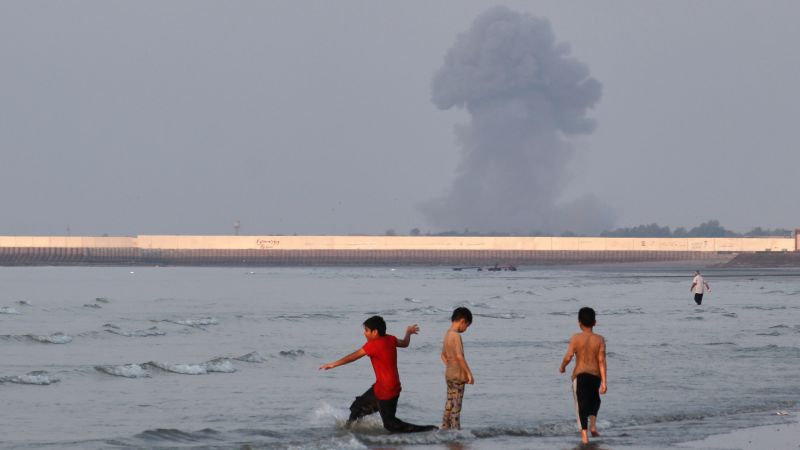
Brett McGurk is a CNN global affairs analyst who served in senior national security positions under Presidents George W. Bush, Barack Obama, Donald Trump and Joe Biden.
When the US and Israeli military operation against Iran began in February, I cited a principle classical military theory. If a leader — in this case, President Donald Trump — is not clear in his own mind regarding the objectives to be achieved before launching a military operation, the objectives will be defined for him and not in ways he may have anticipated.
That’s from Carl von Clausewitz, the 19th century theorist who may well be rolling over in his grave given the events unfolding in the Middle East.
Neither Israel nor the US defined with specificity the objectives to be achieved when the attack on Iran launched nearly five months ago. Trump spoke of regime change, as well as degrading Iran’s military capabilities and removing its remaining nuclear material left over from airstrikes he had ordered last summer. Iran responded by attacking countries across the Middle East — and commercial ships transiting the Strait of Hormuz, the channel accounting for 20% of global energy trade.
Today, the main objective for the US is to open the strait, an objective that — as Clausewitz might have warned — was not even on the table when the war began.
Back to the future
The US and Iran are about to reach the halfway mark (30 days) of a 60-day memorandum of understanding (MOU) signed by Trump and Iran’s president, Masoud Pezeshkian. That document purported to grant concessions to Iran in the form of sanctions relief in return for safe passage for commercial ships in the Strait of Hormuz. By its terms, however, the document appears to grant Iran the right to define the arrangements to be used in the Strait during this period.
Tehran is reading the document literally, whereas the US has pointed to side understandings that reach behind the text.
Last week, Iranian drones targeted two ships — one from Qatar carrying liquid natural gas, and another from Saudi Arabia, carrying crude oil. Reportedly, Iran passed messages through intermediaries that the strikes were a mistake. Some even claimed they reflected an internal power struggle within Tehran between those aiming to keep the MOU intact and those prepared to risk a further escalation with the United States.
Trump quickly ordered retaliatory airstrikes to enforce the American understanding of the MOU, which followed more Iranian attacks on ships — and then, this week, the MOU unraveled altogether. On Monday, Trump announced that he was reimposing a blockade on Iranian ports and said the US was prepared to become the “guardian” of the strait in exchange for payment in some form. The United States launched another round of airstrikes inside Iran, and Iran targeted two more commercial ships off the coast of UAE, killing an Indian crew member.
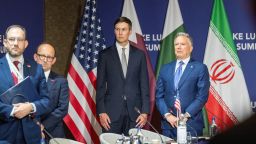
Trump’s Iran envoys face scrutiny as diplomacy stalls
Until this all settles down, few ships may risk passing through the Strait of Hormuz, causing oil prices to creep upward once again. That could increase pressure on the White House to take another go at the MOU.
Read more The bugs are getting worse
So, the US and Iran have crept back to the exact situation that existed before the MOU was signed in the first place.
Balance of advantage
Iran appears to be calculating that its pressure on the strait will force the US to give up altogether, thereby ceding a new equation in the Middle East with Tehran effectively in charge of a global chokepoint. The US appears to be betting that new pressure on Iran will force it to relent and permit the uninterrupted flow of commerce that existed before the war started.
In that equation, Iran has two advantages, one ancient and one modern. Its ancient advantage is the natural power of terrain — often the best resource for a defender. Iran is using its geographic location to force the US into an asymmetrical contest and neutralizing Washington’s hard power advantages. Its modern advantage is drone warfare, in particular Iran’s Shahed drones that are cheap to produce and can travel over 1,000 miles to strike a slow-moving oil tanker in the dark of night. Drones can be shot down and deflected but it only takes one strike — or even the threat of a strike — to stop commercial traffic.
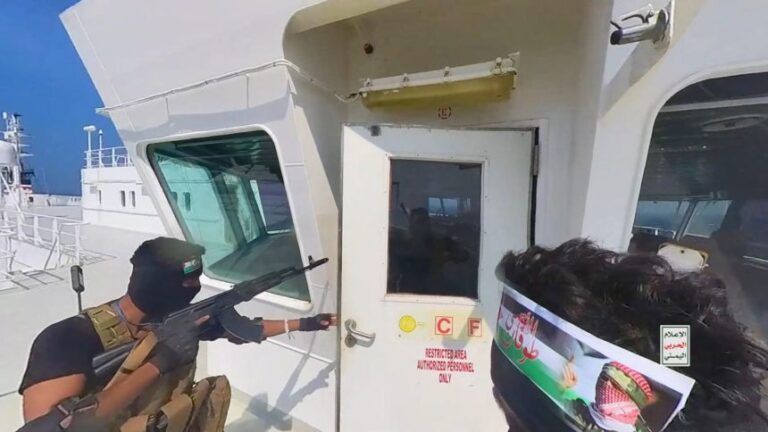
Together, these two advantages — ancient and modern — favor Iran, at least in the short term. They also present the US with limited options if it aims to truly guarantee the safe passage of commercial ships. I was the White House lead on the Middle East in 2023 and 2024 when an Iranian proxy group, the Houthis, effectively shut down the Red Sea with drones and anti-ship missiles. Despite forming an international coalition and launching a prolonged air campaign against the Houthis, it was nearly impossible for us to stop every launch let alone restore confidence to shipping companies to risk the journey.
Longer term, however, the advantages may shift in Washington’s favor — for four reasons.
- First, the Gulf states are united in rejecting Iran’s claims to the strait and they are increasingly cooperating with the USon ensuring this conflict does not end with Iran in control of the passageway.
- Second, Iran’s economy remains in distress and a prolonged blockade will compound pressure on its decision-makers, as well as on the Iranian people demanding change.
- Third, Iran’s skies remain loosely defended and US military forces can strike at will with the only limit being the number of known targets.
- Finally, with each passing week, there is progress on diversified export routes thereby reducing global dependency on the strait. The UAE this week announced new plans for ports and infrastructure to bypass the strait, building on projects already underway. Reducing Iran’s ability to hold the global economy hostage through the strait would reduce its main source of leverage.
No strait path
Whether the US can sustain a prolonged campaign of military and economic pressure will depend ultimately on the global price of oil and other products that pass through the Strait of Hormuz — such as fertilizer and liquid natural gas — on a weekly basis. Shortly before signing the MOU, Trump said he did not want to be Herbert Hoover and oversee a new Great Depression, an acknowledgement that Iran’s pressure through the strait had worked. Since the MOU was signed, energy prices have fallen significantly but they’re on the rise again, jumping nearly 10% on Monday.
So what happens now?
I anticipate a hot summer of tit-for-tat military strikes, open back channels for diplomacy, reduced tension at times, and then new flare-ups at others. After all, this has been the pattern with Iran for many decades — particularly with attacks against US troops in Iraq, Syria, or elsewhere. Washington has utilized military force to deter such attacks, diplomacy to contain them, and a combination of both to de-escalate when necessary. So long as Iran’s Revolutionary Guards remain in charge in Tehran, diplomacy offers at best narrow and tactical deals.
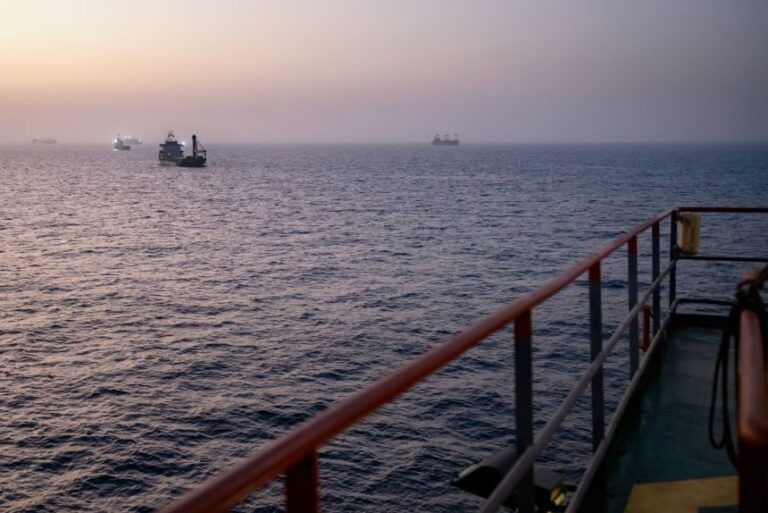
That same pattern is now playing out in the Strait of Hormuz, albeit with far broader implications.
Wild cards
The situation could also turn worse. The Houthis maintain capacity to shut down the Red Sea, and on Monday traded fire with Saudi Arabia — testing a fragile ceasefire on the Arabian peninsula. Loss of the Red Sea and Strait of Hormuz would further stress the macro economy — and put pressure on Washington. At the same time, Iran’s capacity and willingness to target civilian ships with drones and missiles in two international chokepoints highlights the underlying nature of the problem with Iran’s regime. It’s been preparing for these scenarios for years and its new leaders believe the United States will ultimately back down.
Read more Judges are getting more comfortable calling out Trump’s and the DOJ’s cynical ploys
Thus far, Trump has proven that prediction to be wrong.