 By admin
Four months into the primary calendar, most of the battlefield is set in the race for control of the US Senate. Now the real fight begins.
Read more Takeaways from a divisive Supreme Court term that expanded Trump’s power
Democrats are increasingly bullish about their chances to win back the Senate majority for the final two years of President Donald Trump’s term even as the party faces a difficult map and questions about some of its candidates in key contests. To be successful, Democrats will need to defend all their seats and flip four others, including many in deep-red territory.
Strong recruitment in several key races and a favorable national political environment are fueling the hopes of Democrats. There is widespread disapproval of Trump’s handling of the economy and the war in Iran. Just 34% of the American public holds a favorable view of the president, according to a recent CNN poll.
Republicans hope Trump’s Iran agreement, which remains the subject of talks, could soon ease some of the economic fallout from the war, including the high gas prices that have heightened cost-of-living concerns for Americans. Given the volatility of the war over the past few months, there’s no guarantee that will happen before Election Day.
On Tuesday, the Supreme Court also injected a fresh element into this year’s elections, paving the way for the party committees to spend more money in close coordination with campaigns, a move that experts say could benefit the GOP in the midterms.
At this point in the cycle, there are nine states that will likely determine control of the Senate come November: Six are currently held by Republicans while three belong to Democrats.
Our ranking of the seats most likely to flip in November is based on CNN reporting, including conversations with strategists involved in Senate races, as well as our analysis of candidate fundraising, polling and the partisan environment in the states. The rankings are a snapshot of where the contests stand at this point in the cycle and will shift over the next four months as the general election comes into sharper focus.
1. North Carolina
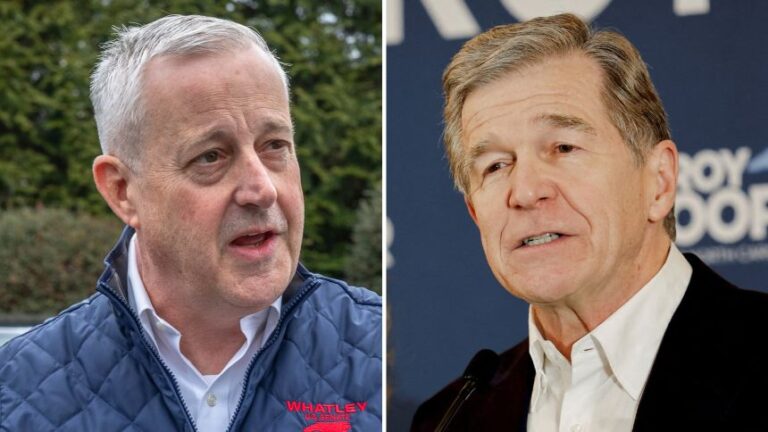
North Carolina tops the list as former two-term Gov. Roy Cooper is giving Democrats their best chance of flipping a Senate seat in November.
Cooper has demonstrated crossover appeal, winning both of his elections for governor in years when Trump carried the state in his presidential runs. That familiarity gives Cooper a bit of a built-in advantage over Michael Whatley, a former chair of the Republican National Committee, in the open Senate race to succeed retiring GOP Sen. Thom Tillis.
A New York Times/Siena poll released this week found Cooper leading Whatley by 7 points among likely North Carolina voters, 50% to 43%.
Whatley, who received Trump’s endorsement as soon as he launched his campaign, must contend with that close alliance at a time when voter frustration with the president’s performance is high. The Times survey found 55% of North Carolina likely voters disapproved of the president’s overall job performance with 64% disapproving of how he’s handled cost of living issues.
Cooper has leaned into affordability messaging while Republicans have sought to paint the former governor as soft on crime. Cooper released an ad last week rebutting those attacks, highlighting his record as governor and state attorney general, saying “you deserve to feel safe and there’s nothing political about that.”
Cooper is operating with a strong fundraising base in the early months. The Democratic nominee ended the first quarter with roughly $18.4 million in the bank compared to Whatley’s $2.5 million in cash on hand.
Outside groups are expected to play heavily in the months leading up to November with the Senate Leadership Fund announcing a $71 million investment, the second highest amount the Republican-led group is planning to spend to defend a state this cycle. Republicans are hoping that money will make a dent in Cooper’s standing, arguing he hasn’t faced that level of spending against him in past elections.
Meanwhile, the Democratic-aligned Senate Majority PAC is setting aside $31 million for advertisements to boost Cooper.
North Carolina hasn’t elected a Democrat to the Senate since Sen. Kay Hagan in 2008, which was also the last time a Democrat carried the state at the presidential level. Cooper’s bid has put the party in a position to break that streak, which earns him the top spot in the July rankings.
2. Maine
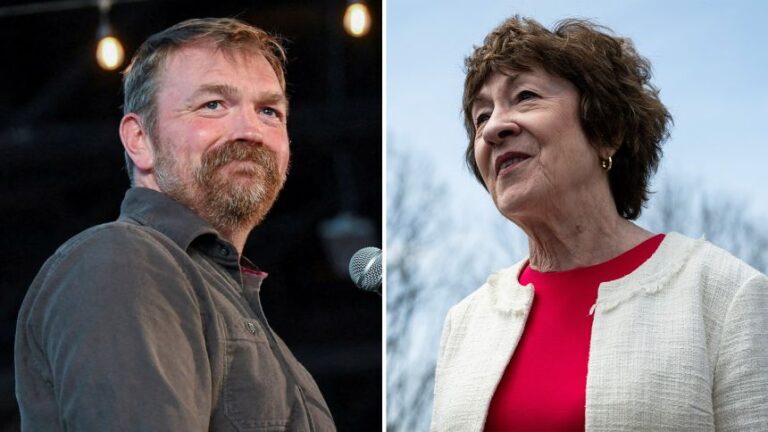
At this point in the race, Maine remains a toss-up state that could be prime for a flip in the contest between GOP Sen. Susan Collins and Democratic nominee Graham Platner, whose controversies have dominated much of the recent attention on this race.
There is a high degree of unpredictability around this contest, given it is unclear how much voters in Maine have absorbed the latest round of scandals surrounding Platner, including reports he exchanged sexually explicit messages with women outside his marriage and allegations from former partners of “unsettling” behavior.
Platner and Collins are locked in a tight contest with no clear leader according to a pair of recent polls. A New York Times/Portland Press Herald/Siena poll found the Democratic challenger drawing 49% support among likely voters compared to 47% for the GOP incumbent, while a Fox News survey showed Collins with 50% support among registered voters while 47% are backing Platner.
As she seeks a sixth term, Collins has a proven track record of turning back Democratic challenges but finds herself in the unique position of being the only Republican senator running in a state that Trump lost to former Vice President Kamala Harris.
Collins is confronting political headwinds created by Trump in a blue-leaning state, with 57% of Maine likely voters saying they strongly disapprove of Trump’s handling of his job as president, according to the Times survey. She has looked for ways to differentiate herself from Trump perhaps more than any GOP Senate candidate running this year, but Democrats are quick to argue she still votes with Trump most of the time, a message they plan to hammer as they look to tie Collins to the unpopular president.
Republicans have spent months running ads highlighting how Collins’ work in the Senate has benefitted Maine, including a new one touting her efforts to protect family farms and bringing in more funding for law enforcement.
In many ways, Platner fits the “fighter” mold many Democrats have pushed for in the second Trump era. Despite being relatively unknown a year ago, Platner leaned on his populist, political outsider appeal to secure nearly 72% of the Democratic primary vote last month against Maine Gov. Janet Mills, who suspended her campaign after struggling to gain traction but kept her name on the ballot.
But Platner’s controversies, including a tattoo with Nazi symbolism that he had covered, present a big question mark in this race. Democratic anxiety about his candidacy lingers due to his scandal-laden past and questions about whether additional revelations might come to light before November.
Republicans plan to put Platner’s controversies front and center in their messaging, and they’ll have a lot of cash to do so. SLF has announced a $42 million investment in the state while Collins’ campaign and a super PAC supporting her, Pine Tree Results, have millions more in their arsenal.
Meanwhile, Platner entered May with about $2.7 million cash on hand as he dealt with his Democratic primary fight, and SMP has said they’re allotting more than $33 million to the general election fight. This week, Platner leaned into anti-corruption messaging.
Ultimately, this is a race that could boil down to how women voters are feeling about the candidates in November. Female voters made up 59% of the electorate in the 2020 Senate race and split 49% to 46% in favor of Collins, who outperformed Trump with the group, according to CNN exit polling. Platner held a 52% to 44% edge among women in the Times poll.
Democrats are trying to chip away at Collins’ standing with female voters, including on the issue of abortion rights. Planned Parenthood Action Fund recently endorsed Platner over Collins, one of the few Republican senators to support abortion rights. His campaign has also run ads highlighting her vote to confirm Supreme Court Justice Brett Kavanaugh, one of three justices nominated by Trump who voted to overturn Roe v. Wade.
3. Michigan
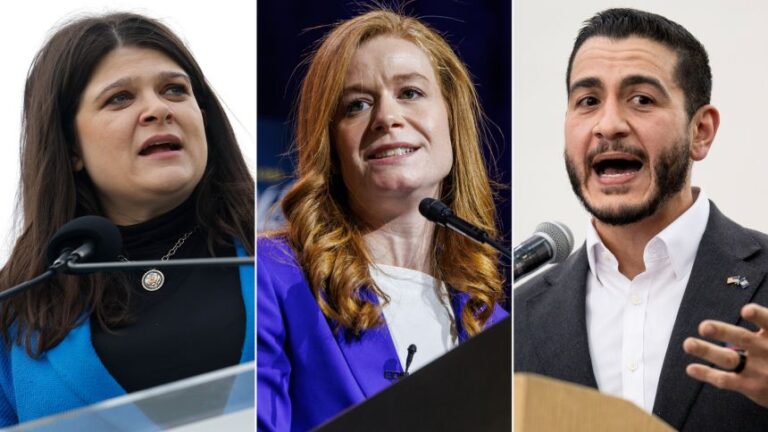
Michigan is one of just two states on this list where the general election matchup hasn’t been set as Democrats remain locked in a bruising primary to replace outgoing Democratic Sen. Gary Peters.
The uncertainty around that Democratic primary in August puts this toss-up state high up on the list. The three-way contest to take on the GOP’s expected nominee, former US Rep. Mike Rogers, reflects some of the broader fault lines within the Democratic Party, testing the clout of the progressive movement in a battleground state after wins in more solidly Democratic areas such as New York City.
Abdul El-Sayed, a former health official in the state, is running as an unabashed progressive who has the blessing of Sen. Bernie Sanders. Rep. Haley Stevens is a centrist with the backing of many establishment Democrats. Senate Minority Leader Chuck Schumer has said he believes she has the best chance to win. Mallory McMorrow, a liberal state senator, is running somewhere between the two with an endorsement from Sen. Elizabeth Warren.
Most recently, Sen. Chris Van Hollen threw his support behind El-Sayed, who has said he believes the Maryland Democrat should be the party’s next Senate leader.
Outside groups have started to mobilize in the contest. The United Auto Workers union, an influential organizing force in the state, is siding with El-Sayed. United Democracy Project, a super PAC associated with the American Israel Public Affairs Committee, is running TV ads to boost Stevens, a supporter of Israel, in a state where the war between Israel and Gaza proved problematic for Democrats in 2024.
For now, Republicans are relishing the drawn-out and divisive Democratic battle. They argue it gives Democrats little time to unite around a candidate post-primary and provides Rogers with a longer stretch to build a stronger infrastructure than his 2024 run for Senate when he lost to then-Rep. Elissa Slotkin.
Meanwhile, Democrats view Rogers as a flawed candidate whom they have proven they can beat even with Trump on the ballot to turn out GOP voters. Further, they believe trends of Democratic success in off-year elections coupled with negative views of the president’s job performance will work in their favor.
4. Ohio
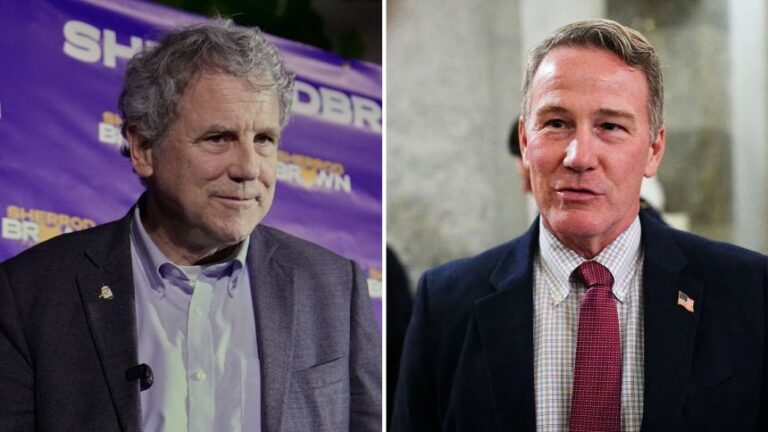
Ohio has shifted to the right during the Trump era but Democrats could have an opening to reclaim a Senate seat in the state in November.
After losing his reelection bid in 2024, Democratic former Sen. Sherrod Brown is back for another round, challenging GOP Sen. Jon Husted, who is running for a full term in the Senate after being appointed to the seat vacated by Vice President JD Vance last year.
Recent polling in the state has been mixed. A New York Times/Siena Poll released this week found no clear leader in the race with Husted at 50% and Brown at 47% among likely Ohio voters. A Fox News poll released in early June showed Brown leading by a wider margin among registered voters. Both polls signaled voter frustration with the president. In the Times survey, Trump’s overall disapproval rating stands at 54%, while 57% of Ohio voters in the Fox poll had an unfavorable view of the president.
Republicans are planning to run a similar playbook against Brown as the 2024 contest when GOP Sen. Bernie Moreno defeated the Ohio Democrat by less than 4 points, much closer than Trump’s 11-point margin of victory. Democrats believe Brown’s long embrace of economic populism is right for the moment when anxiety over cost of living is a top concern for voters.
Brown has proven to be a strong fundraiser early in the contest, ending the first quarter with a war chest of $17 million. Husted, a former Ohio lieutenant governor, ended that same period with roughly half that amount – $8.2 million – in his campaign coffers.
Read more The Iran MOU is a mess. It still might work
Ohio could turn into one of the country’s most expensive Senate contests with competitive races for governor and a handful of US House seats also potentially in play. SLF is devoting the highest amount of spending to the state – $79 million – while SMP has pledged more than $46 million.
5. Alaska
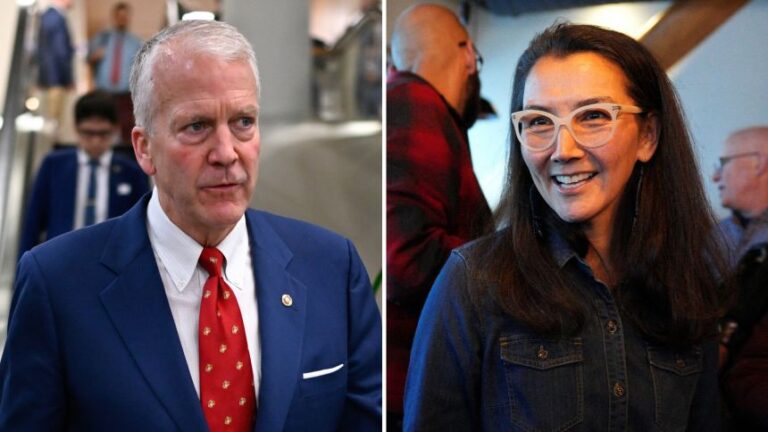
The recruitment of Democratic former Rep. Mary Peltola, who lost her 2024 reelection bid after winning Alaska’s at-large House seat twice, led party leaders to label Alaska as a key piece of their path back to the majority. On the GOP side, party strategists feel confident GOP Sen. Dan Sullivan will prevail in a state that voted for Trump by 13 points in 2024.
A New York Times/Siena poll released this week showed a close contest with no clear leader as Sullivan received support from 47% of likely Alaska voters compared to 45% for Peltola.
On the money front, Peltola has been a strong fundraiser, bringing in $8.6 million in her first two-and-a-half months in the race. She ended that period with $5.7 million cash on hand while Sullivan had more than $7 million in the bank. SLF has promised a $15 million investment while SMP is putting more than $10 million in the race.
There are some potential wildcards that could be factors in the race come November. One is the state’s use of ranked-choice voting, which will determine the winner between the four candidates who advance from the open primary in August. There is also the possibility Alaska voters will have two Dan Sullivans to choose from on the ballot, after a candidate with the same name as the GOP incumbent filed to run as a Republican – sparking a dispute that ended up in the courts.
6. Iowa
Like Ohio, Iowa is another state that has seen a rightward shift in recent years. Republicans have control of Iowa’s entire congressional delegation, the governor’s seat and the two chambers in the state Legislature.
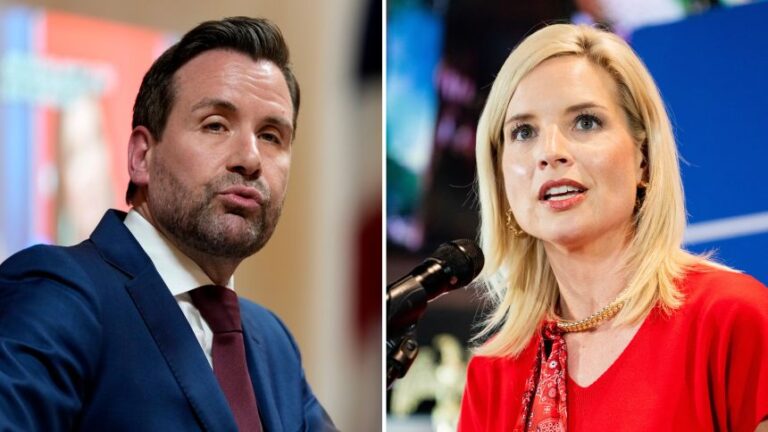
GOP Rep. Ashley Hinson, a former news anchor, remains an early favorite in a state where Trump won by 13 points. Democrats are hoping state Rep. Josh Turek, a former Paralympian and self-described “prairie populist,” could make inroads in the agriculture-reliant state grappling with the impacts of Trump’s tariffs and the economic fallout from the war in Iran.
A New York Times/Siena poll released this week showed no clear leader in the competitive contest with Hinson at 48% support among Iowa likely voters and Turek at 46%, while another by Fox News gave the Democrat a slight 4-point edge. The Times survey found 54% of the state’s likely voters disapproved of the president’s job performance with clear majorities also disapproving of his handling of the economy, cost of living issues and the Iran war.
Hinson has been a strong fundraiser, ending the first quarter of the year with $6.5 million in the bank. Turek has some ground to make up after his primary fight against progressive state Sen. Zach Wahls. But both parties are expected to spend significant sums in the race. SLF has reserved $29 million for the general election fight while SMP plans to spend more than $13 million.
In addition to the Senate contest, Iowa is home to competitive races for governor and at least two US House seats. Rob Sand, Iowa’s state auditor and lone Democrat holding statewide office, is seen as a strong gubernatorial nominee who could help boost Turek and other down-ballot Democrats come November.
Though Trump won Iowa three times, it wasn’t long ago that the Hawkeye State was a true battleground state that former President Barack Obama carried twice, a dynamic offering Democrats some hope they can revive their political fortunes in the state.
7. Georgia
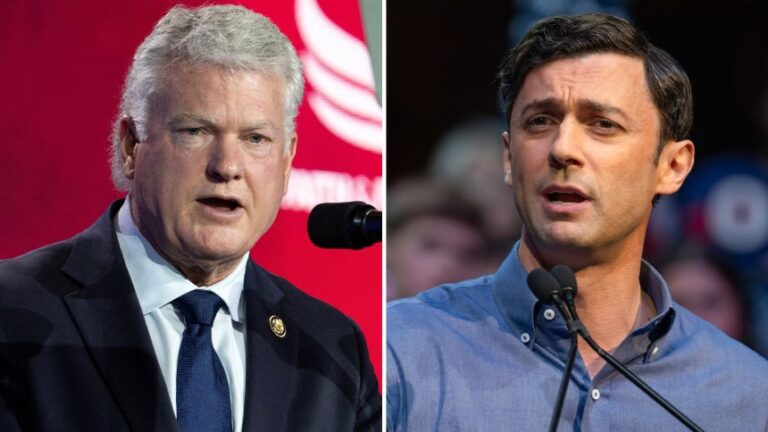
The fact that Georgia lands at seventh on our list speaks to the political strength of Democratic Sen. Jon Ossoff, who at this point appears to have the edge against GOP Rep. Mike Collins in a race Republicans have eyed as a prime pickup opportunity.
The only Democratic senator running in a state Trump won in 2024, Ossoff has benefitted from a drawn-out GOP primary to stockpile resources and fine-tune his messaging on the campaign trail. The 39-year-old first-term senator has generated viral moments by rolling out fiery lines calling out what he sees as corruption by Trump and his allies.

Sen. Jon Ossoff almost didn’t run for reelection. Now some Democrats want to draft him for 2028
As the general election campaign gets underway, Ossoff holds a 13-point advantage against Collins in a Fox News poll of Georgia registered voters. The Democratic incumbent’s favorable rating sits at 58% compared to 44% for Collins and 42% for Trump.
The first-term senator also has a sizable advantage over Collins in the money race, sitting on more than $32 million according to his last fundraising report. Even Collins has acknowledged Ossoff’s fundraising strength will make for a “challenging” race. SMP is also planning to spend $20 million to support Ossoff’s reelection bid this fall.
Collins ended May with less than $1.2 million in the bank, but national Republican strategists say plenty of money will pour into this race to boost the GOP nominee. SLF has committed $44 million to the race, and last year, the group and the National Republican Senatorial Committee established a joint fundraising operation for the eventual GOP nominee, raising $1 million for Collins right out of the gate.
The GOP congressman is running as a staunch ally of the president, securing Trump’s endorsement in the final days of the runoff. Republicans campaigning against him in the primary argued Collins had too much political baggage to be an effective candidate against Ossoff in November.
Right out of the gate, Democrats went on the attack. Ossoff fired off a blistering statement against Collins, calling him “a notorious bigot, antisemite and extremist.” The Democratic Senatorial Campaign Committee released a digital ad calling Collins a “puppet on Trump’s strings.”
After his runoff win, Collins insisted Republicans will unite around a shared mission to “put a Republican in that seat and get rid of that Jon Ossoff in November.” To succeed against Ossoff, Collins will need to broaden his appeal beyond the MAGA base. His campaign rolled out a digital spot pointing out he spearheaded laws signed by Trump and former President Joe Biden while painting Ossoff as too “liberal.”
8. New Hampshire
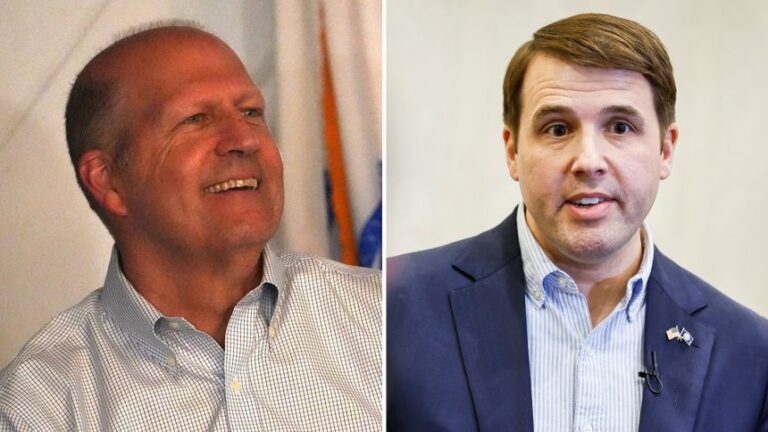
Democratic Sen. Jeanne Shaheen’s decision to retire after her decadeslong political career in New Hampshire has put this seat in play – but Democrats still retain an advantage given the state’s partisan lean. Since New Hampshire is known for its independent streak, this is one to watch as the race progresses.
Democrats feel confident about their likely nominee, US Rep. Chris Pappas, who has won tough races in the past. Harris carried the state by nearly 3 points in 2024 but that was down from Biden’s 7-point advantage four years earlier.
Ahead of the September primary, a University of New Hampshire Survey Center poll showed Pappas has support from a majority of likely Democratic primary voters – 53% – compared to 29% for progressive rival Karishma Manzur.
Republicans see an opening with former GOP Sen. John E. Sununu, whose family has deep roots in the state. Former Massachusetts Sen. Scott Brown also remains in the primary fight, but Sununu, who is backed by Trump, is the clear favorite to win the GOP contest. The two men clashed over the Trump endorsement in their first debate last month.
The same University of New Hampshire survey found a competitive general election contest with Pappas receiving 47% of likely voters compared to 44% for Sununu. Pappas holds a lead of 14 points over Brown in a hypothetical general election matchup.
One challenge Republicans will face in flipping the seat is Trump’s diminished standing in the Granite State. The University of New Hampshire poll found 62% of New Hampshire residents disapprove of the president’s job performance.
Pappas ended the first quarter with $4.2 million cash on hand while Sununu had about $1.9 million in the bank. SLF has committed $17 million in spending while SMP is devoting $10 million to defend the state.
9. Texas
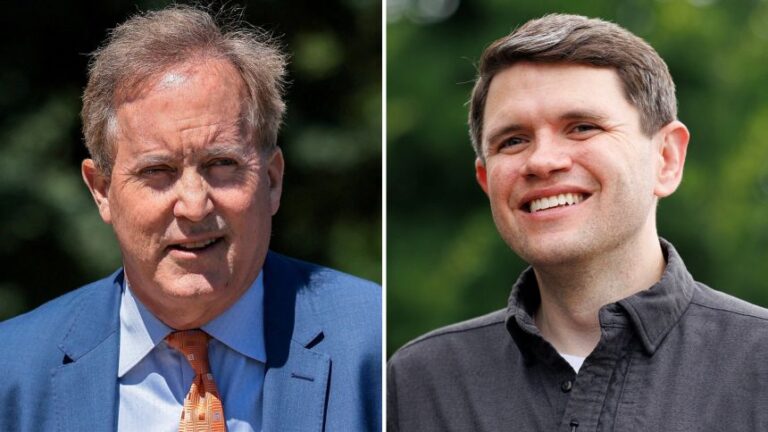
There is no question Texas will dominate a lot of the national conversation heading into November, but Democrats’ ability to flip the state where Trump won by 14 points remains an uphill climb.
While polls have shown a potentially competitive contest between Republican state Attorney General Ken Paxton and Democratic state Rep. James Talarico – including a New York Times/Siena poll that found them deadlocked at 47% a piece – outside groups have yet to announce investments in the race. Such moves could signal the parties see the race as truly in play – but Texas is an expensive commitment – especially for Democrats, who have more favorable targets higher up this list.
Like Maine, Texas is a race with a higher degree of volatility that could see its place in the rankings shift as the campaign plays out in the coming months.
Paxton’s long history of scandals will be fodder for Democrats, but he’s survived controversies in past campaigns and remains a favorite of the MAGA base, which helped him defeat incumbent Sen. John Cornyn in a May runoff. Paxton could also benefit from being on the ballot with Republican Gov. Greg Abbott, who has a strong political network in the state and is seeking a fourth term.

A ‘vegan’ and ‘Tala-freak-o’: GOP prepares a furious general election messaging blitz against Talarico
Talarico’s fundraising prowess and his message aimed at appealing to voters across the political spectrum are giving Democrats fresh optimism they could put the red state in play in November. Republicans have sought to define the state lawmaker early, seizing on past comments about cultural issues that even Talarico has acknowledged were “cringey” and “missed the mark.”
Money is one area where Democrats hold an early advantage. Paxton struggled with fundraising during the primary, so he’s expected to need considerable help from national Republicans. One group to watch is MAGA Inc., the pro-Trump super PAC, and whether it deploys any of its $380 million stockpile to help Paxton. For his part, Talarico raised $27 million in the first quarter of the year and brought in another $3 million in the 24 hours after Paxton became the nominee last month.
On the bubble
In addition to the nine states above, here are three other Senate races to keep an eye on:
Minnesota: Rep. Angie Craig and Lt. Gov. Peggy Flanagan are battling it out in Minnesota’s Democratic primary, which will be held on August 11. Flanagan won the Minnesota Democratic-Farmer-Labor Party endorsement after Craig said she would not seek it.
Montana: If not for the three-way general election fight on deck, Montana might have earned a spot on the list. With Democratic nominee Alani Bankhead and independent Seth Bodnar likely splitting the non-Republican vote in a red state, it makes GOP nominee Kurt Alme the clear favorite. Alme was endorsed by Sen. Steve Daines, who announced his retirement just before the filing deadline.
Nebraska: Independent candidate Dan Osborn is waging his second straight Senate run, this time challenging Republican Sen. Pete Ricketts after losing to Sen. Deb Fischer, the state’s other GOP senator, by less than 7 points in 2024. Osborn has the backing of Nebraska Democrats but there is still technically a Democratic nominee in the contest. Cindy Burbank won the party’s primary in May but has said she plans to drop out and back Osborn.
Read more Colorado governor fires two clemency board members who spoke out about Tina Peters’ commutation