 By admin
Brett McGurk is a CNN global affairs analyst who served in senior national security positions under Presidents George W. Bush, Barack Obama, Donald Trump and Joe Biden.
Read more Colorado governor fires two clemency board members who spoke out about Tina Peters’ commutation
The 14-point “Memorandum of Understanding” is among the oddest international agreements in recent memory. Short on detail, its two pages purport to grant significant up-front American concessions to Iran in exchange for opening the Strait of Hormuz, which was already open before the war President Donald Trump started in February and now hopes to end.
The document has come under withering criticism from many Republicans, while being met with a “told you so” flair from Democrats who point to the Obama-era nuclear deal by comparison: a 159-page agreement that placed limits on Iran’s nuclear program.
Meanwhile, Iran has interpreted the MOU to not even require unimpeded access to the Strait of Hormuz — the one issue the Trump administration cited as the reason for the agreement in the first place. Iran has fired drones at commercial ships violating its interpretation of the deal. The US struck targets inside Iran in response — and to uphold its interpretation of the deal.
Nearly everything the US says the deal means — from releasing funds for Iran to buy American soybeans, to sanctions relief only in exchange for Iranian actions — Iran in return says the deal means something different — with no restrictions on where frozen funds are spent, and sanctions relief as a precondition even for further talks.
It gets worse from there. The deal’s first paragraph declares a ceasefire in Lebanon, without any details. Iran read this to require Israel to leave southern Lebanon, where it’s been since 2024 under a prior ceasefire deal. Israel has refused. Then last week, Israel and Lebanon signed a separate agreement requiring Israel to withdraw only after the Lebanese army can displace Hezbollah in these areas.
Iran says that new agreement violates the MOU agreement. The US says it merely incorporates what’s already in the MOU.
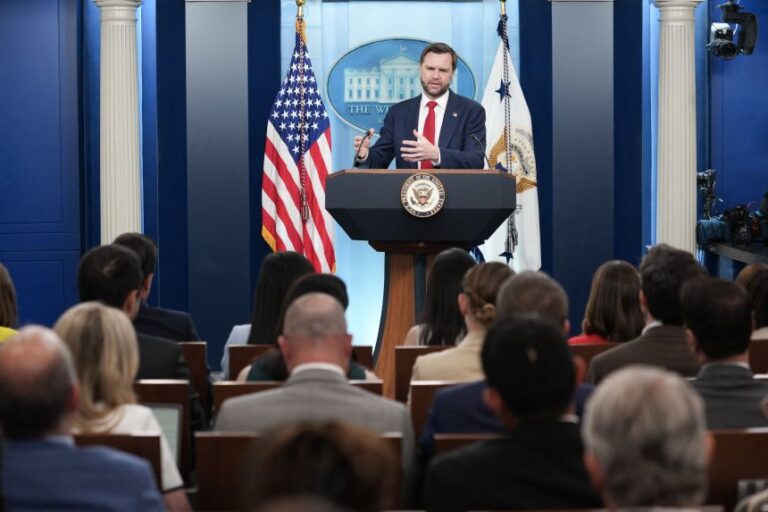
To account for this confusion, Vice President JD Vance, the deal’s lead negotiator, has said the “words don’t matter,” whereas Iran cites the MOU as equivalent to a binding treaty.
It’s easy to lampoon such zigzags as borderline diplomatic malpractice. For the first time ever, the President of the United States has signed an agreement with the Islamic Republic of Iran and yet nobody seems to agree on what the MOU says or even what it’s supposed to do.
This week in Doha, the US and Iranian teams were supposed to meet to provide some clarity on mutual expectations and perhaps to start the still-dormant nuclear talks, which the MOU envisions leading to a comprehensive deal. But Trump’s negotiators met with Qatari mediators, not with Iranians, and there’s a dispute about whether lower-level talks are happening at all.
Whether those talks happen or not, I would not expect much to come from them. If the MOU seemed incoherent when it was first revealed, it’s only become more so in practice.
The real test: time
Yet, on perhaps the most important test of all — time and optionality — the MOU appears to be working. Henry Kissinger once said, “When statesman want to buy time, they offer to talk.”
That appears to be the case here, for both the United States and Iran. The prolonged stalemate in the strait was harming everyone. The US military blockaded Iranian ports, suffocating Iran’s economy, as Iran held the world’s economy hostage with threats to commercial shipping.
Read more The president’s getting richer — but many midterm voters aren’t
The MOU allowed both sides to pull back, and breathe. Trump gave up the game when he said the alternative to the MOU was a global depression. Iran’s leaders supporting the deal have similarly pointed to the economic benefits for Iran under the deal.
As for which side this bought time will advantage, it’s too early to say. If you had asked me two weeks ago and upon first reading the MOU, it appeared to be a clear Iranian victory. Washington was giving up a lot for almost nothing in return other than an opening of the Strait of Hormuz.
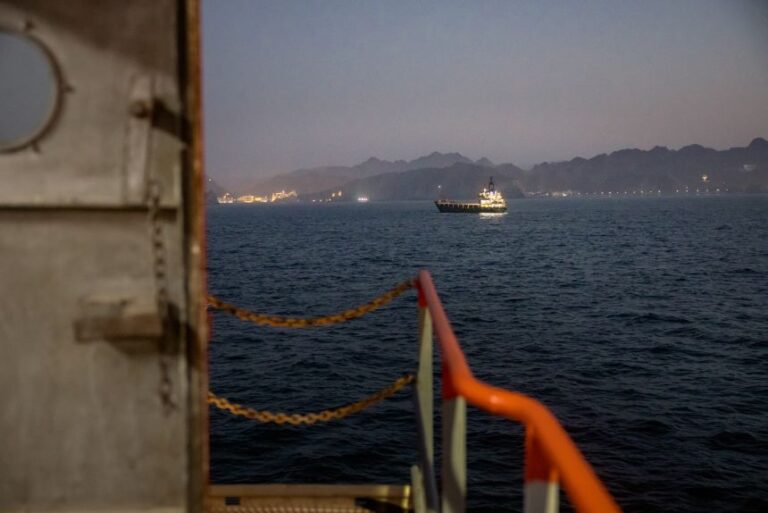
But snapshots in time, particularly in the Middle East, rarely tell the full story — and this story is still unfolding. Some factors are even running in Washington’s favor.
1. Iran is not enriching uranium. Iran’s enrichment capacity has been knocked out and has not restarted. The MOU requires Iran to maintain this status quo, making it nearly impossible to produce a bomb. For now, this most acute threat remains dormant.
2. Iran’s economy is reeling. The International Monetary Fund recently reported that Iran’s economy will contract more than 6%. That’s “the steepest contraction since the 1980s,” and it’s due in part to the recent war. In addition, inflation is projected to average nearly 70%, and the sanctions relief contemplated under the MOU means, at best, only a slow rebound.
3. US economic pressure is easing. Since the MOU was signed, global oil prices have plummeted over 20 percent. That has eased macro-economic pressures and reduced gas prices for Americansas the summer vacation season heats up. Trump confirmed again that this was a primary aim, posting on social media last night: “Gas Prices will soon be back to the Record Low Prices Americans enjoyed at the pump before our very successful ‘excursion’ in Iran.”
4. Iran’s regional “axis” is strained. Iran’s triumphalist reading of the MOU initially gave a shot in the arm to Hezbollah and other Iranian proxies across the region. The recent Lebanon deal with Israel, however, tripped up Tehran’s victory lap, and even in Iraq — where militias joined Iran’s war against the Gulf states — a new government is cracking down and calling for all arms to be under state control.
5. Less reliance on the strait. Iran effectively turned the tables on the US with its closure of the Strait of Hormuz, and it continues to assert sovereignty over future traffic. That’s a serious problem. But its actions have caused counter-reactions, to include new pipelines and ports that bypass the strait altogether. Its recent shots at commercial ships had little impact on global prices.
So, where does that leave us? Nobody can say for certain. My bet would be that this current situation sustains for some time, at least through elections this fall in both Israel and here.
For now, what we do know is that the major fighting has subsided; economic pressure has reduced; and diplomatic channels are open — albeit confused and fledgling.
And for all that, I say one cheer for the MOU. Because in the Middle East, things can always be considerably worse.
Read more US life expectancy on track to reach record high as death rate falls to record low in 2025