 By admin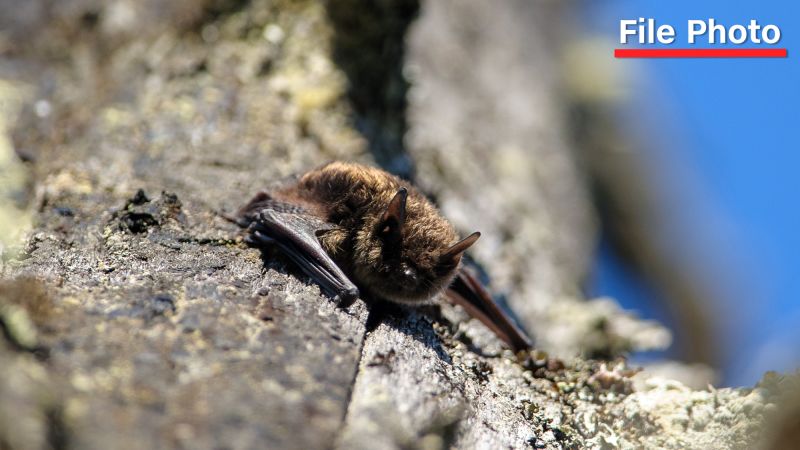
An 11-year-old Canadian boy has died from rabies after waking up with a bat on his nose and mouth.
Read more FDA allows Philip Morris to market Zyn as less harmful than cigarettes
The episode occurred during a visit to a cottage in northern Ontario in 2024, according to a report published in the Canadian Medical Association Journal on Monday.
Woken by the shock, the boy, who wasn’t named in the report, smacked the bat off his face. His father then caught it in a cooking pot and released it outside, doctors from the Department of Pediatrics and Child Health at the University of Manitoba, Canada said in the report.
Since the child had no visible bite marks and the bat’s behavior did not seem erratic, the boy’s parents did not seek medical attention.
However, 19 days later, the boy began to experience a progressive tingling sensation and numbness on the right side of his face, followed by facial swelling and a loss of appetite.
Four days after the symptoms began, a local urgent care clinic prescribed him medication used to treat herpes, as it was presumed he had symptoms of Bell’s palsy caused by the herpes virus.
Three days later, he was brought to a city hospital emergency department in Ontario with painful swallowing and vomiting.
A physical exam found ulcers in his gums and a mild impairment in a nerve on the right side of the face that provides sensation and controls chewing.
The boy’s family told the doctors about the incident with the bat and, the next day, the emergency doctor notified the local public health authority.
However, the hospital discharged the child on a presumed diagnosis of herpes gingivostomatitis, which is sores in the lips or mouth caused by herpes.
By the next morning, the boy had returned to hospital with weakness on the right side of his face, reduced sensation and slurred speech.
While waiting to be admitted, he developed a fever, difficulty swallowing, confusion and visual hallucinations.
By the evening, the boy’s condition had rapidly deteriorated. He was placed on a ventilator and admitted to the pediatric intensive care unit (PICU).

A California art teacher died from rabies after an encounter with a bat in her classroom
“When we saw the patient in the PICU, we strongly suspected rabies,” the doctors said.
A PCR test confirmed a rabies diagnosis on the fourth day of the boy’s admission. The Canadian Food Inspection Agency then also identified a bat rabies virus variant.
The child died on his 17th day in hospital.
Any human-bat contact is ‘high risk’
Rabies is a virus that attacks the central nervous system of humans and other mammals, and it is almost always fatal once symptoms appear.
Read more Scientists say they have built a cell from scratch for the first time
It is contracted through an infected animal’s bite or scratch, or if the animal’s bodily fluids enter the eyes, nose, mouth or an open wound, according to the Canadian Veterinary Medical Association (CVMA) website.
While there are several thousand cases of rabies confirmed in animals in Canada each year, according to the CVMA, rabies is very rare in humans in Canada, with just 28 human cases reported in the country since 1924.
This patient was the first reported case of locally acquired rabies in Ontario since 1967, the doctors said.
In the United States, fewer than 10 people die of rabies every year, according to the Centers for Disease Control (CDC) website. However, the CDC says rabies “poses a serious public health threat” because it is found in wildlife throughout the country, except for Hawaii.
Globally, rabies poses a serious health risk in more than 150 countries, largely in Africa and Asia, causing tens of thousands of deaths each year, with children under 15 making up 40% of the victims, the World Health Organization reported in 2024.

A man died from rabies after waking up to a bat in his room. It’s Illinois’ first human case of the virus in nearly 70 years
Dogs cause 99% of rabies cases in humans, according to WHO, but in the Americas, where this is controlled, bats are the main source.
In Canada, skunks and foxes are also frequent transmitters of the disease, according to the CVMA.
Symptoms in humans tend to occur 20 to 60 days after exposure, but can begin much sooner or later, the CVMA said.
They include initial flu-like symptoms, such as a fever, headache or weakness, or pain or discomfort by the bite site. Symptoms can then progress to difficulty swallowing, excessive salivation, muscle spasms, seizures, confusion, anxiety, a fear of water and abnormal behavior.
The CVMA advises people not to let pets roam freely, not to approach unknown animals, to report wild animals behaving strangely to local animal control or related authorities, and to protect homes from wildlife by sealing entry points and securing garbage containers.
The CDC also recommends making sure pets are up to date with their rabies vaccinations and consulting a doctor before traveling about your risk of exposure to rabies.
If you are bitten or scratched by an animal, thoroughly wash the wound with soap and water for 15 minutes, apply rubbing alcohol and seek medical attention immediately, the CVMA urges.
If administered promptly, before symptoms appear, rabies post-exposure prophylaxis (PEP) — a treatment that includes vaccines and immune globulin, a medication that reduces the severity of infections — can prevent rabies.
There is no established, effective treatment for rabies once symptoms appear, according to the report, and death usually occurs within seven to 14 days of symptoms starting.
“Bats may or may not show classic signs of rabies; hence, any direct human contact with bat is considered high risk,” the University of Manitoba doctors added.
Read more Trump says he told new acting director of national intelligence to ‘declassify almost everything’