 By admin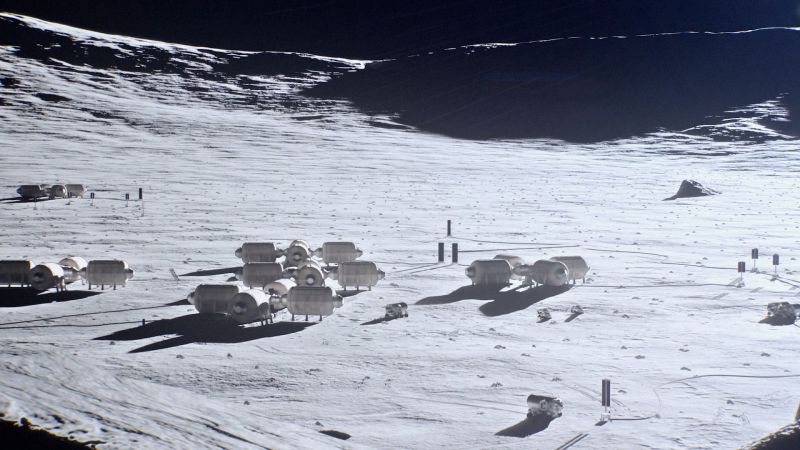
NASA’s moon base plans, conceptualized just a few months ago, are rolling out in earnest as the space agency maps out plans to deliver landers, rovers, buggies and other assets to the lunar surface.
Read more Speaker Johnson loses key vote as House GOP leaders struggle to contain rebellion
On Tuesday, NASA said it will pay at least half a billion dollars to three companies — Astrobotic, Firefly and Intuitive Machines — for four missions to deliver science instruments and other cargo to the moon. Astrobotic was the only vendor to be awarded two missions.
The agency also floated the possibility of repurposing a Mars rover, nicknamed Promise, for use on the moon.
It’s part of a broader effort to use robotic vehicles to build up infrastructure on the moon that can be used by future human explorers.
The deals announced Tuesday are part of what Carlos García-Galán, NASA’s program executive for the moon base, called “Phase 1” of a plan to build out a permanent lunar settlement where astronauts will live and work. This initial phase is expected to last through 2028 and cost about $10 billion.
NASA announced other deals under the first phase of the program last month, including plans to rename three previously contracted missions as “Moon Base” specific. The agency also awarded additional contracts in May — worth over $1 billion altogether — for building buggies to drive on the lunar surface and deploying three or four drones to the moon to help map a moon base location, perhaps as soon as 2028.
Read more Supreme Court agrees to review ban on AR-style semi-automatic rifles in major Second Amendment case
Phases 2 and 3 — which include plans to build the first pressurized habitats on the moon and install power generators — lay out NASA’s vision to continue building up its moon base in the 2030s. Eventually, NASA says it hopes astronauts will live and work in “semi-permanent” settlements.
It’s all part of the space agency’s plan to compete with China, whose space program has taken dramatic strides over the past decade. Lawmakers continually warn China’s efforts are threatening to eclipse the United States’ technological supremacy in space.
Navigating setbacks
Still, NASA is already facing clear headwinds.
Blue Origin, the space outfit founded by Amazon’s Jeff Bezos, was set to deliver a prototype of its massive robotic lander, called Blue Moon, to the lunar south pole later this year. The south pole is highly coveted because it is believed to be home to stores of water ice, which can be converted to rocket fuel or drinking water.
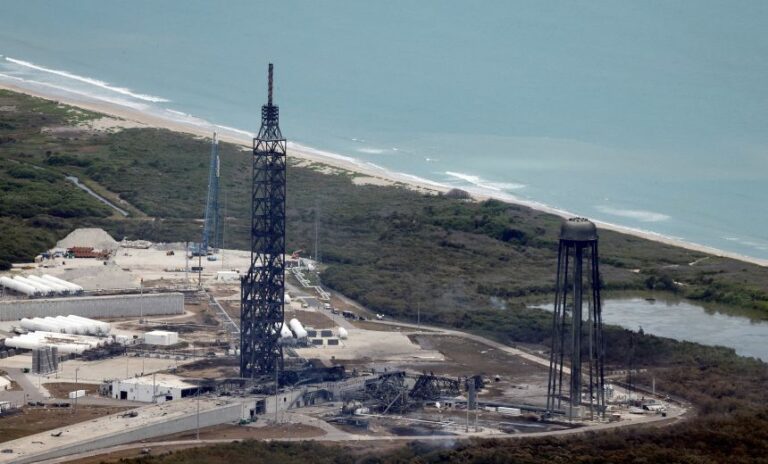
But Blue Origin suffered a major setback in May when one of its rockets abruptly exploded on the launchpad, destroying vital infrastructure that will take months to rebuild. It’s not clear how long the Blue Moon launch may be postponed as a result.
On Tuesday, García-Galán hinted that the Blue Moon lander may launch on a different vehicle if needed, saying NASA is “looking at other options” in case Blue Origin’s rocket and launchpad work doesn’t meet the agency’s timeline.
Read more Longtime Clinton aide walks back claim former president visited Epstein island, sources say