 By admin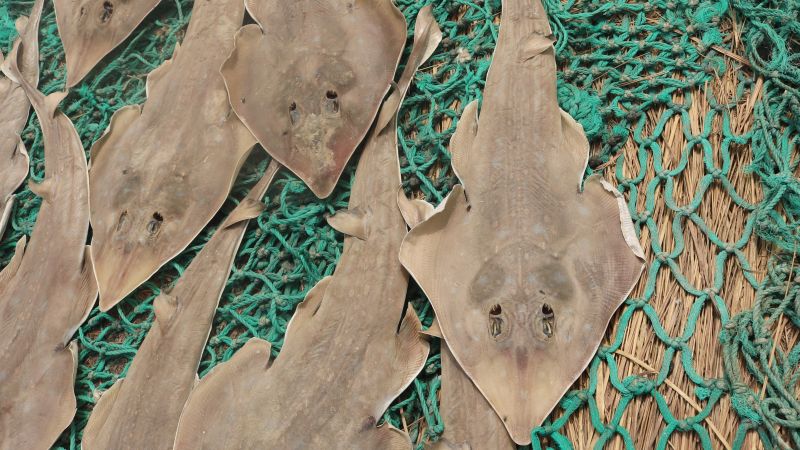
EDITOR’S NOTE: Call to Earth is a CNN editorial series committed to reporting on the environmental challenges facing our planet, together with the solutions. Rolex’s Perpetual Planet Initiative has partnered with CNN to drive awareness and education around key sustainability issues and to inspire positive action.
Read more How the Supreme Court became a power that is reshaping America
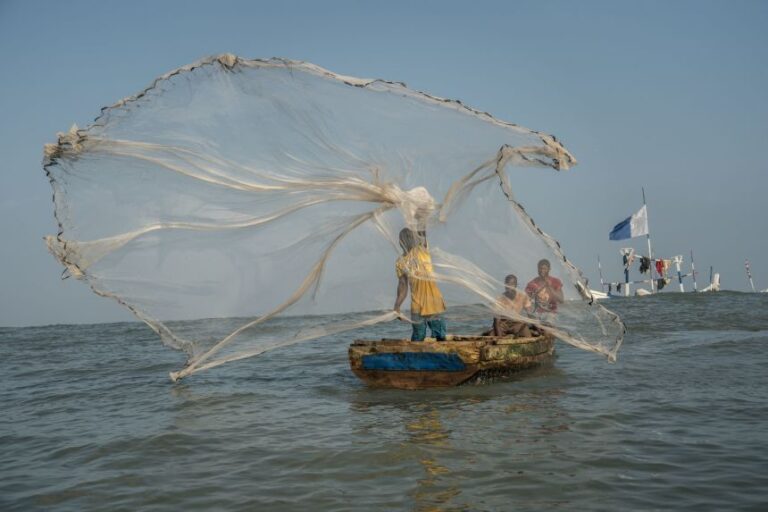
In the rough waters of western Ghana, a fisherman lifts a strange-looking, flat creature — half-shark, half-ray — out of his net.
It’s a guitarfish, a “living fossil” whose ancestors swam the same Jurassic oceans as dinosaurs. Today, it’s among the most threatened fish in the ocean — its fins sold for hundreds of dollars in Asian markets to make luxury soup, a trade pushing them toward extinction.
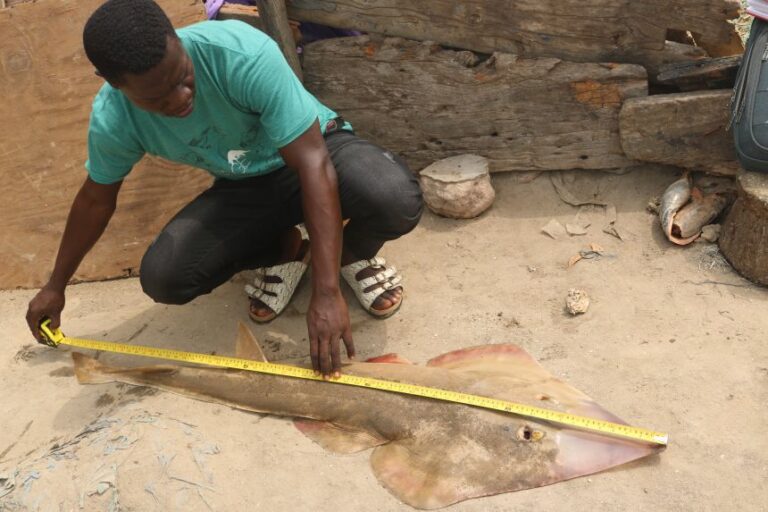
The fisherman measures the animal, notes where he caught it, and slides it back into the waves, unharmed.
Behind that small act is a decade of work by marine biologist Dr. Issah Seidu, whose research is responsible for much of what Ghana knows about its sharks and rays.
“These species are silently going extinct without anybody knowing them,” he told CNN, explaining that all four species of guitarfish in the country are critically endangered.
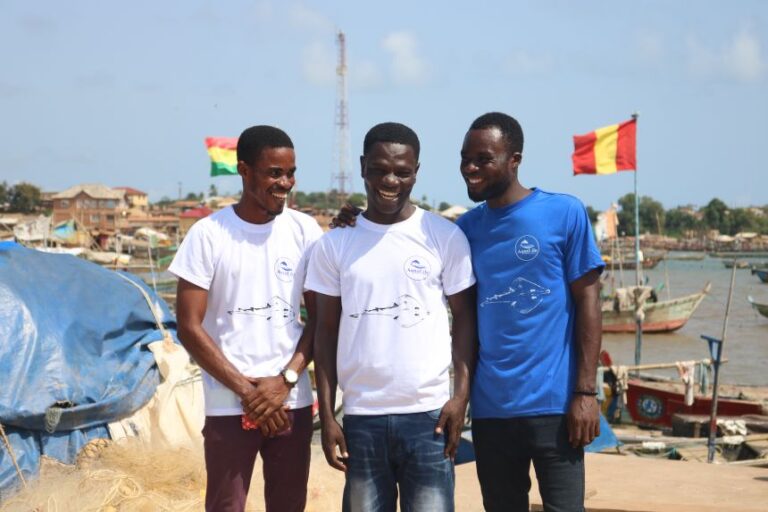
Now, as a university lecturer and founder of the nonprofit AquaLife Conservancy, Seidu and his team are raising awareness across communities and turning hundreds of fishermen into guardians of the same fish they used to catch — work that recently earned him a Whitley Award, a prestigious international honor for grassroots conservationists.
Where did the fish go?
Guitarfish are not sharks, but are a type of “rhino ray,” a group of worldwide, nearly of them threatened with extinction.
In Ghana, larger rhino rays like the distinctly shaped sawfish and wedgefish are believed to be locally extinct. Those left are four guitarfish species — the common, white-spotted, blackchin and spineback — which are the focus of Seidu’s work. “We don’t want guitarfish to suffer a similar fate,” he said.
This hidden canyon in the Mediterranean teems with whales and dolphins. But it’s under threat
Guitarfish are incredibly vulnerable to overfishing, because they inhabit shallow waters, grow slowly and have few offspring. As mid-level predators, Seidu explains, they hold the food web together — keeping the species below them in check while acting as prey for large sharks; remove them and everything around them is at risk, from the small fish people eat to the health of the ocean itself.
Once abundant and caught for food, guitarfish are now increasingly targeted by fishers for their fins, and because the ocean around them is running out of fish.
For generations, coastal communities lived off sardinella, anchovies and mackerel, caught with traditional methods. In recent decades, industrial trawler fleets began operations in West Africa’s rich fishing grounds. Often using banned nets that also catch juvenile fish before they can breed, trawlers are outcompeting small-scale fishers and pushing coastal fish populations to the brink of collapse.
Their profits rarely stay in Ghana. International nonprofit Environmental Justice Foundation found 90% of these trawlers are owned by Chinese corporations, a “shadow fleet” operating under Ghanaian flags to dodge fees and fines. A Ghanaian law passed in 2025 aims to push trawlers farther offshore, but its value will depend on effective enforcement.
‘Queen of the Deep’ Sylvia Earle: ‘Every time I go into the water, I see things I’ve never seen before’
Some trawlers also take part in an illegal trade locals call “saiko”: under cover of darkness, they transfer tons of frozen fish — often juvenile and staple species artisanal fishers depend on — to smaller specialized boats that sell it back cheaply to the same communities. Many of those involved are former fishers who found more profit in saiko than their own dwindling catch.
With small fish gone, many fishers turned to whatever catch still held value, including guitarfish, some resorting to fishing with dynamite and chemicals to make ends meet.
Coveted fins
Across Ghana, only the body and tail of the guitarfish is cooked. Its fins are dried and sold to traders throughout West Africa. “If you go to the fin market you have a price tag for each of these species,” Seidu said.
Most fins reach trade hubs in China. Some are sold as shark fins while the largest and rarest species are a premium category of their own, fetching hundreds of dollars a kilogram for the texture they give to shark fin soup. This culinary delicacy drives the multimillion-dollar global fin trade — killing up to 100 million sharks a year, including countless guitarfish.
Read more US Sen. Dan Sullivan’s same-name challenger can be on primary ballot, Alaska Supreme Court rules
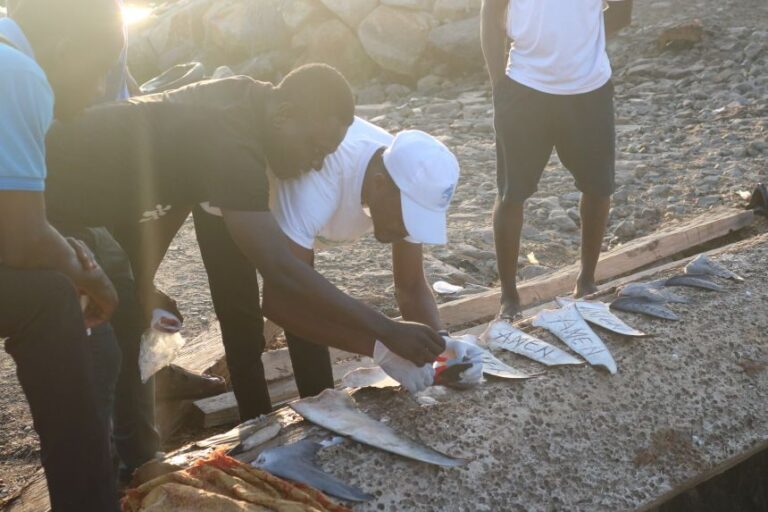
Unlike saiko, guitarfish trade is legal but regulated under the Convention on International Trade in Endangered Species (CITES) Appendix II protection, partly thanks to Seidu’s work supporting their inclusion.
But for the most vulnerable species, trade has remained high. “In future we are aiming to push it to Appendix I, which actually prohibits the exploitation of the species entirely,” he said.
Until then, his plan is to break the supply chain at its first link: the moment guitarfish are caught.
Soap and snails
A former fisherman himself, Seidu knew the fishers’ livelihoods depended on the very animal he wanted to protect. In 2018, he began trying to gain their support.
“If you want to convince them, you cannot tell them to stop catching these fish without giving them an alternative,” he said. “It took me six months to be able to convince some of the fishermen to work with me.”
They feared that conservation meant losing their income but Seidu’s answer was to first put their knowledge to work — what he calls the “fisher biologist model.”
In the ocean’s twilight zone, this diver is discovering vibrant new species
Instead of treating fishers as the problem, AquaLife trains them as collaborators: in safe-release techniques for guitarfish that land in their nets by accident, and in collecting data and GPS-mapping the breeding and nursery grounds critical for the survival of the fish.
The data will be used to map what Seidu hopes will become Ghana’s first locally managed marine area, a community-run refuge where guitarfish, and other creatures from sharks to sea turtles, can recover.
The Fante people of Ghana are considered among the continent’s most skilled fishermen, traveling across West Africa’s coasts, often targeting large catch like guitarfish. By training migrant fishers like them, an overlooked group in conservation plans, Seidu hopes the impact can spread across borders.
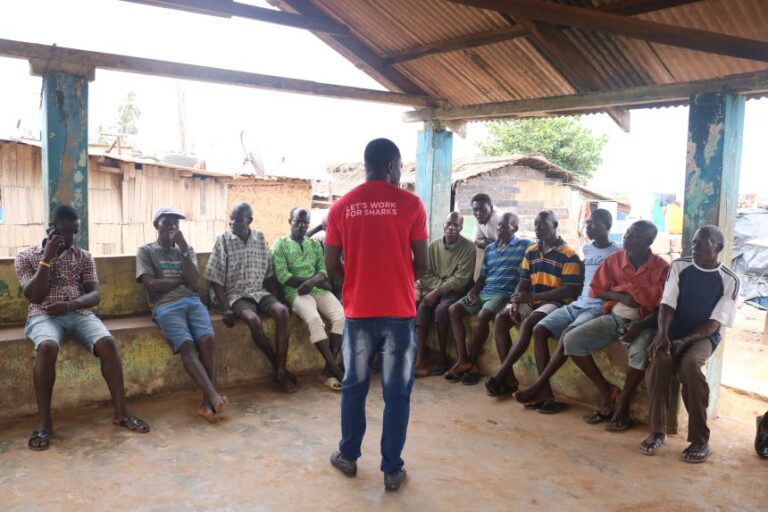
For the long term, they encourage alternative livelihoods — from soap-making to farming edible snails — so fishers gradually depend less on the fragile ocean to make a living. Some now earn more than they did at sea.
To date, 200 people are no longer catching guitarfish or keeping them as bycatch, Seidu said, adding that two communities decided to also ban destructive techniques like dynamite fishing, poisoning and undersized nets that catch everything in their path.
“Local communities are not just beneficiaries of conservation,” he remarked in his acceptance speech at the Whitley Award ceremony. “They are partners, decision-makers, and key to our success.”
Seidu’s collaborative model stood out to the judging panel, said Danni Parks, director of the Whitley Fund for Nature, who in an email to CNN praised his “ambitious and thoughtful approach to addressing the interconnected challenges of biodiversity loss and food security.”
Saving the unknown
For Seidu, saving the guitarfish will also depend on drawing attention and funding to this little-known sea creature. “Despite being among the most threatened marine species globally, guitarfish largely remain invisible in research, policy and public awareness,” Seidu said.
In May, he was in Sri Lanka for Sharks International — the world’s largest conference on sharks and rays — presenting his work and connecting with researchers from more than 80 countries who share a common goal: to protect these species without threatening local livelihoods.
“We must have compassion for those whose lives depend on this,” Seidu said.
Across Brazil, India and Kenya, similar models are giving small-scale fishers another choice — incentivizing them to release sharks and rays and bringing them into the research process.
To keep the work going, Seidu is getting the next generation on board. “I’m training many students, many early-career conservationists,” he said. “And I know, in the future, there is hope for Africa.”
Read more Trump posts apparent AI-generated image of large, golden eagle affixed to Truman Balcony