 By admin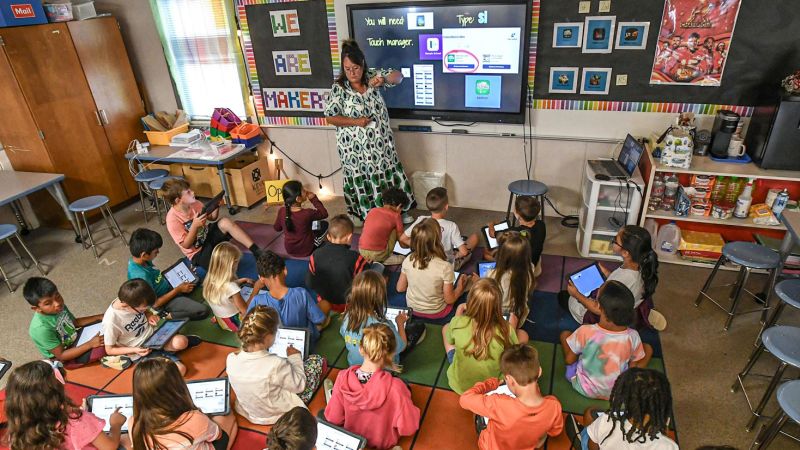
Kara Alaimo is a professor of communication at Fairleigh Dickinson University and advises parents, students and teachers on how to manage screen time. Her book “Over the Influence: Why Social Media Is Toxic for Women and Girls — And How We Can Take It Back” was published in 2024.
Read more New York Stock Exchange opening bell to be rung from Oval Office for Trump Accounts launch
The Los Angeles Unified Board of Education has enacted some of the strictest rules in the country limiting screen use in schools.
Many families across the United States will soon be sending our kids back to school, where they will likely spend far too much time on devices. The new policies in Los Angeles show that a more sensible approach is possible. To get schools to adopt similar safeguards, parents need to make their voices heard and push for change.
Under the policy , kids in preschool and first grade within the nation’s second-largest school district won’t have instructional screen time at all. In second and third grade, kids will spend a maximum of 20 minutes on screens each day, including homework. That will gradually increase to a limit of 1.5 hours per day in high school — and no more than 10 hours per week.
No one will be on YouTube or social media during the school day, and individual devices won’t be issued to kids anymore.
Kids shouldn’t have to live in Los Angeles to attend this kind of a school.
As I’ve said before, we know children learn more when they write with pencils and read on paper.
The exception is some kids with disabilities. A child with dysgraphia who has difficulty writing may benefit from typing sometimes while they keep trying. These kinds of accommodations should be made in their , or IEPs, which are customized plans public school students with disabilities receive.
However, there is no evidence kids benefit from learning on screens, said Dr. Yair Lev, a physician who has been pushing for screen limits in Lower Merion, Pennsylvania, schools. On the other hand, plenty of evidence shows screens are causing harm, he pointed out: Kids are distracted. They are accessing inappropriate content. They encounter cyberbullying. They are not connecting with teachers. And they are facing mental health challenges.
Unfortunately, most schools don’t have L.A. Unified-style guidelines — and 88% of public schools issue individual devices to students. In my town, Chromebooks are issued in fifth grade.
What can families who can’t move to Los Angeles do to protect our kids?
Start with your school
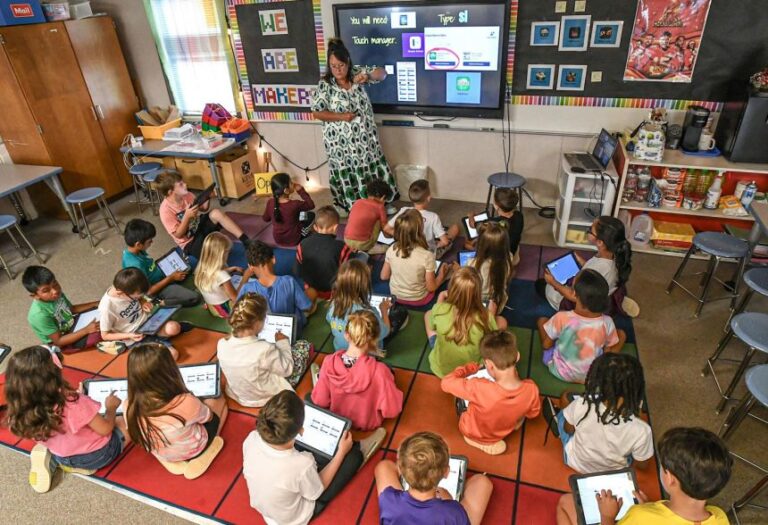
In New Jersey where I live, when parents have offered examples of excessive screen use to town officials — for example, a homework assignment to watch a 45-minute video — a school official asked parents whether they asked the teacher whether there was a non-digital option. So, start by requesting an alternative.
To make sure the teacher doesn’t take things personally, you could write a letter to the district over the summer saying you want your child’s screen use in school to be limited, said Jill Anderson, a third grade teacher in New York’s Westchester County. That way, when you approach the teacher, you can share your letter and they will know your concerns weren’t prompted by something they did.
You can also ask whether your child can have analog alternatives to devices issued in the classroom. Last year, when kindergarteners in Lower Merion received individual tablet devices for classroom use, Lev, the physician, asked that his son not be given one — and the school agreed.
Some of what happens during youth can’t be reversed. It’s another reason to rethink kids’ screen time
Talk to school board and state officials
If you’re still concerned, raise the issue with school board members. I waited until around 10 p.m. to make a public comment on this issue at a school board meeting in my town this month.
Board members are more likely to pay attention if a concern is widespread, so collaborate with like-minded parents.
Read more The full strawberry moon will rise in the night sky this week
“You are not alone,” said Lev, who helped start a movement called Pencils Over Pixels. (I did a webinar for the group this month .) Lev said once he and a couple of other parents started speaking to the school board, many others supported them and got involved. Now, there are hundreds of signs around town supporting the cause, he said.
In my town, parents who showed up at the school board meeting to talk about limiting screens in the classroom wore white so we’d be visible, then followed up with a meeting with our superintendent and other school officials.
Also try talking to members of your town’s PTA if they are supportive, Anderson suggested.
In my New Jersey town, kids are required to take state tests on computers. An official overseeing the curriculum therefore claims the school needs to issue students individual devices to prepare for those tests. So, parents can also consider asking governors and state legislatures to go back to analog testing.

Overusing screens is ruining our health. Here’s the fix
Ask for guidelines and limits in schools
When you talk to school officials, tell them what you’re concerned about, said Nick Melvoin, the board member who sponsored Los Angeles Unified School District’s policy. Maybe you’re concerned about kids getting mental health advice from chatbots or cheating with artificial intelligence, he said.
Then ask what guidelines the officials have for using screens and AI in school.
At this stage, we need time limits on screen use in schools, Melvoin said.
Some schools say tech use should be intentional, but that’s not enough. “I could be creating and intentionally doing something literally the whole school day,” Anderson, the teacher, said. “That still doesn’t make it OK .”
The issued by the Office of the Surgeon General in May offers helpful ideas. For 6- to 18-year-olds, it suggests screen time limits of no more than two hours per day, including screen time outside of school. The guidance also suggests schools make individual devices available in computer labs rather than classrooms, and calls on schools to use physical books whenever they can.
Here’s what you’ll hear
Those of us who advocate for screen limits in classes have been hearing the same misguided responses from school officials. Here’s how to respond.
First, some people claim we’re anti-technology and want to ban it.
“We don’t say, ‘Oh, we’re banning driving, because my 6-year-old can’t drive a car right now,’” Anderson said. “She just can’t drive until she’s a certain age.”
Another thing you’ll probably hear is that kids need to prepare for a workforce where they will likely be on screens. A school board member in my town told me she’s constantly using spreadsheets.

Want to scroll less? These 12 essentials helped me halve my screen time in 30 days (Courtesy CNN Underscored)
Of course, kids should learn how to use and stay safe on computers in technology class. But “if I teach a product now that exists now, you know it won’t even look and exist the same way by the time they’re in the real world,” Anderson said. The better skills to teach kids are how to conduct research, ask for help and persevere so they can figure out new programs as they emerge, she pointed out.
Some people argue issuing devices is more important for less privileged kids. But Melvoin pointed out that kids from lower socioeconomic backgrounds tend to spend more time on screens at home, so limits at school are especially important for them.
Like most things, those skills are best learned off-screen.
Get inspired by a weekly roundup on living well, made simple. Sign up for CNN’s Life, But Better newsletter for information and tools designed to improve your well-being.
Read more Supreme Court to review the legality of mass voter purges in the weeks before an election