 By admin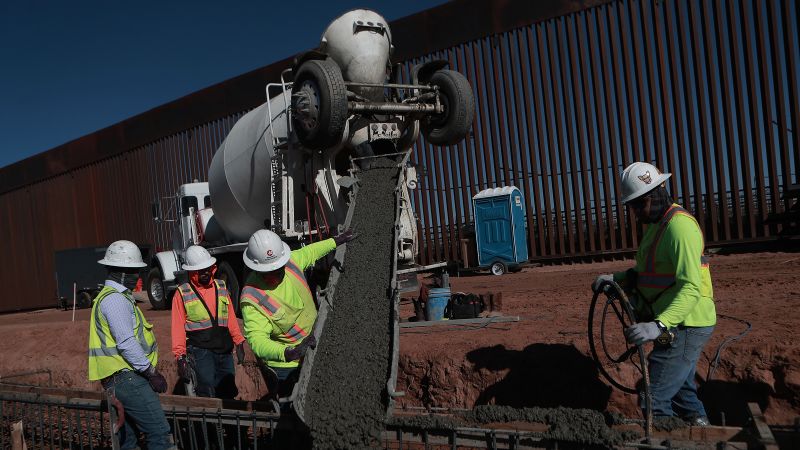
President Donald Trump is accelerating his effort to finish his border wall and setting an ambitious goal of completing it by the end of his administration. He’ll need landowners whose property runs along the US-Mexico border to hand over their land to finish it.
Read more Is Trump celebrating the country, or himself, on America’s 250th?
Over recent months, the Department of Justice has been hiring attorneys whose primary job includes invoking eminent domain to seize private land for the administration to build barriers. It’s an acknowledgement of the reality federal officials face along certain parts of the border, primarily in Texas, where a lot of the land is not federally owned.
“It’s taken too long to buy land at the pace they’re building. They’re running out of land faster than they can get land,” a former Homeland Security official familiar with the current efforts told CNN.
The US-Mexico border is 1,954 miles long. By the end of the Trump administration, officials project that around 1,400 miles of that will be covered with barriers, with additional miles reinforced with technology. It’s an enormous task that will require the administration to build around 775 miles of new wall by the end of 2027, and several hundred more miles of secondary and waterborne barrier by the end of 2028. Former and current US Customs and Border Protection officials say they’re on track to achieve it.
One hurdle, though, is land acquisition. Generally, the government is allowed to acquire privately owned land for public use, under the legal principle known as eminent domain. Border barriers built under previous administrations have largely gone up in areas where land was federally owned, but extending the wall, as Trump pledged to, requires taking privately owned land.
‘Ahead of schedule and below budget’
US Customs and Border Protection is expecting to have “all real estate available for construction by June 2027,” according to a federal document reviewed by CNN, which notes that as land becomes available, construction will occur “on a rolling basis.”
CBP Commissioner Rodney Scott said this month that border wall construction is “ahead of schedule and below budget,” citing previous border wall money appropriated by Congress and the president’s “big beautiful bill” which allocated $46.5 billion for construction.
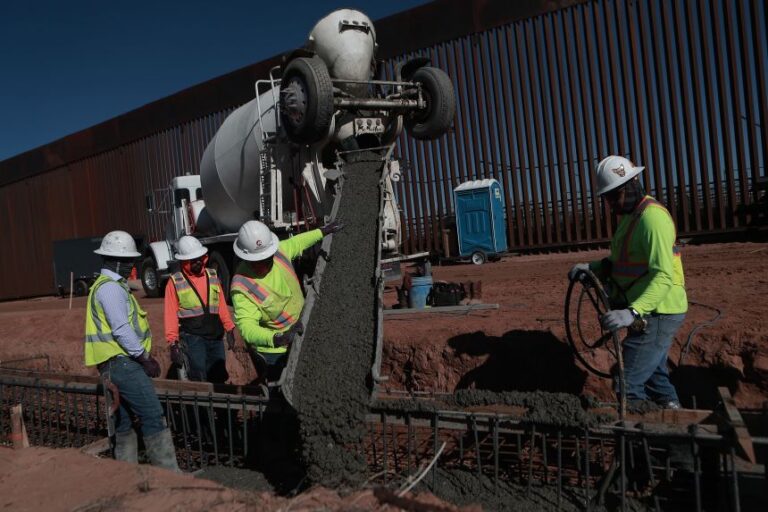
When Trump took office last year, there was around 644 miles of primary wall, meaning barriers where none previously existed, and about 75 miles of secondary wall along the US southern border. Since then, the administration has added roughly 80 miles of new primary wall and about 24 miles of new secondary border wall, according to CBP.
“CBP is planning to construct an additional ~695 miles of primary and ~608 miles of secondary wall. These total numbers may change slightly until all construction contracts are awarded,” an agency spokesperson told CNN in a statement, adding that approximately 535 miles of the border will be covered by technology.
“The primary border wall — I’ve made a commitment to the president — will be done by the end of 2027,” Scott said at a Center for Immigration Studies event, referring to wall that was built along parts of the border where no barriers previously existed.
That would cover San Diego to the Gulf of Mexico, with some gaps, according to Scott.
“The only places we’re not building border wall is places where we’ve made a conscious decision that we don’t need it,” he said, citing remote areas where there’s rough terrain. The whole system, including secondary barriers and technology, is expected to be finished by the end of 2028.
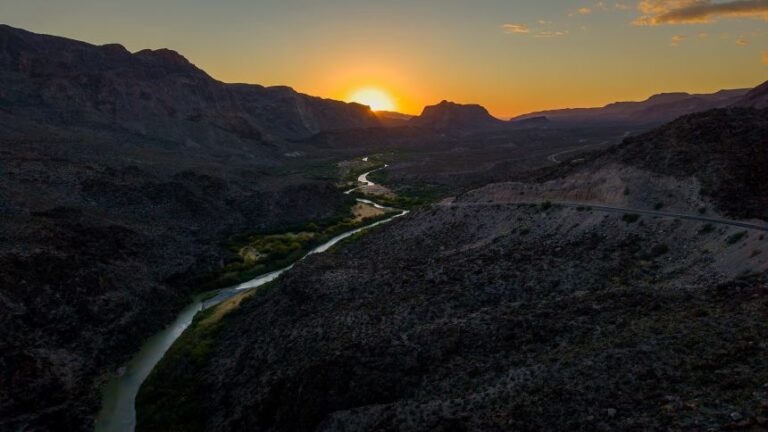
The agency, for example, is not planning to build 30-foot-high barrier in Big Bend National Park, Big Bend Ranch State Park, or the Black Gap Wildlife Management Area.
The administration is projected to build around 10 miles of barrier a week in August and increase the number of miles erected weekly moving forward, according to a source familiar with the planning.
Read more Senate walks back rebuke of Trump over Iran war
“They want to say they’re finished by the end of this administration,” the former Homeland Security official said.
The Department of Homeland Security has also moved to expedite construction by waiving certain laws.
The epicenter of eminent domain cases
The process of acquiring privately owned land, meanwhile, can be laborious.
In Trump’s second term, the Department of Justice has filed 39 land condemnation cases, primarily through the US Attorney’s Office for the Southern District of Texas, according to a department spokesperson. The department is also “actively working with landowners in Texas, New Mexico, Arizona, and California” to obtain property for purposes of border barrier, the spokesperson added.
Stephen Adler, a Texas-based attorney, is currently involved in eminent domain cases where the federal government is trying to seize land in Laredo, Texas and the Big Bend area.
Adler is working with property owners who are looking for information on whether the wall will have a gate so they can still easily access their property, others who are willing to sell but want to maximize what they can get for the property, and some clients who don’t want their property to be taken at all.
“I think that one of the reasons they’re allocating or trying to find more attorneys right now is they’re trying to put more manpower against the processing of these cases, so they could move more quickly,” Adler said, noting cases can take several years before they’re resolved.
“It looks like they have a lot of pieces of property they want to acquire, and the more the property owners seek to fully exercise the rights that they have, the longer and more involved the process gets,” he added.
While eminent domain cases can be lengthy, they generally don’t keep the agency from being able to proceed with construction. Landowners are often fighting for what is known as just compensation – what they deem a fair price for their property.
The Rio Grande Valley is largely privately owned and therefore an epicenter of eminent domain cases.
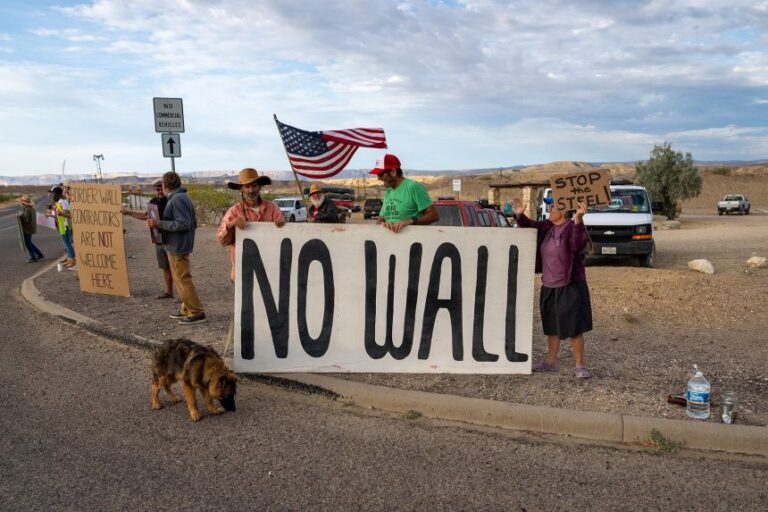
The city of Laredo, which shares roughly 14 miles with the Mexico border, is among the areas where the administration is trying to acquire land through condemnation. The city has been in ongoing discussions with federal officials since the administration sought to acquire the city’s land for wall construction last October.
“We can give them the information that will make them do the correct designs better than just putting the structure as they propose,” said City of Laredo Mayor Dr. Victor D. Treviño. “We understand what happens here, and we understand that they’ve changed some of the designs already because of our information and our collaboration and our dialogue.”
That’s particularly important for the city’s downtown area where city officials are trying to avoid the administration putting up bollard wall, which the mayor described as “more detrimental than functional.” But officials are also concerned about the city’s water source and international trade, which could be impacted by barriers and river buoys.
“We really don’t think it’s needed because we’re one of the areas that has one of the least illegal crossings in the whole southern border, so if you have that situation, there’s really no need for a border wall,” Treviño said.