 By admin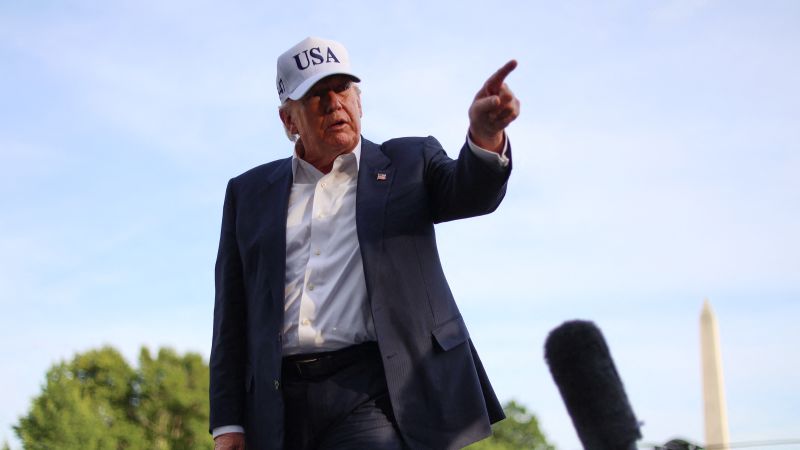
President Donald Trump is escalating his retribution drive after felling yet another Republican critic in a campaignthat he finds deeply satisfying but that comes with widening political risks for his party.
Read more I tried to turn my phone off for a week. Why it didn’t work
Trump destroyed the reelection hopes of Louisiana Sen. Bill Cassidy in the state’s GOP primary Saturday, and will on Monday send Pete Hegseth to Kentucky as part of an effort to doom Rep. Thomas Massie — a rare and controversial foray for a defense secretary in wartime.
Massie, who co-authored a law requiring the release of the Jeffrey Epstein files and who opposes the Iran war, faces voters on Tuesday. But he said Sunday he’s not worried by Trump’s attacks. “You can tell that I’m ahead in the polls and they’re desperate,” he told ABC News’ “This Week.”
Trump also this weekend threatened to withdraw his endorsement of GOP Rep. Lauren Boebert of Colorado after she campaigned for Massie.
Cassidy’s defeat, five years after he voted to convict Trump in a Senate impeachment trial over the January 6 Capitol riot, lengthens the list of GOP grandees, including Liz Cheney and Mitt Romney, already elbowed out of top party positions for standing up to a strongman president.
Trump’s hardball Louisiana play was another stunning display of his power over his own party and his capacity to leverage the support of his most committed supporters, even as a second-term president who has never been more unpopular nationwide. This political superpower explains why the president has not emulated previous unpopular commanders in chief in losing the capacity to shape domestic politics. Earlier this month, Trump toppled a handful of state lawmakers in Indiana who balked at his demands to redraw congressional maps.
But Trump’s pursuit of his political vendettas in a presidency increasingly revolving around personal goals, expensive legacy projects and tin-eared economic messaging is going to cause a headache for the GOP.
Trump has always been a unique political figure. He built a movement that made him president twice through turning his own fixations — such as immigration, tariffs or NATO spending — into policy goals. But his latest antics come as Republicans deal with the early fallout of his turbulent second term ahead of difficult midterm elections.
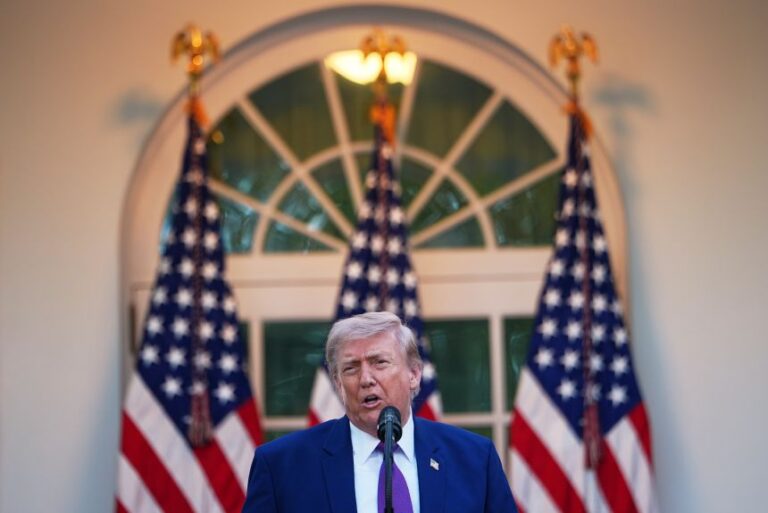
While he’s acting on his own goals, Trump is not focusing on issues that are arguably far more vital to the country — like ending his war against Iran, and the conflict’s economic fallout, which is making an already-stark affordability crisis much worse.
Trump’s interventions are deepening the core dilemma of GOP midterm candidates: How can they appeal to a broader electorate that disdains the president without incurring his wrath? Breaking publicly with Trump, meanwhile, could alienate base voters who aren’t sufficient for victories in swing seats to win but who are needed to show up en masse to keep party candidates viable.
Trump’s zeal for revenge and his focus on passion projects like the new White House ballroom and a proposed massive commemorative arch in Washington also offer a huge opening for Democrats to portray a billionaire president as out of touch with the lives of voters, majorities of whom have been telling pollsters that they oppose his war and that his policies make their lives worse.
Trump’s need to project total dominance raises questions about how far a term-limited president will go to mold the party as his exit from the political stage looms. At some point, the GOP will need to look to the future. That will be harder if candidates cannot maneuver away from their unpopular leader to satisfy their own political needs in their unique races.
Democrats eye an opening
Trump’s weekend of plotting revenge comes as the price of gasoline averages $4.50 a gallon nationwide, according to the AAA. Recent government data showed inflation has hit its highest point since May 2023. The impact is worsened because the rise in the cost of living is now outpacing wage increases.
Democrats, who failed to make a clear affordability argument in 2024, are now trying to reach independent and even some moderate and conservative Republican voters by arguing Trump is driving out all but the most extreme MAGA activists.
“Sen. Cassidy is a normal, honest and very conservative Republican. And it turns out people like that have less and less of a home in Donald Trump’s Republican Party,” former Transportation Secretary Pete Buttigieg told CNN’s Dana Bash on “State of the Union” on Sunday.
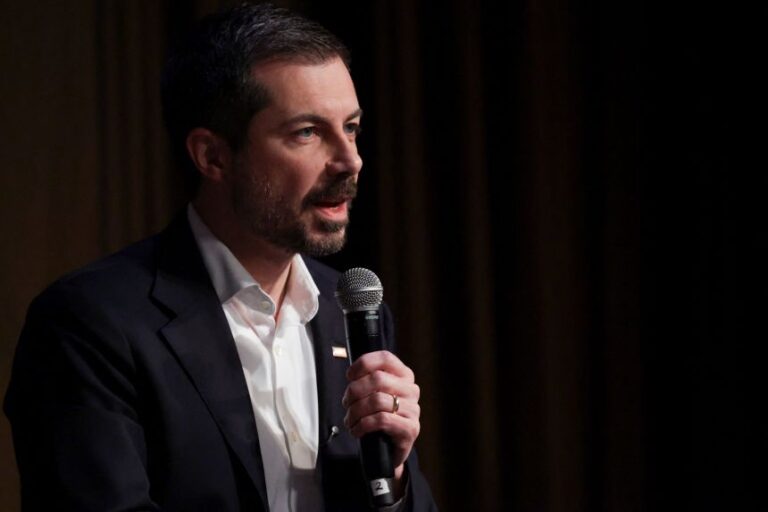
“We are seeing more and more extreme candidates put forward in their House and Senate races, which does create a big opening for Democrats,” Buttigieg said.
Read more Trump’s compensation plan is a metaphor for a brazen presidency
Buttigieg, a possible 2028 Democratic presidential candidate, added, “As that one man remains deeply unpopular, (Republicans) are having a very hard time convincing the rest of America to vote for them.”
Trump’s reluctance to prioritize affordability questions — reinforced by his comment on Fox News last week that he didn’t think about such matters when negotiating with Iran — has put GOP leaders in a tough political position.
Republican House Speaker Mike Johnson tried to rationalize the situation by arguing that everything could be blamed on Iran. “Gas prices are too high because of that, and then that has an effect on how goods are transported to the grocery store and all the rest,” Johnson told “Fox News Sunday.”
“As soon as we get that straightened out, we will get back to the kitchen-table issues, the economic issues that we put in place to make the economy grow,” Johnson said.
Yet the chances of political conditions quickly improving are remote. The war is at a stalemate. Tehran keeps refusing Trump’s demands for a deal. Any attempt meanwhile by the president to use military force to open the deadlock could unleash even worse global economic turmoil. And even if the Strait of Hormuz were to open within days, it could take months for oil prices to stabilize.

How presidential power has grown far beyond what the nation’s founders envisioned
Cassidy offers a grave warning about Trump’s fitness to lead
There are also broader implications from Trump’s desire to purge dissident voices from the GOP. The president has neutered the possibility of congressional oversight from GOP majorities and created an impression — which contravenes the spirit and foundations of US democracy — that only his power matters.
“Let me just set the record straight: Our country is not about one individual. It is about the welfare of all Americans, and it is about our Constitution,” Cassidy said after losing on Saturday. “And if someone doesn’t understand that and attempts to control others through using the levers of power, they’re about serving themselves. They’re not about serving us. And that person is not qualified to be a leader.”
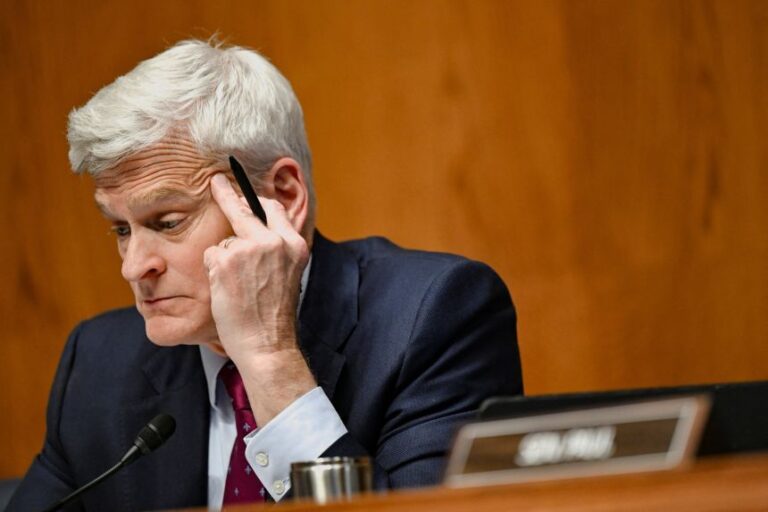
His critique suggested he could join another outgoing GOP senator, Thom Tillis of North Carolina (who did not seek reelection), as a freed-up Trump critic and frustrate remaining GOP legislative aspirations on Capitol Hill.
But Trump was too busy celebrating to listen to a rebuke from the Louisiana Republican, who tried to mend fences with the president during a second term that seemed an impossibility after his 2021 impeachment vote. “His disloyalty to the man who got him elected is now a part of legend, and it’s nice to see that his political career is OVER!” Trump wrote of Cassidy on social media.
Trump now hopes to inflict the same punishment on Massie in a Tuesday primary election that has become an even more acid test of his power over grassroots Republican voters. Trump recruited Ed Gallrein, a farmer and former Navy SEAL, to run against Massie, a fiscal conservative who voted against Trump’s “big beautiful” domestic policy bill, arguing it would balloon the deficit.
The primary, which has attracted a wave of outside money and has cost at least $29 million, will pit the president’s MAGA appeal against Massie’s contrarian old-school conservatism — a possible ideological foreshadowing of future battles when Trump is no longer the party’s dominant actor.
Hegseth’s arrival in the state for domestic political events will be especially controversial, since he’s supposed to be conducting a war that has defied his bombastic claims of total victory. And most government officials in most administrations take pains to avoid infringing the Hatch Act, which is meant to restrict political activities by executive branch employees.
But a Justice Department firmly under Trump’s control wouldn’t investigate any such infringements by Hegseth, and his involvement underscores how this administration is focused as much on its boss’s whims as on traditional and narrower perceptions of national interest.
The question now is how long an increasingly unpopular president who seems out of touch with many voters’ concerns will be able to exert power in a way that advances his own goals but could create an uncertain future for his party.
Read more Want to be happier and healthier? Switch up your day with movement breaks