 By admin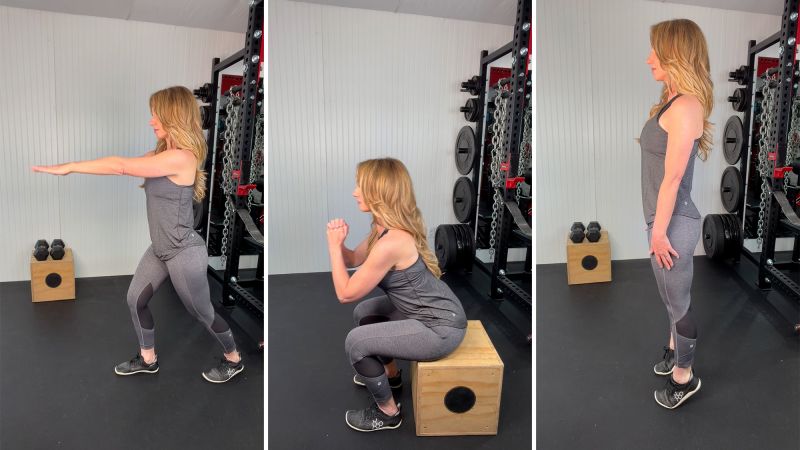
Dana Santas, known as the “Mobility Maker,” is a certified strength and conditioning specialist and mind-body coach in professional sports, and is the author of the book “Practical Solutions for Back Pain Relief.”
Read more Federal judge blocks Trump policy of making arrests at immigration courts nationwide
If you spend the bulk of your day seated — at a desk, in a car or on a couch — your body does what bodies do: It adapts. Hips stiffen, shoulders drift forward, breathing becomes shallow and your nervous system responds by triggering your stress response, effectively locking you into a cycle of chronic tension.
The common assumption is that you need a long workout or a dedicated stretching session to counteract those effects. But research on breaking up prolonged sitting suggests something more encouraging: Short movement interruptions consisting of just a few minutes every 30 minutes can have a significant positive impact.
These brief activity breaks — also known as exercise snacks — not only fight the effects of sitting still for too long but also have been shown to improve blood flow, protect your heart and sharpen your focus.
To help you stop treating movement as an all-or-nothing event, I’ve created a plug-and-play mobility reset you can use throughout your day. The easy-to-follow framework takes just three minutes to help calm your stress response, mobilize your joints and activate your muscles — integrating everything into functional movements designed to help you move and feel better.
5 exercises to offset too much sitting
Your 3-minute reset
Perform this reset once every 30 minutes to break up sedentary time. You’ll start each one with the breathing exercise below and then choose one option from each of the three remaining segments.
Rotate your selections throughout the day so that, across multiple resets, you address different regions of your body. This approach allows you to cover more territory without increasing your time commitment.
Before beginning this or any new exercise program, consult your doctor or physical therapist.
1. Breath-led downshift (about 45 seconds)
How you breathe shapes the way you move — that’s why this reset starts with a focus on restoring proper breathing mechanics and rib cage position. Slow, controlled breathing signals your nervous system to downshift, moving you into a calmer physiological state and relaxing your muscles. That matters because tension is not only structural — it’s neurological.
Stand tall and place both hands on either side of your lower rib cage so that you can guide and monitor the movement of your ribs.
Take three slow breaths using a 5-7-3 pattern: five-count inhale, seven-count exhale and three-count pause. Bring your lower ribs inward and down as you exhale and pause, feeling your rib cage descend and your upper body loosen. Keep your jaw unclenched and your shoulders relaxed.
2. Dynamic joint motion (about 45 seconds)
Sitting for hours on end compresses joints and reduces circulation of synovial fluid, the body’s natural joint lubricant. Moving through your available range of motion repeatedly — rather than holding a stretch — restores that blood flow and primes your joints for the activation exercises that follow.
Choose one:
• Neck and upper back: Slowly turn your head to each side, then follow the head turns with shoulder circles. Perform five repetitions in both directions for each movement. Repeat another set of each move for a total of 10 reps.
• Spine: Practice standing cat-cow posture by placing your hands on your hands on your thighs with your knees slightly bent while you move through a comfortable arc of back extension and flexion for eight to 10 repetitions. Stand tall, take a deep breath and repeat through an additional set.
• Hips and ankles: Do one set of five repetitions of alternating hip circles and ankle rolls on each side in each direction.
3. Light activation (about 45 seconds)
Even a brief activation signal reminds your nervous system that your body is capable of more than sitting. This phase helps reengage muscles that support posture and joint control so the movement you gained is usable.
Read more Gen Zers want to help, they really do, if the work pays well enough
Additionally, even light muscular activation has been shown to improve memory and focus.
Choose one:
• Glutes/lower body: Perform box squats by squatting down to tap your bottom on a chair seat and then coming back up to standing through eight to 10 controlled repetitions. Take a deep breath before doing another set.
• Shoulders and chest: Practice a reach-and-pull pattern from standing. Inhale as you reach forward with your arms at shoulder height, and as you bend your arms to draw your elbows back. Do two sets of 12 to 15 repetitions while keeping your rib cage balanced over the pelvis.
• Foot, ankle and calf: Do two sets of 10 to 12 calf raises, rising with control and lowering slowly. Hold a chair back or use a wall for support, if necessary.
4. Integration (about 45 seconds)
The previous phases decompress, mobilize and activate individual areas; this one integrates all of those aspects into coordinated, whole-body functional movement.
Choose one:
• March in place, swinging your right arm forward as your left knee comes up and vice versa, for 45 seconds or two sets of 20 seconds with a quick break between. Maintain upright alignment with your rib cage over your pelvis, lifting your knees as high as you can comfortably.
• Exhale as you step one foot back 8 to 10 inches in a mini reverse lunge. At the same time, reach both arms forward at shoulder height. Inhale as you return to standing with your arms at your sides. Perform two sets of 10 to 12 alternating repetitions.
• Practice standing on one leg for 15 to 20 seconds on each side while maintaining slow, steady breathing with elongated exhales. If balance is challenging, use a wall or chair back for support.
If you have a few extra minutes, a short walk is one of the most effective integration options — and one I’d consider as a fourth choice whenever your schedule allows. Research in desk-bound adults has shown that frequent walking breaks help offset declines in cerebral blood flow associated with prolonged sitting.
The best office chairs in 2026, tried and tested (Courtesy CNN Underscored)
Why consistency matters more than intensity
Rethinking daily movement as a series of small resets — rather than a single block of exercise — can shift how your body responds to long bouts of sitting.
Three minutes alone can’t replace a comprehensive mobility program, but it’s enough to interrupt the stress your body builds up hour after hour in a static position.
Over the course of a full day of consistent resets, you’re giving your nervous system, joints and muscles repeated opportunities to recalibrate rather than letting tension compound unchecked.
When frequent movement breaks become a lifestyle habit,the cumulative effect is a body that moves better, feels better and handles stress more effectively.
Get inspired by a weekly roundup on living well, made simple. Sign up for CNN’s Life, But Better newsletter for information and tools designed to improve your well-being.
Read more Bill Gates says he didn’t witness crimes but may have been in presence of Epstein victims