 By admin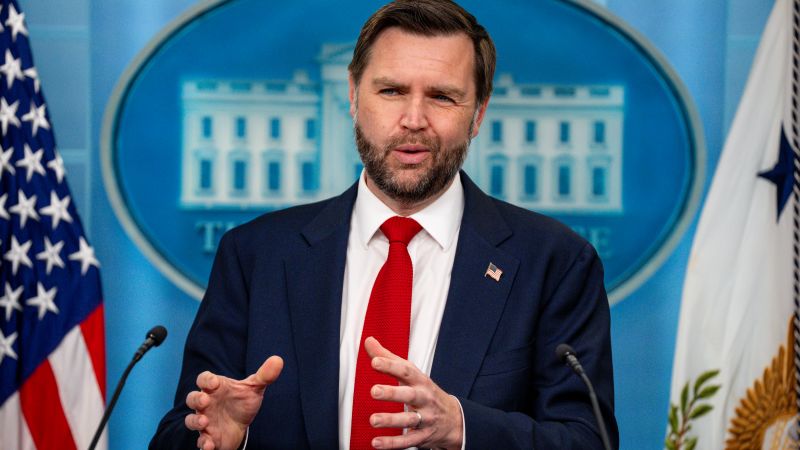
- Vice President JD Vance pushed to take a lead role in both negotiating and promoting a peace agreement with Iran.
- The accord has angered hawkish Republicans, many of whom have accused the administration of capitulating to Iran.
- It’s a serious risk for Vance, a known war skeptic, who is considered a likely presidential candidate in 2028. A formal signing in Switzerland was already derailed.
Vice President JD Vance jumped at the chance to be the face of a peace agreement designed to end months of unpopular war with Iran, a significant risk given the administration had spent months trying to get Tehran to fold with little success.
Read more Blue material peeling off bottom of Reflecting Pool, days after costly renovation
The last week has only made that decision seem more perilous — turning what could have been a career highlight into a potential blunder for Vance and any 2028 ambitions.
A formal, in-person summit planned for Friday was derailed at the last minute, with the vice president canceling his flight to Switzerland Thursday evening. GOP hawks vocally protested the administration’s decision to not share specific text immediately and, since seeing it, have roundly criticized the accord as too generous to Iran. One Republican senator described it as “the worst foreign policy blunder in decades.” And President Donald Trump and Vance have given conflicting statements about the path forward, including on what would happen if Iran violated the agreement.
Some of the ire has been directed specifically at Vance, a known war skeptic, who championed the agreement as a major victory across more than a dozen television and podcast appearances this week despite indications it would do little to immediately achieve the US’ core goals.
“Somebody has told JD Vance that a bad deal is better than no deal,” said a former senior Trump administration official. “And, clearly, nobody else wants to wear the jacket on this when it goes south.”
The criticism marks the latest wartime blow for Vance, who has delicately navigated his involvement in a conflict that he had private reservations about from the outset.
It also threatens to complicate his path to the presidency should he decide to run. Once an outspoken critic of foreign wars, the vice president has since stridently defended the Iran offensive — even as he continued to privately search for a path toward peace.
The approach has troubled outside allies who saw him as a bulwark against the GOP’s interventionist wing, including secretary of state and potential 2028 rival Marco Rubio. And it has simultaneously irritated some within the administration, who bristled at what two senior advisers described as a contrarian streak that could complicate decisionmaking surrounding the war.
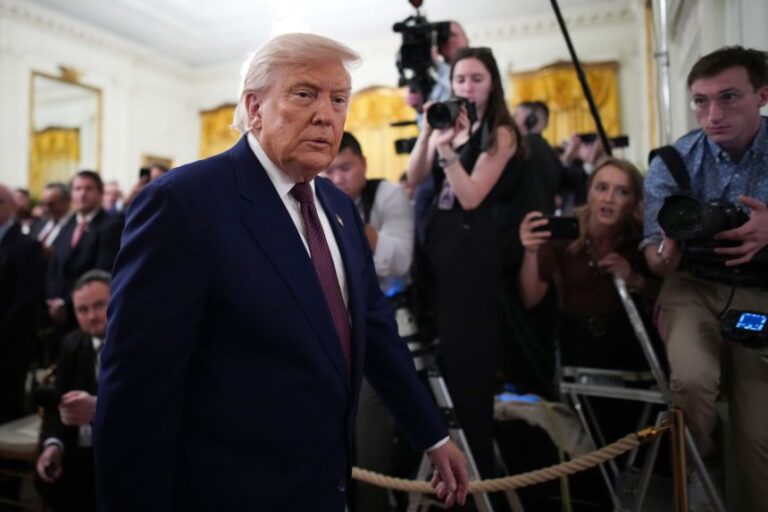
Trump, who has closely monitored Vance’s progress on Iran and frequently quizzed friends and advisers on how Vance and Rubio compare, semi-jokingly acknowledged the vice president’s bind during a Wednesday press conference.
“If it works out, I’m going to take the credit,” Trump said of the peace agreement. “If it doesn’t work out, I’m blaming JD.”
Vance has framed the agreement as the best option the country has to end the war, saying in a briefing Thursday: “People say the Iranians will never change their behavior. Well, maybe that’s true, and if so they don’t get any of the benefits of the bargain. But isn’t it worth trying?”
Vance has also downplayed the implications for his personal ambitions, insisting that he’s not yet contemplating a 2028 run and characterizing his involvement in the talks as meant solely to help get the two nations to an acceptable truce.
“There is a risk if the deal blows up, if the deal is a massive failure, if the deal is extremely unpopular, then Vance is the fall guy,” said Curt Mills, a Vance ally and executive director of The American Conservative, who’s argued going to war was a grave political miscalculation. “But the default was a disaster. JD is not going to be president if the administration is this unpopular.”
Repeated negotiating failures
Vance has sought to be a key part of the peacemaking push since before the war began, at times prompting concern among his colleagues about the implications for a future presidential run.
Vance met with Oman’s foreign minister on February 27 in an effort to stave off war with Iran, only to watch Trump wipe out the nation’s leadership in a barrage of strikes the next day.
After spending the war’s early stages backchanneling in pursuit of an eventual negotiated settlement, Vance then pushed for a role in the first face-to-face talks with the Iranian regime. White House officials agreed, calculating that his presence would help ensure that the Iranians sent high-level officials of their own.
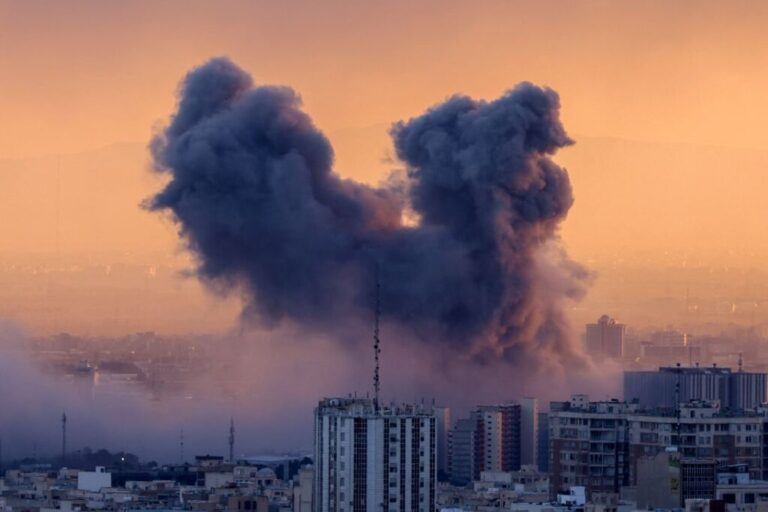
Still, some White House officials worried at the time that allowing Vance to lead the US delegation to Pakistan would amount to a political misstep if the talks fell through — which they eventually did, generating a wave of unflattering coverage.
“He didn’t think it through,” a senior White House official said of the Islamabad summit, arguing that the vice president needed to be more strategic about decisions that could affect a 2028 run. “He put himself at the front of the line, and then The New York Times headline is, ‘Vance loses.’”
But the setback appeared to do little to change Vance’s approach. He had planned to travel back to Pakistan for a second round of talks before they were called off. Since then, officials said, Vance has been closely involved in the weeks of deliberations that ultimately led to this week’s memorandum of understanding.
The vice president, already in the midst of promoting his new book, made clear to Trump in recent days that he wanted to take the lead in touting the agreement, a source briefed on the internal conversations said.
Read more Trump’s Iran agreement draws rare reproach from powerful Republicans
A senior official said Trump has encouraged Vance to take a central role. And in the wake of the agreement, there were few others options for messengers; most other senior officials involved in the talks were overseas with Trump at the G7 summit.
Vance subsequently celebrated the agreement in a multiday media blitz, portraying it as a “big win for the American people” that had handed the US greater leverage over Iran.
“If the Iranians comply with this deal, it is going to fundamentally transform the Middle East,” Vance told Fox News shortly after the pact was announced.
‘Worst foreign policy blunder in decades’
Yet with each successive day, the criticism has only grown louder. Marc Thiessen, a conservative commentator who had advocated war with Iran, dubbed the agreement the “Vance peace deal” while denouncing the potential creation of a $300 billion fund for Iran in any final truce as “utterly disastrous.”
Democratic lawmakers and some Republicans have slammed the agreement for lifting key sanctions on Iran without forcing any concrete concessions from the regime regarding its nuclear ambitions. And Sen. Bill Cassidy of Louisiana excoriated the framework after text was released Wednesday, saying on X that “Reagan is rolling over in his grave.”
“Before the war, the strait was open, Iran was being crushed by sanctions, and 13 service members were still alive. Now, 13 Americans are dead, families have paid billions at the pump, sanctions will be lifted, and the bombing has stopped,” Cassidy continued. “This is the worst foreign policy blunder in decades.”
More Republican lawmakers have since piled on, with Senate Armed Services Chair Roger Wicker decrying the pact as “completely out of step with the president’s goals.” The Mississippi Republican also said the $300 billion fund to Iran laid out in the text made the widely criticized “payoff” under the Obama administration’s 2015 Iran deal “look like a pittance by comparison.”
Amid the wave of skepticism, sources in and around the White House insisted that Vance wasn’t being hung out to dry trying to sell a doomed agreement, and that Trump believed it’s set the US on a winning path.
As for Vance’s most vocal critics, one Trumpworld source dismissed them as largely irrelevant to the White House’s view of his performance or his political future. They have little influence within the administration, the source argued, especially as officials reviewed early polling that showed enthusiasm among voters for the peace agreement.
“There’s no real downside risk to the president and vice president for giving the peace process a chance,” the source said. “In fact, they are getting credit for it.”
Vance v. Rubio
Yet among some of Vance’s supporters, there is still some measure of dismay at his rush to own an accord that could easily collapse by the end of the summer.
“If I was his political adviser, I would tell him to sit back and let this play out,” one Republican operative close to the White House told CNN.
Others noted that as the scrutiny intensified, Rubio had conspicuously receded from the spotlight. The secretary of state stood behind Trump at a press conference this week that largely focused on the Iran agreement, but he remained stone-faced and silent throughout the hour.
“Rubio is being put in a very strong position here,” one former Trump official said of the Iran fallout.
Some Vance allies insisted that despite the initial criticism, the vice president could still emerge stronger, having bolstered his foreign policy credentials ahead of 2028 while playing a central role in trying to extract the US from a war that few Americans support.
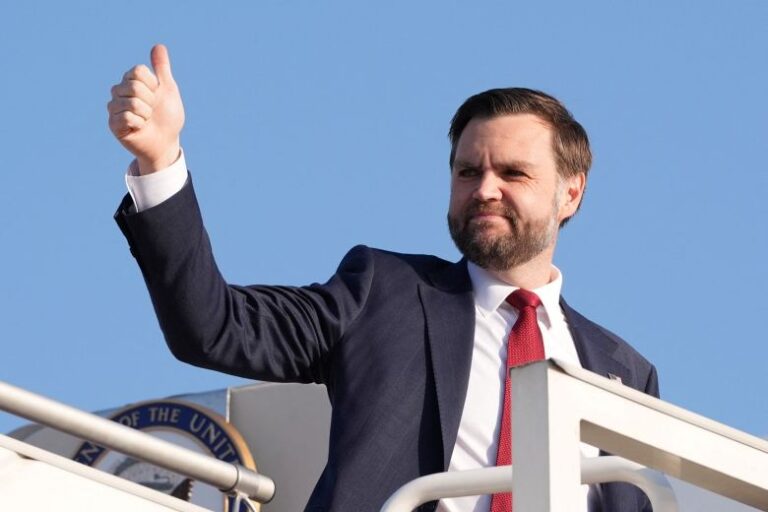
“He’s a steady hand on the messaging tiller, and it’s a great opportunity for him to feature his input on foreign affairs,” said one person close to the White House. “I’m certain it’s a risk he considered, and that gives me more confidence in this because he decided it’s a risk worth taking.”
But as Vance prepared to negotiate the next phase of an agreement he’d hailed as a milestone, even those in his own White House were casting down on the odds it would lead to lasting peace. The vice president had suggested in an interview on the “Megyn Kelly Show” that if the agreement didn’t work out, then at least the Strait of Hormuz was open and “we can get on with our lives as a country.”
Trump had a different take.
“If it doesn’t get done in 60 days, that’s all right,” Trump said on Wednesday. “We go back to bombing.”
Read more Secret US-Iran proposals reveal fragile path toward broader nuclear deal