 By admin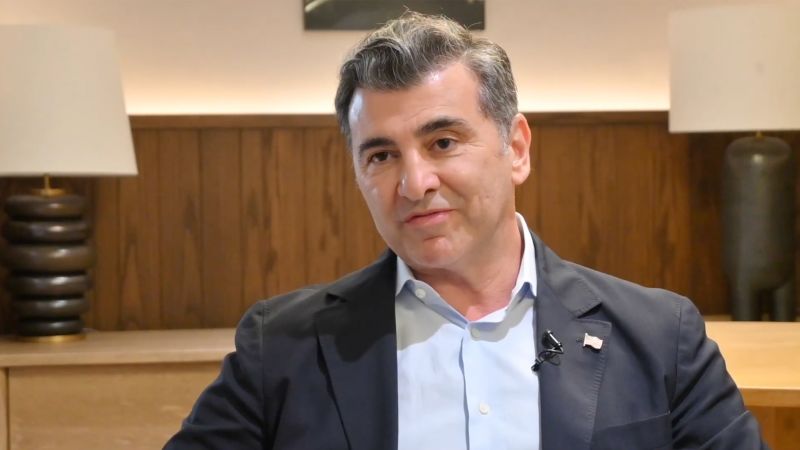
Casey Askar, a GOP House candidate and pizza magnate, has campaigned heavily on keeping Sharia law out of the United States. He’s called the religious legal framework a “growing threat” and has promised voters he’d join the Sharia-Free America Caucus if elected in his competitive Florida district.
Read more Exclusive: Barack Obama’s hidden hand shaping Democrats’ AI debate
But as a businessman seeking new customers, Askar has been decidedly more welcoming of followers of Sharia.
As he sought to expand his restaurant chains in the Middle East last year, Askar partnered with a firm promoting his pizzerias as “100% halal” – noting a dietary restriction spelled out as part of the same Islamic tradition he’s called dangerous as a candidate.
He also traveled extensively around the Middle East, posing for photos with business leaders and royalty in Saudi Arabia and othercountries that operate under Sharia-based legal systems.
This contrast between his corporate practices and campaign rhetoric is the starkest example of a larger clash between the politician’s campaign and the businessman’s record, according to a CNN review of Askar’s dozens of financial holdings. While he’s touted his American success story on the trail, he’s also been dogged for years by investment partners who say he burned them and regulators who accuse him of breaking the rules.
“Many public people are willing to have great relationships, but then when it’s also convenient to sow hatred against the Muslim community, then they are also equally happy to do that,” Corey Saylor, a spokesperson for the Council on American-Islamic Relations, told CNN.
Askar said in a statement that he has “neither invested in or received investments from the Middle East, and that business decision is not going to change.” He defended his statements against Sharia law.
“We must do whatever it takes to protect our citizens from the efforts by domestic radical Islamists to destroy our American way of life,” said Askar, who did not respond to more detailed questions about his business record.
A growing business with legal woes
Askar has told his rags-to-riches story often on the campaign trail, beginning with his family fleeing religious persecution as Christians in Iraq.
They settled in Michigan, where Askar grew up before serving in the Marines and then later partnering with his brother to build a business empire spanning commercial real estate and franchises of fast-casual foods like pizza.
Two decades after relocating to Florida, his financial disclosures show millions of dollars in holdings tied to those restaurant ventures and other investments. As a politician, Askar has touted his success as an entrepreneur, noting that he built a “business that employs thousands.”
A CNN review of court records, business filings and interviews with former associates also found a long trail of financial and legal disputes that have followed Askar since his early days as an entrepreneur.
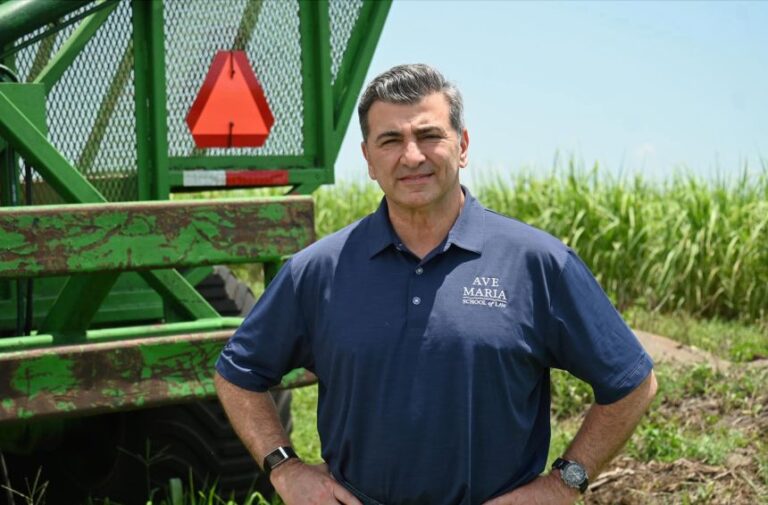
An electrician who sold the candidate a limousine in 2001 told CNN it took months to recover his money after receiving a bad check from Askar. He ultimately sued Askar — who by then owned several local gyms — and his business, recouping his financial loss through a 2002 settlement. Askar initially asked the judge to dismiss the case but was denied.
After Askar’s restaurant franchise Papa Romano’s Pizza merged with the Michigan chain Mr. Pita in 2007, his former business partner Frank Lombardo sued Askar for breach of contract and wrongful termination. A court ruled that Askar’s business owed Lombardo more than $900,000. In a legal filing, a lawyer for Askar’s business accused Lombardo of not negotiating in good faith and harming the company’s financial prospects. The judgments were later satisfied in 2012.
In 2016, the Seminole Tribe of Florida sued Askar’s fuel distribution business, alleging theft of trade secrets and other business misconduct. Askar and his associates later denied the allegations. A tribal court found the company owed more than $2.5 million, touching off a legal fight that stretched on for nearly a decade. The case eventually settled in 2024.
More recently, Askar has faced significant problems with an abandoned office tower in Hartford, Connecticut that one of his companies bought in 2020 with plans for a major renovation. Instead, Askar’s company has racked up hundreds of thousands of dollars in liens and multiple lawsuits over the property, with one judge finding the business had engaged in a “continuing pattern of delay and noncompliance” in the legal proceeding.
Hartford’s mayor added Askar to a list of “problem landlords” last year, and the city plans to auction the property to the highest bidder in November to pay more than $860,000 in delinquent taxes. The auction will take place three days after the election.
In legal filings, lawyers for Askar’s company have argued that a business partner misrepresented the condition of the office tower and that the Covid-19 pandemic’s impact on the rental market made the renovation project financially impossible.
The Federal Election Commission took issue with Askar’s use of another property – a massive Connecticut mansion he bought from the rapper 50 Cent in 2019 for $2.9 million.
Askar used $3 million from a line of credit from Northern Bank & Trust Company, backed by a mortgage on the house and several other properties, to fund his first run for Congress in 2020 – though mortgage documents say the loan was intended to be used to remodel Dunkin’ stores.
During the primary, which Askar lost to Rep. Byron Donalds, a Florida resident filed a complaint with the FEC, noting that Askar’s campaign had reported conflicting details about the loan and that the CEO of Northern Bank and his wife had donated more than $11,000 to the campaign, according to FEC records.
At the time, a lawyer for Askar’s campaign argued in a filing that there had been no violation, writing that the bank loan was made in the “ordinary course of business” and that Askar was allowed to lend funds from that line of credit to his campaign.
But in 2022, the FEC that Askar’s campaign had violated campaign finance law by failing to accurately report information about the loan. Florida court records show Askar later sued the man who complained to the FEC for defamation; a judge dismissed the lawsuit and ordered Askar to pay the man’s attorney’s fees.
Read more Trump’s made his big call on AI. Humanity’s fate may ride on him being right
Now, Askar is again funding his campaign primarily with a loan from himself. As of late July, he had loaned his campaign $2.5 million – 43 times as much as the roughly $58,000 he had received in campaign contributions, FEC records show. According to his he still owed Northern Bank between $1 million and $5 million on the line of credit from January 2020.
In total, Askar reported owing Northern Bank between $41 million and $130 million across five different loans.
‘A growing threat’
When Askar first ran for Congress in 2020, Islam was not a major theme of his campaign.
But this year, GOP candidates have shown renewed opposition to Sharia, Islam’s religious and legal framework derived from the Quran and prophetic tradition. At the Republican midterm convention in Texas last month, language demonizing Muslims emerged as a key theme – with many top Republicans calling Sharia a growing domestic threat.
On the campaign trail, Askar has fanned similar rhetorical flames. He said over the summer at a candidate forum that “Sharia law is extremely dangerous” and that “Islam and Christianity just do not mesh,” according to The Floridian.
In a 9/11 anniversary post this month, he wrote that Americans “must stay vigilant on the growing threat that Sharia Law poses.” He has also promised to join the newly formed Sharia-Free America Caucus if elected.
Askar has also purported that Muslim immigration poses a danger to Western societies, arguing at a forum in June that mass migration to Europe – which he referred to as “Christendom” – should serve as a dire warning to the United States.
Earlier this month, Askar again promised to join the Sharia-Free America Caucus and wrote: “Radical Islam is a growing threat to America and must be eliminated.”
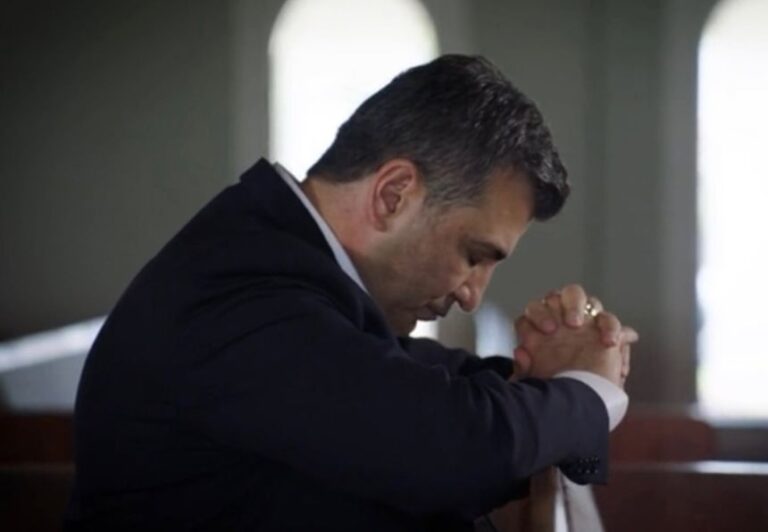
Askar’s business, though, has sought to embrace followers of Islamic tradition as it has looked to expand overseas.
Last September, the consulting firm Franchise Arabia announceda partnership with Askar Brands to grow two restaurants in its portfolio – Sarpino’s Pizzeria and Blackjack Pizza & Salads – in the Middle East. Askar celebrated the partnership in a news release, citing the region’s “thriving economy.”
“We’re excited to bring our brands to the MENA region and introduce our proven franchise systems to a new generation of entrepreneurs,” he said at the time, using an acronym for the Middle East and North Africa.
Shortly after the partnership was announced, Askar embarked on a business “roadshow” through the Middle East, including countries where Sharia serves as a foundation for the legal system. Photos from his trip, posted in October of last year, were shared by Franchise Arabia’s CEO Omar Al-Haza’a, a self-described “Royal Family Advisor” based in Dubai.
In several photos shared by Al-Haza’a, Askar is seen smiling next to executives and royal figures, with captions celebrating the potential expansion of his business footprint in the region. In one image, Askar and his son pose in Dubai with Sheikh Mansour Al-Thani, a member of the Qatari ruling family.
In February, Al-Haza’a posted a picture of the two men alongside another prominent Qatari businessman. The following month, the pair were again photographed at a charity event hosted by Askar and his wife. In a recent Instagram post, Al-Haza’a referred to Askar as “my good friend.”
When contacted by CNN, a spokesperson for Franchise Arabia declined to comment, citing client confidentiality. CNN was unable to confirm any Middle Eastern locations of the brands have yet opened.
Askar’s business connection to the Middle East appears to predate this latest venture. In November 2023, Askar met with a consulting firm working on behalf of the Embassy of Saudi Arabia, according to a Foreign Agents Registration Act document reviewed by CNN. Askar’s business partner and campaign donor also met with the Saudi-linked group two times that same month. It’s unclear what the meetings were about.
A tightening race
As Askar embraces anti-Sharia rhetoric, he faces an increasingly competitive race in a district Florida’s GOP-controlled legislature redrew this year to try to gain a red seat.
While Trump won Askar’s district under its redrawn lines by 10 points in 2024, Republicans nationally are facing a significant Democratic surge even in conservative-leaning seats, polling suggests. Political observers rate Askar’s race as among the most competitive districts in the country that will determine the House majority.
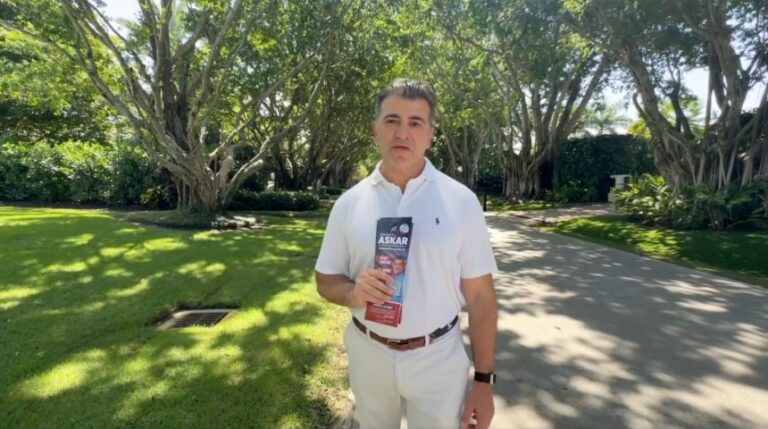
The National Republican Congressional Committee, the political organization that holds the purse strings for GOP candidates, signaled its willingness to spend to boost Askar’s chances earlier this month, adding him to the 2026 MAGA Majority program.
His opponent, Democrat Pia Dandiya, a former educator, was recently added to the Democratic Congressional Campaign Committee’s “Red to Blue” program.
Askar could see targeting Sharia as a safe wedge issue for his base going into November, said Nazita Lajevardi, a political scientist at the University of Michigan, who said anti-Muslim rhetoric “seems to be a strategy that many are turning to in this election.”
Read more What to know about America.gov, the Trump administration’s new AI-driven services website