 By admin
Our featured picks
An editor-favorite
Medline Aluminum Offset Walking Cane
For people with arthritis
Nova Palm Grip Orthopedic Handle Cane
An all-terrain option
Dynamo Swing Cane
Walking canes suffer from a bit of an identity crisis. They can spark cinematic visions — Charlie Chaplin, after all, twirled one on the big screen long before another appeared beside Willy Wonka for the most dramatic cameo a mobility aid has ever had on film. Or the words can make you imagine chunky aluminum sticks atop wide feet, sporting the highlighter pop of some cut tennis balls. The best walking canes, however, aren’t restricted to either of those characterizations.
Read more Why the 2026 election could be the worst midterm for the GOP this century
In fact, there’s a lot to consider when shopping for one that fits your needs. “A cane asks a lot of a user, more than people think,” Dawn Heiderscheidt, an occupational therapist and home accessibility specialist, said. “It requires coordination, grip strength, upper body strength and the attention to use it every single time.”
There are a wide variety of walking canes available, from those with classic handle designs to quad-base models, so to support your search, I spoke with physical and occupational therapists about the models they recommend for people with different accessibility needs.

Related article Increasing your walking cadence can improve mobility
HurryCane Freedom Edition Folding Cane
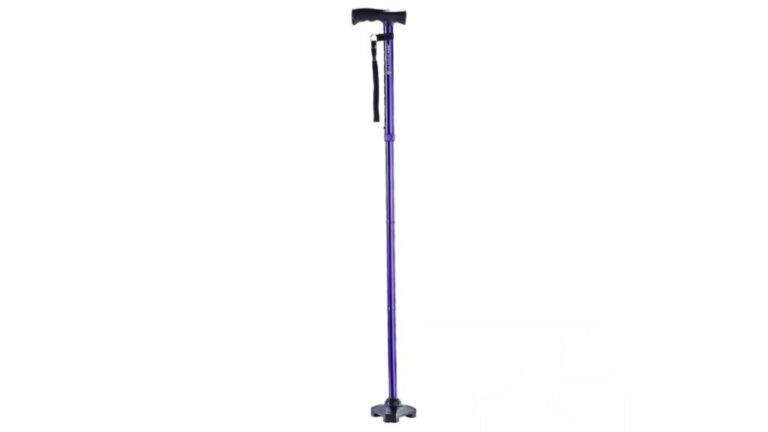
One of the main reasons canes get the vaudevillian toss off the stage is because crappy models are hard to use. Stop holding it for a second, and the cane falls quicker than a house of cards. Add in bending down to retrieve it, and you’re left with an unplanned workout and annoying side task. The HurryCane, on the other hand, promises stress-free mobility and support that comes without a side of squats.
“The HurryCane is a good choice because it has a small footprint, comfortable offset handle, is adjustable and it stands on its own,” Tori Goldhammer, founder of Living at Home Consultations and an occupational therapist who specializes in fall-risk management, said. “The solid cane with the offset handle provides good support and stability, and it’s easy to maneuver so it won’t slow someone down.”
The relatively compact base matters once you start moving, while the base’s width is an advantage in open spaces, she said, although she also noted that its expansive bottom can catch on door frames or rugs, so users should stay aware of their surroundings when using it.
Heiderscheidt recommends this walking cane for “someone who needs intermediate support but still has reasonably good balance,” including people who frequently run errands, travel or get in and out of cars.
Travelers will particularly like the Freedom Edition since it folds small enough to fit in a bag or a purse. It’s worth noting that, because of this foldable design, it’s a bit heavier than other options.
Carex Soft Grip Derby Cane
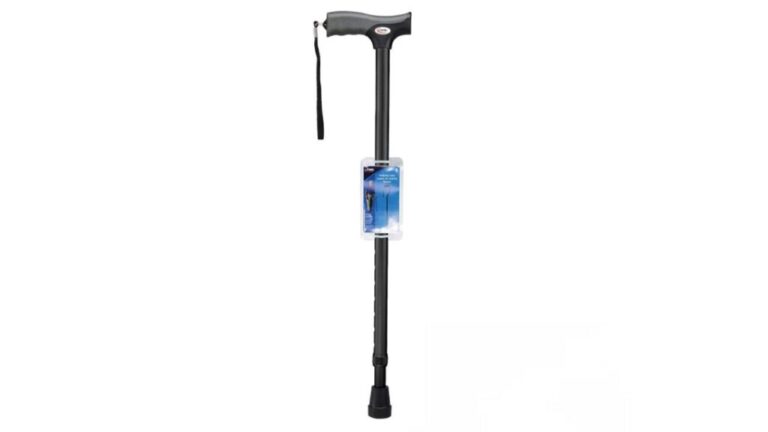
“For someone who just needs a little extra balance or wants to take some pressure off a painful knee, hip or ankle, a lightweight single-point cane is usually my first choice,” Anthony Maritato, a physical therapist and owner of Total Therapy Solutions, said. His recommendation? The Carex Soft Grip Derby Cane.
For the uninitiated, “single-point” is pretty literal: One shaft ends in one rubber tip, rather than the three- or four-footed base found on wider models. That smaller base means the cane is lighter and easier to maneuver.
Typically, compact designs like this don’t offer much stability, but the Carex’s handle is broader and flatter than most. It’s not that awkward candy-cane crook Mr. Peanut reaches for. “I like the Derby-style handle because it gives you more surface area under the palm compared with a traditional curved cane,” Maritato said. “That becomes much more important if someone has arthritis or hand pain.” Likewise, Mike Studer, a physical therapist and board-certified neurologic clinical specialist, said that “a larger handle with a pistol grip can feel more comfortable to a person with extensive osteoarthritis.”
While this single-point style is ideal for people who need slight assistance maneuvering around, Maritato said people who depend heavily on canes for balance should choose a sturdier option.
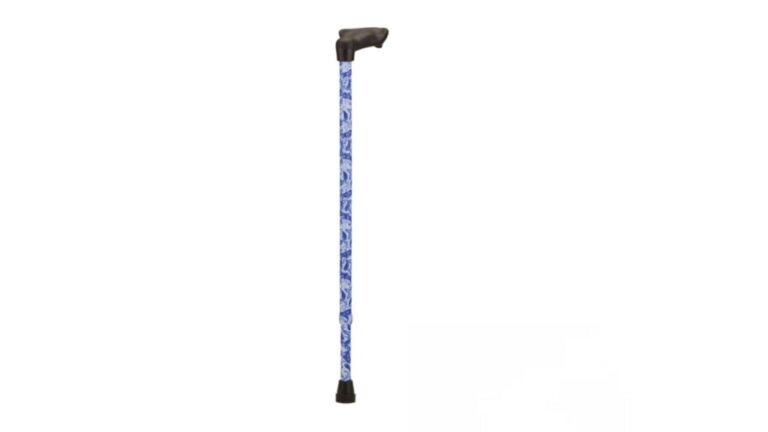
Nova Palm Grip Orthopedic Handle Cane
Heiderscheidt said you should use a cane on the side opposite to whatever hurts. For example, “someone with a painful right hip needs the left-hand cane,” she said. The Nova Palm Grip Orthopedic Cane has separate left- and right-hand versions to provide a more comfortable fit, even on your nondominant side.
The handles are also molded to support palms, which is exactly why Heiderscheidt recommends this model. “If someone tells me that holding the cane itself hurts, this is where I go first,” she said, noting that anyone with arthritis, carpal tunnel syndrome or other hand or wrist pain will especially benefit from it.
Maritato said he looks for the same designs when hand pain is an issue. “I usually want a broader handle that lets them distribute pressure across the palm,” he said. “I don’t want them squeezing the cane tightly with every step.”
But a word of caution: The hand-shaped grip that makes the Nova so useful also has its drawbacks. “The rigid palm grip can create a pressure problem for someone with significant joint deformity or fragile skin,” Heiderscheidt said.
Drive Medical Offset Handle Cane
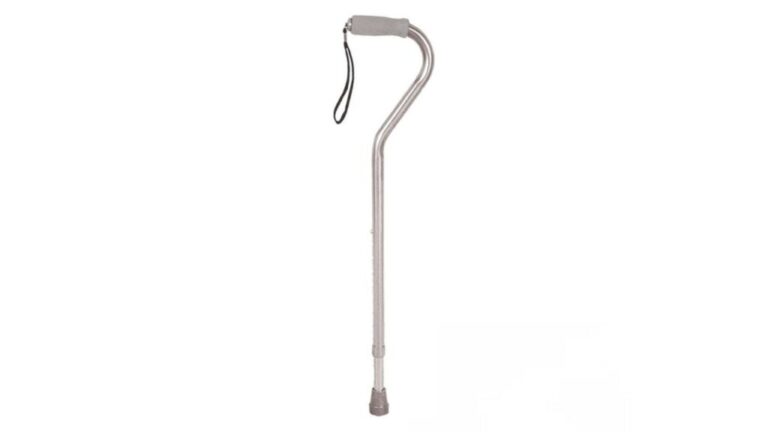
An offset cane has a shaft that bends just beneath the handle, which might look funky, but that kink is deliberate. “The offset design places the hand more directly over the shaft, so the force travels more directly down through the cane,” Maritato, who recommends this Drive Medical model, said. “To me, it just feels more stable when someone is actually using the cane for support rather than simply as a light balance cue.”
A horizontal grip like the one this model features tends to be more comfortable than a narrow crook handle, Maritato said. That broader surface matters more the harder your palm presses into it, especially during a longer walk.
The tradeoff, Maritato said, is that “it’s a little bulkier and you lose the convenience of being able to hook the cane over the back of a chair.” So you may lose the Fred Astaire effect, but when judging less on vibe-factor and more on added support — the whole point of a cane to begin with — the Drive Medical Offset Cane makes a whole lot of sense.
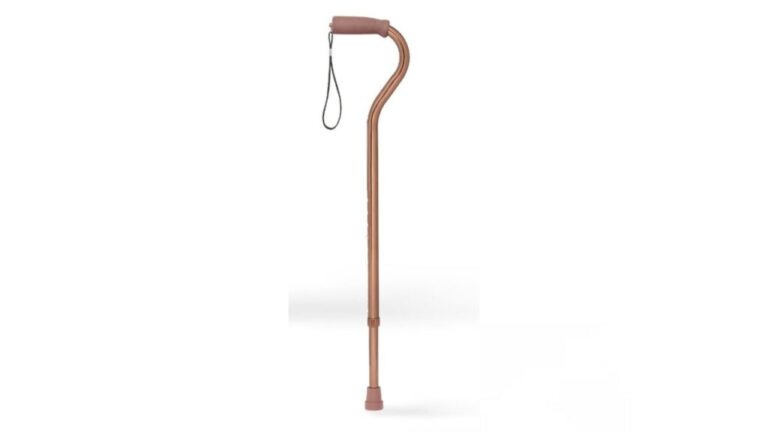
Medline Aluminum Offset Walking Cane
CNN Underscored health and fitness editor Summer Cartwright said her 66-year-old mom used this walking cane during her recovery from intense foot surgery. “She wanted something cost-friendly that would support her during rehab, and this under-$20 model did the trick,” Cartwright said. “She liked that it was lightweight and easy to move around, and she said the big foam handle kept her arthritic hands comfortable.” If a person has a history of arthritis or tendonitis, Goldhammer said a larger grip will likely be more comfortable.
This simple cane supports up to 300 pounds and can adjust its height between 29 and 38 inches. What’s more, the tip is made from nonslip rubber material to ensure stability, even on slick surfaces.
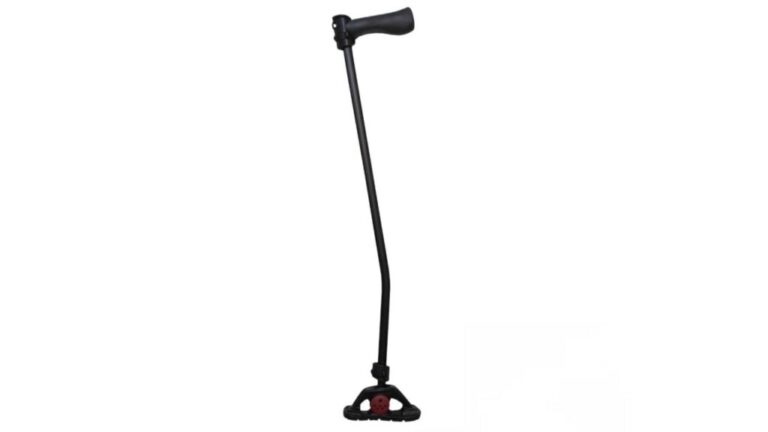
Dynamo Swing Cane
A single-point cane isn’t ideal for people with balance issues. The Dynamo Swing Cane offers a broad, sturdy base for additional support. “This has a wider ‘foot’ that offers a little more stability than the HurryCane, but generally falls in the same category,” Goldhammer said. “I find it a good option to try if the HurryCane is not quite enough support.”
The cane’s unique foot is slimmer than four-leg models, and its articulating post adapts to whichever slopes and surfaces you’re stepping on; it’s made with all-terrain traction that can handle snow, sand, hills, sidewalks and stairs.
T. George Hornby, a professor of physical medicine and rehabilitation at Indiana University School of Medicine and director of the Locomotor Recovery Laboratory, said canes with relatively compact bases, like the Dynamo, “may be more stable than a single point cane” without requiring the footprint of a full quad.
Carex Small Base Quad Cane
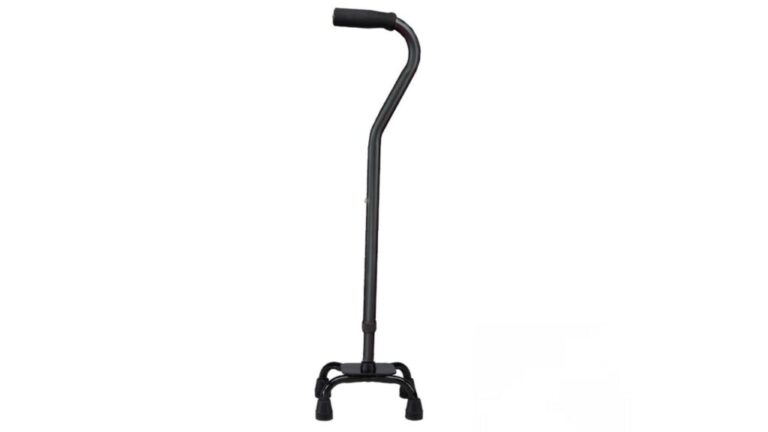
Sometimes, it’s all about that base. More specifically, a quad base because it provides the most support. The trick with a four-legged base, though, is finding one that isn’t so exaggerated it makes you feel like you’re steering furniture. The Carex Small Base Quad Cane aptly pulls off that balancing act, according to Maritato. “I generally prefer a smaller quad base over the really large quad canes because it gives the person some added stability without making the cane too cumbersome,” he said.
The extra legs may be overkill for most. But there’s a middle ground where a quad cane starts to make sense. Brandy Archie, an occupational therapist and founder of AskSAMIE, said a small-base quad is her go-to “when a single point cane no longer feels steady, but a walker is not yet warranted.” This style is particularly ideal for stroke survivors with one-sided weakness, she said. Ferri also noted that people with more pronounced gait problems stemming from neurologic impairment might also benefit from this style.
With this quad style, experts advise paying closer attention to your movement. “All four feet have to land flat to get the benefit, and that takes attention and a slower, more deliberate step,” Heiderscheidt said.
Urban Poling Activator Poles
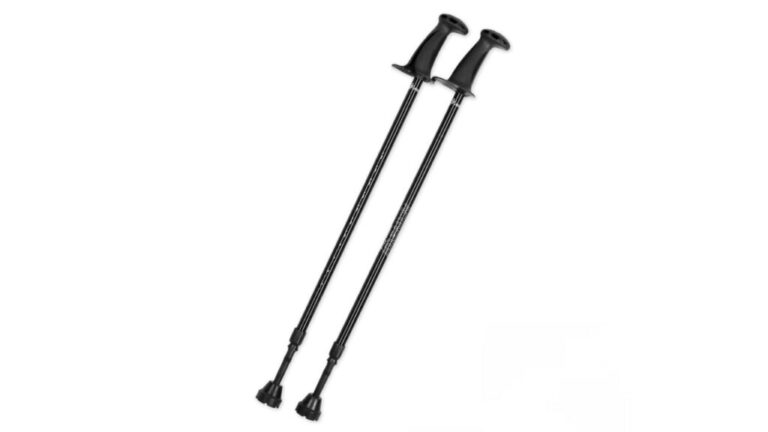
“A perfectly ‘appropriate cane’ that lives in the hall closet isn’t really helping anyone,” Heiderscheidt said. To solve that all-too-common issue, she recommends buying the Urban Poling Activator poles. “Poles read as athletic equipment, not medical equipment,” she said. “I have had more than one client accept poles after turning down a cane three times.”
There’s one nonnegotiable, though: two working arms. So Heiderscheidt ruled them out for folks with hemiparesis or any one-sided injury. She instead recommends these for people with issues like general deconditioning after a hospital stay or declining endurance.
Despite the hiking-trail looks, “these are not trekking poles,” Heiderscheidt said; there’s no wrist strap that can snag the hand during a stumble. Instead, the Activators have a wide ledge that allows for a quick release. Its CoreGrip handle lets users press through the heel of the hand, and a bell-shaped rubber toe puts more surface area against pavement.
Related article The best Hoka orthopedic shoes for joint pain, according to podiatrists
How to choose the best walking cane
Consider the support you need
Before anything else, consider what specific job you’re asking the cane to handle. A single-point cane is generally for lighter duty: a little steadiness or taking some weight off a painful leg. Wider-base and quad canes add support for those who need it to bear more weight.
There’s a pretty visible sign when you’ve undershot: “Probably the biggest red flag I see is someone walking with a cane in one hand while reaching for walls, furniture, or another person with the other hand,” Maritato said.
For people with neuropathy or other health conditions causing significant balance problems, we don’t recommend guessing your way through increasingly elaborate bases. Goldhammer suggests having a physical therapist determine which type of mobility aid is appropriate.
Get the right fit
A walking cane can be perfectly designed and still feel miserable to use if it’s an inch or two off. Stand upright in your normal walking shoes, let your arms hang naturally and look for the handle to meet around your wrist crease. When you take hold, there should be a slight bend at your elbow.
“If the cane is too tall, you often see the shoulder hike up,” Maritato said. “If it is too short, you may see the person leaning toward the cane.” If you switch shoes with different heights, like swapping out sneakers for hiking boots, Heiderscheidt said you’ll likely need to change the cane’s height.
If the shaft is flexing, the tip is skidding or you’re leaning so heavily on the cane that your shoulder is creeping upward, Heiderscheidt said you may have outgrown the device.
The handle design is crucial
Your hand will spend a lot of time gripping the cane’s handle, so it should be as comfortable as possible. Wide grips generally spread pressure over more of the palm and can be more comfortable for arthritic hands. Foam bases can also boost comfort, but don’t shop for squishiness alone. A handle that’s really soft isn’t necessarily better and might be harder to grip over prolonged periods.
Tread boosts stability
At the other end of the cane is one of the easiest parts to forget: the tip. Maritato compares the rubber tip to tire tread. “Once it gets worn smooth, hard or cracked, the cane may not grip the floor nearly as well as it did when it was new,” he said. “That is probably one of the easiest safety issues to overlook.”
Wider tips and bases can add support, but they also add weight and material around your feet. If you don’t need the extra footprint, there’s no advantage in dragging it around just because it looks sturdier.
Don’t get distracted by materials — or additional promises
Aluminum, carbon fiber, titanium and wood can change a cane’s weight, costs and how it feels in your hand. However, none of those materials fixes a bad fit.
Susan L. Whitney, professor of physical therapy and otolaryngology at the University of Pittsburgh, said she generally prefers lighter canes (typically made of aluminum or carbon fiber) because they’re less tiring over distance, though she notes that a little extra weight can sometimes help people with coordination difficulties. For weight capacity, choose a cane rated for your body weight rather than automatically buying the heaviest-duty model you can find.
Foldable canes can be good (or might not matter) depending on your lifestyle. “They are great for someone who only uses a cane occasionally or wants to put it in a bag when traveling,” Maritato said. “If someone is heavily dependent on a cane every time they walk, I usually prefer a simple rigid cane.” If you do go with a folding model, Whitney recommends inspecting the joints and the elastic cord running through them; thicker, more substantial construction is preferable to something that feels flimsy.
FAQs
To properly use a walking cane, you’ll generally hold it in the hand opposite the painful or weaker leg, hip, foot or knee. Studer called this the “opposite hand” rule: The cane helps redistribute some weight away from the affected side while adding another point of contact with the ground.
Timing matters, too. “Ideally, you move the cane forward at the same time as your sore or injured leg,” Whitney said.
That rule can change with neurological conditions, one-sided arm weakness and other impairments. Goldhammer recommends getting fitted and taught how to use a cane by a physical therapist instead of inheriting one from somebody else and improvising your gait around it.
You can buy a walking cane online, at medical-equipment stores and in many pharmacies. Where you buy it matters less than whether you’re buying the right thing. Goldhammer advises seeing a healthcare provider first, unless you’re replacing a device you’ve already been fitted for.
To size a walking cane, stand upright in your normal shoes with your arms hanging loosely; the handle should land around the crease of your wrist. Heiderscheidt said that position should leave roughly a 20- to 30-degree bend in the elbow once you grab the handle. Studer similarly places the proper height around the wrist joint or hip — “not the waistline,” he said.
The best walking cane for balance depends on how unsteady you actually are. Whitney said a simple single-tip cane with a small base is a safer, easier choice for most people, while someone needing additional support may benefit from a wider tip or base.
The best walking cane for seniors isn’t determined by age so much as balance, gait, hand function, strength and how the person will actually use it. “The best cane is the one that is sized correctly,” and, most importantly, “the one they will actually use,” said Heiderscheidt.
A cane is no longer enough when the person using it is falling, struggling to coordinate their stride with it or regularly hunting for something else to hold onto. Goldhammer said if someone’s gait looks uncoordinated or if they’re struggling to manage the cane, the device may actually be making things worse.
Difficulty getting out of a chair or off the toilet, running out of endurance midway through an outing or needing both hands for support can signal you need a walker or rollator.
Meet our experts
For this article, we consulted the following experts for their professional insights:
- Brandy Archie, founder of AskSAMIE and an occupational therapist
- Tori Goldhammer, founder of Living at Home Consultations and an occupational therapist specializing in fall-risk management and home accessibility
- Dawn Heiderscheidt, founder of Aurora Independence and an occupational therapist and home accessibility specialist
- T. George Hornby, professor of physical medicine and rehabilitation at Indiana University School of Medicine and director of the Locomotor Recovery Laboratory
- Anthony Maritato, physical therapist and owner of Total Therapy Solutions
- Mike Studer, physical therapist and board-certified neurologic clinical specialist at Brain and Body Rehabilitation
- Susan L. Whitney, professor of physical therapy and otolaryngology at the University of Pittsburgh
Why trust CNN Underscored
CNN Underscored editors and writers ensure every product included in an article is thoroughly vetted and something we ourselves would feel comfortable buying and using. Our team has many decades of collective experience researching, testing and recommending products across every category — from fashion and food, to home goods and health, to electronics and everything in between — and we’re committed to using that expertise to help you make the most of your money and live a better life.
For this article, CNN Underscored contributing writer and former deputy editor Scott Simone consulted occupational and physical therapists to find the best walking canes.
Want the latest discounts?
CNN Underscored scans thousands of products every hour, so you don’t have to.
See latest discounts
Scott Simone is a contributor and former deputy editor at CNN Underscored. He was previously managing editor at Hearst’s BestProducts.com. In his decade-plus career, he has written and edited thousands of product reviews and guides on a range of products, from blenders to smartphones.
Read more Supreme Court revives DHS citizenship data tool for voter audits in win for Trump
Latest Articles
-
The best walking canes of 2026, according to mobility experts
-
25 under-$50 kitchen tools at Amazon that professional chefs swear by
-
The best weightlifting shoes for every type of gym-goer, according to experts
Explore trending products
Intelligent Change ‘The Five-Minute Journal’

Read our review
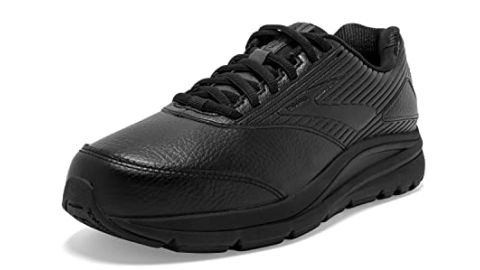
Brooks Women’s Addiction Walker 2
Garmin Venu 4

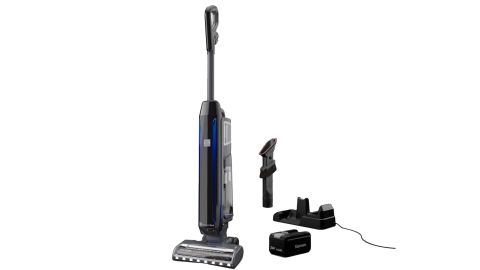
Kenmore Elite Litening Cordless Upright Vacuum
Read our review