 By admin
Our featured picks
An expert favorite
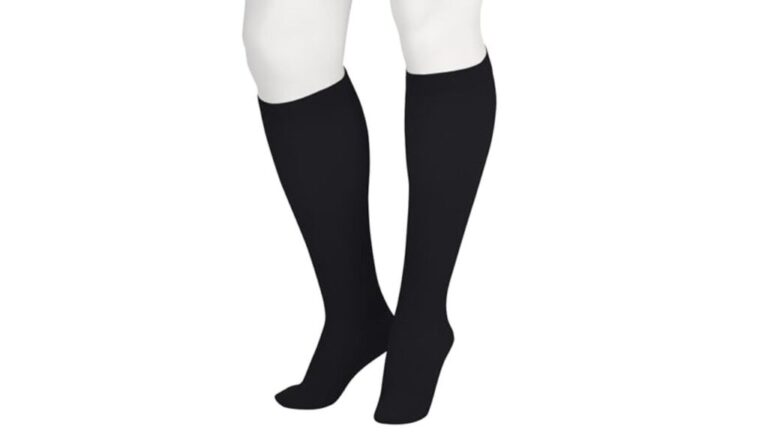
Juzo Soft 2001 Knee-High Compression Stockings
Easy to put on and take off
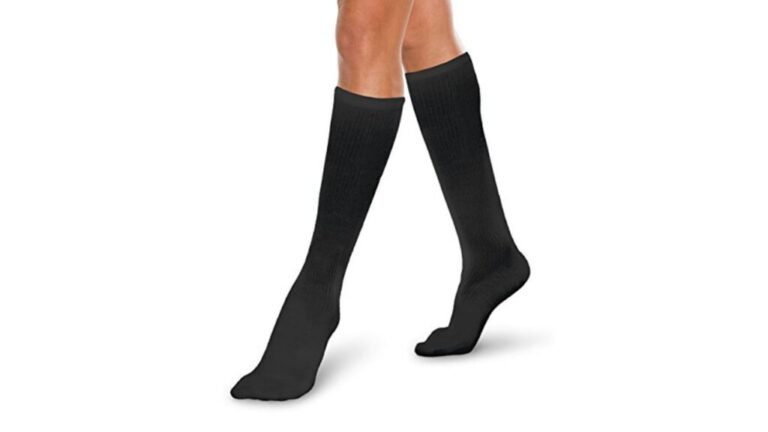
Therafirm Core-Spun Moderate Support Socks
Best for higher containment
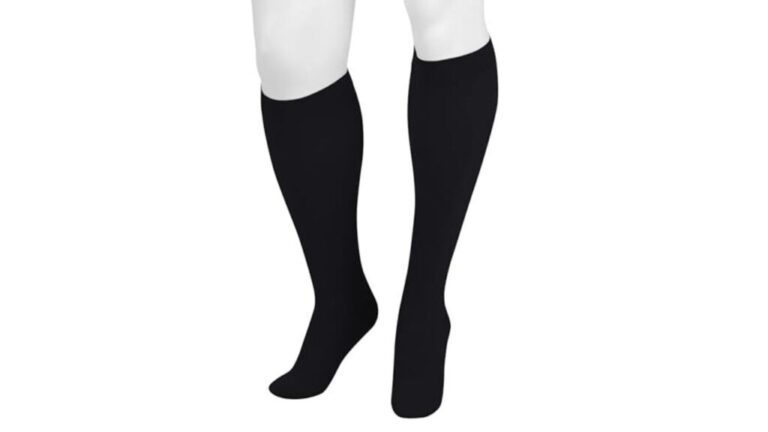
Juzo Dynamic 3511 Knee-High Compression Stockings
“Compression socks are one of those things that sound incredibly simple until you actually try to buy a pair,” Eva Tutic, a certified lymphedema therapist and founder of TheraFlow Health, said. “Suddenly you’re looking at 15 to 20 [millimeters of mercury (mmHg)], 20-30 mmHg, knee-high, thigh-high, open toe, closed toe, medical grade, different fabrics, different brands and wondering why buying a sock has turned into a medical research project.”
Read more What is pneumonic plague and how dangerous is it?
Maybe all of these numbers overwhelm you, and you end up buying a pair that’s 20 to 30 mmHg because the bigger number sounded safer. But then you find the compression socks require a vise grip to pull them over your heels. And once you finally get them up, they pinch you a little too much. Nicole Nohner, an occupational therapist, certified lymphedema therapist and owner of Hand N Hand Home Rehab, said that spur-of-the-moment decision-making leads patients to join the chorus of similarly sounding complaints: “They’re too tight,” “They’re uncomfortable,” or “I can’t get them on.”
So, I spoke with physical and occupational therapists as well as compression specialists about everything from fabric and compression options to sizing and types, all in the hopes that you don’t sing similar refrains. The health and wellness experts also shared the support socks they recommend for varicose veins, whether you’re looking for something soft enough to wear all day or firm enough to better contain swelling.
Best support socks for varicose veins
Juzo Soft 2001 Knee-High Compression Stockings
“This is probably one of my favorite everyday medical compression stockings,” Tutic said. “What I like most is the balance between support and wearability. If somebody has to wear compression all day, I want them to eventually forget they are wearing it.”
That starts with the thin microfiber knit. Tutic described the socks’ design as “very soft, elastic and breathable,” with reinforced heels and soft toe boxes. Choose from open- and closed-toe versions and multiple lengths, including regular, short and petite. She recommends 20 to 30 mmHg and a knee-high style specifically for people with symptomatic varicose veins or mild swelling below the knee, especially for those looking to use them for everyday wear or long periods of sitting or standing.
Melissa Carlton, a board-certified clinical specialist in oncologic physical therapy at Central Oregon Lymphedema and Oncology Physical Therapy, also recommends the Juzo Soft stockings, noting that the 20 to 30 mmHg of these socks is ideal for someone with more noticeable swelling. “For a person with moderate to severe edema in their legs … this will provide more support for their veins and lymphatic vessels.”
Tutic does draw a line at more significant swelling. “If I have someone with more significant edema, lymphedema, lipedema or tissue that needs greater containment, I may choose something more structured instead,” she said.
Therafirm Core-Spun Moderate Support Socks
“This is the one I think about when a patient tells me, ‘I already have compression stockings — I just can’t get them on,’” Tutic said of these socks. “And frankly, if putting your socks on becomes an Olympic event before breakfast, you are probably not going to keep wearing them.”
The Core-Spun’s moisture-wicking, stretchy yarns provide comfort, while the nonrestrictive top makes them easier to pull up (and won’t suffocate your upper calves once in place). That relative slack, though, doesn’t mean they’re not effective; the Core-Spun offer graduated compression of 20 to 30 mmHg. Tutic also called out the reinforced areas that add durability, while short and regular lengths give you a little more room to get the fit right. They also look more like everyday socks than traditional medical stockings.
Their less constricting nature makes the Core-Spun ideal for those with reduced hand strength or limited mobility, said Tutic, who also recommends them for anyone spending long stretches sitting or standing. But she does provide a slight caution: “Easier to don does not mean universally appropriate. If someone has significant edema, substantial tissue changes, unusual limb proportions or needs much more containment, I would reassess the garment choice rather than automatically putting them into the easiest sock to pull on.”
Sigvaris Style Linen Compression Socks
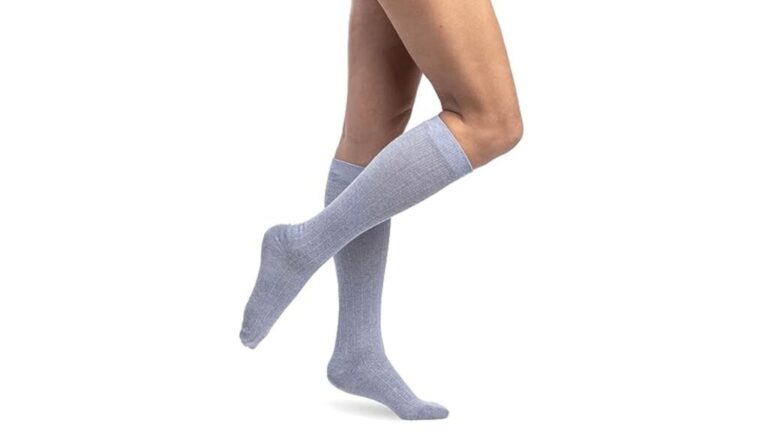
“I love this one because it completely changes what people think medical compression looks like,” Tutic said. “Most people hear ‘compression stocking’ and immediately picture Grandma’s beige stocking slowly rolling down her leg by lunchtime.”
The Sigvaris’s design is all in the details: a cotton-and-linen fabric with a ribbed finish that looks more like that of normal dress socks than medical hosiery. Short and long sizes (with closed toes) keep the style points climbing. “We now have linen, beautiful technical fabrics, colors, women’s styles and men’s compression socks that look like normal dress socks,” she said. “If we are asking people to wear something every day, they should still be able to get dressed and feel like themselves.”
And those looks belie the Sigvaris’s strength: graduated compression of 20 to 30 mmHg. “It is lightweight, breathable, soft against the skin,” Tutic said. “It is a nice choice for everyday wear, travel and someone who sits or stands for long periods but does not want their compression sock announcing itself from across the room.”
She wouldn’t, however, recommend these for people who need considerably more containment, have substantial edema or don’t fit comfortably within the standard sizing. “Pretty is wonderful,” Tutic said. “Physiology still wins.”
Related article Compression socks are beneficial for people of any age. After testing 8, these 2 are my favorite for travel
Juzo Dynamic 3511 Knee-High Compression Stockings
Nohner said one of her favorite stockings are the Juzo Dynamic because they have a firmer, more containing fabric. That extra structure matters when varicose veins come with more significant swelling or early skin and tissue changes. That’s when “I start thinking not only about pressure but also about stronger containment,” she said.
Containment is how much the fabric resists the leg expanding into it and is a strong dividing line between options. “Two stockings can both be labeled 20 to 30 mmHg but feel very different and provide very different levels of containment,” Nohner said. She appreciates the Juzo Dynamic’s wide silicone borders, as they keep the stockings in place without relying on narrow cuffs at the top of the legs.
The Dynamic boast a circular knit, which the brand says creates higher working pressure as the leg pushes against it. Despite that strength, the Dynamic stocking don’t look medical. Their finish is opaque rather than sheer (with different silicone borders, to boot) and come in three lengths for more style options. Juzo also uses moisture-wicking fibers, which Nohner said you’ll want if you’re wearing heavier-duty stockings for hours at a time.
Jobst Relief Knee-High Graduated Compression Stockings
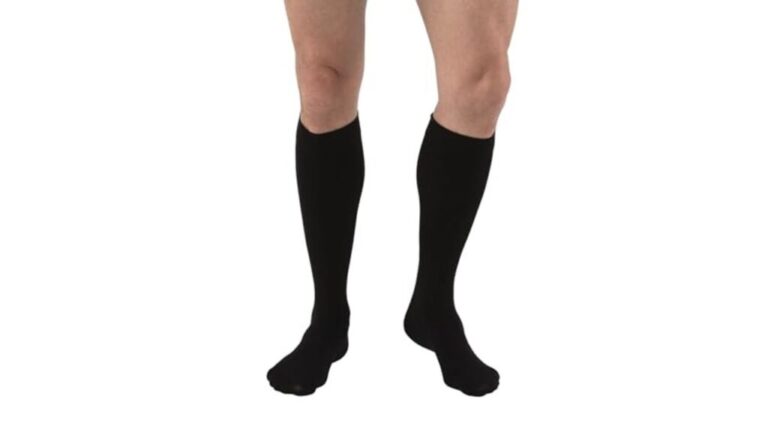
Shana Mangaldas, an occupational therapist and certified lymphedema therapist at Chicago Physical Therapists, recommends the Jobst Relief for anyone in search of proper medical-grade compression at a relatively wallet-friendly price point. They can “fit most sizes,” are “more affordable than other medical-grade compression socks” and have a knit that offers “good containment of edema,” she said.
The knee-high socks have a simple enough build: a soft nylon-and-spandex fabric, roomy toe areas and reinforced heels, along with standard and petite lengths plus full-calf sizing in larger sizes. Jobst also offers open-toe and silicone-band versions, giving you a few more options than most in order to tailor the fit.
Mangaldas said to opt for 20 to 30 mmHg “if there is existing edema,” while lighter compression of 15 to 20 mmHg may be enough when it’s being used more preventively.
Juzo Power Vibe 2650 Knee-High Compression Socks
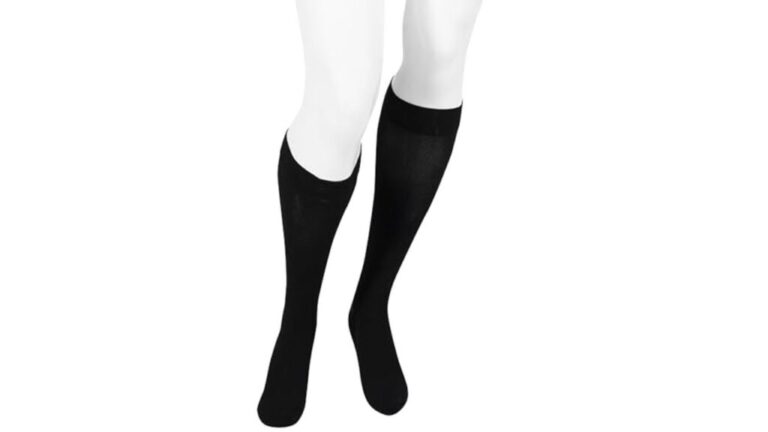
“One of my favorite options is the Juzo Power Vibe,” Nohner said. “It has more of an everyday sock appearance and is comfortable and stylish while still providing good support and containment.”
This knee-high has a more elastic construction than most other options. The seamless toes and moisture-wicking fabric (not to mention the soft comfort band) all add to the stockings’ cozy, supportive fit. Juzo also said the Power Vibe is designed to be easier to put on and take off than more traditional compression stockings; it also has a bit less compression at 15 to 20 mmHg. Style-wise, the Power Vibe is available in designs ranging from plain black to stripes, from dots to zebra patterns, providing enough variety to make them feel more like part of your sock drawer than a piece of medical equipment.
Fit matters just as much as all that stretch, of course. Nohner said to “make sure your ankle and calf measurements actually fit within the same size on that manufacturer’s size chart,” as simply sizing up can mean you no longer get the appropriate compression at the ankle. She said Juzo has a vast sizing range, so you have a good shot at finding a pair that fits properly.
Related article I’ve tested the best wool socks for a year. These 3 pairs can’t be beat
Sigvaris Motion Flow Tech Calf-High Compression Socks
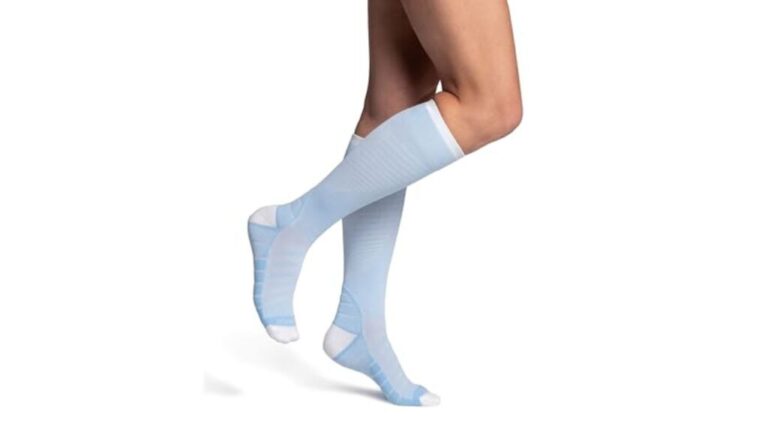
“Another favorite for someone who wants an athletic look is the Sigvaris Motion line,” Nohner said, while Carlton specifically recommends the Motion Flow Tech knee-high in 20 to 30 mmHg.
The socks’ athletic build is more in line with technical running socks than traditional medical hosiery. MeshLink channels run through the feet and legs to move heat out, while SENSIL Aquarius fibers wick moisture away from the skin. Cushioned footbeds soften your step, with extra padding around the Achilles tendons for support during long walks, strength-training workouts or a full day on your feet.
Sigvaris also added a mesh flex zone across the insteps to make the socks easier to pull on, plus toe seams that sit on top of the foot instead of underneath it. Wide knee bands help keep everything in place once you’re moving.
And underneath all that sneaker-sock engineering is graduated compression of 20 to 30 mmHg. Carlton recommends that range when swelling becomes more substantial because it provides more support for the veins and lymphatic vessels.
Related article The best black tights in 2026, tried and tested
How to choose compression socks for varicose veins
Compression strength
Compression in support socks is measured in millimeters of mercury, or mmHg, which indicates how much pressure the stocking applies. With graduated compression, that pressure is strongest around the ankles and eases as the socks moves up the legs.
“As far as compression strength, stronger is not automatically better,” Tutic said. “For mild symptoms, travel, prolonged standing or sitting, tired legs or someone who is just beginning compression, 15 to 20 mmHg may be completely appropriate. For symptomatic varicose veins, venous insufficiency or more noticeable swelling, 20 to 30 mmHg is commonly used.”
The numbers climb from there, but Tutic doesn’t recommend going with them on your own. “Once we start talking about 30 to 40 mmHg or stronger, I really want that person professionally assessed and fitted,” she said.
“I would not recommend anyone starting with 30 to 40 mmHg unless advised to do so by their physician or certified lymphedema therapist,” Carlton said. Someone who needs compression that strong will likely already need a healthcare provider involved in getting the swelling under better control.
Pressure and containment
That mmHg number tells you how much pressure the socks deliver but says nothing about what happens when your legs push back. “One distinction I wish consumers heard more often is pressure versus containment,” Tutic said. “They are not the same thing.”
“Pressure is the amount of force the garment applies to the limb. That is the mmHg number everyone sees on the package,” she said. “Containment is how well the fabric resists the tissue expanding back into it.”
Tutic compares this song and dance to wearing stretchy leggings versus a firmer fabric that really holds its shape. “Both may feel snug, but they behave very differently when tissue pushes against them,” she said.
That distinction is more important when swelling isn’t coming from one problem. “Lymphedema and venous disease can coexist,” Tutic said. “Patients do not always walk through the door with one neat diagnosis. Human bodies apparently did not get the memo that we like tidy categories.”
In those cases, more squeezing isn’t what she wants. “I do not necessarily want to keep increasing the pressure,” Tutic said. “I may want a more structured textile that gives that softer tissue greater resistance and support.”
Sizing and measurements
“I do not fit true medical compression from shoe size alone,” Tutic said. “Two people can both wear a size 9 shoe and have completely different ankles and calves; they may need completely different stockings.”
For a knee-high design, “at minimum, I want the ankle circumference at its narrowest point, the widest calf circumference and the lower-leg length.” A thigh-high requires additional measurements around the thigh and the overall leg length.
Take those measurements when your leg is relatively calm; Tutic generally prefers earlier in the day, when swelling tends to be at its lowest. And don’t convince yourself that pain is proof you bought serious socks.
“If a garment continually slides down, wrinkles or bunches, something is wrong with the fit,” Tutic said. “If it rolls into a tight band, causes pain, numbness, tingling or significant color changes, something is definitely wrong.”
Mangaldas gave a similar gut check: “If the sock is rolling down the leg, is leaving deep indents on the leg or is painful to wear, it is probably an incorrect size.”
Read more Trump is clearly trying to buy votes with taxpayer money
If your ankles and calves keep landing in different boxes on every sizing chart, Tutic would rather you stop playing compression-sock roulette. “If you fall between sizes, have a very narrow ankle and larger calf, significant swelling, unusual proportions or you look at the chart and think, ‘I have absolutely no idea what I am doing,’ that is probably the moment to stop guessing,” she said.
Related article We tested the best foot massagers for tired, achy feet. Our favorite model is under $100
Knee-high vs. thigh-high
More coverage doesn’t automatically mean more benefits. Start with where the veins and swelling actually are. “If the varicosities and symptoms are below the knee, a properly fitted knee-high may be completely appropriate and is usually easier for the patient to live with,” Tutic said. “If the veins, swelling or symptoms extend above the knee, then I may consider thigh-high or full-length compression.”
Carlton draws the same dividing line. “If a person has swelling in their knees or thighs, or [has] varicose veins in their thighs, then knee-high compression stockings are not appropriate for them,” she said. “A knee-high is more appropriate for lower-leg edema.”
Carlton recommends leaving roughly two finger widths between the top of the stocking and the creases behind your knees. If the sock ends directly in that fold, “the patient might be uncomfortable in sitting and walking,” she said.
Mangaldas generally gives the shorter socks the first crack at the job. “Try knee-highs first, and if they seem to displace the edema higher on the legs, then wear thigh-highs,” she said.
There’s a downside to those extra inches. “Thigh-highs are notorious for rolling down as they move, so a lot of people don’t like them,” Mangaldas said. If full-leg compression really is necessary, some people have better luck with a pantyhose- or legging-style garment instead.
Fabric and construction
Compression socks can hit the exact pressure your leg needs and still make you want to rip them off by lunch. “For all-day comfort, I pay attention to far more than the compression number,” Tutic said. “I look at breathability, stretch, textile stiffness, the heel pocket, toe construction, cuff or top band, garment length and how easily the fabric moves over the ankle.”
Those details start to matter after several hours. “Natural fibers can be wonderful for some patients. Microfibers can feel incredibly soft. Moisture-wicking fabrics can make a huge difference for someone wearing compression all day,” Tutic said.
But there isn’t one magic fiber to look for. “I do not believe there is one ‘best’ material,” she said. “The fabric has to match what I am trying to accomplish with that particular leg.”
Carlton has seen one fabric go over particularly well with her own patients: bamboo, which offers a cooling element and is often used in sheets. “A lot of my patients are really enjoying compression stockings made with bamboo,” she said. “Bamboo stockings seem to be lighter, more comfortable and more tolerable for my patients.”
The top of the socks deserve a look too. Mangaldas likes silicone bands because they help prevent a stocking from slipping as you move, something that is especially useful once you get into thigh-highs, where gravity has a little more material to work with.
Ease of putting them on
“For someone with limited hand strength or mobility, donning matters just as much as pressure,” Tutic said. “I look for more elastic textiles, enough stretch through the heel and ankle, a comfortable upper band and a garment the person can actually manage.”
An open toe can sometimes make the trip over your foot easier, especially with a donning aid, although Tutic cautioned that it isn’t automatically the better option. Carlton also recommends a Medi Butler or similar donning device for people who struggle to get their stockings on, along with the Juzo Slippie Gator for daily compression wearers.
As for construction, keep it simple unless you’re in desperate need of assistance. “I do not prefer compression socks with zippers but would make an exception if donning is the biggest challenge,” Mangaldas said.
And while it might seem easy to give up if donning gets tough, the experts I spoke with encouraged resilience. Tutic would rather fix how you’re getting into the stockings than automatically sacrifice the pressure your leg needs. “I would much rather teach someone to use a donning aid than reduce their compression below what they actually need just because they cannot get the garment on,” she said.
FAQs
Compression socks can help varicose veins by managing symptoms and swelling, but they don’t repair the underlying problem causing the varicose veins.
“Compression can be very useful for symptom and edema management, but it does not repair underlying venous reflux,” Tutic said.
That distinction matters more once the problem starts progressing beyond aching or tired legs. “If somebody has significant symptomatic varicose veins, progressive swelling or skin changes, that is a vascular conversation,” Tutic said. “Buying a stronger pair of socks is not a substitute for finding out what is actually happening.”
Graduated compression means the stocking applies the most pressure around the ankles and gradually eases that pressure as it moves up the legs.
“A graduated compression stocking should not squeeze the entire leg equally,” Tutic said. “The greatest pressure is at the ankle, and the pressure gradually decreases as the garment moves up the leg. That gradient is intentional and supports venous return against gravity.”
Simply making the entirety of the socks brutally tight doesn’t accomplish the same thing. “So grabbing a random sock because it feels extremely tight is not the same thing,” Tutic said. “‘Really tight’ is not a medical specification.”
Compression socks shouldn’t necessarily stop leg swelling completely; they can still be working if they reduce or control how much your legs swell during the day.
Carlton said patients sometimes tell her their compression socks “do not work” because their legs still swell or there’s a visible indentation when they take the socks off.
“The purpose of the compression socks is not to reduce the size or volume of their leg but to prevent or decrease the amount of swelling that they might experience as the day goes on,” she said. “A 15-to-20mmHg compression stocking might help manage their swelling, but it will not completely stop it or ‘make their leg look skinnier.’”
Her airplane test is considerably easier to picture. “If their leg still swells by the end of the day, however, does not ‘blow up like a balloon’ after a six-hour flight, then I do believe that the garment did what it was meant to,” Carlton said.
Open-toe and closed-toe compression socks are both good options, but where you swell and how easily you can get the stocking on matter more than the toe style alone.
Carlton prefers closed-toe socks when swelling reaches the feet. “If a person does have swelling in their toes or feet, they should get closed-toe compression stockings, not open-toe, as their toes will swell,” she said. “Fluid will travel to wherever the compression is not on the limb, especially if gravity is going to pull it down to the toes.”
Open-toe stockings can make sense when foot and toe swelling isn’t an issue, and they can sometimes be easier to put on. Tutic noted that open-toe compression “can sometimes make application easier, particularly when used with a donning aid,” although “open toe is not automatically better.”
Compression socks with zippers may look easier to put on, but a zipper shouldn’t be the main reason you choose an off-the-shelf pair.
“I would not recommend off-the-shelf (or in a catalog) compression stockings with zippers,” Carlton said. “Zippers, hooks, loops and any add-ons that make it ‘easier’ to don and doff compression stockings are best added on for custom compression garments.”
That’s partly because custom garments are built around the leg rather than asking the leg to fit a standard size. “Custom compression garments actually are easier for patients to get on and off, as they are custom made for the patient,” Carlton said. They can also be made with “zippers, loops, seams, patches and pads” when those additions genuinely help.
Medical-grade compression refers to more than whatever a brand happens to print on the package; the actual pressure range, graduated design, sizing system and construction matter more than the label alone.
“The term ‘medical grade’ gets thrown around pretty loosely,” Tutic said. “For me, I want to know the actual compression range. I want graduated pressure. I want a legitimate measurement-based sizing system. I want to know that I can choose the correct length, textile and construction for that particular patient.”
And no, wrestling with a single stocking for 10 minutes doesn’t make it more medically legitimate. “A sock being miserable to put on does not make it medical-grade,” she said. “Sometimes it just makes it miserable to put on.”
You should see a doctor before wearing compression socks if you have new one-sided swelling, significant pain or redness, a suspected blood clot, infection or possible problems with arterial circulation.
Tutic screens for those issues before she fits anyone. “If someone presents with new one-sided swelling, significant pain or redness, suspected acute DVT, infection or I have concerns about arterial circulation, I am not simply pulling a compression stocking out of a box and saying, ‘Here you go,’” she said.
She recommends starting with a physician or vascular specialist if you have “significant varicose veins, persistent or new swelling, skin changes, pain, wounds or anything that makes you question whether compression is appropriate.”
“Find out what you are treating before you start treating it,” Tutic said.
Meet our experts
For this article, we consulted the following experts to gain their professional insights:
- Melissa Carlton, board-certified clinical specialist in oncologic physical therapy at Central Oregon Lymphedema and Oncology Physical Therapy
- Shana Mangaldas, occupational therapist and certified lymphedema therapist at Chicago Physical Therapists
- Nicole Nohner, occupational therapist, certified lymphedema therapist and owner of Hand N Hand Home Rehab
- Eva Tutic, certified lymphedema therapist and founder of TheraFlow Health
Why trust CNN Underscored
CNN Underscored editors and writers ensure every product included in an article is thoroughly vetted and something we ourselves would feel comfortable buying and using. Our team has many decades of collective experience researching, testing and recommending products across every category — from fashion and food, to home goods and health, to electronics and everything in between — and we’re committed to using that expertise to help you make the most of your money and live a better life.
For this article, contributing writer and former CNN Underscored deputy editor Scott Simone interviewed four physical and occupational therapists and certified compression and lymphedema specialists who regularly fit or recommend compression garments. They shared the specific compression socks and stockings they recommend for varicose veins and explained how pressure, containment, fit, garment length, fabric and ease of use should factor into choosing the pair for you.
Want the latest discounts?
CNN Underscored scans thousands of products every hour, so you don’t have to.
See latest discounts
Scott Simone is a contributor and former deputy editor at CNN Underscored. He was previously managing editor at Hearst’s BestProducts.com. In his decade-plus career, he has written and edited thousands of product reviews and guides on a range of products, from blenders to smartphones.
Read more Democrats release midterms ad featuring family of Epstein victim Virginia Giuffre
Latest Articles
-
7 best support socks for varicose veins of 2026
-
How to get the quiet luxury look at home for under $50, according to interior designers
-
The best carpal tunnel braces, according to hand specialists
Explore trending products
Brooks Women’s Addiction Walker 2
FitFlop Iqushion Flip-Flop
Philips Sonicare 4100 Series Electric Toothbrush
Read our review
Apple AirTag

Read our review