 By admin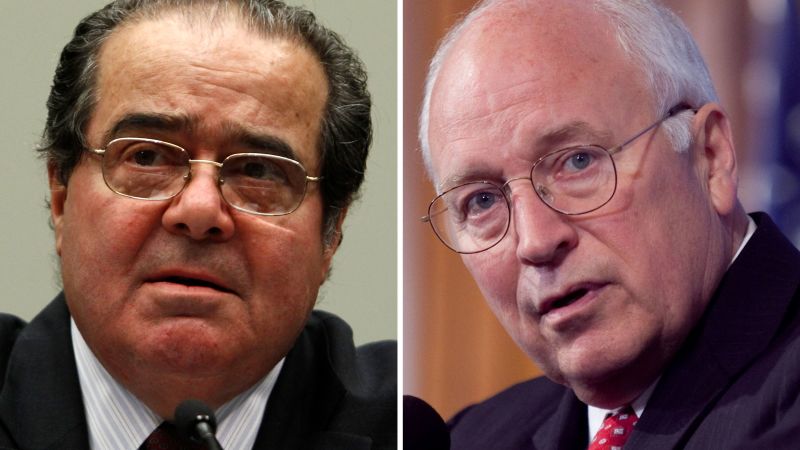
- Once-confidential documents reveal Justice Antonin Scalia drove the Supreme Court to hear Dick Cheney’s energy task force case.
- Scalia persuaded colleagues to take the appeal after justices initially voted to reject it, according to materials from Justice John Paul Stevens.
- The documents show Scalia’s behind-the-scenes role before his duck hunting trip with Cheney generated an ethics controversy.
In late 2003, Supreme Court justices were prepared to reject a case involving then-Vice President Dick Cheney’s attempt to keep private politically sensitive records from his energy policy task force that had recommended opening more federal lands to oil and gas drilling.
Read more Josh Shapiro couldn’t avoid the questions about him. He decided he doesn’t want to
But then-Justice Antonin Scalia launched into action – in moves concealed from the public at the time.
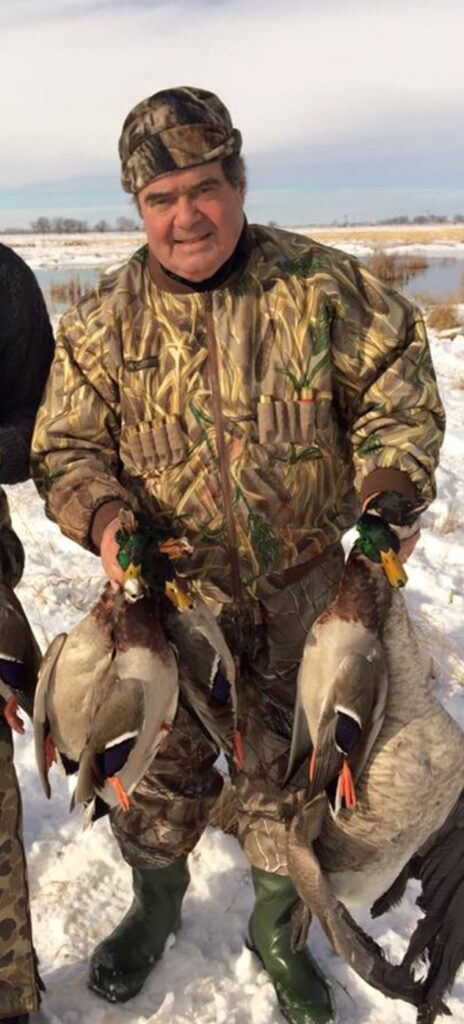
Scalia has long been linked to the dispute. He went on a long-planned duck hunting trip with Cheney three weeks after the court announced it would hear the case, generating one of the most enduring controversies over Supreme Court ethics.
Once-confidential materials reviewed by CNN show how Scalia drove the decision to hear the Cheney appeal in the first place.
The Sierra Club, one of the groups that sued the Cheney task force for documents, challenged Scalia’s impartiality and formally requested that he recuse himself. Scalia responded with a memorable 21-page statement refusing to take himself out of the dispute over lobbyists and other outsiders who may have met with the task force.
Scalia’s defiant statement included a mix of hobnobbing history in Washington’s upper echelons – “Justice (William) Douglas was a regular at President Franklin Roosevelt’s poker parties” – and vacation detail: “I never hunted in the same blind with the Vice President.”
Even with more recent conflict-of-interest debates, such as over justices’ lavish travel with business executives or spousal connections to President Donald Trump, the 2004 Scalia-Cheney controversy stands out.
In the end, Cheney won the Supreme Court by a 7-2 vote, and after another round of lower court litigation, he was able to avoid disclosing who participated in the energy task force.
What was unknown at the time is the justices had tentatively voted against Cheney’s appeal regarding the documents, and it was Scalia who persuaded them to take up the case.
According to now-public materials at the Library of Congress of the late Justice John Paul Stevens that CNN has been reviewing, Scalia repeatedly sought reconsideration of the appeal and wrote a memo to his colleagues urging their intervention.
“The case raises separation of powers issues of the first order,” Scalia wrote, insisting that a lower appellate court had “pooh-poohed” Cheney’s interests.
The Stevens files also contain a draft of Scalia’s 21-page statement and reveal his effort to seek advice from a senior colleague on the bench. Despite the political valence of the case, the justices were not sharply split politically or ideologically. Cheney’s request for the justices’ intervention had come at an early stage of litigation, and justices were skeptical about whether they even had jurisdiction.
Materials in the Cheney case are especially salient today as the court considers many cases testing presidential prerogatives and as criticism builds over the justices’ secretive processes, including the opaque first stage of choosing cases to hear. Potential conflicts of interest can arise when petitions for certiorari, as they are called, are first screened. The public typically never knows who voted for or against an appeal.
“I never knew he had any role in the cert grant. Oh, boy,” said George Washington University law professor Alan Morrison, who represented groups challenging the task force. “That he was the proponent makes it all the more iffy for him not to recuse himself.”
Scalia died in 2016. He said his activities with Cheney did not undermine his impartiality or provide any basis for recusal. He plainly felt unencumbered, start to finish, in his participation.
Several big newspapers had urged him to sit out the Cheney case. The New York Times, for example, editorialized, “In the interest of justice, and of the court’s reputation, Justice Scalia should step aside in Mr. Cheney’s case. … By vacationing in a small group with Mr. Cheney and taking things of value, Justice Scalia created an appearance of bias in Mr. Cheney’s favor.” The newspaper pointed to Scalia’s free ride on Air Force Two.
Such commentary and public criticism only made Scalia more insistent. He said if he recused himself, he would appear to be yielding to the pressure. He thought that, in itself, would damage the court.
“Since I do not believe my impartiality can reasonably be questioned, I do not think it would be proper for me to recuse,” Scalia wrote.
“Recusal would in my judgment harm the Court,” he added. “… The people must have confidence in the integrity of the Justices, and that cannot exist in a system that assumes them to be corruptible by the slightest friendship or favor, and in an atmosphere where the press will be eager to find foot-faults.”
Yet reactions to Scalia’s decision would likely have intensified if the public had been aware of the difference Scalia made to hear Cheney’s appeal.
New York University ethics professor Stephen Gillers, a critic of Scalia at the time, told CNN recently, “The more influential he is on behalf of Cheney’s interests, given Cheney’s governmental and personal interests in the case, and Scalia’s friendship, and the timing of the trip, it makes the Scalia activity behind the scenes all the more reprehensible.”
Convinces justices to change course after apparent rejection
When lower courts refused to block the document request related to the National Energy Policy Development Group, George W. Bush administration lawyers skipped over the usual procedural steps and asked for relief from the Supreme Court. Administration lawyers contended judges were encroaching on executive authority even at a preliminary stage when no court determination had been made regarding what documents tied to the task-force participants would have to be released.
Challengers were seeking records of who met with the task force. Critics said the panel had been influenced by oil and gas executives; among the panel’s recommendations favoring the industry was to open the Arctic National Wildlife Refuge in Alaska to drilling.
Most of the justices initially voted to deny the petition; Stevens’ scratchy, partial notes from one of their private sessions suggest jurisdiction was a stumbling block. (No other justices’ files from this period are publicly available.)
Stevens’ materials include the record of a private conference on November 26, 2003. They show seven initial votes against taking the case and a “Cert denied” notation, which appears to have been planned for an announcement on December 1, 2003. But that notation has a line through it and additional markings indicating that Scalia twice asked that the case be reconsidered.
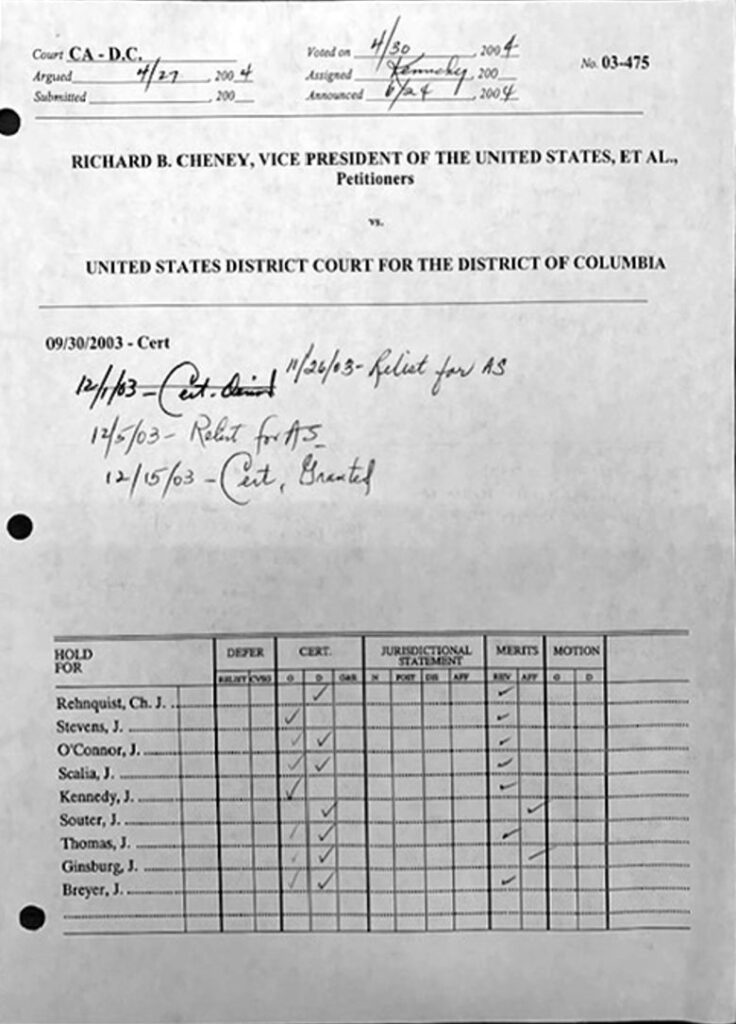
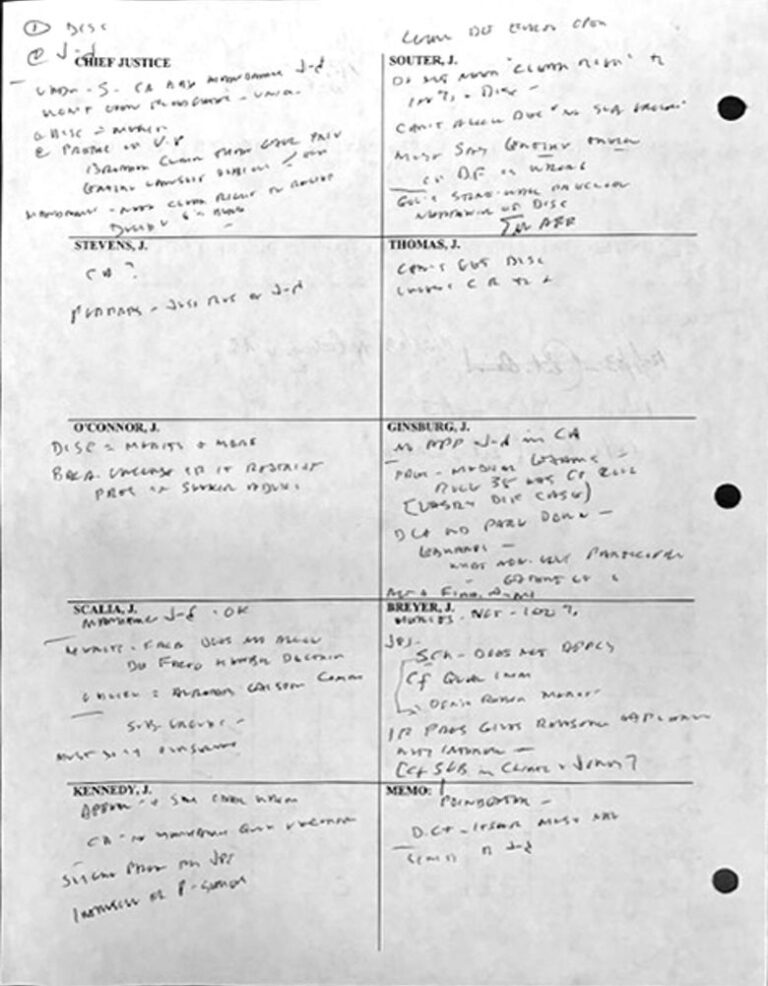
Scalia himself may have expressed some early ambivalence. Stevens’ notations suggest only he and Justice Anthony Kennedy were ready to grant the case at the first private session.
Read more What we know about the UFC fight at the White House
What’s certain is that Scalia made his desire known on December 11, 2003, when he wrote in a private note to colleagues, “I relisted this case to consider whether the Vice President’s petition for certiorari is jurisdictionally proper. I have concluded that it is.”
Scalia faulted the district court’s determination against Cheney and an appellate court’s refusal to intercede to stop the document process known as discovery.
He also addressed the deeper merits of the issue, saying it raised important concerns about the separation of powers. “(T)he lower courts’ disposition threatens to embarrass the Executive in the exercise of its constitutional duties,” Scalia wrote. “Moreover, the interest of the Executive in protecting against intrusion into internal affairs will be irretrievably lost if discovery is allowed.”
Scalia, who became friends with Cheney while working in the Gerald Ford administration, was a strong proponent of executive power.
The day after Scalia wrote the memo, when the justices met in another private session, enough shifted their votes to grant the case, and the order was made public on December 15. Oral arguments were eventually scheduled for April.
Duck season
The document dispute burst into a major national news story when it became known that Scalia had gone duck hunting with Cheney in Louisiana soon after the case was granted.
The trip was in early January 2004 and, Scalia later said, had been planned since the previous summer. Details of their vacation were first reported in The Daily Review in Morgan City, Louisiana. Then the Los Angeles Times picked up the story, putting a spotlight on the potential conflict of interest and igniting nationwide interest.
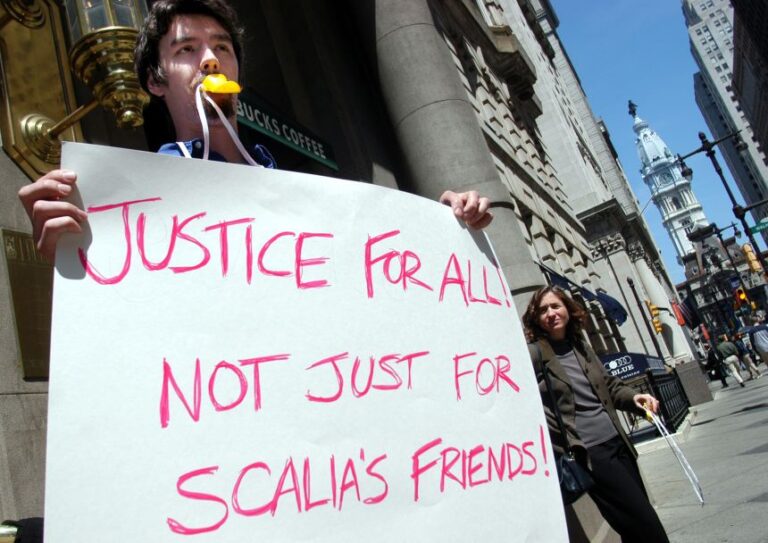
Critics acknowledged that socializing among the branches was a fact of Washington life but contended that in this particular litigation, personally involving Cheney, the duck-hunting trip created at least an appearance of impropriety.
The Sierra Club motion for Scalia’s recusal emphasized that Cheney’s “own conduct is central to this case,” and that the vacation differed from the usual social contacts between the justices and executive branch officials.
After Scalia received the motion from the Sierra Club, he wrote a March 4 note marked “PERSONAL AND CONFIDENTIAL” to Stevens, asking him to review a draft of his statement refusing the request. “I would welcome your views on its form and substance – as well as on what you believe to be the proper course for me to take.”
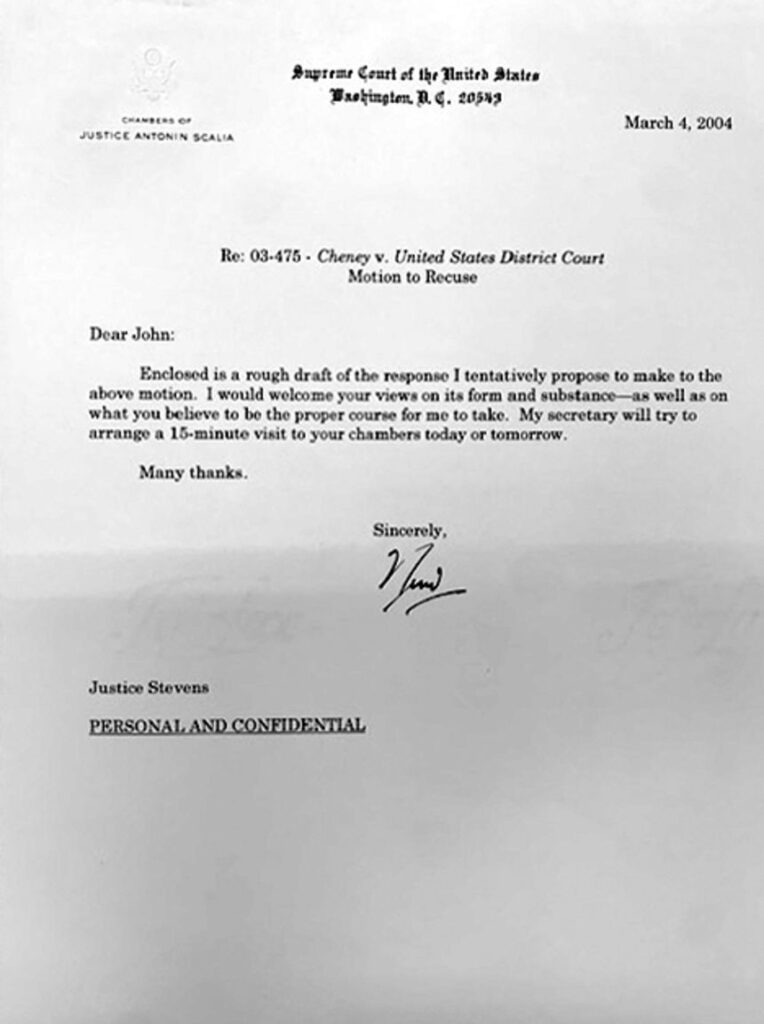
Scalia’s draft does not differ substantially from the March 18 memorandum released to the public, although he toned down some sections.
In his publicly released statement, Scalia referred to a personal letter that Morrison, generally on good terms with Scalia, had written to him earlier, in October 2003, regarding a position Morrison was about to take at Stanford Law School.
“Two days before the brief in opposition to the petition in this case was filed, lead counsel for Sierra Club, a friend, wrote me a warm note inviting me to come to Stanford Law School to speak to one of his classes. … I saw nothing amiss in that friendly letter and invitation. I surely would have thought otherwise if I had applied the standards urged in the present motion.”
As he first penned the draft statement, Scalia wanted to attach that “Dear Nino” letter. He was also harsher in his characterization of the situation. “If they thought me so readily corruptible, surely their lead counsel would not have written me a warm note (copy appended), dated two days before his filing of the Brief in Opposition to the Petition, inviting me to come to Stanford Law School to speak to one of his classes.”
Scalia made other changes, but his bottom line was the same: “If it is reasonable to think that a Supreme Court justice can be bought so cheap, the Nation is in deeper trouble than I had imagined.”
No correspondence indicating what Stevens thought of Scalia’s draft was in the case file. Scalia had told him he wanted to meet privately in Stevens’ office. On the core legal issue, however, Stevens appeared concerned about executive prerogatives. In another memo, Stevens expressed fear about the breadth of the potential discovery, referring at one point to the challengers’ “fishing expedition.”
Court sides with Cheney
After the April 2004 oral arguments, the justices voted 7-2 to throw out the lower court’s decision and send the case back for judges to reconsider whether any disclosure of participant records should be released.
“This is not a routine discovery dispute,” Kennedy wrote for the majority, saying the requests were directed to the vice president and other senior officials who served in the group to give advice to the president. “As we have already noted, special considerations control when the Executive Branch’s interests in maintaining the autonomy of its office and safeguarding the confidentiality of its communications are implicated.”
Scalia declined to write separately but signed a concurring opinion by Justice Clarence Thomas further in favor of Cheney. Thomas said the district court that initially ruled for the challengers exceeded its authority. Thomas, joined by Scalia, would have outright reversed and ended the litigation over the documents.
Only Justices Ruth Bader Ginsburg and David Souter dissented in the case known as Cheney v. US District Court for the District of Columbia. Ginsburg then took the rare step of reading a portion of her dissenting opinion from the bench.
She faulted her colleagues for intervening and insisted the DC Circuit already was mindful of the separation of powers concerns. “As the Court of Appeals suggested, discovery could be kept down to two issues, did persons other than federal officials participate in the energy policy group, and if so, to what extent?”
The answers remained elusive for years after the task force submitted its recommendations in May 2001. The that it was thwarted because Cheney refused to turn over information.
In 2007, however, the Washington Post obtained a confidential Bush administration list that showed that Cheney and his aides had met with several industry executives, including top officers of Enron and Exxon Mobil, as the task force was developing its recommendations.
Some of the names had leaked over time. But, as the Post noted, the Supreme Court’s decision shielding the Cheney task force had ensured that most were kept secret.
Read more Trump’s second term risks stalling on multiple fronts