 By admin
A version of this story appeared in CNN’s What Matters newsletter. To get it in your inbox, sign up for free here.
Read more The GOP’s game of chicken over Ken Paxton in Texas is getting testy
It is not news, or surprising, that Americans are worried about government corruption.
They twice elected Donald Trump, who twice promised to drain the “swamp” of Washington, DC.
“We are transferring power from Washington, DC, and giving it back to you, the American People,” he said in his first inaugural address.
In his second inaugural address, Trump promised to liberate the country from “a radical and corrupt establishment” that “extracted power and wealth from our citizens.”
On that promise, there’s striking new evidence that Americans believe he has failed to deliver.
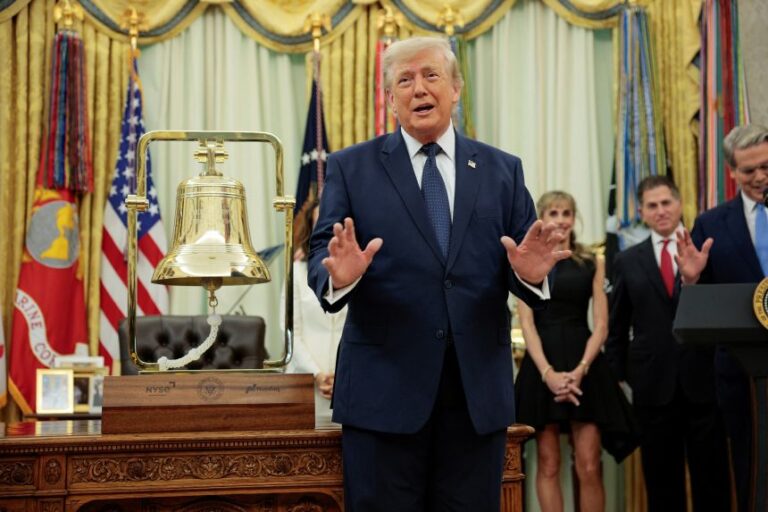
It should be of some concern to the White House — and to every American, really — that 89% of Americans said “yes” in a Gallup poll when asked, “Is corruption widespread throughout the government in this country, or not?”
Gallup isn’t alone on this. The University of Massachusetts at Amherst is also out with a poll Tuesday in which 97% of Americans — nearly everybody — says there is some corruption in government. A smaller portion, 75%, said there is “a great deal” of corruption in the UMass poll.
Decades of polling has found widespread frustration with and mistrust of government, but the new data from Gallup is notable for two main reasons.
First, Americans are more likely to see widespread corruption than people in other OECD countries
Gallup is still collecting data from all 38 countries in the Organization for Economic Cooperation and Development (OECD) for 2026, but the preliminary indication is that the US is now in a class of its own in terms of how its people view government corruption.
The US already outpaced other OECD countries in Gallup’s polling, but while the average corruption perception has been below 60% since 2022, it has now shot up for the US, which has been above 70% since 2010. In 2025, the US was tied with Colombia at 79%.
What changed?
Second, Republicans still agree there is widespread government corruption — even though they control the government
Usually, as Gallup notes, when power changes hands, those who favor the winning party are less likely to see corruption. That expected drop has not happened. Instead, the 83% of Republicans who see widespread corruption in the most recent poll is broadly in line with the 87% who said corruption was widespread in 2024, the final year of President Joe Biden’s administration.
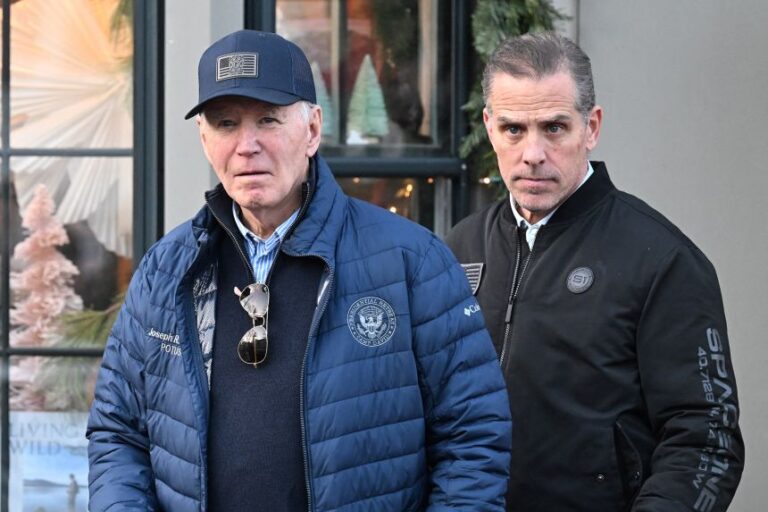
At the time, Republicans worked very hard to portray Biden’s family, particularly his son Hunter, as corrupt, which the Bidens vehemently denied.
In the meantime, while Republicans have not abandoned their perceptions of corruption, 91% of Democrats and 90% of political independents see widespread corruption.
Very few issues see such cross-party agreement. And lawmakers are not doing much to counter the trend.
In the UMass poll, respondents were asked to rank four governmental institutions from most to least corrupt. Most people — 53% — listed the president first, compared with 18% who listed Congress first. Forty-one percent listed Congress as the second most corrupt branch of government. Fewer pointed to courts and the federal bureaucracy first or second.
The Trump family sees opportunity in Trump 2.0
After accusing Biden of trying to enrich his family through the presidency, Trump’s family has adopted a YOLO attitude toward wealth acquisition during Trump 2.0. The dollar figures the Trumps appear to be bringing in could dwarf what Hunter Biden was paid to sit on corporate boards.
In the UMass poll, 77% said the president should not or definitely should not be profiting from business ventures that could be affected by the policies and decisions of his administration.
One Trump-aligned company, Trump Media, is selling early access to his social media posts, giving Wall Street firms who can afford up to $100,000 a month possible early looks at some of his policy decisions.
Trump’s sons both have interests in defense contractors at a time when President Trump is pushing for a gobsmacking $1.5 trillion Pentagon budget, which would be an increase of nearly $500 billion in one year.
Read more Luigi Mangione’s behind the scenes plea discussions revealed in unsealed court transcript
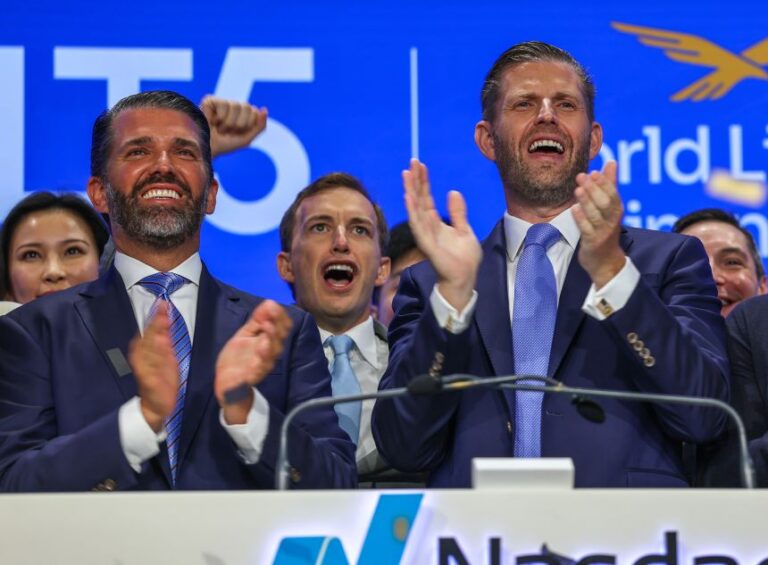
Overseeing their father’s assets, sons Eric and Don Jr. founded a firm, World Liberty Financial, along with the son of his Mideast and Ukraine negotiator Steve Witkoff, to capitalize on the craze around cryptocurrency. All of this is happening at a time when President Trump is taking a hands-off approach to regulation.
Trump made more than a billion dollars from cryptocurrency ventures in first year back in office
They are pursuing overseas deals at a time when their father is seeking trade deals.
Trump doesn’t think Americans mind
“I found out that nobody cared,” he told the New York Times back in January, suggesting he feels entitled to mix business and politics. He said he tried to separate the two during his first term and “got no credit.”
Don Jr. and Eric Trump say they do not discuss business with their father. The sons of other top Trump administration officials, including Witkoff and Commerce Secretary Howard Lutnick, are also working business angles that touch their wealthy fathers’ public jobs.
Lutnick, pressed on CNBC about the perception of a conflict in a mining deal that benefits his family and Trump’s, dismissed “silly questions” and a “waste of time.”
The president also apparently does not have direct control over his stock portfolio, so it is at least possible he does not know about the 1,000-plus recent stock trades made on his behalf by third-party financial institutions, including in energy companies affected by his war on Iran. The trades were disclosed in government-mandated disclosures to the Office of Government Ethics.
Top Democrats play the market too
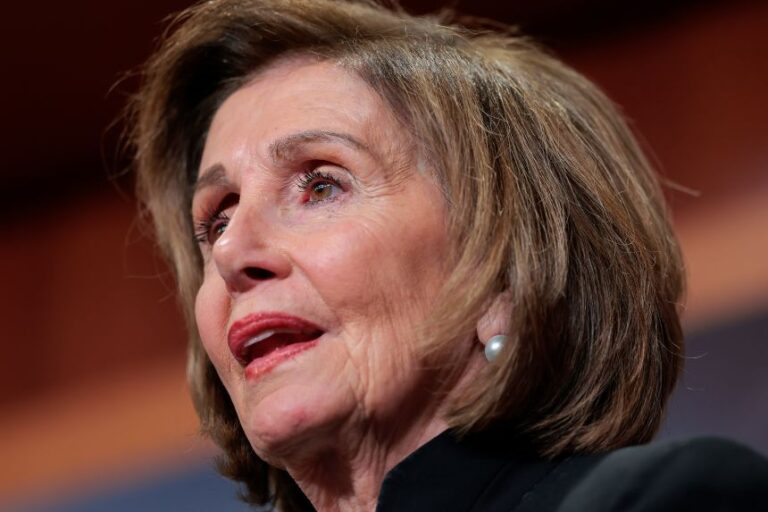
Trump isn’t the only politician playing the market. Tracking the trades of members of Congress, including wealthy Democrats such as Reps. Nancy Pelosi and Ro Khanna of California, has become an investment strategy for people who want to buy the same stocks as lawmakers from either or both parties. It has also led to growing bipartisan calls, but no concrete action, for a ban on members of Congress and their direct family members trading stocks. A large, bipartisan majority of Americans support passing such a ban.
No commitment not to cash in
Defense Secretary Pete Hegseth, who prefers to be called secretary of war, was critical, before his nomination to join the Trump administration, of generals working for defense contractors. But he notably declined, when pressed by Democratic Sen. Elizabeth Warren, to pledge not to work for a defense contractor for 10 years after he leaves office.
“I’m not a general, senator,” Hegseth told Warren at his confirmation hearing. More recently, he and Warren tangled at a congressional hearing over whether the Pentagon should be doing anything to investigate well-timed oil market bets before Trump launched the war in Iran.
Warren’s own one-percenter wealth — divulged when she released tax returns during a 2020 presidential run — could be construed as antithetical to her progressive bona fides, although her wealth was built through her and her husbands’ healthy salaries as professors and her book deals rather through than stock trades.
Many of the people who are elected to office are wealthy. (And simply having money in index funds would have inflated anyone’s bottom line in recent years.) That is clearly different from using knowledge or access to gain an upper hand.
Meanwhile, the debt accrues
A larger issue than the money made by lawmakers in their private pursuits may be how the government spends money at a time when the national debt has eclipsed $40 trillion.
Trump’s administration has sounded the alarm about government spending, but then cut revenues with massive tax cuts that will only generate more revenue far down the road, if ever.
Promises that fizzled
Elon Musk, the world’s richest individual, was brought in as a special government employee early in the Trump administration with directions to cut government spending and whittle down the bureaucracy.
But it’s not clear what, if anything, he actually accomplished other than making wild, frequently unfounded accusations about fraud and corruption in social safety net programs. Musk ultimately left government to return to his companies, which benefit from government contracts, and briefly became the world’s first trillionaire. He’s still doing OK. The nearly $300 million we know about that he spent helping get Trump elected in 2024 can be viewed as a solid investment.

How much of Musk’s wealth comes from government help? Virtually all of it
At the same time, the increasing murkiness of US election spending means we don’t know exactly who is spending what to get candidates elected.
Trump has also made wild and unverified claims about fraud throughout government and repeatedly alleged corruption in US elections. All of these claims could appeal to his political base, which identifies with his claim that the system is rigged against them. And Democrats have alleged that his moves are a threat to democracy and the right to vote is under threat.
Take a step back, and the vast majority of Americans just see corruption.