 By admin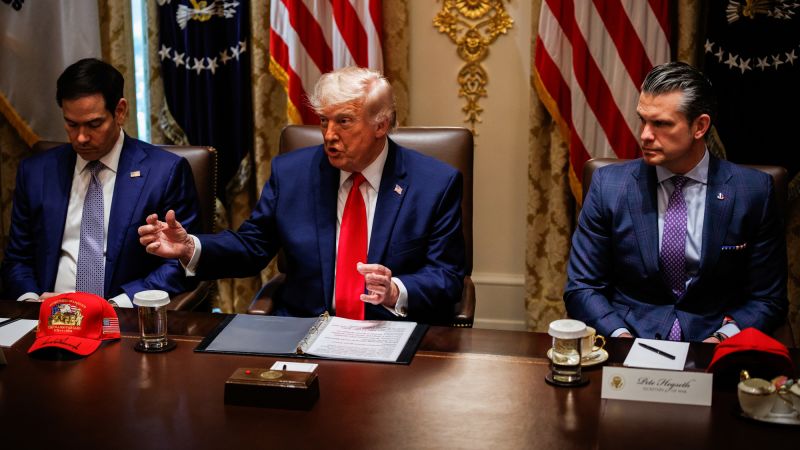
- President Donald Trump has repeatedly shifted his position on whether Iran must hand over its enriched uranium stockpile.
- Top administration officials have cast its extraction as a red line, but Trump has repeatedly floated a resolution that comes up short of that.
- The inconsistency reflects broader confusion about the administration’s goals in the war with Iran.
As the United States and Iran try to hammer out a deal to start winding down the war, few particulars loom as large as what happens with Iran’s nuclear stockpile.
Read more What is a blue moon? Everything to know before the upcoming celestial event
It’s not only a major point of contention — with Iran signaling it won’t turn over its highly enriched uranium — but extracting it could be very complicated. And the fate of these materials will go a long way toward determining just how much President Donald Trump’s war has truly “obliterated” Iran’s nuclear threat.
But as with many of its other goals, the Trump administration has been very inconsistent about its demands on this one.
Appearing at a White House briefing on Thursday, Treasury Secretary Scott Bessent said Iran turning over the uranium was a “red line” for Trump.
“Iran has to turn over their highly enriched uranium,” Bessent said.
Trump said on social media Friday that the uranium “will be unearthed by the United States … in close coordination and conjunction with the Islamic Republic of Iran, plus the International Atomic Energy Agency, and DESTROYED.”
Secretary of State Marco Rubio said last weekend that Tehran needs “to turn over their highly enriched uranium.”
“These are the president’s points consistently,” Rubio added.
But this has not been a consistent point from the president. In fact, as Trump has appeared eager to cut some kind of a deal to end the war, he’s repeatedly and conspicuously floated a resolution that comes up shy of Iran handing over all of its uranium.
That doesn’t mean that’s where a deal could wind up; Trump makes very little effort at rhetorical consistency. But you could be forgiven for thinking this particular point was at least somewhat negotiable in his mind.
April 1: the Reuters interview
Trump first seemed to telegraph a relaxed demand back in early April, in an interview with Reuters.
Despite having assured just three days prior that Iran would turn over what he calls its “nuclear dust,” Trump suddenly suggested the materials were buried so deep thanks to the US strikes last year that they didn’t even matter.
“That’s so far underground, I don’t care about that,” he said.
Trump suggested the sites where the material is buried could simply be monitored — “We’ll always be watching it by satellite” — and cast Iran as already “incapable” of getting a nuclear weapon.
But just two weeks later, in another interview with Reuters on April 17, Trump reverted to promising to get the uranium.
“We’re going to go in with Iran, at a nice leisurely pace, and go down and start excavating with big machinery,” Trump said, adding: “We’ll bring it back to the United States.”
On April 26, the president doubled down, saying that “we have to take that nuclear dust. We’re going to take it.”
Mid-May: the Fox News interviews
But by mid-May, Trump was again casting the enriched uranium as not a must-have.
In a May 14 interview with Fox News’ Sean Hannity, he said Tehran had told him the uranium was so buried that Iran itself could never access it. He also cast a retrieval effort as hugely difficult, given it would require a lengthy operation on Iranian soil.
Hannity volunteered that perhaps the uranium could be “entombed” rather than retrieved.
Read more Louisiana lawmakers pass new congressional map to give GOP additional House seat
Trump signaled that was an option — while casting retrieval as important mostly for symbolic reasons.
“No, I don’t think it’s necessary except from a public relations standpoint,” Trump said. “I think it’s important for the fake news that we get it.”
And he again said the US military could just monitor the areas, saying, “I would rather get it, but we have our eyes on it.”
Trump then echoed those comments in an interview the next day with Fox’s Bret Baier.
“It is good enough” to bury the uranium, he said. “But you know what, it’s not good enough public relations-wise. It’s important, you know, it’s important. It’s probably good enough for a different reason, though.”
But the same day in a gaggle with reporters on Air Force One, Trump said he was still insisting on actually getting the uranium.
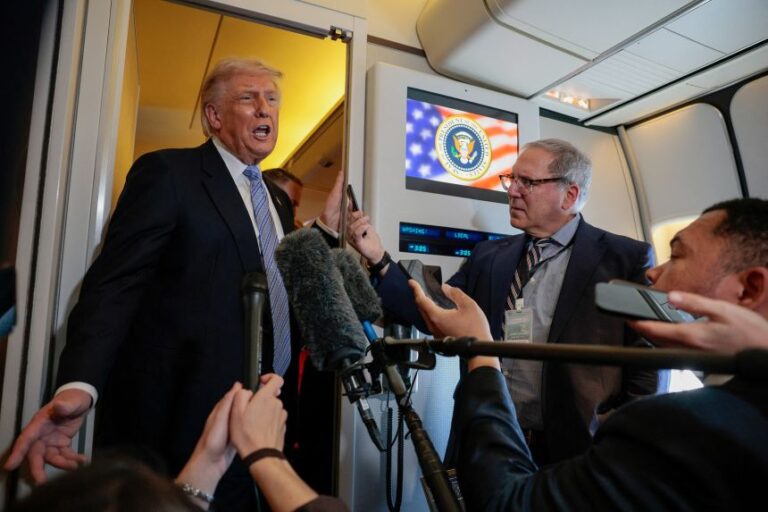
“With that being said, I want to get it,” Trump said. “And they agreed to it, but then they took it back, but they’ll agree to it eventually.”
(There is no evidence that Iran agreed to this. Trump has repeatedly cast Tehran as agreeing to things that never come to fruition.)
It’s hardly the only inconsistent goal
So when Rubio and Bessent cast extracting the uranium as a clear goal of the administration, they glossed over a lot of Trump’s comments.
The president might need to get the materials to sell this war as a success and to avoid inflaming the Iran hawks in the Republican Party. But his inconsistency would suggest he doesn’t seem completely committed to it as a true red line in negotiations.
And this issue is a microcosm of Trump’s broader problem with the war. From the start, the goals have been unclear and often shifting. The administration keeps listing four goals, but they’ve routinely been a different list of four, depending upon who is speaking.
It almost seems like Trump went in without knowing what he wanted out of the war, and now he’s just winging it.
But when it comes to actually ending it, the resolution of this issue is hugely important.
Which means the administration might want to decide exactly how it feels, at some point.
Read more Stop worrying about Ebola: Protect yourself from contagious viruses you may actually encounter