 By admin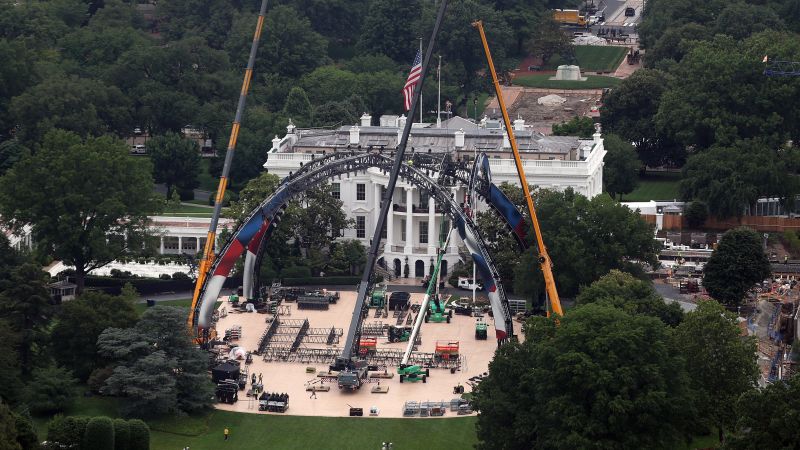
President Donald Trump had just finished showing off renderings for June’s White House UFC fight when his focus shifted to another set of designs.
Read more Scientists accidentally discover sea cucumber with ‘tissue immortality’
As he left the Oval Office earlier this month, he could be heard peppering an associate about his biggest construction obsession: His East Wing ballroom. He claimed portions were missing from the latest renderings and asked for clarity on its many columns.
The brief interaction in the halls of the West Wing — which came on the same day the US was trading proposals on an elusive end to the war with Iran — showed how intimately involved the president is with every detail of his signature project, and how much of his time it’s consuming.
Trump’s predecessors have sought creative ways to protect their valuable time: cutting down on decision-making, limiting staff walk-in access to the Oval Office and replacing meetings with to-the-point memos.
But that’s not Trump’s approach when it comes to design and construction — from updates to the West Wing to the 90,000-square-foot new East Wing to projects across Washington, DC, for which he comes to meetings prepared with swatches and feedback on finishes and scale.
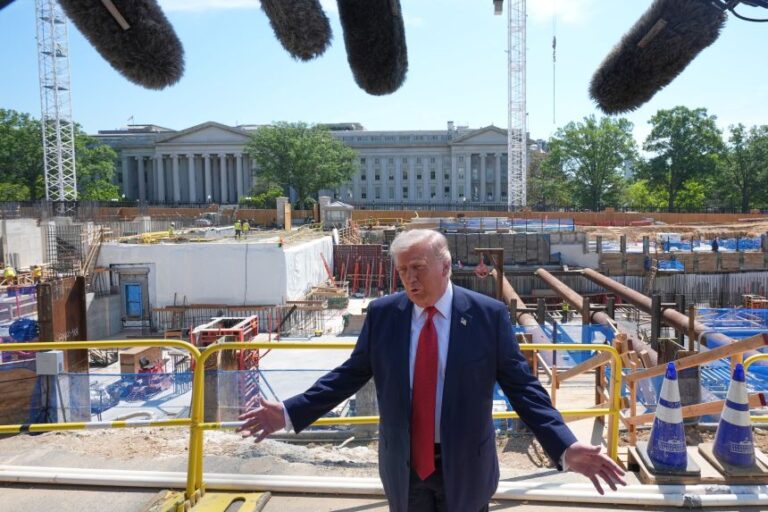
During Wednesday’s Cabinet meeting, he talked at length about his pet projects — including positing a new one: repainting the bottom of the fountain at the World War II memorial, like he has with the Reflecting Pool. On Monday, upon returning from a Memorial Day ceremony at Arlington National Cemetery, he spent roughly six minutes inspecting columns on the North Portico before retreating indoors. And last week, he brought reporters outside for a 45-minute presentation on the ballroom’s progress.
But the American public hasn’t viewed his East Wing demolition and ballroom construction charitably. A source close to the president suggested to CNN that he waited until his second term, when he wouldn’t be running again, to pursue these projects.
“It’s politically toxic, any way you cut it. Look at how everybody’s paying attention to it and the grief he’s been given,” the source said.
In Trump’s view, though, construction — and defending those projects against legal challenges — isn’t a side project; it’s the foundation of his legacy, according to sources familiar with his thinking.
“I’m a really good builder. The thing I do best in life is build,” the president told reporters last week over the raucous sound of ballroom construction.
‘I have a construction job’
The former real estate executive involves himself with meticulous design details — to an extent that has surprised sources who have met with him about his construction projects.
“He felt very confident in his opinions about technical details,” one of the sources said about the president’s participation in a recent meeting, requesting anonymity to speak freely.
“He comes with fabric samples, tile samples, images that you wouldn’t see the developer themselves bring to a high-level meeting. You would see the developer’s third rung down the leadership staff bring that to the meeting,” the source said.
But the commander-in-chief inserts himself in all of it — shopping for marble and onyx at a South Florida stone showroom, selecting the image of an auto-pen to represent former President Joe Biden on his “Presidential Walk of Fame,” and demanding that his proposed arch be the tallest in the world.
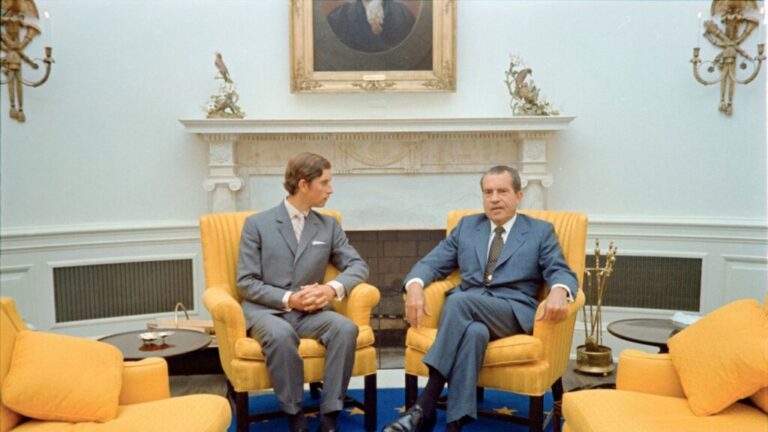
It started with gilding the Oval Office, a design choice that crept into the Roosevelt Room.
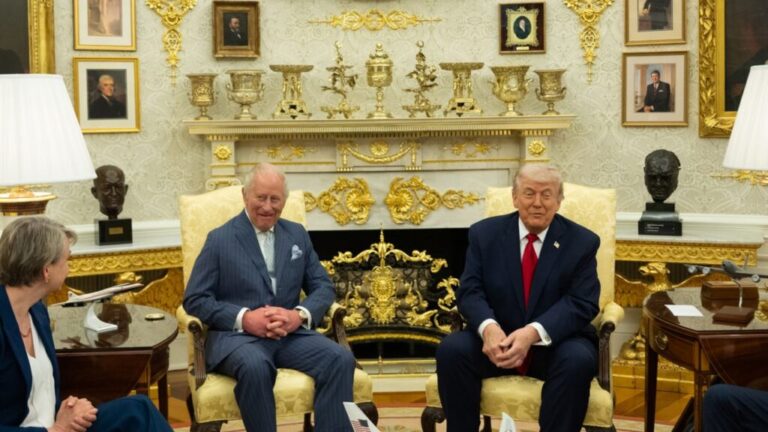
“It’s gold leaf,” Trump is known to tell visitors. “None of the fake stuff.”
And the transformation at the White House hasn’t been subtle. When Trump decides what he wants, he seeks immediate action, sources said.
“I have two jobs. I have a construction job … which is really like relaxation for me because I’ve been doing it all my life,” Trump recently said.
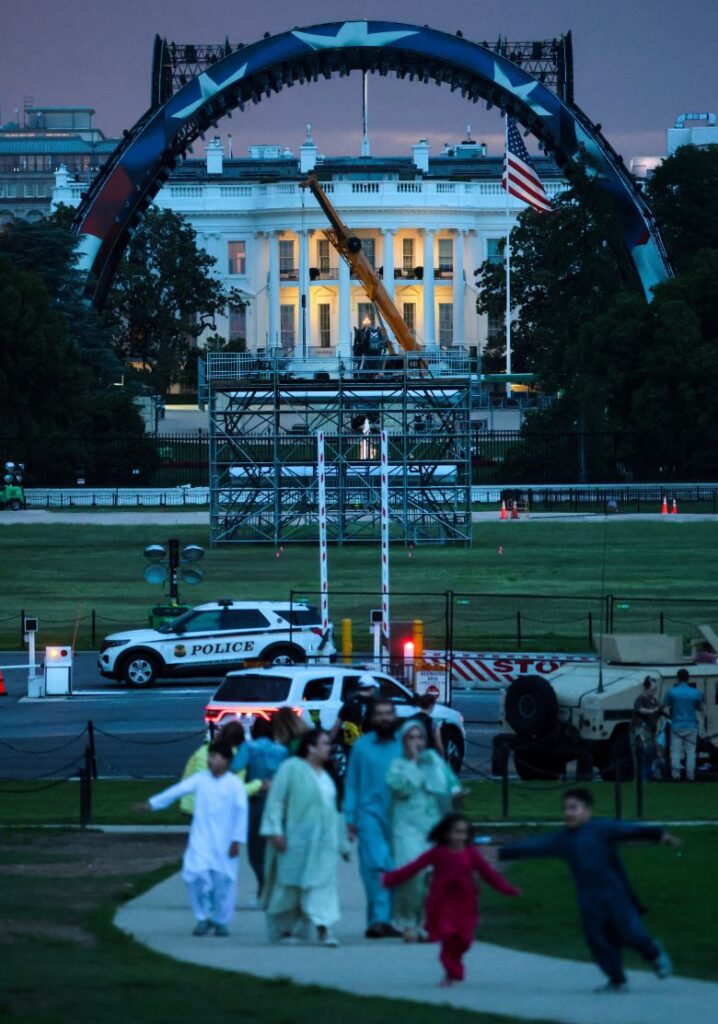
This week, construction on a temporary arena for next month’s UFC fight has taken over the White House grounds. The massive structure erected on the South Lawn is even visible from the North Lawn.
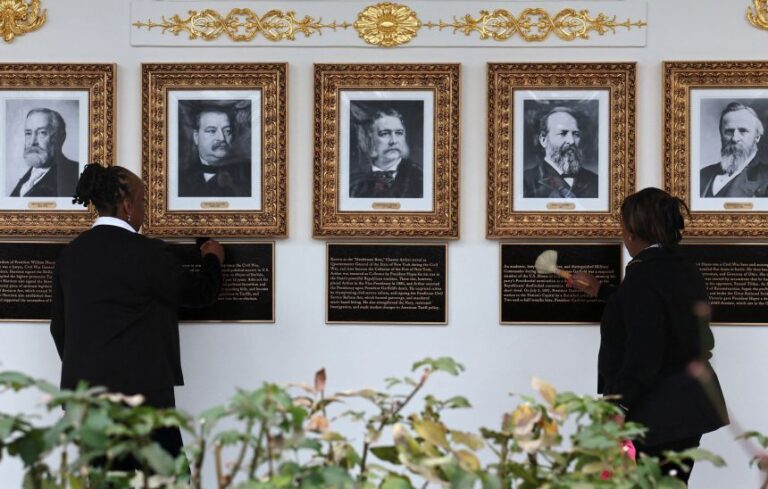
He’s already finished several projects. The Rose Garden has been paved with stone and reconfigured in the image of his Mar-a-Lago patio; the tongue-in-cheek “Presidential Walk of Fame,” with biographies written in Trump’s voice, has been installed along the West Colonnade, plus new granite pavers; Giant new flagpoles and a helipad have been added to the lawn. And the Palm Room flooring and the storied Lincoln Bedroom bathroom have been redone in marble.
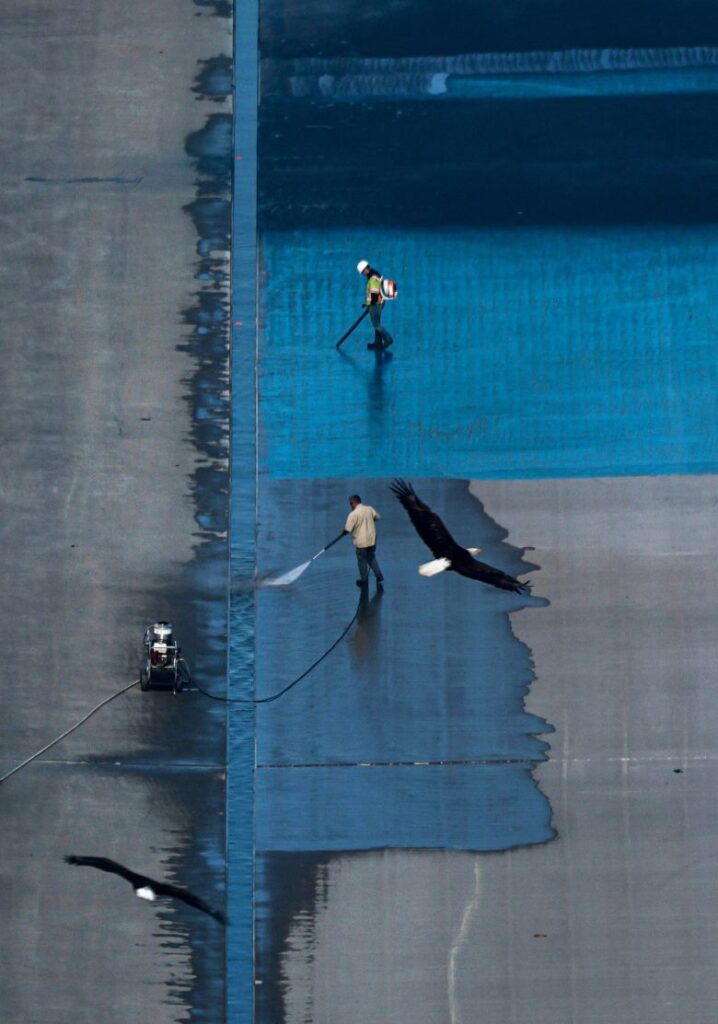
Trump has also set his sights beyond the White House: Across town, the Kennedy Center — whose facade also now bears his name — is undergoing a sweeping renovation requiring a two-year closure. He’s overseeing the repainting of the Reflecting Pool, along with plans for the massive arch (which has lost eight feet). He’s building new sidewalks for Lafayette Square, pushing a coat of white “magic paint” for the neighboring Eisenhower Executive Office Building and resurrecting a plan for a “Garden of American Heroes” proposed during his first term and scrapped by the Biden administration.
Trump has spent more time reflecting on his legacy during his second term — and he sees his rebuilding of the White House and Washington, DC, as part of that, sources said.
“Look at Donald Trump’s life, look at what he’s done: Built things that no one will ever tear down,” the source close to the president told CNN, noting that even if successors undo his policies, the ballroom will likely still stand.
“The one thing they can’t tear down will be the East Wing. That is his lasting impact. That’s why he cares so deeply: legacy sh*t,” the source said.
White House spokesperson Davis Ingle told CNN in a statement that “everyone should celebrate” the president’s “historic beautification of the White House and our Nation’s Capital and giving it the glory it deserves.”
Legal and political challenges
Trump is expending political capital to get his projects done, with the White House recently pressuring Congress to authorize $1 billion for security costs tied to the ballroom, despite the president repeatedly saying the project would be privately funded.
“This is really being built for other presidents, it’s not being built for me,” Trump said last week, trying to make the case for the national imperative of his ballroom after the Senate parliamentarian ruled against some of his funding being in the latest GOP budget bill.
But Republicans have feared spending taxpayer dollars on such a project would only reinforce voters’ perceptions their party is out of touch, Senate aides and others familiar with the matter previously told CNN. The GOP dramatically broke with the president last week over that and his “anti-weaponization” fund.
But taxpayers are also expected to foot costs for some of his other projects — including portions of the arch, the “Garden of Heroes” and the Reflecting Pool renovations.
Trump has leaned on the same expansive view of executive authority that he’s often brought to tariffs or foreign policy — which has prompted similar legal pushback.
“It’s not just the projects taking his time — it’s defending all of these cases,” said the source who has met with Trump about one of his projects.
The administration has been hit with at least 10 lawsuits taking aim at projects from the ballroom to the arch. At the heart of many of these legal challenges isn’t whether Trump can do what he wants to do, but whether he’s followed key processes in doing so, from seeking congressional approval to getting signoff from planning commissions in the nation’s capital.
Lawyers from the highest levels of the Justice Department have been tapped to defend the president in court, arguing that he is acting within his presidential powers.
“His fingerprints are all over these cases the same way they’re all over the choice of upholstery for seats in the Kennedy Center,” said the source.
Read more Proposed US Ebola facility in Kenya sparks backlash at home and abroad