 By admin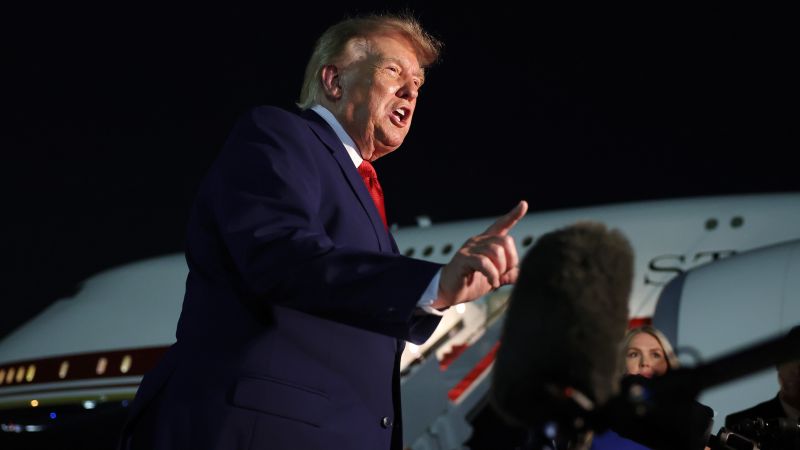
President Donald Trump late Tuesday confirmed reporting from the Washington Post, CNN and others that he secretly switched planes in Turkey last month because of a security threat.
Read more Exclusive: Former Southern Poverty Law Center CFO arrested on fraud charges
“I guess there was a threat out there,” he told reporters. “I didn’t really ask too much about it.”
The president added of the Secret Service and military telling him to switch planes: “I just have to do what they say. They go for safety, and I have to do what they say.”
But the confirmation makes it clear that both Trump and the White House lied about the situation, even after the immediate danger had passed.
It’s one thing not to disclose the ruse in real time — though many would argue that allowing the reporters and administration staff that remained on Air Force One to effectively serve as unwitting decoys, while Trump flew on a smaller military jet, stretches the bounds of what’s acceptable to protect the president. But Trump and the White House went further than just lying to perpetuate a protective ruse. They also denied there was a security threat at all.
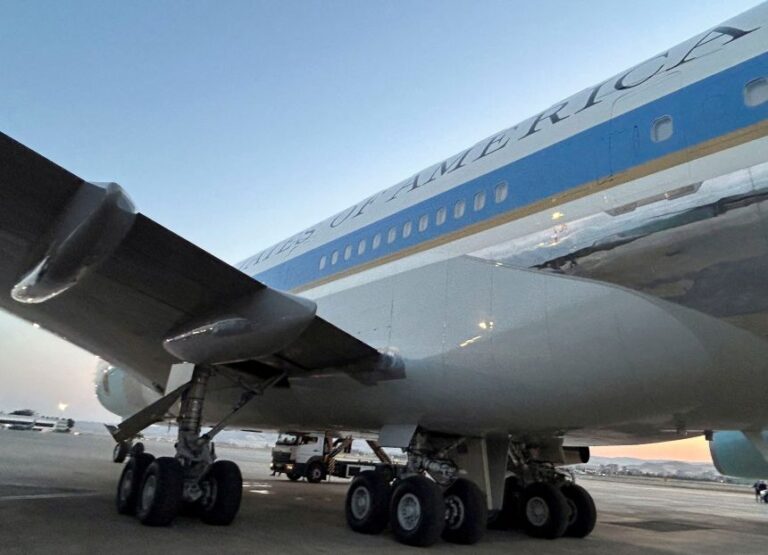
They did so when it was first reported that Trump would use his legacy Air Force One — rather than the new, retrofitted one he got as a gift from Qatar — due to security concerns.
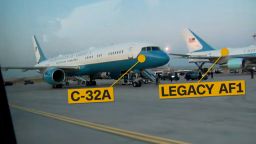
How Trump’s secret plane switch unfolded
Before that story first broke, Trump claimed on social media that he was swapping presidential aircrafts on July 8 “for old time’s sake” and sending the new Qatari-gifted plane meant to be used as Air Force One to the United Kingdom ahead of him “in order to give our Great Military Heroes a chance to appreciate our beautiful new addition to the Air Force Fleet.”
After Trump flew from Turkey to the UK (on what we now know was that third smaller plane) and then re-boarded the new Air Force One for the leg back to the United States, he spoke to reporters and flatly denied a security threat.
“You’re saying there wasn’t a security concern?” a reporter asked.
“No. No. Why would there be?” Trump responded.
Asked if there were “any other issue,” he said: “No.”
When reporters kept asking, he repeatedly deflected.
But it wasn’t just Trump.
White House communications director Steven Cheung issued a somewhat oblique statement at the time defending the security capabilities of the new, Qatari-gifted Air Force One.
But then on social media, he ripped into a reporter from MS NOW who had reported the switch to the legacy plane was due to “concerns” about the new Qatari-gifted plane’s security capability “to safely manage a rapidly escalating conflict with Iran.”
His dismissal of that reporting as “complete fake news” and his statement that the reporter “has no idea what she is talking about” were already undermined by the news a couple weeks later that the White House was moving to further secure the new Air Force One. Trump himself confirmed that the plane was being “maxed out.”
And now the president is confirming that he switched planes because of a threat.
The new revelations also sharply undercut what Trump said about Iran’s military capabilities just a few days after returning from Turkey
Appearing on Fox News on July 13, he claimed that Iran’s “entire military is gone.”
“They got nothing,” he added. “They have no Navy. They have no Air Force. It’s all gone. Their anti-aircraft is gone.”
But now we know that, just five days earlier, Trump was forced to switch planes — twice, in fact — because of fears that Iran was capable of striking Air Force One over Turkey.
CNN’s Kevin Liptak reported Wednesday that a person familiar with the matter said the threat involved a shoulder-fired missile — a specific enough threat that officials feared Trump’s life would be at enormous risk if he flew on either version of Air Force One.
This isn’t the only time that Trump’s claims about Iran’s capabilities have been undercut by real-world events. He’s routinely cast Tehran as militarily crippled, but it keeps fighting and prolonging the war. And early in the conflict, Trump and Defense Secretary Pete Hegseth claimed the United States and Israel had free rein over Iran’s skies — before two US jets were shot down.
Many of the president’s broader claims about Iran and how the war has played out have also fallen apart. As have his assurances that a deal was right around the corner and that Iran had already agreed to key concessions.
The war is a mess — and an unpopular one at that. And the administration keeps giving Americans reason to doubt pretty much everything it says about it.
Read more Rep. Max Miller, accused of abuse, will remain in reelection race as withdrawal deadline passes