 By admin
A puzzling email landed in Nevada’s state election office last month. A Fox News reporter wanted to know if the state had a response to the Department of Homeland Security’s purported discovery of more than 15,000 noncitizens on its voter rolls.
Read more The little-noticed Supreme Court case that could impact where people pray
Election officials circulated the request. No one knew where the claim had come from.
“We just responded very plainly, like we have no idea what you’re talking about,” Nevada Secretary of State Cisco Aguilar told CNN.
Three days later, they got their answer. DHS announced that an analysis of public voter data had found more than 250,000 potential noncitizens registered in Nevada, California, New Jersey and Pennsylvania.
Trump’s mail voting appeal tests Supreme Court’s anti-chaos election rule
Officials in all four states said they were blindsided. They disputed the findings and said DHS had provided neither its methodology nor the names of the allegedly ineligible voters.
“I can’t take something that’s made up out of thin air and try to justify it or defend it,” Aguilar said. “We operate off of facts, not allegations or anecdotal information.”
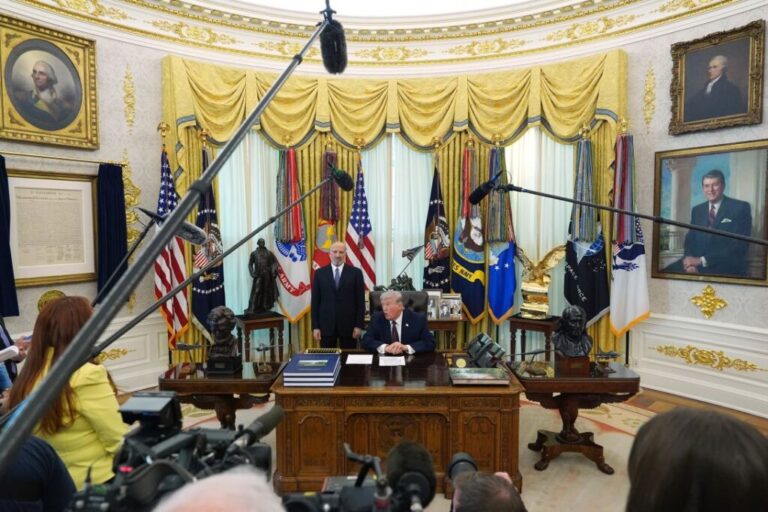
The announcement coincided with a primetime address by President Donald Trump, who said he was declassifying information exposing vulnerabilities in the nation’s election system. His allies hailed the findings as a bombshell. Publicly and privately, some Republican officials balked at them.
Homeland Security Secretary Markwayne Mullin, who has long echoed some of Trump’s election fraud claims, underscored his role after the president’s speech. At a press conference on the White House grounds, he touted his department’s noncitizen findings, urged more states to collaborate, and delivered a stark warning.
“If the election officials – once we gave them the information they need to secure their elections, and they chose not to – then those individuals can also be held accountable by fines, by penalties, and even, depending on how far it goes, prison,” Mullin said.
Since taking over DHS in March after Trump fired Kristi Noem, Mullin has accelerated efforts to make the department a central force in Trump’s crusade against purported widespread election fraud. DHS has pushed states to share their voter rolls for audit and vowed to withhold grant funding from those that refuse to adopt a broader set of election reforms.
Last year, DHS tapped Heather Honey, a Trump-aligned election researcher who gained national attention for her efforts challenging the 2020 results, to lead an “election integrity” campaign.
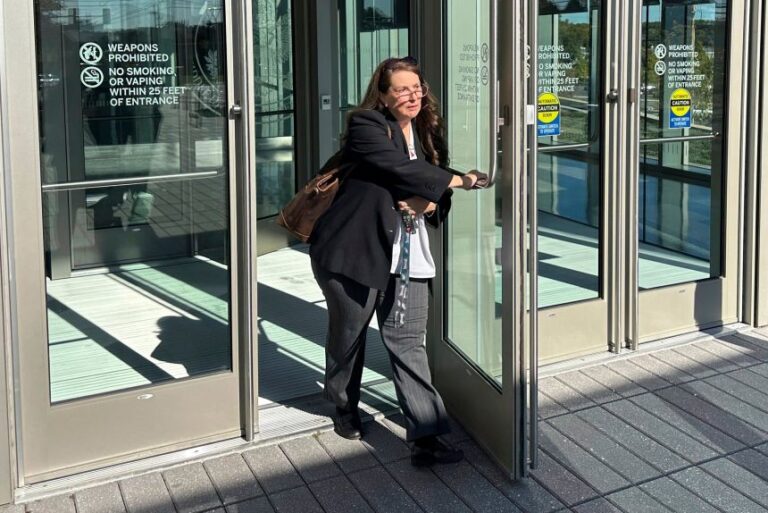
Honey’s influence has grown under Mullin, and in June, the department promoted her to senior counselor to the secretary.
In Trump’s second term, DHS has pivoted away from its longstanding role to help with election security and focused far more resources on voter fraud allegations, claiming troves of noncitizens are registered – and likely voting – especially in Democratic-led states.
Federal law bars noncitizens from voting as well as making false statements to register. The administration has sharply intensified efforts to uncover such violations – pursuing criminal charges and deportations.
The department has leaned for investigative work on one of its federal agencies – Homeland Security Investigations – an arm of Immigration and Customs Enforcement that typically tackles major crimes like human trafficking, drug smuggling and child exploitation, not voter fraud.
“HSI is actively rooting out and investigating election fraud wherever it can be found,” a DHS spokesperson said in a statement to CNN. “We have repeatedly demonstrated that illegal aliens can and do vote in our elections.”
Federal agents hunt for voter fraud
Communications obtained by CNN show that HSI agents have spent months pressing local election officials across the country for voter records to build criminal cases. Their inquiries have primarily centered on a slew of individual voters, but the probes have expanded to canvassing groups and even questions on debunked theories about the 2020 election – often with a sense of urgency.
“I wouldn’t normally ask this of you if I was conducting an investigation with my usual methodology and speed, but there’s a bit of pressure on the timeline of things,” one HSI agent told a county election official in Ohio while requesting records for several names.
The agent later acknowledged: “Voter fraud investigations aren’t typically what HSI works.”
Under the Trump administration, agents have, for example, been assigned to investigate whether naturalized US citizens registered or voted before becoming citizens, according to an internal memo reviewed by CNN. Another memo directs HSI agents to coordinate with US Citizenship and Immigration Services to begin removal proceedings when a noncitizen is suspected of or linked to voter fraud.
“All HSI offices are engaged in these important efforts,” the DHS spokesperson said.
For months, agentshave been working to trace the voting histories of tens of thousands of people flagged as potential noncitizens by a controversial federal verification system — the same pool of names Mullin cited at his news conference as definitive proof that large numbers of noncitizens are registered to vote.
While Trump and his allies have made sweeping claims about widespread noncitizen voting, emails obtained by CNN reveal a messier reality. Agents repeatedly pursued leads only to discover that they had identified the wrong people or lacked enough information to know for sure — and in some cases, few had ever cast a ballot.
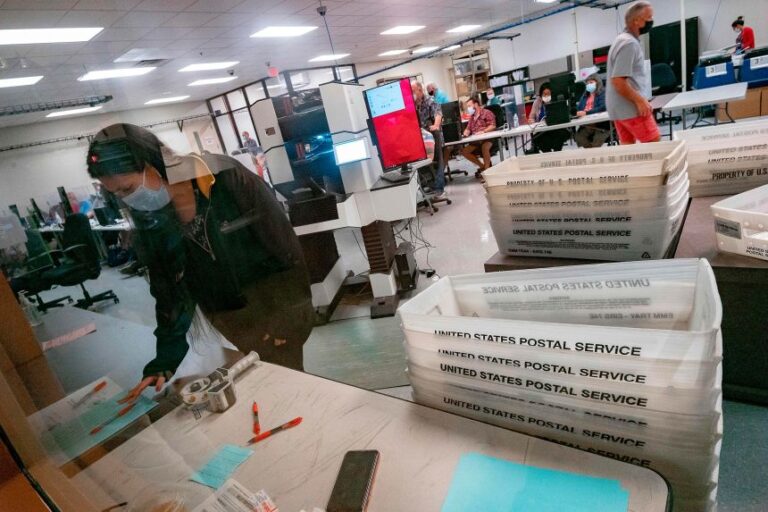
In Franklin County, Ohio, several people flagged by HSI had never been registered to vote. After confusion over another person’s birthdate, the agent wrote: “Oops! Turns out the voter is actually his father.”
The emails show the inquiry soon expanded to canvassing groups, including questions about the Ohio Organizing Collaborative, a progressive voter-turnout organization that federal agents raided in June – four months after the exchange.
In Fort Bend County, Texas, HSI subpoenaed the election director for records before supplying a list of names to check, according to records obtained by Democracy Forward and shared with CNN. When county officials asked for more details to ensure they had identified the correct voters, the investigator replied: “At this time, the information I sent is all we have. If you could just proceed with the information provided, that would be great. We may have to do additional checks on our end.”
Read more US embassies in the Middle East prepare for extended period with reduced staff amid Iran war
“This looks like DHS scraping the bottom of the barrel,” said Brendan Fischer, Director of Strategic Investigations at Campaign Legal Center, a voting-rights advocacy group.
Over the past 18 months, the administration has enhanced the citizenship records programs known as SAVE (Systematic Alien Verification for Entitlements) with data from other federal agencies, a move that was praised by Republican election officials who nonetheless have acknowledged that the data-matching can produce false positives and requires further investigation. Separately, the Justice Department has been demanding that states turn over their voter rolls — bringing lawsuits against 30 states that have refused — so that the administration can do its own SAVE audits for ineligible voters.
“The expansion of SAVE failed to substantiate claims of widespread noncitizen voting, so now the administration is trying to save face by directing HSI investigators to pursue a very limited number of potential cases,” Fischer said.
A guidance document circulated within HSI last year, which CNN reviewed, tells agents working election-related cases to determine which federal laws give them authority to investigate before collecting evidence. It also directs them to consult prosecutors before issuing subpoenas or conducting interviews.
The document warns against public actions that could influence an election and bars immigration enforcement that “chills” voting. It also prohibits agents from bypassing election officials who control records or Justice Department divisions that oversee election matters.
Investigating Trump’s 2020 loss
DHS has also joined the administration’s continuing effort to find evidence supporting Trump’s unfounded claim that the 2020 election was rigged against him.
In February, HSI contacted the Arizona attorney general’s office with questions about previous reviews of the election. The outreach, first reported by VoteBeat, came days after Noem, then the Homeland Security secretary, held an unusual news conference in Arizona promoting a stalled Trump-backed election bill.
In the queries to officials working under Arizona’s Democratic attorney general, an HSI agent asked about claims involving late-arriving ballots in Maricopa County and supposed discrepancies in the ink used to print some ballots — allegations that had already been investigated.
“I have to get a report in by (close of business) today, so was hoping to have some of the materials soon if at all possible,” an HSI agent wrote in a follow-up email.
The attorney general’s office provided materials assembled during an earlier investigation by Mark Brnovich, the Republican who led the office until 2023, prompting additional questions from the HSI official on March 5.
Noem was fired by Trump that day, with her replacement by Mullin announced simultaneously. HSI’s 2020-related queries to the state attorney general ceased, but separately, the Justice Department obtained records from another review of that election from Arizona’s Republican-controlled Senate. There has been no public investigatory action in the federal 2020 probes in Arizona since then.
Inflated claims of non-citizens on voter rolls
Under Mullin, DHS has made sweeping claims of foreigners polluting the voter rolls of Democratic-led states while at times overstating what has been uncovered while working with Republican election officials.
Last month, DHS said it found more than 28,000 noncitizens (since revised to under 25,000) on the voter rolls of roughly two dozen mostly GOP-led states that voluntarily handed over their rolls.
But officials in two of those states – Georgia and North Carolina – have questioned the findings, saying the numbers are likely inflated and require more scrutiny. Republican officials elsewhere have stressed that the matches produced by SAVE must go through additional rounds of vetting once the federal government hands them over to states.
In Texas, one of the states DHS has touted for its cooperation, the secretary of state’s office recently informed local election officials that some voters whose registrations were cancelled because of the SAVE review might need to be added back to the rolls, because the state had records indicating they had already proved their citizenship at the DMV.
Still, DHS is urging states to let the administration inspect their voter rolls, noting that only state and local election officials – not the federal government – can remove voters.
The DHS voter audit operation faces multiple lawsuits alleging the federal data system is leading to sloppy purges that disenfranchise eligible voters. In one of those cases, a court found the DHS violated privacy law in how it revamped the data program and issued a ruling that has blocked its use for most states.
DHS is appealing that ruling, and Mullin blasted it as coming from an “activist” judge.
The administration has not disclosed how many HSI investigations have led to referrals for prosecution or deportation beyond a small number of publicized cases. They include charges announced by the Justice Department this spring against several alleged noncitizen voters in New Jersey.
Those charges predated Democratic Gov. Mikie Sherrill’s disclosure that a state DMV error had mistakenly added thousands of noncitizens to New Jersey’s voter rolls, nearly 400 of whom cast ballots, according to the governor.
DHS officials say they’re investigating the blunder to tee up prosecutions and deportations. Sherrill has refused the administration’s request for data on those voters, saying “The request had no legal basis, and I will always protect New Jerseyans.”
In Nevada, meanwhile, DHS last week requested that state election officials meet virtually with Mullin to discuss the thousands of potential noncitizens purportedly registered to vote. In emails obtained by CNN, DHS said it appreciated Nevada’s “willingness to collaborate on this important effort” and hoped to schedule “as quickly as possible.”
A Nevada official waved off that request, telling DHS it had not adequately explained how it came up with its claims about the state’s voter rolls.
“Once we receive and evaluate that information, we will be in a position to engage in a productive and meaningful discussion with your office,” the official said.
DHS replied that its analysis “was not done using SAVE” and offered to explain its process and provide a list of suspected noncitizens during the meeting.
Read more Trump calls them a ‘tremendous thing’ — but most Americans hate them
“Let’s set up a call,” the Nevada official responded.