 By admin
You’re cutting raw chicken when the juices spread across the board, possibly carrying salmonella, a bacterium that can make you and your family seriously sick. You grab a well-known disinfectant, quickly spray and wipe the surface, and move on.
Read more Another Democratic nail-biter in Wisconsin and other takeaways from Tuesday’s primaries
Are the germs you attacked dead?
With a mischievous grin, your baby sweeps his dinner from his high chair to the floor — again. You use a disinfectant wipe to clean up the mess before you allow your little one to crawl through the kitchen.
Was the use of a disinfectant necessary?
In both scenarios, the answer is no. Food spills usually require soap and water, not harsh chemicals that may pose health risks.
Using a disinfectant on a surface still covered with grease, grime or chicken slime will keep the chemical from reaching — and killing — the germs underneath unless the surface is first thoroughly cleaned.
“The disinfectant isn’t getting direct contact with the germ because it’s shielded by the dirt and grime. The chemical needs to directly touch the microorganism to kill it,” said Alicia McCarthy, a senior safer chemistry scientist at TURI, the Toxics Use Reduction Institute of the University of Massachusetts Lowell.
“Disinfecting before cleaning is like mopping a floor covered in crumbs without first sweeping. The mop cannot properly reach the floor to do its job until the crumbs and dirt are removed,” McCarthy said.
Even if you did clean first, spraying and quickly wiping away the disinfectant is useless, said TURI’s science and policy director, Heather Tenney.
“People often spray the chemicals on a surface and wipe it right off. If you do that, then you’re not leaving it on the surface long enough to disinfect. You might as well not be using it,” Tenney said. ““Read the label: Disinfectants have to be left wet on a surface for one to 10 minutes to be effective.”
Soap and water typically do the job
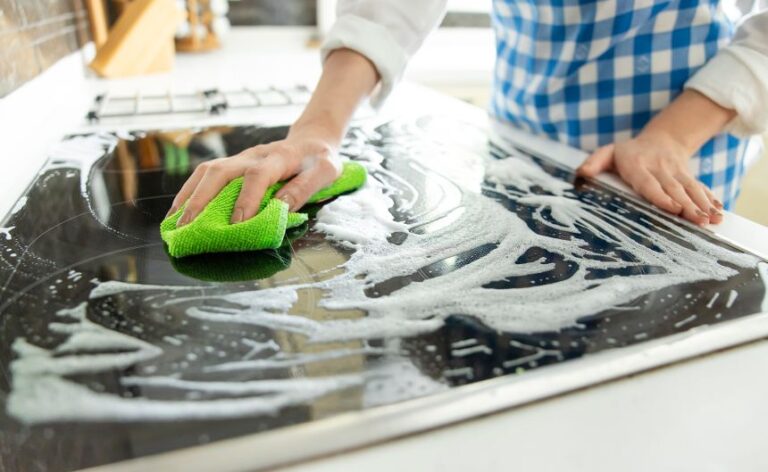
Disinfectants became a symbol of protection during the pandemic. Yet experts say the first step against many household germs should still be the simplest one: Wash them away.
“Certain strains of flu can be harder to kill than Covid-19, which can be broken down with soap and water and rinsed away,” McCarthy said. “But even with the flu you still want to clean your doorknobs, light switches and other high-traffic areas with soap and water before using a disinfectant.”
Yet people often reach for a germ killer first, not realizing it may be unnecessary or ineffective, said microbiologist Erica Hartmann, an associate professor of civil and environmental engineering at Northwestern University in Evanston, Illinois, who studies how microbes and chemicals interact.
“Many people don’t understand the difference between cleaning and disinfecting or know when just cleaning is enough,” Hartmann said. “If you are working with raw chicken or have a contagious pathogen in the house, you may need to disinfect. But in most cases, cleaning with soap and water is all that’s needed.”
That’s because a good scrub with soap and a thorough rinse with water breaks the chemical bond that holds viruses and bacteria to surfaces. When the soap is rinsed off, those microbes wash away.
“People feel like killing germs is necessary, but it’s not,” said Rebecca Fuoco, director of science communications for the Green Science Policy Institute, a nonprofit that investigates harmful chemicals.
“A lot of that is just psychological,” Fuoco said. “You don’t need to kill most germs, just remove them. Disinfectants should only be used when absolutely necessary due to their impact on human health and the environment.”
Mike Gruber, interim CEO for the Household & Commercial Products Association, told CNN consumers should carefully review product labels before use.
“Cleaning and disinfecting serve different purposes,” Gruber said. “Disinfectants can pose risks if they are misused, overapplied, or used in ways that are inconsistent with the label. For this reason, HCPA supports educating consumers about responsible use.”
The potential dangers of disinfectants
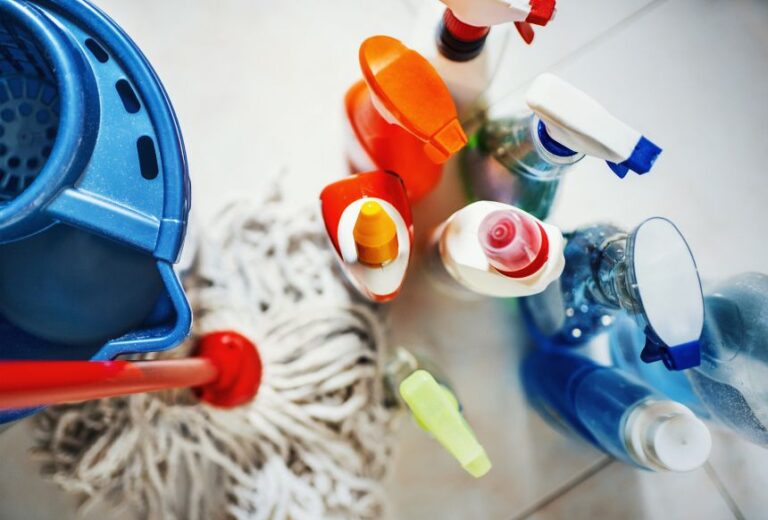
Quaternary ammonium compounds, or QACs, are among the most common chemicals in disinfectants frequently used in homes, schools, daycares, offices, senior care facilities and medical settings. Pilot studies have detected QACs in human blood serum, breast milk, urine and feces.
“Quaternary ammonium compounds are on track to be the next major toxic chemical story,” Fuoco told CNN previously. “We’re worried the public knows nothing about these dangers.”
Lab and animal studies over the last decade have raised concerns about QACs’ effects on inflammation, immune and respiratory systems, the developing brain, and reproductive hormones and fertility.
Fetuses of mice suddenly exposed to QACs developed deformities and neural tube defects similar to spina bifida in humans. Fertility in female mice plummeted. Male mice had lower sperm counts and less mobile sperm after QACs accumulated in testicles.
Human and animal studies have also found quaternary ammonium compounds weaken mitochondria — the cell’s powerhouse — and harm oligodendrocytes, brain cells that produce a protective coating called myelin that helps neurons communicate.
Read more Pain, stigma and barriers to care: The burden of cysts and fibroids in Africa
Overuse of QACs and other disinfectants is also harming the environment and contributing to the growing problem of antimicrobial resistance. Elevated levels of QACs and chlorine bleach can be toxic to algae, fish and small water organisms as well as plants.
“It should be low-hanging fruit to say, ‘There’s enough concern here that we should stop using these chemicals.’ There just isn’t enough benefit from using QACs to justify the risks,” Fuoco said.
The American Cleaning Institute, a nonprofit trade organization that represents industry, told CNN that, unlike ordinary household products, disinfectants must be registered with the US Environmental Protection Agency and undergo review for safety and effectiveness.
“EPA evaluates data on the active ingredient, the finished product, likely exposure and product performance,” Dan Selechnik, ACI’s director of environmental health, said in an email. “A disinfectant can only be marketed if data demonstrate that the use according to the label is safe and effective.”
Popular cleaning products with germ-killing chemicals may be dangerous to health
More natural options for disinfecting
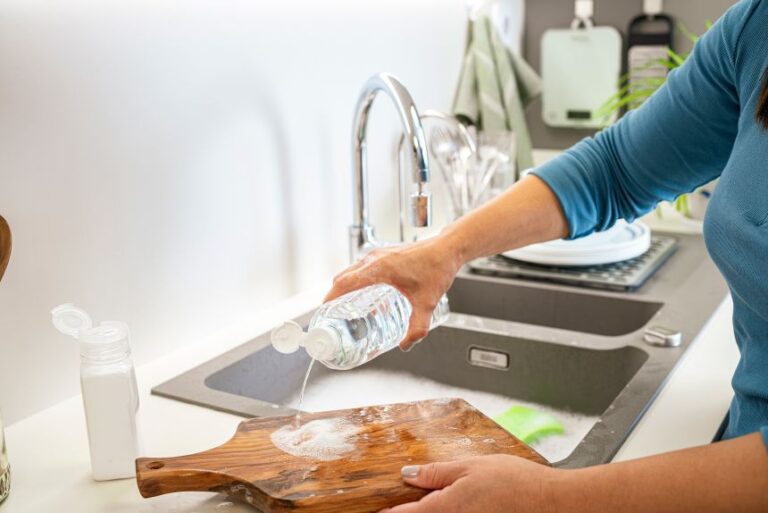
There are three steps to removing germs from your home. Cleaning comes first: Water works for crumbs and simple food spills, but if the residue is sticky, greasy or especially grimy, experts say soap and water are best.
That is likely the only step you’ll need, according to the US Centers for Disease Control and Prevention: “Cleaning alone removes most types of harmful germs (like viruses, bacteria, parasites, or fungi) from surfaces.”
A second step might be using a sanitizer on high-touch items such as toilet flushers, doorknobs, cellphones and TV remotes, McCarthy said.
“The job of sanitizers isn’t necessarily to kill everything on the surface, just reduce bacteria to a safer level, which is often all that’s needed,” she said. “However, many of these products contain QACs.”
Use of disinfectants would be the third step, needed to rid the kitchen of disease-causing bacteria from chicken or meat or destroy contagious microbes when someone is sick.
But there are less toxic options — citric acid, lactic acid, hydrogen peroxide and alcohol — that kill bacteria and viruses just as effectively as QACs, experts say.
“There are multiple organizations that vet more natural, eco-friendly products and provide their seal of approval,” McCarthy said. “Look on labels for seals from EPA Safer Choice, Ecologo and Green Seal.”
Citric acid, made from fruits; caprylic acid, made from coconut or palm oils; and L-lactic acid, created from fermentation, are all effective, natural microbe killers. They can be corrosive in higher concentrations, however.
Isopropyl, or rubbing alcohol, has been shown to kill E. coli and staph bacteria in less than a minute, while both ethyl and rubbing alcohol kill flu, HIV, hepatitis B and herpes viruses, according to the CDC. Alcohol also kills SARS-CoV-2, the virus that causes Covid-19.
Stick to a concentration of 70% alcohol and leave it on a surface for at least one minute — using a 99% solution will evaporate too quickly, the CDC said. Alcohol does have limits: It is less effective against cold viruses, cannot kill bacterial spores and discolors or cracks certain wood coatings, plastics and rubber.
Hydrogen peroxide cleaners, however, do break down the tough shells of bacterial spores, lift biofilm off surfaces and work against colds and norovirus that cause digestive distress.
“Chlorine free is hydrogen peroxide-based bleach — do not get that confused with regular chlorine bleach,” McCarthy said. “Chlorine bleach is a terrible cleaner — it’s not meant for that purpose. It can easily mix with other cleaning compounds like vinegar, ammonia and alcohol and produce toxic fumes.”

FDA seeks to close decadeslong loophole for food additives
When using the standard 3% hydrogen peroxide, a surface would need to remain wet for about five minutes to kill germs, according to the Cleveland Clinic. Some products on the market contain up to 12% hydrogen peroxide — those must be diluted to avoid irritation or chemical burns.
In fact, reading the instructions on any product is a must, McCarthy said, to use it safely and maximize its effectiveness.
There’s another, less obvious way to clean and disinfect without chemicals: dry steam vapor systems. Using high heat — over 200 F to 300 F, or 93 C to 149 C — and less than 5% water, dry steam kills germs, dust mites and mold without harsh chemicals. Care must be taken: High heat can blister skin, damage plastic and paint, or ruin wax and sealants on hardwood and stone.
Your cheat sheet for safer cleaning
You can clean safely without caustic chemicals by following these steps:
- Start by scrubbing with soap, then rinse well with water
- Disinfect after cutting meat or chicken
- Disinfect during contagious illnesses
- Choose less-toxic options: alcohol, citrus acid, hydrogen peroxide, steam
- Leave disinfectants wet long enough to work
- Always check directions, dilute as needed and wear gloves
Get inspired by a weekly roundup on living well, made simple. Sign up for CNN’s Life, But Better newsletter for information and tools designed to improve your well-being.
Read more Trump administration bans the use of federal Medicaid funds to cover gender identity healthcare